• Home
  • Popular Topics
    • Papillons
    • Alaskan Klee Kai
    • Hiking with Dogs
    • Dog DIY
    • Recipes
    • Dog Product Reviews
    • Can Dogs Eat…
    • Dog Health
  • The Paw Pack
    • Kitsune (2008 – 2024)
    • Fenrir
  • Policies
    • Disclaimer
    • Privacy Policy
    • Work with Us
    • Site Map
  • Contact

Paw Print

    Dog Health

    Dog Food Ingredients 101: Pomegranate

    April 19, 2023

    #AtoZChallenge 2023 letter P I’ve barely even started working on today’s post and already I’m craving pomegranate!  I love snacking on pomegranate seeds.  I always prefer eating snacks that are dog safe.  Snacks get dropped, and I don’t like having to play that potentially dangerous game of racing to the dropped food with my dogs.  They’re faster than I am!  That’s why grapes, while delicious, are pretty much banned in our house.  But what about pomegranate seeds?  There seems to be some conflicting information out there about whether or not pomegranates are dog safe.

    This post is part of our 2023 April blogging from A to Z Challenge!  Join us this month as we go through the alphabet, A to Z, learning more about some of the ingredients that are commonly (or not so commonly, in some cases) found in our dog’s food!

    Post Contents:

    • 1 What are Pomegranates?
    • 2 Why are Pomegranates Added to Dog Food?
    • 3 Cons of Feeding Pomegranates to Dogs:
    • 4 Benefits of Pomegranates for Dogs:
    • 5 So What’s the Verdict on Pomegranates?  Are They Safe as a Dog Food Ingredient?

    What are Pomegranates?

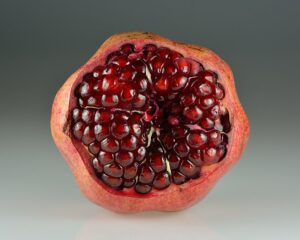
    pomegranate

    Image credit: Ivar Leidus. This file is licensed under the Creative Commons Attribution-Share Alike 4.0 International license.

    Pomegranates are officially (according to me) the world’s second-best fruit.  Pomegranate fruit grows on deciduous shrubs that were originally native to the Mediterranean.  They have since been introduced to other areas, and are cultivated in many areas including California, the Middle East, Africa, Iran, Asia, and in their native Mediterranean.

    Pomegranates are commonly eaten fresh, as well as used in baked goods, juices, smoothies, and alcoholic beverages.  The fruit consists of a thick outer husk, and a thinner inner membrane where seeds are attached.  Each pomegranate seed is contained inside a juice-filled seed coat.
    Pomegranate dog food

    Why are Pomegranates Added to Dog Food?

    My senior dog, Kitsune’s, food contains dried pomegranates.  Pomegranates are packed full of healthy nutrients such as potassium, vitamin C, potassium, and antioxidants.  They are high in fiber and low in calories, which means they can help your dog feel full without adding a lot of excess calories into their diet.

    Cons of Feeding Pomegranates to Dogs:

    Pomegranates are non-toxic to dogs.  However, there are a few concerns when it comes to feeding dogs pomegranates.  The biggest issue is the fact that pomegranate husks, and the seeds themselves, are very hard, if not impossible, for dogs to digest.  Your dog getting into pomegranate husks, or eating too many of the seeds at once, can lead to a potentially deadly impaction.

    Pomegranates, in excess, are also known for causing stomach/GI upset in dogs.

    For these reasons, pomegranates should only be offered to dogs in small amounts.  Never allow your dog to consume the thick outer husks of a pomegranate.

    Benefits of Pomegranates for Dogs:

    Pomegranates are a superfood!  A 2012 study found that…

    taurine, L-carnitine, pomegranate extract, and soy isoflavones exert antioxidant and cytoprotective activities through different mechanisms of action. Multi-component antioxidant treatment directed to counteract pivotal ROS-activated pathways appears as a rational intervention in heart failure.

    Pomegranate extract is sometimes given to dogs to help promote heart health.

    Pomegranates are high in fiber and antioxidants.  Pomegranate juice is sometimes included as an ingredient in dog dental products, as it is thought to potentially help improve oral health.  Polyphenol in pomegranates may help reduce inflammation and help dogs who are suffering from arthritis.

    So What’s the Verdict on Pomegranates?  Are They Safe as a Dog Food Ingredient?

    I’d say pomegranates themselves are a ‘feed with caution’ type of food.  Pomegranate seeds are not toxic for dogs, but the skin or too many of the seeds consumed at once can lead to intestinal blockage.  I wouldn’t worry if you drop a pomegranate seed and your dog finds it before you do, but keep the skin away from them.  Seeds should only be offered in moderation.

    Pomegranates are so high in antioxidants that they are somewhat notorious for causing GI upset in dogs.  This is another reason they should be offered in moderation only.  However, I don’t personally worry about pomegranates being an ingredient in my dog’s food.  Pomegranates, in low amounts, are safe for dogs and can provide beneficial nutrients.  They may even help support things such as heart health, oral health, and arthritis.

    Comment below!  What is your favorite fruit?  Has your dog ever tried a pomegranate, either fresh or as an ingredient in their dog food?
    Pomegranates dog food
    We’ve, unfortunately, been dealing with content scrapers stealing our articles lately. You shouldn’t be seeing this article on any site other than pawprintpetblog.com! If you’re reading this article on any other site, we’d love for you to take the time to contact us and let us know and, if you have the time, stop by and visit us on our official site! Thanks you.

    Dog Health

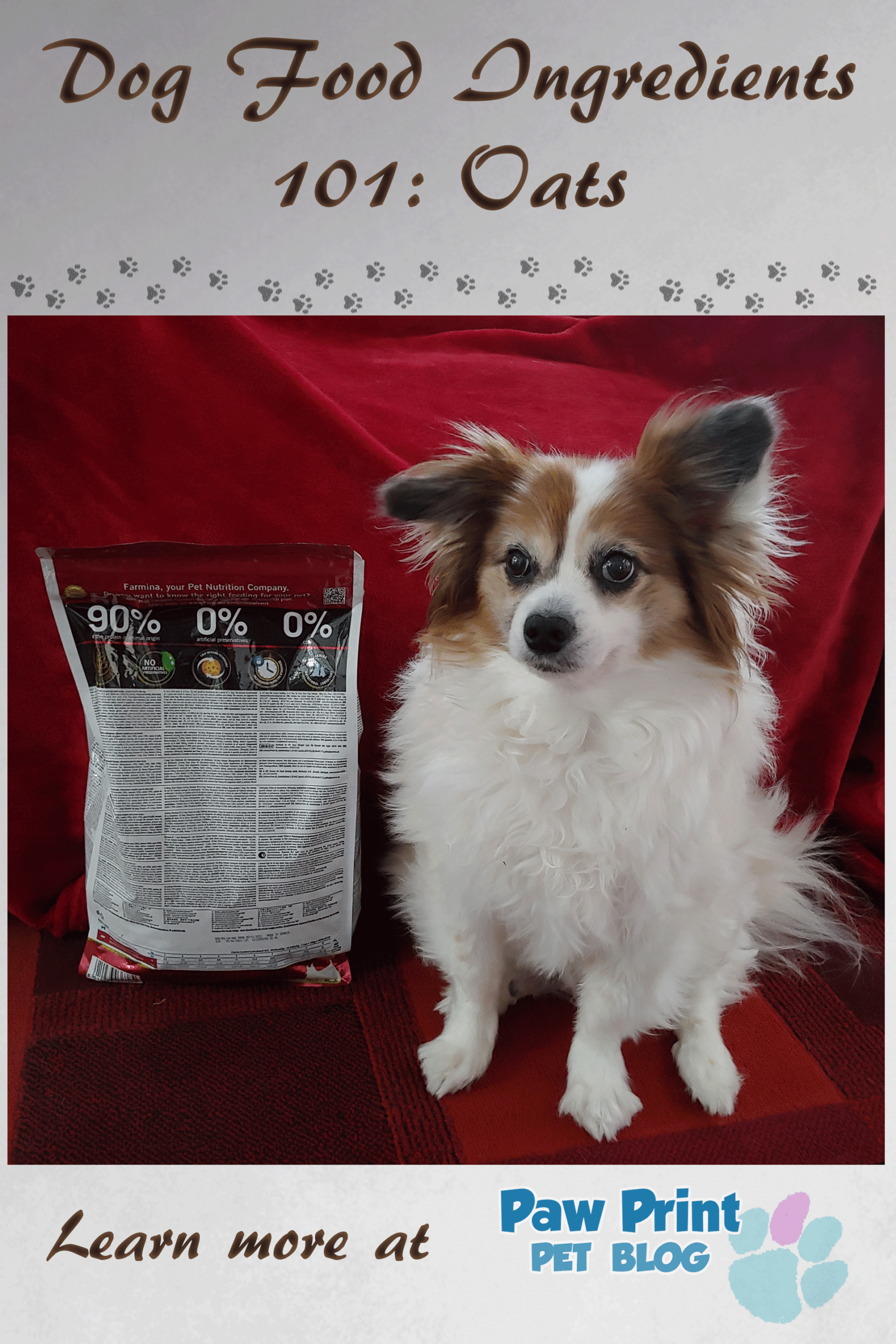
    Dog Food Ingredients 101: Oats

    April 18, 2023

    #AtoZChallenge 2023 letter O Do you feed your dog a grain-free diet?  I feel like the grain-free versus grain-inclusive dog food argument is one dog owners just might be having till the end of time.  My dogs are currently 14 and 7 years old.  Throughout my dogs’ lives, especially so for my 14-year-old, I’ve tried offering them quite a few different types of diets.  Yes, including both grain-free and grain-inclusive dog foods.

    This post is part of our 2023 April blogging from A to Z Challenge!  Join us this month as we go through the alphabet, A to Z, learning more about some of the ingredients that are commonly (or not so commonly, in some cases) found in our dog’s food!

    Post Contents:

    • 1 What are Oats?
    • 2 Why are Oats Added to Dog Food?
    • 3 Cons of Feeding Oats to Dogs:
    • 4 Benefits of Oats for Dogs:
    • 5 So What’s the Verdict on Oats?  Are They Safe as a Dog Food Ingredient?

    What are Oats?

    Oats (Avena sativa) is a species of cereal grain, similar to wheat, rye, and barley.  Humans commonly eat oats in the form of oatmeal and rolled oats.  Oats are also very commonly used as animal feed.

    oats

    Photo Credit: Matt Lavin. This file is licensed under the Creative Commons Attribution-Share Alike 2.0 Generic license.

    Why are Oats Added to Dog Food?

    Oats are often included as a dog food ingredient to provide fiber and carbohydrates.  They add bulk to the food, and can help your dog feel full without adding a ton of additional calories.  Oats are high in soluble fiber, making them good for your dog’s GI system.  Oats are also surprisingly high in protein, and also contain many nutrients, including the following…

    • Magnesium
    • Copper
    • Calcium
    • Zinc
    • Iron
    • Phosphorus
    • B vitamins
    • Vitamin A

    oats dog food

    Cons of Feeding Oats to Dogs:

    Uncooked oatmeal is hard for dogs to digest and shouldn’t be offered.  Non-organic oats, unfortunately, are often exposed to herbicides such as Glyphosate.

    Dogs can be allergic to oats and other grains.  Grain allergies in dogs are more common than other types of food allergies, such as to meats.  Symptoms of oat allergies can include a wide array of issues such as asthma like symptoms, skin issues (bumps, itching, thickened skin, ulcered skin, redness), coughing, ear infections, hair loss, congestion, sneezing, shortness of breath, red/itchy eyes, obsessive licking, etc.  If your feeding your dog a commercial dog food, it can be hard to pinpoint exactly what ingredient(s) are causing allergic symptoms.  Vets will usually recommend eliminating grains from the diet first, as they are one of the most common food allergens in dogs.

    Benefits of Oats for Dogs:

    For dogs who can tolerate them, oats can be a beneficial addition to their diet.  Oats can be used as a source  of protein, fiber, and the nutrients listed above.  Oats contain a compound called b-sitosterol that is thought to help fight against tumors.  Like in humans, offering oats to dogs may help fight inflammation and lower cholesterol.  They can help promote heart health and are also beneficial for dog’s skin, lungs, liver, GI tract, nervous system, and urinary system.

    So What’s the Verdict on Oats?  Are They Safe as a Dog Food Ingredient?

    As long as your dog doesn’t suffer from grain/oat allergies, oats, in moderation, can be a beneficial addition to dog food.  If you make your own dog food, using organic oats is preferred since organic oats aren’t treated with herbicides.  Dogs don’t require oats, so if your dog food doesn’t contain them that’s perfectly fine.  And if it does, then know that many dogs tolerate oats without any issues.

    Comment below!  Does your dog’s food contain oats?  Have you ever tried feeding grain free dog food?

    oats dog food

    We’ve, unfortunately, been dealing with content scrapers stealing our articles lately. You shouldn’t be seeing this article on any site other than pawprintpetblog.com! If you’re reading this article on any other site, we’d love for you to take the time to contact us and let us know and, if you have the time, stop by and visit us on our official site! Thanks you.

    Dog Health

    Dog Food Ingredients 101: Niacin

    April 17, 2023

    #AtoZChallenge 2023 letter N Because your typical commercial dog foods are processed (sometimes quite heavily processed) they lose some of the natural nutrients present in once-fresh ingredients.  Heat can improve the digestibility of some foods, but it can also decrease the amounts of nutrients available.  For example, the amounts of water-soluble vitamins (C and B), fat-soluble vitamins (A, E, D, and K), and some minerals (magnesium, sodium, potassium, and calcium) are actually reduced when high heat is applied to food.  This is one main reason why many pet food companies add additional supplements to their foods.  Supplemental nutrients can help make up for what’s lost during processing.

    This post is part of our 2023 April blogging from A to Z Challenge!  Join us this month as we go through the alphabet, A to Z, learning more about some of the ingredients that are commonly (or not so commonly, in some cases) found in our dog’s food!

    Post Contents:

    • 1 What is Niacin?
    • 2 Why is Niacin Added to Dog Food?
    • 3 Cons of Feeding Niacin to Dogs:
    • 4 Benefits of Niacin for Dogs:
    • 5 So What’s the Verdict on Niacin?  Is it Safe as a Dog Food Ingredient?

    What is Niacin?

    People familiar with human nutrition will probably be familiar with niacin.  Niacin is important for humans as well as dogs.  It’s a water-soluble vitamin, also known as B3.  Vitamin B3 is found naturally in foods such as bananas, nuts, seeds, legumes, brown rice, fish, poultry, and red meat.  It’s role in the body is to act as a coenzyme.  Over 400 enzymes depend on the presence of niacin to complete their functions in the body.  Niacin is required to help form cholesterol and fats, create and repair DNA, and convert nutrients into energy.  Niacin is essential for your dog’s nervous system, skin, and GI health.

    Since niacin is water-soluble, when more than the body requires is taken in the excess is eliminated through urine.  Although niacin is more stable than some other water-soluble vitamins, some of this nutrient is lost from foods when they are cooked.

    niacin dog food

    Why is Niacin Added to Dog Food?

    Vitamin B3 plays many roles within a dog’s body.  While dog’s can actually synthesize niacin for themselves, the amount each dog can synthesize each day varies.  Because niacin is water-soluble, it cannot be stored within the body.  That, in addition to the fact that niacin, to some degree, is degraded when food is cooked, makes it a smart idea for pet food companies to supplement their foods with additional niacin.

    Cons of Feeding Niacin to Dogs:

    Dogs receiving niacin from food sources are unlikely to overdose.  Any excess niacin obtained through food or synthesized by the body is normally eliminated through the urine.  Dogs supplemented with additional, high dose, niacin, or who accidently consume too many supplements or human vitamins may, rarely, experience niacin toxicity.  In rare cases chronic niacin overdose can lead to side effects such as ulcers, GI upset, and liver damage.

    Benefits of Niacin for Dogs:

    Dog’s require niacin to preform a wide array of body functions.  An average dog requires 13 mg of niacin daily.  Luckily, because it is present in many foods and often supplemented in commercial dog foods, deficiency is rare.  Niacin deficiency is sometimes referred to as “black-tongue”.  It causes symptoms such as anorexia, weight loss, GI upset, redness and inflammation of the mouth, and can eventually lead to death.  Among other things, vitamin B3 is responsible for the following:

    • Maintaining a healthy metabolism.
    • Niacin helps break down fatty acids.
    • The proper break down of these fats can improve skin and fur health.
    • Niacin is required for the creation of energy within the body.
    • It also helps support cognitive function.
    • Niacin promotes proper hormone synthesis, which plays many important roles within their bodies.
    • It promotes hormones that help the kidneys function properly.
    • Niacin is involved in the release of corticosteroids, which help your dog better deal with stress.
    • Niacin is required for the production of growth hormones, especially important for growing puppies.
    • Niacin also controls the production of stomach bile and acids.
    • It promotes optimal pH levels within the digestive tract.

    So What’s the Verdict on Niacin?  Is it Safe as a Dog Food Ingredient?

    Niacin is a necessary nutrient for dogs.  Luckily, overdose is very rare and is not normally seen.  Niacin is commonly found in foods such as fish and meat, so it’s not common for dogs to be deficient in in.  However, some dog food companies choose to add additional supplemental niacin to their recipe.  This may help make up for any of the vitamin that is lost when the food is processed.  Additional niacin obtained from food sources that’s not needed by the body is eliminated through the urine, normally within 24 hours after it is consumed.  Niacin, or vitamin B3, is safe for dogs in the amounts that it would be found in dog food.

    niacin dog food

    We’ve, unfortunately, been dealing with content scrapers stealing our articles lately. You shouldn’t be seeing this article on any site other than pawprintpetblog.com! If you’re reading this article on any other site, we’d love for you to take the time to contact us and let us know and, if you have the time, stop by and visit us on our official site! Thanks you.
    Dog Health

    Dog Food Ingredients 101: Manganese Sulfate

    April 15, 2023

    #AtoZChallenge 2023 letter M If you feed your dog commercial dog food, have you ever taken the time to go down the list of ingredients to learn what each one is?  It’s a daunting task!  As of today, I’m two weeks into my April blogging from A to Z Challenge, which has been focused on taking a deep dive into learning more about some of the ingredients found in commercial dog foods.  I hope you’ve learned something useful so far, and continue to stop by as we learn about a new dog food ingredient (almost) everyday this April!

    This post is part of our 2023 April blogging from A to Z Challenge!  Join us this month as we go through the alphabet, A to Z, learning more about some of the ingredients that are commonly (or not so commonly, in some cases) found in our dog’s food!

    Post Contents:

    • 1 What is Manganese Sulfate?
    • 2 Why is Manganese Sulfate Added to Dog Food?
    • 3 Cons of Feeding Manganese Sulfate to Dogs:
    • 4 Benefits of Manganese Sulfate to Dogs:
    • 5 So What’s the Verdict on Manganese Sulfate?  Is it Safe as a Dog Food Ingredient?

    What is Manganese Sulfate?

    Manganese sulfate, formula MnSO4·H2O, is an inorganic compound that is pale pink in color.  Manganese is found naturally in seeds, nuts, whole grains, eggs, and green vegetables.

    Manganese sulfate dog food

    Why is Manganese Sulfate Added to Dog Food?

    Although manganese is naturally present in some foods, many dog food companies also add supplemental manganese into their dog foods.  Manganese helps the body process protein, carbohydrates, and is important for proper enzyme function.  Some of these enzymes are involved in energy production and the creation of fatty acids.  Manganese helps keep the skeletal system, ligaments, cartilage, and organs, especially the liver and kidneys, healthy

    Dogs require 2.3 mg of manganese per pound of dry food daily.

    Cons of Feeding Manganese Sulfate to Dogs:

    The effects of manganese toxicity are unknown.  It would be very difficult, if not impossible, for a dog to be exposed to enough manganese that it would result in toxicity.  The amounts of manganese found in dog foods are safe for dogs.

    Benefits of Manganese Sulfate to Dogs:

    Dogs require small amounts of manganese to keep their bodies functioning normally.  Symptoms of manganese deficiency include poor growth, reproductive issues, ataxia (wobbly movements, tremors, eye flickering), skin and coat abnormalities, and issues with the skeletal structure and joints.

    Manganese is required for enzymes in dog’s bodies to function properly.  These enzymes, in turn, are important for many functions including energy production, fat metabolism, protein metabolism, carbohydrate metabolism, bone, cartilage, and collagen formation, brain function, and immune system function.

    So What’s the Verdict on Manganese Sulfate?  Is it Safe as a Dog Food Ingredient?

    Manganese is not only safe (it’s considered to be one of the lest toxic trace elements), it is required by dogs for proper body function.  Manganese is not commonly found in meat.  If your dog eats a diet especially high in meat protein, it’s common for dog foods to add supplemental manganese.

    Manganese Sulfate

    We’ve, unfortunately, been dealing with content scrapers stealing our articles lately. You shouldn’t be seeing this article on any site other than pawprintpetblog.com! If you’re reading this article on any other site, we’d love for you to take the time to contact us and let us know and, if you have the time, stop by and visit us on our official site! Thanks you.

    Dog Health

    Dog Food Ingredients 101: Lysine

    April 14, 2023

    #AtoZChallenge 2023 letter L L is for lysine.  If you haven’t been following my blog lately, I’ve been participating in the 2023 April blogging from A to Z Challenge.  It’s hard to believe that the first two weeks of the challenge are almost already behind me!  My theme this year is “dog food ingredients”.  Almost every day in April, I’ll dive deep into learning more about specific ingredients used to create commercial dog foods.  Coming up with food ingredients for “j”  (juniper berries) and “k” (kelp) both felt like more of a challenge than the rest of the letters have been.  Luckily finding an ingredient that starts with “l” wasn’t as hard.

    This post is part of our 2023 April blogging from A to Z Challenge!  Join us this month as we go through the alphabet, A to Z, learning more about some of the ingredients that are commonly (or not so commonly, in some cases) found in our dog’s food!

    Post Contents:

    • 1 What is Lysine?
    • 2 Why is Lysine Added to Dog Food?
    • 3 Cons of Feeding Lysine to Dogs:
    • 4 Benefits of Feeding Lysine to Dogs:
    • 5 So What’s the Verdict on Lysine?  Is it Safe as a Dog Food Ingredient?

    What is Lysine?

    Lysine is an amino acid.  Lysine helps dogs to produce antibodies, hormones, and enzymes.  It boosts the immune system and plays a role in calcium absorption as well as collagen production.

    lysine dog food

    Why is Lysine Added to Dog Food?

    Dog’s bodies are not able to synthesize lysine, so they must obtain it from the food they eat.  Lysine deficiency in dogs, however, is rare because it can be obtained by eating most meats.  Many dog foods also add supplemental lysine.

    Cons of Feeding Lysine to Dogs:

    Dog’s bodies require lysine to function properly.  However, dog’s rarely require lysine supplementation beyond what is available in their food.

    Lysine overdose can lead to kidney failure in dogs.  Studies have suggested that the amount of lysine needed to be harmful to dogs would be over 2,000mg per pound.  That’s a lot of lysine!  Dosages this high are only really a risk if your dog somehow overdoses on lysine supplements.

    Benefits of Feeding Lysine to Dogs:

    Dogs need lysine.  Thankfully, it’s not usually a nutrient dog owners have to think much about because, as long as you are feeding a healthy, balanced diet, dogs get all the lysine they need from their food.

    Additional supplemental lysine is sometimes prescribed for cats suffering from viral infections (such as feline herpesvirus) but it isn’t as commonly used this way in dogs.

    So What’s the Verdict on Lysine?  Is it Safe as a Dog Food Ingredient?

    In the amounts it would be present in dog food lysine is not only safe, but a nutritional requirement for dogs.  I wouldn’t worry about supplemental lysine being listed as an ingredient in dog food.  Lysine is only dangerous to dogs when it’s consumed in very large amounts, amounts so large, in fact, that it would be difficult for most dogs to consume enough lysine for it to become a danger.  If you take lysine supplements yourself, or give them to a pet, make sure to store the supplements out of reach of your dog.

    lysine dog food

    Dog Health

    Dog Food Ingredients 101: Kelp

    April 13, 2023

    #AtoZChallenge 2023 letter KI thought coming up with a dog food ingredient that starts with “k” was going to be just as challenging as “j” was yesterday.  Que to my Alaskan Klee Kai, Fenrir, coming up to me as I was researching to beg for one of his favorite treats – PlaqueOff dental chews.  The main active ingredient in the dental chews I use for my dogs is kelp!  Inspiration struck, thanks Fen!  It turns out that some dog foods contain kelp too.

    This post is part of our 2023 April blogging from A to Z Challenge!  Join us this month as we go through the alphabet, A to Z, learning more about some of the ingredients that are commonly (or not so commonly, in some cases) found in our dog’s food!

    Post Contents:

    • 1 What is Kelp?
    • 2 Why is Kelp Added to Dog Food?
    • 3 Cons of Feeding Kelp to Dogs:
    • 4 Benefits of Feeding Kelp to Dogs:
    • 5 So What’s the Verdict on Kelp?  Is it Safe as a Dog Food Ingredient?

    What is Kelp?

    Photo Credit: Fred Hsu, licensed under the Creative Commons Attribution-Share Alike 3.0 Unported license.

    Kelp is a type of algae/seaweed.  There are around 30 different genera of kelp.  Although it is often green in color, it’s technically a type of brown algae.  Kelp grows best in shallow, nutrient-rich ocean water.  Kelp forests provide both food and shelter for a wide array of ocean life.  Kelp is known for growing especially fast, up to half a meter a day!

    Kelp has been harvested by humans for centuries.  It used to be harvested to produce soda ash (sodium carbonate).  It also used to be harvested as a source of iodine and iron, and because it can be used in both the soap and glass production process.

    Kelp these days is used to produce alginate, which can be used to thicken products such as jellies, toothpaste, and ice cream.  It’s used in some skin care products and is consumed especially in Chinese, Japanese, and Korean cuisines.  Oh, and kelp is somewhat commonly used in dog products!

    kelp dog food

    Why is Kelp Added to Dog Food?

    Kelp is somewhat commonly used as a supplement to help promote dental health in dogs.  This study done in 2018 found that…

    90-day supplementation of dogs with kibbles containing A. nodosum [a type of kelp] seaweed resulted in significant improvements in several dental health indices and was beneficial for the prevention of plaque and calculus formation after a prophylactic dental procedure…A. nodosum supplementation may be effective for long-term prevention of halitosis as well as for maintenance of good oral health.

    Kelp is also thought to have a number of health benefits, everything from providing essential nutrients to boosting the immune system.

    Cons of Feeding Kelp to Dogs:

    I know from feeding my own dogs kelp based dental chews that kelp should not be given to dogs with thyroid issues.  It’s high in iodine and is thought to potentially lead to hypo or hyperthyroidism based on dog’s thyroid condition.

    Benefits of Feeding Kelp to Dogs:

    I can speak personally to the benefits of kelp when used to help maintain dog dental health.  Not only are my dogs small (thus more prone to dental disease) but they’re also 7 and 14 years old.  Neither one has ever required a dental cleaning from the vet.  There’s a few things I do to help maintain their dental health, and one of them is using kelp based dental chews.

    These are some other potential benefits of feeding kelp to dogs…

    • Kelp is a good source of nutrients.  It contains 60 different minerals and 21 amino acids.  Kelp is a good source of calcium, boron, potassium, iron, and vitamins B12, C, E, and A, among lots of other things.
    • Kelp is high in fiber and can act as a prebiotic.  It helps support a healthy GI tract.
    • By helping to maintain a healthier GI tract, kelp also boosts the immune system.
    • The iodine in kelp can help to regulate the thyroid, pituitary gland, and adrenal gland.
    • By boosting thyroid function, kelp can help boost metabolism and help dogs deal with the effects of stress.
    • Kelp is about 25% protein, so it can boost dog food’s protein content without adding a lot of additional calories.
    • Kelp is thought to help reduce inflammation and may be beneficial for dogs with allergies.

    So What’s the Verdict on Kelp?  Is it Safe as a Dog Food Ingredient?

    I’ve been giving my own dogs kelp based dental chews for years now with no ill effects.  Do make sure to consult with your vet before supplementing with kelp if your dog is experiencing any health issues, especially thyroid issues.  But I really do feel that kelp has done wonders for helping to maintain my dogs’ dental health.

    Comment below!  Have you ever tried kelp based dental products for your own dog, or does your dog’s food contain kelp?

    kelp dog food

    Dog Health

    Dog Food Ingredients 101: Juniper Berries

    April 12, 2023

    #AtoZChallenge 2023 letter JWhen I picked my theme for this year’s Blogging from A to Z Challenge, I figured it’d be relatively easy to find dog food ingredients that start with each letter of the alphabet.  There are some pretty crazy named supplements and such, even ones that start with “x” and “z”, letters that I found really challenging when I completed this challenge in the past.  Well, it turns out, there aren’t very many ingredients used in dog food that start with the letter “j”!  I finally came across a brand of dry food for puppies that contains juniper berries.  So j is for juniper berries, however obscure of a dog food ingredient they may be.

    This post is part of our 2023 April blogging from A to Z Challenge!  Join us this month as we go through the alphabet, A to Z, learning more about some of the ingredients that are commonly (or not so commonly, in some cases) found in our dog’s food!

    Post Contents:

    • 1 What are Juniper Berries?
    • 2 Why are Juniper Berries Added to Dog Food?
    • 3 Cons of Feeding Juniper Berries to Dogs:
    • 4 Benefits of Feeding Juniper Berries to Dogs:
    • 5 So What’s the Verdict on Juniper Berries?  Are they Safe as a Dog Food Ingredient?

    What are Juniper Berries?

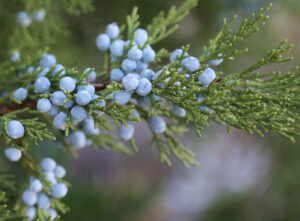
    Photo credit: Dcrjsr. This file is licensed under the Creative Commons Attribution 3.0 Unported license.

    The name juniper berries is a bit misleading because juniper “berries” are not technically berries.  They are the female cones of juniper trees.  The modified fleshy cones look more like berries than traditional tree cones, though.  They start out green and, over time, turn a purple-ish color that reminds me quite a bit of blueberries.  Depending on the species of juniper, it can take anywhere from 8 to 24 months for the berries to mature.  Juniper berries are sometimes eaten or used in recipes, and they have a long history of being used for medicinal purposes.

    juniper berries dog food

    Why are Juniper Berries Added to Dog Food?

    Juniper berries are not a common dog food ingredient.  But I did find a dog food that contains them!  They are reported to have a number of potential benefits for dogs, which I will outline below.

    Cons of Feeding Juniper Berries to Dogs:

    However, juniper berries are toxic to dogs.  They contain an oil called thujone.  Thujone can cause GI upset and kidney issues in dogs (and people!) if it’s consumed in large quantities.  Different species of juniper contain different levels off thujone, so some species are more toxic than others.

    It’s especially important to avoid offering your dog juniper berries of any sort if he/she is suffering from kidney failure.

    Enzymes found in juniper berries can also interfere with prescription medications.  If your dog is taking any prescription medications it’s important to talk with your vet before offering him/her juniper berries.

    Benefits of Feeding Juniper Berries to Dogs:

    If given in very small amounts, so as to avoid causing side effects from the berries being toxic, juniper berries are thought to have a number of benefits including…

    • Juniper berries are an effective diuretic and can help dogs who are dealing with urinary tract infections.
    • Juniper berries are thought to potentially be able to dissolve kidney and bladder stones.
    • Juniper berries may help treat intestinal worms such as tape worms.
    • Juniper has been shown to be able to lower blood sugar.

    So What’s the Verdict on Juniper Berries?  Are they Safe as a Dog Food Ingredient?

    I, personally, wouldn’t go out of my way to offer my dogs a food that contained juniper berries.  While they may in fact offer some health benefits, I’m not sure I’d feel like the potential benefits would outweigh the cons.  I was only able to find one dog food that contained juniper berries as an ingredient.  I’m sure they must include the berries in a very small amount to avoid the risk of causing GI upset and kidney issues.  I didn’t notice whether or not the food contained a warning that it shouldn’t be used for dogs experiencing kidney failure or taking prescription medication(s).  It does make me wonder how much juniper berries are actually included in the food.

    If your dog is currently doing well on a food that contains juniper berries, and your vet is comfortable with you using the food, then I wouldn’t worry too much.  The negative effects of juniper berries are thought to be much more of a concern when the berries are eaten in excess.  My assumption is that any dog food that includes them in it’s ingredient list would do so in very small amounts.

    juniper berries dogs


    Dog Health

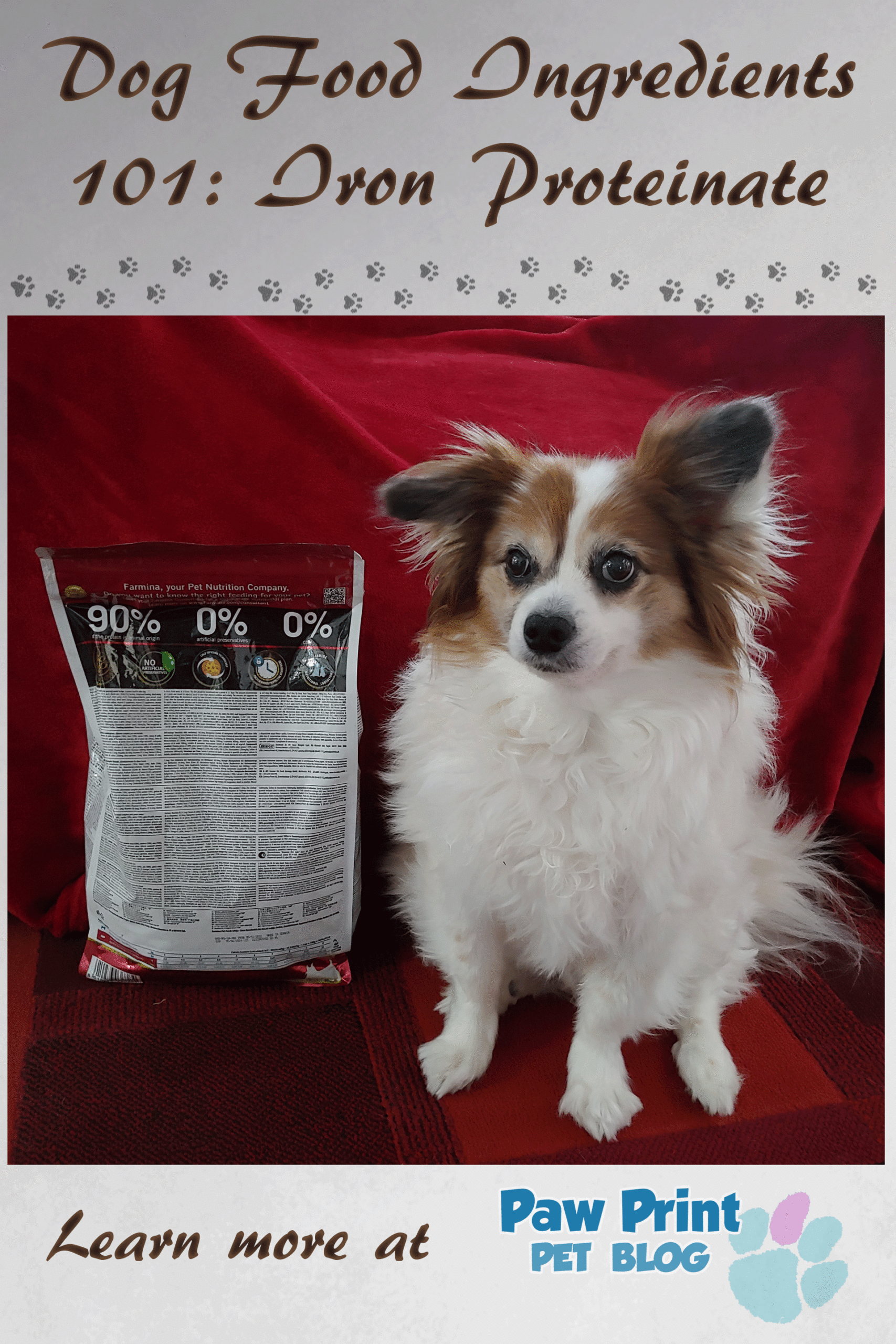
    Dog Food Ingredients 101: Iron Proteinate

    April 11, 2023

    #AtoZChallenge 2023 letter I I like to think I’m pretty knowledgeable when it comes to knowing what I’m feeding my dogs, but this month’s A to Z challenge is the first time I’ve taken a deep dive to really learn more about some of the ingredients that are commonly present in commercial dog food.  What do you feed your dog?  Have you ever taken the time to research all of the ingredients in your dog’s food?  This challenge has been really eye-opening for me for sure.

    This post is part of our 2023 April blogging from A to Z Challenge!  Join us this month as we go through the alphabet, A to Z, learning more about some of the ingredients that are commonly (or not so commonly, in some cases) found in our dog’s food!

    Post Contents:

    • 1 What is Iron Proteinate?
    • 2 Why is Iron Proteinate Added to Dog Food?
    • 3 Cons of Feeding Iron Proteinate to Dogs:
    • 4 Benefits of Feeding Iron Proteinate to Dogs:
    • 5 So What’s the Verdict on Iron Proteinate?  Is it Safe as a Dog Food Ingredient?

    What is Iron Proteinate?

    Iron proteinate is, basically, a mixture of the metal iron with a protein carrier.  Protein carriers are typically hydrolyzed proteins that bond together with iron to make it more bioavailable when it’s consumed by an animal.

    Why is Iron Proteinate Added to Dog Food?

    Iron proteinate is added to dog food as a source of iron.

    Iron Proteinate dog food

    Cons of Feeding Iron Proteinate to Dogs:

    Iron proteinate can be more expensive than other forms of supplemental iron.  But I doubt iron proteinate would be added to any dog food in amounts so high that it would significantly increase the cost of the food.

    Too much iron in the diet can sometimes lead to iron poisoning.  This shouldn’t be a risk if your dog’s only source of iron is his/her food.  However, can become an issue if your dog consumes too many multivitamins that contain iron, iron supplements, fertilizers, pesticides, or the contents of single use hand warmers.  Signs of iron poisoning can include vomiting, diarrhea, bloody diarrhea, fatigue, low blood pressure, abdominal pain, rapid heart beat, seizures, and coma.

    Benefits of Feeding Iron Proteinate to Dogs:

    Protein bound, also called chelated, minerals are more bioavailable (verses non-chelated minerals) and easier for dog’s bodies to absorb.

    Iron, in the proper amount, is required for proper function of the circulatory system.  It is part of dog’s red blood cells and is essential for oxygen transport.

    So What’s the Verdict on Iron Proteinate?  Is it Safe as a Dog Food Ingredient?

    Iron is an essential mineral for dogs.  Iron proteinate is the preferred type of iron supplement to be added to dog food because it is more bioavailable than other forms of iron.  It’s possibly for dogs to overdose on iron, but this isn’t normally a worry for dog’s who are receiving supplementary iron in their food.  Iron poisoning is more of a concern for dogs who get into things they shouldn’t, such as dogs who consume large amounts of vitamins containing iron.

    Iron Proteinate

    Dog Health

    Dog Food Ingredients 101: Herring Oil

    April 10, 2023

    #AtoZChallenge 2023 letter HI’ve been giving my senior papillon, Kitsune, supplemental fish oil for a couple of years now.  When most people think of fish oils for dogs, they probably think of salmon oil.  However “fish oil” can be created from pretty much any type of oily fish.  The one I commonly use for my own dog is created from wild anchovies and sardines.  Herring oil is a fish oil created from, you guessed it, herring!

    This post is part of our 2023 April blogging from A to Z Challenge!  Join us this month as we go through the alphabet, A to Z, learning more about some of the ingredients that are commonly (or not so commonly, in some cases) found in our dog’s food!

    Post Contents:

    • 1 What is Herring Oil?
    • 2 Why is Herring Oil Added to Dog Food?
    • 3 Cons of Feeding Herring Oil to Dogs:
    • 4 Benefits of Feeding Herring Oil to Dogs:
    • 5 So What’s the Verdict on Herring Oil?  Is it Safe as a Dog Food Ingredient?

    What is Herring Oil?

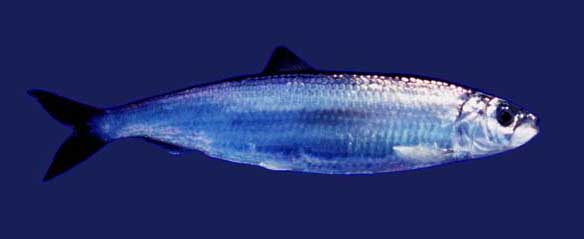
    Herring, sometimes also called “silver darlings” are a species of fish that belongs to the Clupeidae family.  They are considered to be forage, otherwise known as prey or bait, fish, and are preyed upon by a wide array of animals in the wild.  Herrings are very oily fish.  Herring oil is a type of fish oil created from herrings.

    Photo Credit: Uwe Kils. Licensed under the Creative Commons Attribution-Share Alike 3.0 Unported license.

    Why is Herring Oil Added to Dog Food?

    Fish oils, herring oil included, is thought to provide a wide array of benefits for dogs.  The omega-3 fatty acids present in fish oil play important roles in everything from healthy brain function to managing inflammation.  Fish oil is a popular supplement used for dogs, especially sports dogs who are especially active and seniors who may be dealing with health issues like arthritis.

    herring oil dog food

    Cons of Feeding Herring Oil to Dogs:

    Some feel that the benefits of supplementing with fish oil may be overstated.  In humans, studies on the benefits of fish oil have suggested not only that fish oil may not be as beneficial as once thought, but that it can sometimes be detrimental.  A human study conducted in 2003, for example, found that…

    Men advised to eat oily fish, and particularly those supplied with fish oil capsules, had a higher risk of cardiac death.

    Dog’s bodies use vitamin E to process oils, fish oils included.  If too much oil is added to the diet, it can deplete their vitamin E.  Vitamin E deficiency in dogs can lead to vision issues, cardiovascular issues, neurologic abnormalities, and immune system impairment.  Symptoms of vitamin E deficiency in dogs can include muscle weakness and hemorrhages in the large intestine.

    Too much fish oil, besides potentially causing vitamin E deficiencies, can also cause diarrhea and vomiting in some dogs.  It should be avoided for dogs with health issues such as pancreatitis and, in many cases, acid reflux.

    Benefits of Feeding Herring Oil to Dogs:

    Like other types of fish oils, the omega-3 fatty acids in herring oil are thought to provide many benefits including…

    • A boosted immune system
    • Relief from skin allergies
    • Improved cognitive function
    • Protection against autoimmune diseases
    • Improved skin and coat health
    • Potential protection against cancers
    • Improvement of stomach/digestive issues
    • Protection against heart disease and stroke
    • Renal support/protection
    • Reduced inflammation throughout the body
    • Relief from arthritis pain

    So What’s the Verdict on Herring Oil?  Is it Safe as a Dog Food Ingredient?

    Herring oil, and other fish oils in general, are very much a case of “amounts matter”.  Fish oils are thought to be beneficial for most dogs in moderation.  Offering too much herring oil, however, can potentially lead to health issues ranging from mild GI upsets to very serious vitamin E deficiencies.  Talk to your vet about how much fish oil your pet should be getting, especially if herring or another type of fish oil is already present in your dog’s food.  It can be easy to overlook the fact that your dog’s food already contains fish oil and then over supplement with additional oil.

    Out of my two dogs, one of them cannot tolerate fish oil.  He has a sensitive stomach.  The few times I’ve tried supplementing him with fish oil it made him sick.  My senior dog, however, does well on supplemental fish oil.  I feel like it does seem to help a bit with his arthritis.

    Comment below!  Did you know that some dog foods contain fish oils?  Do you supplement your dog’s diet with herring oil, or some other type of fish oil?

    herring oil

    Dog Health

    Dog Food Ingredients 101: Glucosamine

    April 8, 2023

    #AtoZChallenge 2023 letter G The other day I wrote about chondroitin sulfate.  Today’s dog food ingredient, glucosamine, is the peanut butter to chondroitin’s jelly!  Glucosamine and chondroitin are often found together in supplements meant to help support dog joint health.  I supplement my own senior dog, Kitsune, with Dasuquin (among other things) to help deal with his arthritis.  Most dog owners know about glucosamine supplements, but did you know that some dog foods contain glucosamine?

    This post is part of our 2023 April blogging from A to Z Challenge!  Join us this month as we go through the alphabet, A to Z, learning more about some of the ingredients that are commonly (or not so commonly, in some cases) found in our dog’s food!

    Post Contents:

    • 1 What is Glucosamine?
    • 2 Why is Glucosamine Added to Dog Food?
    • 3 Cons of Feeding Glucosamine to Dogs:
    • 4 Benefits of Feeding Glucosamine to Dogs:
    • 5 So What’s the Verdict on Glucosamine?  Is it Safe as a Dog Food Ingredient?

    What is Glucosamine?

    Glucosamine (C6H13NO5) is an amino sugar that helps to form glycosaminoglycans and glycoproteins.  Glycosaminoglycans and glycoproteins are the building blocks that help form ligaments and cartilage.

    Supplemental glucosamine is usually derived from the exoskeletons of shellfish, although it can also be created by fermenting grains.

    Glucosamine dog food

    Why is Glucosamine Added to Dog Food?

    Glucosamine is a popular joint supplement.  It is thought to be able to help repair cartilage within joints, helping to reduce the pain of arthritis.  Glucosamine is a naturally occurring substance in dog’s bodies.  However, as dogs age, their bodies begin to produce less glucosamine.  This slows down joint repair, and can contribute to pain and inflammation of the joints.  For these reasons, glucosamine is a common supplement especially for older dogs.

    Cons of Feeding Glucosamine to Dogs:

    Although glucosamine is commonly given to dogs, and generally thought of as safe, some dogs do react poorly to it.  Side effects of supplementing with glucosamine can include allergic reactions, fatigue, insomnia, stomach upset, or excessive thirst and urination.  Talk to your vet before supplementing your dog with glucosamine if they are on a prescription blood thinner, have diabetes, or are being treated for cancer.

    Benefits of Feeding Glucosamine to Dogs:

    Glucosamine is used most commonly as a preventative or treatment for arthritis in dogs.  It is thought to be able to help reduce inflammation, and thus pain, in dog’s joints.  For most dogs, if glucosamine supplements work they are a safer alternative than other treatments used to deal with arthritis, such as NSAID pain medications.

    So What’s the Verdict on Glucosamine?  Is it Safe as a Dog Food Ingredient?

    Glucosamine is generally thought to be safe for most dogs.  It is possible for dogs to be allergic to glucosamine, especially if it’s shellfish derived.  Some dogs do experience adverse effects, especially if glucosamine is given in excess.  Studies thus far about the effectiveness of glucosamine in dogs seem hit or miss.  More research is defiantly needed.  However, empirical evidence seems to suggest that glucosamine can help alleviate pain in at least some arthritic dogs.

    Comment below!  Do you, or have you ever, supplemented a pet with glucosamine?  Did you feel like it helped them?

    glucosamine

Older Posts
Newer Posts
It's a beautiful day to play ball in the snow ❄️ It's a beautiful day to play ball in the snow ❄️
Today would have been Kit's 17th birthday. My best Today would have been Kit's 17th birthday. My best buddy...not a single day goes by that I don't think of him. Forever a beloved member of our little pack ❤️
Someone stole his dad's socks 😂 10 years old and s Someone stole his dad's socks 😂 10 years old and still as mischievous as a pup!  This little one makes me laugh everyday and I'm SO thankful for him. 💙
New phone, who dis!? 😅 Sorry for the lack of new New phone, who dis!? 😅 
Sorry for the lack of new Fen pics lately... My old phone broke and it took me awhile to replace it. 
Fen is his happy, sassy, playful self and is doing well. 💙
Fen makes me laugh so much! Today is my partner's Fen makes me laugh so much! Today is my partner's birthday. ❤️ I almost always wake up earlier than him, so this morning I was planning on getting up to decorate for his birthday. I wanted to surprise him with decorations and his presents set out when he got up.

Well...Fenrir ruined it all, because as soon as he saw the wrapped presents for my partner, he got SO excited! And if you have ever had the pleasure of meeting an Alaskan Klee Kai you will know, when they get excited, they just have to make sure everyone knows about it!

Long story slightly shorter, Fen woke my partner up early, on his birthday, all because Fen REALLY wanted to open presents that weren't even for him! I didn't get to decorate, but lesson learned - don't put gifts where Fen can see them because he will get really, really excited about it.

And just so you all don't feel too bad for him...I ended up wrapping one of Fen's Christmas presents and giving it to him to open early! 🤣
Follow on Instagram
Facebook Instagram Pinterest Youtube

Copyright © 2025 Paw Print Pet Blog. All Rights Reserved.

Back to top