• Home
  • Popular Topics
    • Papillons
    • Alaskan Klee Kai
    • Hiking with Dogs
    • Dog DIY
    • Recipes
    • Dog Product Reviews
    • Can Dogs Eat…
    • Dog Health
  • The Paw Pack
    • Kitsune (2008 – 2024)
    • Fenrir
  • Policies
    • Disclaimer
    • Privacy Policy
    • Work with Us
    • Site Map
  • Contact

Paw Print

    Dog Health

    Dog Food Ingredients 101: Flaxseed

    April 7, 2023

    #AtoZChallenge 2023 letter F

    It’s always nice when you look at the ingredient list on the back of your dog’s food bag and actually see the names of ingredients you can pronounce!  And spell!  This is only the first week of this year’s A to Z blog challenge and already I’ve written about ingredients like dicalcium phosphate and Enterococcus faecium.  Although I love writing, spelling has never been my strong suit.  Needless to say, I was thankful for copy and paste this week, so I didn’t have to spell Enterococcus faecium over and over again!  Now flaxseed I can do.

    This post is part of our 2023 April blogging from A to Z Challenge!  Join us this month as we go through the alphabet, A to Z, learning more about some of the ingredients that are commonly (or not so commonly, in some cases) found in our dog’s food!

    Post Contents:

    • 1 What is Flaxseed?
    • 2 Why is Flaxseed Added to Dog Food?
    • 3 Cons of Feeding Flaxseed to Dogs:
    • 4 Benefits of Feeding Flaxseeds to Dogs:
    • 5 So What’s the Verdict on Flaxseed?  Is it Safe as a Dog Food Ingredient?

    What is Flaxseed?

    Flaxseed, as the name suggests, are the seeds of the flax plant (Linum usitatissimum).  The seeds are small and either brown or yellow.  They have a somewhat nutty flavor and are considered to be a superfood for humans (and dogs?).
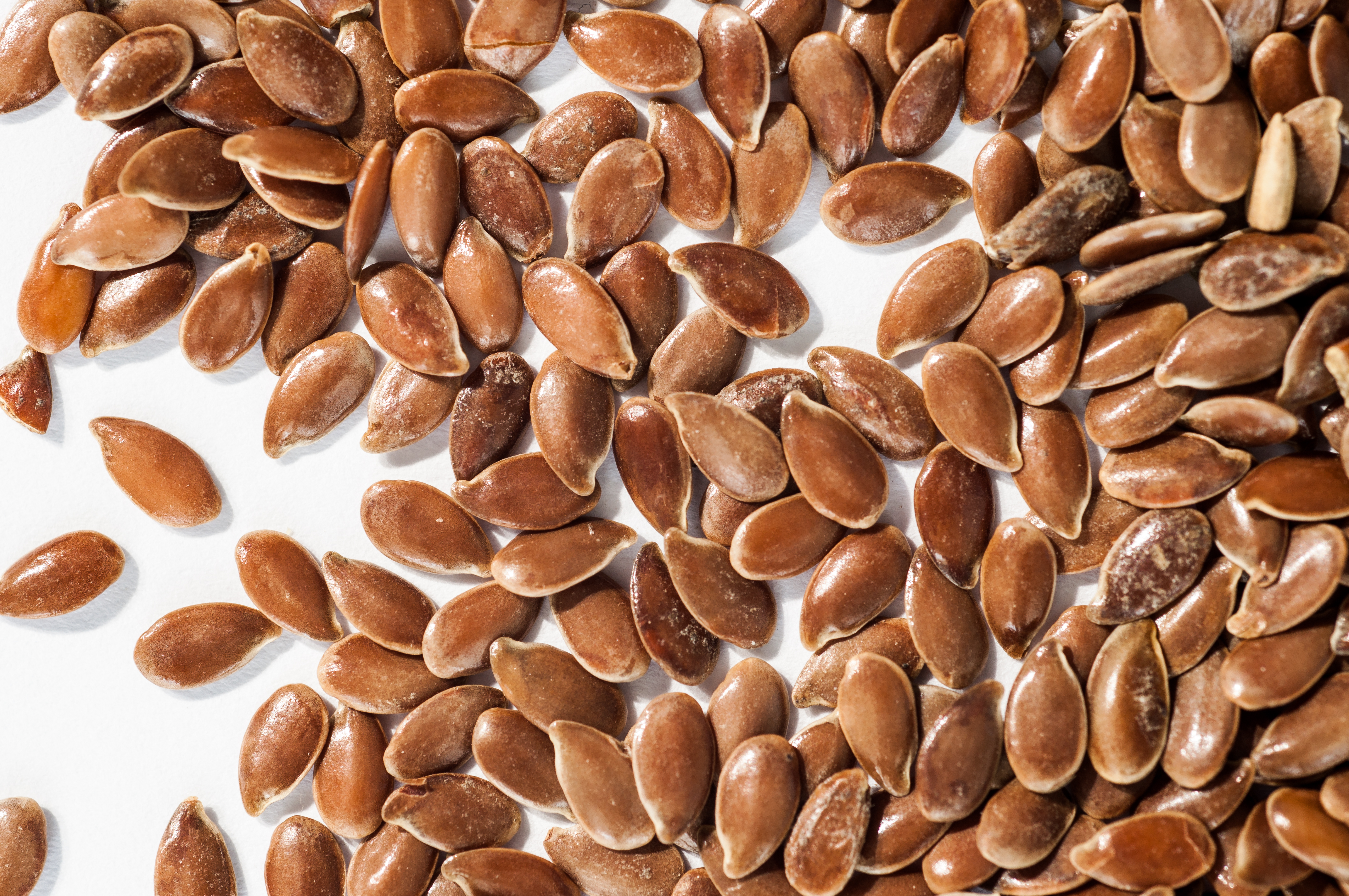
    flaxseed

    Photo via BastienM. Licensed under the Creative Commons Attribution-Share Alike 3.0 Unported license.

    Why is Flaxseed Added to Dog Food?

    Flaxseed has a number of benefits for both people and dogs.  When added to dog food, it can act as a fiber and plant protein source, and also provides valuable nutrients such as omega fatty acids, antioxidants, magnesium, choline, manganese, thiamine, and phosphorus.

    Cons of Feeding Flaxseed to Dogs:

    Although the flaxseed itself is considered safe, in moderation, for dogs, feeding too much can lead to flaxseed poisoning.  Raw flax contains cyanogenic glycosides.  Although most of the toxin is removed during processing, overdosing on flaxseed can lead to cyanide poisoning.  Symptoms most commonly include vomiting and diarrhea, but can also include paralysis, difficulty walking, rapid heart rate, lethargy, seizures, and shortness of breath.

    Dogs should not be fed raw flax for this reason.  If your dog is on any medication, especially anticoagulants, insulin, or blood pressure medication you should speak with your vet before offering supplemental flaxseed.  It’s also important to note that some dogs can be allergic to flaxseed.
    flaxseed dog food

    Benefits of Feeding Flaxseeds to Dogs:

    • Digestive Aid: Flaxseed is high in fiber, which can help maintain a healthy GI tract.
    • Nutrients: Flaxseed contains nutrients such as magnesium (bone health), manganese (helps nutrient absorption), choline (liver and brain function), thiamine (metabolism and nerve function), and phosphorus (bone health).
    • Skin & Fur Health: The omega fatty acids in flaxseed can help promote a healthy skin and coat.
    • Immune Support: Antioxidants in flaxseed help support the immune system, and may even be able to help prevent cancer!
    • Reduced Inflammation: The omega fatty acids in flaxseed have also been shown to help reduce inflammation, including inflammation occurring in the joints due to arthritis.

    So What’s the Verdict on Flaxseed?  Is it Safe as a Dog Food Ingredient?

    Flaxseed is safe, and can be quite beneficial, to dogs as long as it’s offered in moderation and your dog isn’t allergic to it.  Luckily, when feeding a dog food that contains flaxseed as an ingredient, you shouldn’t have to worry about overdosing.

    Comment below!  Does your dog food contain flaxseed?
    flaxseed dogs

    Dog Health

    Dog Food Ingredients 101: Enterococcus Faecium

    April 6, 2023

    #AtoZChallenge 2023 letter EDo you give your dogs probiotics, or maybe even take them yourself?  A healthy gut is everything!  Did you know that some dog foods contain pre and probiotics already in the food?  Making our lives easier, if effective, since it would eliminate the need to provide an additional probiotic supplement.  Are probiotics in dog food actually effective?  Today we’re going to look at one bacteria in particular, Enterococcus faecium.
    This post is part of our 2023 April blogging from A to Z Challenge!  Join us this month as we go through the alphabet, A to Z, learning more about some of the ingredients that are commonly (or not so commonly, in some cases) found in our dog’s food!

    Post Contents:

    • 1 What is Enterococcus faecium?
    • 2 Why is Enterococcus faecium Added to Dog Food?
    • 3 Cons of Feeding Enterococcus faecium to Dogs:
    • 4 Benefits of Feeding Enterococcus faecium to Dogs:
    • 5 So What’s the Verdict on Enterococcus faecium?  Is it Safe as a Dog Food Ingredient?

    What is Enterococcus faecium?

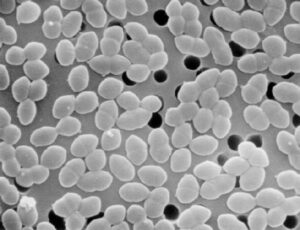
    Photo Credit: Janice Haney Carr. Public domain image.

    Enterococcus faecium is a gram-positive bacteria commonly found in the GI tract of humans and other animals.

    Why is Enterococcus faecium Added to Dog Food?

    Enterococcus faecium is an example of what is referred to as a “good bacteria” when it comes to the GI tract of dogs.  It’s commonly used in probiotic supplements designed for dogs.  Probiotics are given to dogs for similar reasons as humans take them.  They are thought to promote GI health, help treat GI issues, reduce inflammation, strengthen immune health, and promote general health.

    Enterococcus faecium in particular can be a good choice of probiotic bacteria to add to dog food due to its ability to survive in extreme conditions.

    Enterococcus faecium dog food

    Cons of Feeding Enterococcus faecium to Dogs:

    There is some concern that Enterococcus faecium from dogs may be able to cause illness in people.  Because it is so resilient, Enterococcus faecium seems particularly prone to becoming antibiotic resistant.  Studies, such as this one conducted in 2009, have shown that dogs can be carriers of antibiotic resistant strains of Enterococcus faecium.  This is of particular concern to dog owners who are immunocompromised in any way.

    There is also some debate on whether probiotics added to dog food actually survives processing.  Although Enterococcus faecium does seem to do better than other strains of bacteria.  This study, conducted in 2003, determined that…

    Overall, commercial pet foods that claim to contain probiotics appear to contain very low numbers of viable organisms, and often do not contain the species listed on the label. Whether this relates to improper addition of organisms during processing, failure to survive processing, or poor viability during storage is unclear.

    Benefits of Feeding Enterococcus faecium to Dogs:

    Enterococcus faecium can help to keep our dog’s GI tracts healthy.  Supplementing with probiotics can be especially beneficial during times of stress or after a course of antibiotics.  Studies have shown that Enterococcus faecium in particular stimulates the immune system of dogs.

    So What’s the Verdict on Enterococcus faecium?  Is it Safe as a Dog Food Ingredient?

    Enterococcus faecium’s propensity to become antibiotic resistant is concerning.  It is generally thought to be safe when used as a probiotic for dogs, but care should be taken if you, or someone in your family, is immunocompromised.  Enterococcus faecium is commonly present in the GI tract of dogs even when they are not supplemented with the bacteria, however.  

    If your dog requires probiotics to help deal with a health issue, it’s important to remember that your dog’s food may not actually contain the amount of viable probiotics that it promotes on the bag.  Supplementing with a stand alone probiotic is recommended.

    Enterococcus faecium  

    Dog Health

    Dog Food Ingredients 101: Dicalcium Phosphate

    April 5, 2023

    #AtoZChallenge 2023 letter DOne thing I always try to make clear when I write posts about food (or food ingredients) for dogs is that amounts really do matter!  I feel like I write, over and over again, that moderation is key.  Too much of anything, even water, can be a bad thing!  Some dog food ingredients are perfectly safe in the small amounts that they’re found in our dog’s food but would be potentially dangerous in larger amounts.  Another thing that I find myself repeating often is that you really have to feed the dog in front of you.  Dogs tolerate different foods and ingredients differently.  There is no “one size fits all” option when it comes to feeding our dogs!

    This post is part of our 2023 April blogging from A to Z Challenge!  Join us this month as we go through the alphabet, A to Z, learning more about some of the ingredients that are commonly (or not so commonly, in some cases) found in our dog’s food!

    Post Contents:

    • 1 What is Dicalcium Phosphate?
    • 2 Why is Dicalcium Phosphate Added to Dog Food?
    • 3 Cons of Feeding Dicalcium Phosphate to Dogs:
    • 4 Benefits of Feeding Dicalcium Phosphate to Dogs:
    • 5 So What’s the Verdict on Dicalcium Phosphate?  Is it Safe as a Dog Food Ingredient?

    What is Dicalcium Phosphate?

    Dicalcium phosphate, chemical formula CaHPO4, is also known as dibasic calcium phosphate or calcium monohydrogen phosphate.  It is a mineral compound that is usually manufactured from cow’s milk.  As the name suggests, supplemental dicalcium phosphate can be used as a source of both calcium and phosphate.  Dicalcium phosphate is commonly added to human foods such as enriched flour, breakfast cereals, and noodle products.  It is also added to toothpastes because of its ability to help prevent tartar.

    dicalcium phosphate dog food

    Why is Dicalcium Phosphate Added to Dog Food?

    Dicalcium phosphate is added to some pet foods, including dog foods and treats, mainly as a source of calcium.  Calcium is as important for our dogs as it is for us humans.  Namely, proper calcium levels are required to maintain healthy bones and teeth, as well as to support the nervous system and heart.  Phosphorus, which is also present in dicalcium phosphate, is required for proper kidney function.  It also supports muscle and motor function, and the processing of energy.

    Dicalcium phosphate is also sometimes added to dry dog foods and treats to help give the food its texture.  Dicalcium phosphate helps make kibble hard and dry.

    Cons of Feeding Dicalcium Phosphate to Dogs:

    When supplemented in appropriate amounts, dicalcium phosphate is thought to be a relatively safe compound for dogs.

    However, dicalcium phosphate cannot absorb water.  It is difficult for some dogs to absorb, and is thought to potentially contribute to the formation of kidney stones, especially if fed in excess.

    Benefits of Feeding Dicalcium Phosphate to Dogs:

    Calcium, and the proper calcium to phosphorus ratio, is important for dogs.  Dogs require both calcium and phosphorus for their bodies to function properly.  If a dog food is lacking in these nutrients, adding dicalcium phosphate can be a way to safely supplement the food.  As long as it’s not supplemented in excess, dicalcium phosphate can help support your dog’s bone and teeth health.  It also supports proper protein synthesis and supports other body functions such as the nervous system and the heart.

    So What’s the Verdict on Dicalcium Phosphate?  Is it Safe as a Dog Food Ingredient?

    In the case of dicalcium phosphate, moderation is key!  Dicalcium phosphate is thought to be safe source of both phosphorus and calcium as long as it’s not fed in excess.  If your dog is prone to developing kidney stones, or suffering from other health conditions, this may be an ingredient you’d want to research further.  However, for a healthy dog, I wouldn’t personally go out of my way to avoid feeding food supplemented with dicalcium phosphate.

    Dicalcium Phosphate

    Dog Health

    Dog Food Ingredients 101: Chondroitin Sulfate

    April 4, 2023

    #AtoZChallenge 2023 letter CPet food companies will often times cater their recipes to specific pet life stages.  With dog food, for example, it’s not uncommon to find formulas for puppies, adult dogs, and seniors all made by the same company.  Usually, there will be some minor changes between the formulas.  Senior dog food, for example, may be less calorie dense since senior dogs are not usually as active as their younger counterparts.  Senior dog foods will often also contain supplements to help deal with common old dog issues, such as joint pain or cognitive decline.

    This post is part of our 2023 April blogging from A to Z Challenge!  Join us this month as we go through the alphabet, A to Z, learning more about some of the ingredients that are commonly (or not so commonly, in some cases) found in our dog’s food!

    Post Contents:

    • 1 What is Chondroitin Sulfate?
    • 2 Why is Chondroitin Sulfate Added to Dog Food?
    • 3 Cons of Feeding Chondroitin Sulfate to Dogs:
    • 4 Benefits of Feeding Chondroitin Sulfate to Dogs:
    • 5 So What’s the Verdict on Chondroitin Sulfate?  Is it Safe as a Dog Food Ingredient?

    What is Chondroitin Sulfate?

    If you give your dog, or yourself, a joint supplement you may already be familiar with chondroitin sulfate.  Chondroitin sulfate is a chemical that is an integral component of cartilage.  Cartilage is the connective tissue that helps to cushion and protect the joints.  When cartilage in the joints breaks down, it leads to the painful condition known as arthritis.

    Supplemental chondroitin sulfate is usually manufactured from animal sources, such as from cow, pig, shark, bird, or fish cartilage.

    Chondroitin Sulfate image by Yikrazuul. Public Domain Image.

    Why is Chondroitin Sulfate Added to Dog Food?

    Chondroitin sulfate is added to dog food to help support joint health.  It is most commonly seen on the ingredients list of food marketed for joint health or towards senior dogs.  Supplemental chondroitin sulfate is thought to help improve cartilage and joint health.

    Cons of Feeding Chondroitin Sulfate to Dogs:

    While chondroitin sulfate is pretty safe when offered to dogs in moderation, there is some contention as to whether or not it actually helps improve issues associated with cartilage degradation.  According to VCA Animal Hospitals…

    A recent study at the University of Montreal…failed to demonstrate a significant benefit of a chondroitin nutraceutical on gait in 71 dogs with osteoarthritis over 60 days.  Clinical experience likewise suggests that some dogs and cats may appreciably benefit from chondroitin administration and others not at all. It is difficult to anticipate which animals are most likely to respond.

    Benefits of Feeding Chondroitin Sulfate to Dogs:

    Because chondroitin sulfate does seem to be beneficial for some animals, with very little risk that animals will react poorly to it, it doesn’t hurt to try chondroitin sulfate if you have a pet experiencing joint discomfort.  In some dogs, chondroitin sulfate does seem to help relieve inflammation and pain associated with arthritis.  Chondroitin sulfate is safer for dogs than other types of arthritis medication, such as NSAIDs.

    chondroitin sulfate dog food

    So What’s the Verdict on Chondroitin Sulfate?  Is it Safe as a Dog Food Ingredient?

    I give my own senior dog, Kitsune, joint supplements including chondroitin sulfate.  I would not worry about feeding him a dog food that contained chondroitin sulfate as an ingredient.  As long as it’s offered in moderation, chondroitin sulfate is a very low risk ingredient for dogs.  Arthritis is, sadly, a common ailment in senior dogs.  Dogs who do benefit from chondroitin sulfate supplementation may be able to avoid potentially more dangerous drugs for longer.

    Comment below!  Does your dog’s food contain chondroitin sulfate?  Do you give your dog(s) any type of joint supplement?

    dog chondroitin sulfate

    Dog Health

    Dog Food Ingredients 101: Beet Pulp

    April 3, 2023

    #AtoZChallenge 2023 letter BWhat do you feed your dog?  Did you spend time researching the ingredients in your dog’s current food before selecting it?  I’ve always strived to feed my two dogs, Kitsune the Papillon and Fenrir the Alaskan Klee Kai, healthy diets.  But I have to admit that I haven’t always been super aware of what all the ingredients in their food are, and what they each do.  Researching and learning more about specific ingredients used in dog foods, and their potential pros and cons, has been really eye-opening for me!

    This post is part of our 2023 April blogging from A to Z Challenge!  Join us this month as we go through the alphabet, A to Z, learning more about some of the ingredients that are commonly (or not so commonly, in some cases) found in our dog’s food!

    Post Contents:

    • 1 What is Beet Pulp?
    • 2 Why is Beet Pulp Added to Dog Food?
    • 3 Cons of Feeding Beet Pulp to Dogs:
    • 4 Benefits of Feeding Beet Pulp to Dogs:
    • 5 So What’s the Verdict on Beet Pulp?  Is it Safe as a Dog Food Ingredient?

    What is Beet Pulp?

    Beet pulp is the byproduct that’s left over after the sugar is processed out of sugar beets.  It’s commonly used as fodder for horses in the form of dried flakes or compressed pellets.  Beet pulp is very fibrous and is, apparently, comparable to grass hay.  I don’t know much about horses, but did you know that beet pulp is sometimes used as an ingredient in dog foods?

    beet pulp dog food
    Why is Beet Pulp Added to Dog Food?

    The main reason beet pulp is added to dog food is because of its high fiber content.  Beet pulp is a good source of both soluble and insoluble fiber.  Fiber helps to promote good bowel health.

    Cons of Feeding Beet Pulp to Dogs:

    Although, the benefits of beet pulp as a source of fiber for dogs is somewhat up for debate.  In a 2018 study titled Beet pulp in dog food, researcher Anton Beynen shared that…

    [S]tudies in dogs suggest that the changeover to a diet rich in beet pulp increases rather than decreases stool volume. This could be considered disadvantageous to many dog owners….Beet pulp lowers macronutrient digestion and expands stool bulk. Other indicators of canine gut function are not convincingly improved.

    In addition, a 2016 study titled Dietary beet pulp decreases taurine status in dogs fed low protein diet, researches concluded that…

    BP [beet pulp] may contribute to a decrease taurine status in dogs by increasing excretion of fecal BA [bile acids] and decreasing protein digestibility, thus decreasing the bioavailability of sulfur amino acids, the precursors of taurine.

    Why does a dogs taurine levels matter?  Taurine is an amino acid essential for, among other things, proper cardiac (heart) function.  For a couple of years now there have been ongoing concerns that certain diets may negatively impact dog’s taurine levels, causing a potentially life threatening condition known as dilated cardiomyopathy.

    Benefits of Feeding Beet Pulp to Dogs:

    The main proponents of adding beet pulp to dog food seem to be the dog food companies themselves, who tout the ingredient as a high quality fiber source.

    So What’s the Verdict on Beet Pulp?  Is it Safe as a Dog Food Ingredient?

    Before doing research for this post I figured beet pulp would be a pretty neutral ingredient in dog food.  Not super nutritious, but not harmful either.  It certainly is a source of fiber that may be beneficial to dogs struggling with certain GI issues.  Beet pulp in dog food can help a dog feel full, without adding a lot of excess calories.

    However, the studies on beet pulp and taurine are a bit concerning to me personally.  Since the potential link between diet and dilated cardiomyopathy was first announced I made sure to avoid dog foods that contained peas, lentils, pulses, and potatoes in excess.  Until recently, I wasn’t aware that beet pulp may also play a roll in decreasing taurine levels in dogs.

    The complete story about dilated cardiomyopathy as it potentially relates to diet is still being written.  More research needs to be done.  I’ve spoken with pet owners and experts on both sides of the fence.  Some who say you should avoid taurine lowering ingredients to be safe, and others who feel that, so far, the connection between certain ingredients and dilated cardiomyopathy isn’t strong enough to convince them to avoid certain dog foods.  I usually err on the side of caution when it comes to my own dogs.  But this is something you’ll probably want to research more before coming to a conclusion for yourself.

    Comment below!  Does your dog’s food contain beet pulp?  Is it an ingredient you feel safe feeding, or one you avoid?

    dog beet pulp

    Dog Health

    Dog Food Ingredients 101: Alfalfa

    April 1, 2023

    #AtoZChallenge 2023 badge AAlfalfa in dog food?  Alfalfa reminds me more of my house rabbit keeping days.  Imagine my surprise when I was scanning the list of ingredients on the back of a dog food bag and saw ‘alfalfa meal’ listed!  So what, exactly, is alfalfa?  Why is it used as an ingredient in some dog foods?  Is it an ingredient you should avoid or is it beneficial to feed our dogs?  Read on to find out!

    This is our first post for the 2023 April blogging from A to Z Challenge!  Join us this month as we go through the alphabet, A to Z, learning more about some of the ingredients that are commonly (or not so commonly, in some cases) found in our dog’s food!

    Post Contents:

    • 1 What is Alfalfa?
    • 2 Why is Alfalfa/Alfalfa Meal Added to Some Dog Foods?
    • 3 Cons of Feeding Alfalfa to Dogs:
    • 4 Benefits of Feeding Alfalfa to Dogs:
    • 5 So What’s the Verdict on Alfalfa?  Is it Safe as a Dog Food Ingredient?

    What is Alfalfa?

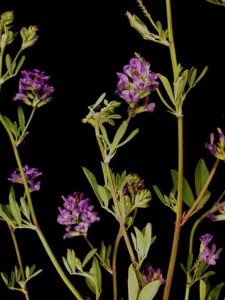
    Alfalfa

    Photo Credit: Ayotte, Gilles. Licensed under the Creative Commons Attribution-Share Alike 4.0 International license.

    Alfalfa, scientific name Medicago sativa, is a perennial flowering plant in the legume family.  Alfalfa plants resemble clovers.  It eventually develops small purple flowers that are actually quite pretty.

    Alfalfa is commonly farmed for grazing animals, to make hay, and as a cover crop.  In countries outside of the US, alfalfa may go by the name lucerne.  As I learned, again, in my rabbit keeping days, alfalfa hay is higher in minerals, fat, and protein than grass-type hays.  Because of its higher fat content, and because the higher amounts of calcium in alfalfa can cause bladder sludge in rabbits, alfalfa is not usually recommended as a staple in the diet of adult rabbits.  But enough about rabbits, what about dogs!?

    Alfalfa in dog food

    Why is Alfalfa/Alfalfa Meal Added to Some Dog Foods?

    Hay isn’t usually an ingredient associated with dogs!  So why is alfalfa or alfalfa meal used in some dog foods?  As I mentioned above, alfalfa is rich in nutrients, including protein, calcium, and also potassium, magnesium, beta-carotene, and vitamins A, B12, C, D, E, and K.  When it comes to dog food ingredients, alfalfa is cheap.  It’s certainly cheaper than meat.  Adding alfalfa meal to dog food can be a cheap way to increase the protein content.

    Cons of Feeding Alfalfa to Dogs:

    In that way, alfalfa meal can be seen as a filler ingredient in dog food.  It increases the protein level without having to use more expensive ingredients, namely meat.  The protein in alfalfa and other plants, however, is not the same as the protein your dog would get from a meat source.  Meat provides amino acids that plants don’t contain.  There are a couple of other potentially concerning components of alfalfa…

    • Alfalfa is also known to contain phytoestrogens.  Phytoestrogens, or plant estrogens, can act as endocrine disruptors that can lead to health issues.
    • It also contains vitamin K, which can act as a natural anti-coagulant.  Owners with dogs who suffer from anemia should take note.
    • Coumarin is a chemical naturally found in alfalfa that can impact liver health in large amounts.
    • Saponin is another chemical found in alfalfa that can cause GI issues in dogs.
    • L-Canavanine is present in the seeds of alfalfa, and is toxic to dogs.
    • Alfalfa flowers, like other flowers, contains pollen that can trigger allergies in dogs.

    Benefits of Feeding Alfalfa to Dogs:

    Despite those cons, there are also some benefits to feeding alfalfa to dogs…

    • Alfalfa is a natural anti-inflammatory and has been shown to help relieve the symptoms of arthritis and other inflammatory issues.
    • Alfalfa is good for kidney health.  It can act as a natural diuretic and helps deal with overly acidic urine.
    • Alfalfa contains saponins that can help your dog absorb fat-soluble nutrients.
    • The chlorophyll in alfalfa can help improve your dog’s breath and dental health.
    • Alfalfa is, once again, rich in beneficial nutrients.
    • Alfalfa is thought to help protect the body against carcinogens that can cause cancer.

    So What’s the Verdict on Alfalfa?  Is it Safe as a Dog Food Ingredient?

    The vitamin K content is alfalfa is only really a concern for dogs suffering from anemia.  Coumarin and saponin shouldn’t cause any issues unless you are feeding your dog alfalfa in extreme amounts.  Luckily, commercially produced alfalfa meal doesn’t usually contain flowers or seed heads, so that eliminates the risks of allergies caused by pollen and the toxic effects of L-Canavanine.

    Most of the cons of feeding alfalfa are essentially eliminated as long as it’s being fed in moderation.  Alfalfa can provide some benefits, although in most cases it’s probably being added to dog food as a way to boost protein, and maybe nutrient, levels on a budget.  Essentially, alfalfa meal used in dog food can be categized as a filler.

    But that doesn’t necessarily make it bad.  The senior brand dog food I often buy for my 14 year old Papillon, Kitsune, contains alfalfa meal.  I still consider the kibble to be a high quality brand.  Kitsune does really well on it, and has had zero issues with the alfalfa meal or any of the other ingredients in the food.  It’s all relative, and the name of the game is moderation.  A dog food that contains other, high quality, ingredients and also contains a bit of alfalfa meal is probably just fine.  Remember, you have to feed the dog in front of you.  What works well for one won’t necessarily be the “perfect” food for all.

    • Selecting the Best Dog Food Based on Your Dog’s Individual Needs (What I feed My Own Dogs)
    • Why I Don’t Generally Recommend Specific Dog Foods
    • Dog Treat Recipes
    • “People” Food Dogs Can Eat!

    Comment below!  Did you know that alfalfa meal is sometimes used as an ingredient in dog food?  Do you currently feed your dog a food that contains alfalfa?

    Alfalfa in dog food

    Puppies

    S*#* Puppy Owners Say

    March 25, 2023

    I started this post forever, years, ago now.  It’s been sitting in my draft folder since my now 7-year-old Alaskan Klee Kai, Fenrir, was a puppy!  It’s going to be kind of a short post, at least for now, but I’ll try to remember to continue to add to it over time.  My “puppies” are 14 and 7 now, but that doesn’t mean they don’t still inspire some silly quotes!

    Have you ever been playing, or otherwise spending time with your puppy, when he or she does something that causes you to utter a quote so crazy it makes you wonder if those words have been strung together that way before?  Puppies do have a magical way of bringing out their human’s silly side.  Without further ado, I give you, after an adorable throwback photo of puppy Kitsune, of course, real quotes that I have said to or about my dogs!

    puppy owner quotes

    • “Why don’t you find something more constructive to do, other than chewing up a $300 book!?”
    • “Why is your (insert random body part here) wet!?”
    • “There is poop everywhere!” – An actual text I sent to my fiancé
    • “I’m at the laundromat…..Yes, again.”
    • “Don’t unroll all the toilet paper!”
    • “People are not trampolines.”
    • “Stay off the table, you cannot eat a whole pack of hot dogs!”
    • “What’s in your mouth now!?”
    • “You’re going to get a concussion if you don’t stop humping your toy like that.”
    • “Did you just pee on your brother!?”
    • “You’re small, but too big to fit inside the floor grate!”
    • “Sorry, I don’t think the groundhog wants to play with you.”

    Join in the fun!  What are some silly things you remember that you’ve said to your dog?  Let us know in the comments below.

    puppy owner quotes

    We’ve, unfortunately, been dealing with content scrapers stealing our articles lately. You shouldn’t be seeing this article on any site other than pawprintpetblog.com! If you’re reading this article on any other site, we’d love for you to take the time to contact us and let us know and, if you have the time, stop by and visit us on our official site! Thanks you.

    Dog Health, Pet Tips

    Can Dogs Eat Pineapple?

    March 23, 2023

    Our local grocery store recently had a sale on pineapple.  My partner and I both really enjoy pineapple, so I bought a few.  Cut to our kitchen counter with pineapples sitting on it for the weeks it took them to actually get ripe.  Oh well, at least they were good once they were finally ready!  I remember in my rabbit keeping days that I would often give my bunnies small pieces of pineapple as treats.  I read that the enzymes in pineapple can help rabbits digest the excess hair they consume from grooming.  But what about dogs?  Can dogs eat pineapple?

    Post Contents:

    • 1 Pineapples are Nontoxic to Dogs!
    • 2 Are There Any Benefits to Feeding Pineapples to Dogs?
    • 3 Are There Any Drawbacks to Feeding Dogs Pineapple?
    • 4 How to Feed Pineapple to Your Dog

    Pineapples are Nontoxic to Dogs!

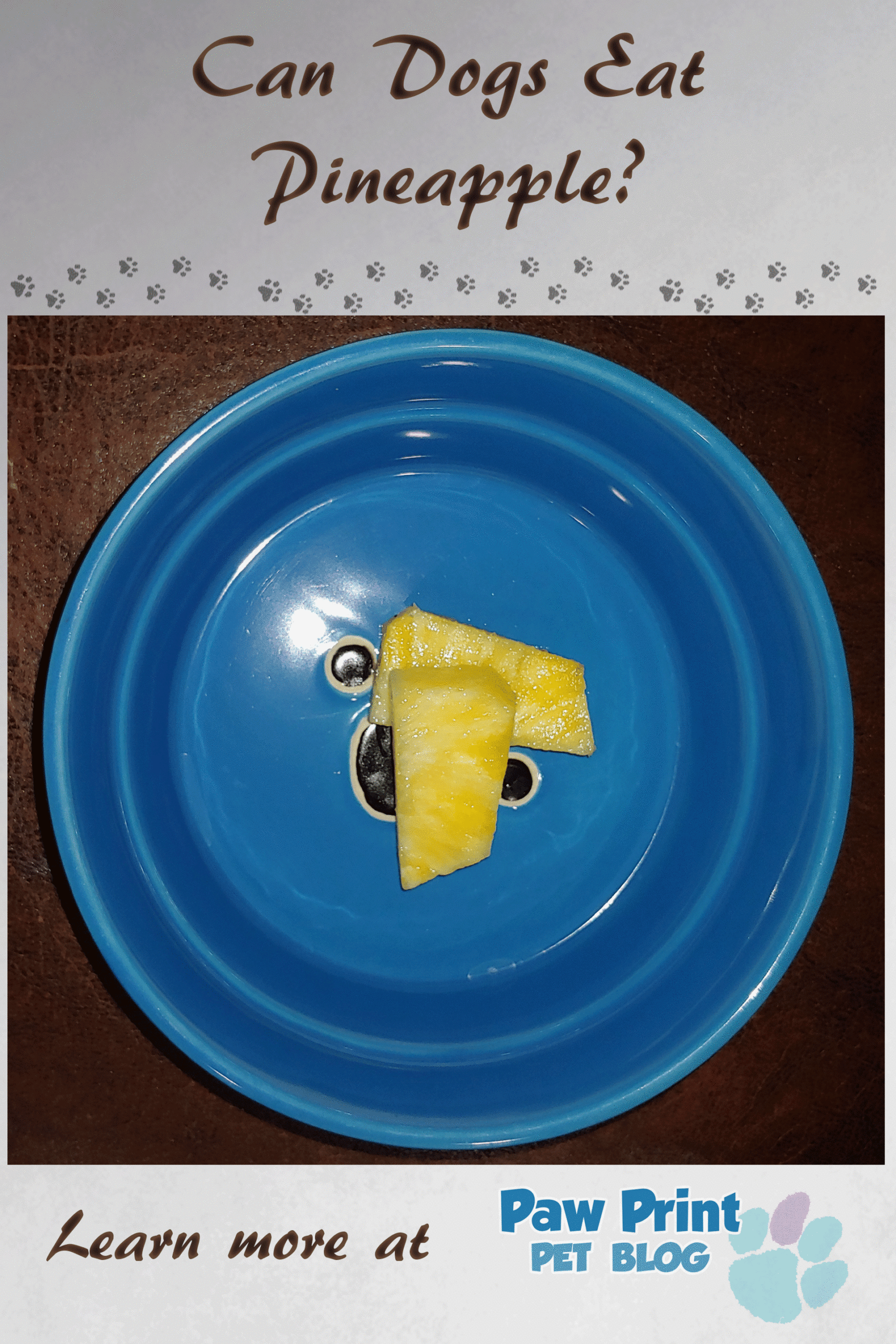
    Good news for all you pineapple fans, pineapples are not toxic to dogs and are safe, in moderation, to feed.  Although you’ll want to keep the tough outer skin and central core away from your dog, if you’re snacking on pineapple and drop a piece you shouldn’t have to worry about it if Fido gets to it before you can.

    pineapple for dogs

    Are There Any Benefits to Feeding Pineapples to Dogs?

    Pineapples are typically between 82% and 86% water.  This can make them a refreshing, hydrating treat, especially on a hot summer day.  Pineapples contain beneficial nutrients including vitamin C, potassium, magnesium, riboflavin, niacin, vitamin B6, copper, and iron.  Many of these nutrients can help support general health, including immune and GI health.

    Pineapple also contains antioxidants, which can help protect against the damaging effects of free radicals.  Bromelain present in the fruit can act as a natural histamine, and may help dogs suffering from allergies.  Pineapple is also high in fiber, again making it beneficial for digestive health.

    Are There Any Drawbacks to Feeding Dogs Pineapple?

    Pineapples, like many other fruits, are high in natural sugars.  It makes them taste delicious, but a bit less healthy for dogs.  Foods high in sugar can lead to GI upset in some dogs, and shouldn’t be offered to dogs suffering from diabetes or weight issues.

    The hard core and tough skin of pineapples should be kept away from dogs.  These parts of a pineapple are very difficult for dogs to digest, and could lead to impaction.

    Dogs can be allergic to pineapples and other fruits.  Go slowly and offer small pieces only if your dog has never tried pineapple before.  Look out for symptoms of allergies such as hives, itchiness, GI upset, swelling especially around the face, and difficulty breathing.  Speak to your veterinarian if any of these symptoms occur.

    How to Feed Pineapple to Your Dog

    I don’t feed my own dogs pineapple often.  When I do, I offer them small pieces of fresh fruit.  Stay away from canned, dried, or otherwise prepacked fruit as these often contain added ingredients such as sugars that will be more likely to make your dog sick.  When it comes to fruit, fresh, and in moderation, is best!

    My senior papillon, Kitsune, seems to enjoy pineapple.  I don’t know if that’s saying much, though, as he’s a foodie and enjoys most things!  My other dog, Fenrir the Alaskan Klee Kai, rarely eats pineapple when it’s offered to him.  He’s a really picky eater.

    Comment below!  Do you like pineapples?  Have you ever offered your dog a piece to try?  Did he/she seem to like it?

    can dogs eat pineapple
    We’ve, unfortunately, been dealing with content scrapers stealing our articles lately. You shouldn’t be seeing this article on any site other than pawprintpetblog.com! If you’re reading this article on any other site, we’d love for you to take the time to contact us and let us know and, if you have the time, stop by and visit us on our official site! Thanks you.

    All About Dogs, Dog Health

    What is Spring Fever? Can Dogs Catch It?

    March 21, 2023

    It’s officially spring here now.  I don’t quite feel like Mother Nature has received the memo yet, considering we still have snow on the ground.  My dogs, Kitsune the papillon and Fenrir the Alaskan Klee Kai, seem to disagree with me.  They have what I fondly refer to as the “spring time crazies”, aka spring fever!  But is spring fever a real thing?  Can dogs ‘catch’ it and, if so, what are the signs that your furry friend is suffering from a case of the spring time crazies?

    Spring fever isn’t a real fever, of course.  Dictinary.com defines spring fever as…

    a listless, lazy, or restless feeling commonly associated with the beginning of spring.

    Post Contents:

    • 1 My Own Pets and Spring Fever
    • 2 What Causes Spring Fever?
    • 3 Spring Time is Fun!
    • 4 Is Spring Fever Something Dog Owners Should Worry About?
    • 5 Comment Below!

    My Own Pets and Spring Fever

    spring fever dogsI haven’t personally experienced much of the “listless, lazy” aspects of the onset of spring.  In fact, in all my years of keeping pets, I’d say my furry friends have trended much more toward the “restless” side of spring fever.  My dogs, Kitsune especially, want to spend a lot more time outside in the spring.  Lately, Kit has been asking to go outside much more often.  When a 14-year-old dog asks to go out you let him out!  But once he gets outside it becomes obvious that he didn’t really need to use the bathroom.  He just wants to explore the yard and smell all the things.

    My younger dog, Fenrir, likes to play outside too.  But I’ve found that he’s been taking out his spring time crazies in slightly different ways.  He’s been super playful lately, running zoomies around the house with toys in his mouth.  It’s super cute, if not somewhat distracting.  Especially when he does it while I’m trying to work.

    What Causes Spring Fever?

    Since it’s not really an actual disease, we don’t have definitive answers about what, exactly, causes spring fever.  In their 2007 article, Scientific America states that…

    Clearly, there are marked correlations between moods, behavior and the lengthening days of spring, but the precise cause for our renewed energy remains elusive.

    More hours of sunlight, warming temperatures, hormonal changes, and just a general increase in mood may be to blame for the phenomenon of spring fever.  I personally enjoy the winter, but even I rejoice at the coming of spring.  The slowly warming weather, longer days, and regrowth of plants outside just makes me feel happy.  Maybe our pets feel the same way?

    Spring Time is Fun!

    spring fever dogsWhen it comes to dogs, the world just gets a whole lot more interesting in the spring.  The snow starts to melt and suddenly things they haven’t been able to access and smell for an entire season starts to emerge.  Trees grow leaves, flowers bloom, and wild animals start to become more active again.


    And whether we notice it or not, our dogs often feed off of our own emotions.  Perhaps humans feeling the effects of spring fever leads our furry companions to follow suite.  Many owners most likely spend more time outdoors with their dogs in the spring, sometimes after a long winter of feeling cooped up inside.  Spending quality time with our pups out in the great outdoors is undoubtedly mood boosting for man and beast.

    Is Spring Fever Something Dog Owners Should Worry About?

    Make sure not to mistake signs of real diseases for a simple case of spring fever.  For example, a dog asking to go outside more often could be spring fever, but it could be a sign that your furry friend is suffering from a UTI or other illness.  When in doubt, talk to your veterinarian.  It’s better take your dog in and find out that nothing was wrong than to potentially allow him/her to suffer.  Any super drastic changes in mood, behavior, or personality should be discussed with your vet.

    Other than that the only potential issue caused by a dog with spring fever is that they just might succeed in driving their owners crazy.  If your dogs, like mine, seem to act particularly restless as the weather improves, exercising them appropriately should help.  When Kit and Fen get really hyped up in the spring, usually I can bring their energy levels down a few notches by walking them, working on their training, or playing a game of fetch in the case of Fenrir.

    Comment Below!

    Do any of your pets get spring fever?  Do you!?  What are the symptoms you’ve experienced and what do you do, if anything, to help mitigate them?  Seeing my dogs act like fools in the spring time never ceases to put a smile on my face.  Their moods seem to so closely mirror my own when the weather is nice, and luckily the spring time crazies are nothing a nice walk, play, or training session can’t usually tame.

    spring fever dogs
    We’ve, unfortunately, been dealing with content scrapers stealing our articles lately. You shouldn’t be seeing this article on any site other than pawprintpetblog.com! If you’re reading this article on any other site, we’d love for you to take the time to contact us and let us know and, if you have the time, stop by and visit us on our official site! Thanks you.

    Dog Health

    April is Heartworm Awareness Month

    March 19, 2023

    April is National Heartworm Awareness Month.  Did you know that not only dogs can get heartworms—but cats, and ferrets can too?  Other animal species such as coyotes, wolves, foxes, sea lions and, very rarely, humans, can carry heartworms as well.

    When I was in college, I had to dissect a cat.  One thing that helped me get through it was the fact that they weren’t healthy cats who were killed for college dissections.  They came from the local animal shelter, and either passed, or were put down, due to medical issues.  My cat, as I quickly discovered, had passed away from complications due to heartworms.  It’s one thing to see a picture of an animal’s heart infested with worms, and quite another to see it in person.  Probably thanks, at least in part, to that experience, I’ve never felt comfortable forgoing heartworm prevention when it comes to my own pets.

    Post Contents:

    • 1 What, Exactly, Are Heartworms?
    • 2 Ok, so heartworms suck, but how do pets get them in the first place?
    • 3 What can pet owners do to protect against heartworm?
    • 4 Annual testing, even if your pet is on year round preventative, is important.

    What, Exactly, Are Heartworms?

    As their name suggests, heartworms are long, often described as spaghetti-like (if that doesn’t put you off eating spaghetti…) worms that can infest the heart, lungs, and blood vessels.  Heartworms can be fatal, but short of killing our beloved pets they can also cause heart failure, organ damage, and lung disease.

    Heartworm Awareness MonthDogs are a natural heartworm host.  Inside a dog, heartworms are able to mature and reproduce.  That means that in dogs, if left unchecked, heartworm numbers will steadily climb.  The same is not true of cats.  Cats are considered to be atypical heartworm hosts, meaning that, in cats, heartworms do not commonly mature and reproduce.  That doesn’t mean, however, that they can’t still cause life-threatening complications, such as a condition known as heartworm associated respiratory disease.  The treatment commonly given to dogs to eliminate heartworms is toxic, and cannot be used, in cats.

    Signs of heartworm infestation in dogs include a mild but persistent cough, fatigue, reluctance to exercise, decreased appetite, and weight loss.  Symptoms will progress if heartworm remains untreated, and could eventually include symptoms of heart failure, and fluid accumulation in the abdomen.  In some cases, heartworms can cause blockages in the heart which can quickly become life-threatening.  Symptoms in cats can be similar to those in dogs, including coughing, lack of appetite, and weight loss.  Sometimes more dramatic symptoms such as vomiting, difficulty walking, fainting, seizures, and fluid accumulation can occur.

    Ok, so heartworms suck, but how do pets get them in the first place?

    Basically, heartworms are transmitted by mosquitoes.  Female mosquitoes can carry microfilaria, or baby heartworms, that they pick up when biting a heartworm infested animal.  These microfilaria develop into larvae inside the mosquitoes and are then passed on to new animals when the mosquitoes feed again.  It takes up to 6 months for these larvae to mature inside their new hosts.  Mature heartworms can live 5 to 7 years in dogs, and from 2 to 3 years in cats.

    What can pet owners do to protect against heartworm?

    If you take your dog in for regular yearly vet exams, you’ll probably be familiar with heartworm testing.  This is an important yearly test, because the earlier heartworm is detected, the better your pets’ prognosis.  Your vet will use a small amount of your dog’s blood to look for heartworm proteins.  These tests can direct the presence of heartworm, often even before your pet begins to show any symptoms of infestation.  Testing in cats is not quite as straightforward, because cats are generally less likely to be carrying adult heartworms.  Your vet may use different tests, such as an antigen and antibody tests.

    April heartworm preventionDogs who test negative for heartworms can be started on heartworm prevention.  Preventives come in the form of spot-ons, injections, or pills.  All forms of preventatives work by killing heartworm larva before they get the chance to mature.  This is why it’s essential to adhere to a schedule when it comes to administrating heartworm preventatives.  Once the worms molt past the larval stage, it’s much less likely they’ll be affected by preventatives.

    Annual testing, even if your pet is on year round preventative, is important.

    Something as simple as missing one dose of preventative can lead to heartworm infestation.  Even for owners who adhere to their pet’s preventative schedule, it’s possible for pets to sneak off and spit out, or vomit, their pill.  Preventatives are not always 100% effective.

    Despite that, using preventatives are generally much safer, and cheaper, than heartworm infestation and treatment.  According to the Companion Animal Parasite Council, 166,817 dogs tested positive for heartworm last year.  Cases were reported in all 50 states.  Don’t let your pet become a statistic—talk to your vet about what they recommend as heartworm preventative for your area.  April, Heartworm Awareness Month, may be almost over, but it’s not too late to be proactive about your pet’s health care, if you haven’t been already.

    We always love hearing from our readers, comment below!  Do you currently use heartworm preventative for your pet(s)?

    April heartworm awareness month

    We’ve, unfortunately, been dealing with content scrapers stealing our articles lately. You shouldn’t be seeing this article on any site other than pawprintpetblog.com! If you’re reading this article on any other site, we’d love for you to take the time to contact us and let us know and, if you have the time, stop by and visit us on our official site! Thanks you.

Older Posts
Newer Posts
It's a beautiful day to play ball in the snow ❄️ It's a beautiful day to play ball in the snow ❄️
Today would have been Kit's 17th birthday. My best Today would have been Kit's 17th birthday. My best buddy...not a single day goes by that I don't think of him. Forever a beloved member of our little pack ❤️
Someone stole his dad's socks 😂 10 years old and s Someone stole his dad's socks 😂 10 years old and still as mischievous as a pup!  This little one makes me laugh everyday and I'm SO thankful for him. 💙
New phone, who dis!? 😅 Sorry for the lack of new New phone, who dis!? 😅 
Sorry for the lack of new Fen pics lately... My old phone broke and it took me awhile to replace it. 
Fen is his happy, sassy, playful self and is doing well. 💙
Fen makes me laugh so much! Today is my partner's Fen makes me laugh so much! Today is my partner's birthday. ❤️ I almost always wake up earlier than him, so this morning I was planning on getting up to decorate for his birthday. I wanted to surprise him with decorations and his presents set out when he got up.

Well...Fenrir ruined it all, because as soon as he saw the wrapped presents for my partner, he got SO excited! And if you have ever had the pleasure of meeting an Alaskan Klee Kai you will know, when they get excited, they just have to make sure everyone knows about it!

Long story slightly shorter, Fen woke my partner up early, on his birthday, all because Fen REALLY wanted to open presents that weren't even for him! I didn't get to decorate, but lesson learned - don't put gifts where Fen can see them because he will get really, really excited about it.

And just so you all don't feel too bad for him...I ended up wrapping one of Fen's Christmas presents and giving it to him to open early! 🤣
Follow on Instagram
Facebook Instagram Pinterest Youtube

Copyright © 2025 Paw Print Pet Blog. All Rights Reserved.

Back to top