• Home
  • Popular Topics
    • Papillons
    • Alaskan Klee Kai
    • Hiking with Dogs
    • Dog DIY
    • Recipes
    • Dog Product Reviews
    • Can Dogs Eat…
    • Dog Health
  • The Paw Pack
    • Kitsune (2008 – 2024)
    • Fenrir
  • Policies
    • Disclaimer
    • Privacy Policy
    • Work with Us
    • Site Map
  • Contact

Paw Print

    Pet Tips

    Get the Pet You Want

    August 14, 2022

    When I write “get the pet you want” what I really mean is “get the pet that, after doing your research, you decide is the best fit for you/your family” – but that doesn’t make for such a great blog title! 

    Post Contents:

    • 1 I’ve had quite a few pets over the years.
    • 2 Finding my first dog…
    • 3 My dogs came from reputable breeders.
    • 4 Finding a new pet is not “one size fits all”.
    • 5 For some people that pet is going to be a rescue pet – and that’s awesome!  For other people that pet is going to come from a reputable, well researched, breeder – and that’s ok too!

    I’ve had quite a few pets over the years.

    get the pet you wantMy partner and I got Kitsune, our first dog, back in 2009.  Before Kit, for many years, I was a “rabbit person”.  I kept house rabbits, mostly rescues.  Over the years I shared my life with 5 different house bunnies (not all at the same time).  My last rabbit, Barnaby, passed away in 2017.  His exact age was unknown, since he was a rescue, but I had shared my life with him for 11 years.

    I often think of my past bunnies, and miss them quite a bit.  After Barnaby, I decided to take a break from rabbits.  As much as I loved them, I was burnt out.  I volunteered quite a bit in rabbit rescue, where I had seen it all.  Almost all of my personal rabbits were rescues, and most of them came with health and/or behavioral issues.

    Finding my first dog…

    Before my partner and I got Kitsune, we talked a lot about what we were looking for in a dog.  My first inclination was to adopt because, well, adoption being the best option kind of gets drilled into you.  Especially when you’re involved in any kind of animal rescue, albeit with a different species.

    I knew I wanted a papillon.  Papillons had been my favorite breed of dog since I was a kid, and we felt that a small, active, friendly dog would fit in perfectly to our outdoorsy, apartment life.  I spent SO long trying to find a papillon in a shelter near us.  I remember being so happy when I finally found one.  The papillon in question was a shy, adult female.  We had wanted a younger male.  I wanted a puppy that I could train and socialize myself, especially around small animals.  I still had rabbits at the time, and wanted a puppy I could raise around the rabbits, to train him/her to treat smaller animals with respect.  But c’est la vie, right?  It had taken me months to find a papillon in rescue, so I felt like I couldn’t really afford to be picky.

    Alas, it wasn’t to be.  Despite being a more than dedicated pet owner, who had worked in rabbit rescue for many years and had a biology degree, the rescue decided to deny my adoption application.  I was one year younger than their required age to adopt.  Apparently, I hadn’t yet attained the magical age of responsibility.

    My dogs came from reputable breeders.
    get the pet you want

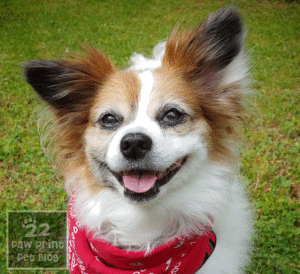
    My dream puppy, 13 years later!

    I was heartbroken.  What were the chances that I was going to find a papillon, local to me, in rescue again anytime soon?  Let alone ideally either a puppy, or one that was already ok around small animals.  And would I get my hopes up, only to have them dashed again?  We were young, lived in an apartment, and didn’t have a fenced in yard.  A trifecta that, apparently, to a lot of recues made us horrible adoption candidates.

    I did a lot of soul searching, and a lot of research.  I decided to reach out to reputable papillon breeders and, long story shorter, found my dream puppy – Kitsune!  He was everything I was looking for in a dog, and then some!

    Finding a new pet is not “one size fits all”.

    Being very involved in the pet community for quite awhile now, the argument of rescues verses breeders is a reoccurring point of discussion.  “Adopt don’t shop” is a mantra I see often, as if those of us buying animals from reputable breeders liken the experience of “shopping” for a living being, a new member of our family, to purchasing a pair of socks or a new sweater.  Going through a reputable breeder is nothing like shopping, by the way!

    I’ve been asked many times before where my loyalties lie when it comes to obtaining a pet, and I’ve always said pretty much the same thing.  Get the pet you want.  The pet that is the best fit for you and your family.  Get the pet that you can handle for the entirety of its life.

    For some people that pet is going to be a rescue pet – and that’s awesome!  For other people that pet is going to come from a reputable, well researched, breeder – and that’s ok too!

    I’ve always been a huge proponent of doing lots (and lots and lots) of research before adding a new pet to your family.  Getting the right pet is so important!  It could mean the difference between being able to provide that animal with an awesome home for its whole life, or having to give him/her up when you realize that they weren’t the best fit for you.  If more people put more thought into always selecting animals that fit well into their lives, less pets would end up homeless in shelters.  At the end of the day I would think/hope that more animals in happy, lifelong, appropriate homes would be something all animal lovers could get behind.

    get the pet you want

    Dog Health

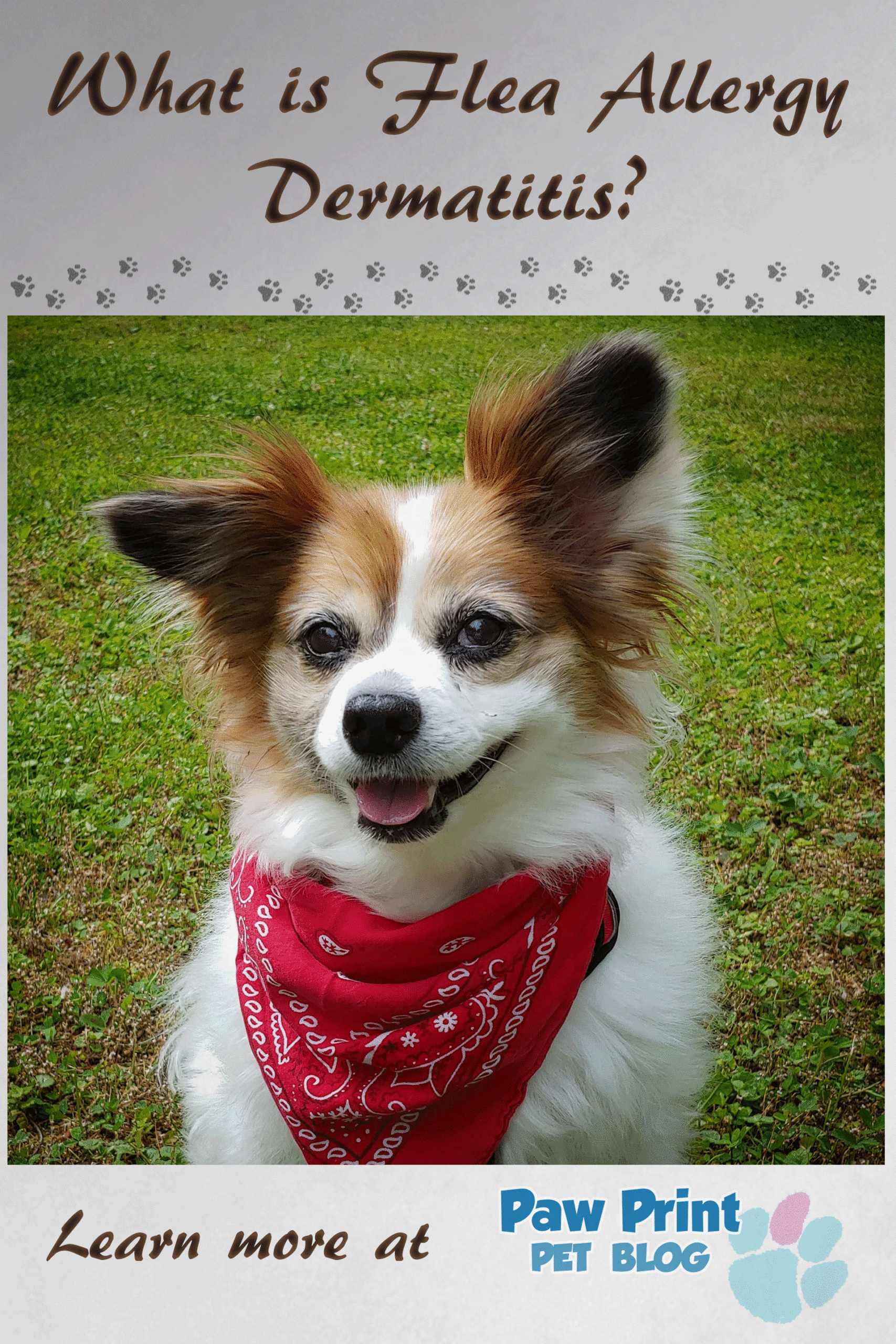
    What is Flea Allergy Dermatitis?

    August 13, 2022

    There’s been a lot of hype going around on social media about the potential dangers of dog flea and tick preventatives.  This has always been such a hard topic for me.  I’m the type of person who likes to take as natural an approach as possible with my dogs.  I don’t like the idea of exposing them to unnecessary chemicals, especially ones with known (potential) side effects.  However, my senior papillon, Kitsune, suffers from flea allergy dermatitis.  If he gets so much as a single flea bite, it will often times develop into a hot spot.  Flea allergy dermatitis, and the resulting hot spots, make Kit so miserable that I do whatever I can to prevent them, including use flea (and tick) preventatives from our vet.

    Post Contents:

    • 1 What is flea allergy dermatitis?
    • 2 What are the symptoms of flea allergy dermatitis?
    • 3 What are hot spots?
    • 4 What is the treatment for flea allergy dermatitis, and resulting hot spots?
    • 5 The best cure is prevention!
    • 6 Other things you can do to help…
    • 7 Thankfully, though, it’s been years since my dog has had a FAD flare!

    What is flea allergy dermatitis?

    Flea Allergy Dermatitis

    Very simply, flea allergy dermatitis (FAD) is a hypersensitivity to flea bites.  Dogs with FAD are allergic to flea saliva, which is injected into their skin when a flea bites them.  

    What are the symptoms of flea allergy dermatitis?

    Symptoms of FAD can occur as soon as 15 minutes after a flea bites an affected dog.  In some dogs, however, more serious symptoms can take 24-48 hours to develop.  Symptoms of  flea allergy dermatitis in dogs can include…

    • Intense itching, which usually results in excess scratching, licking, and chewing at affected areas.
    • General discomfort and restlessness.
    • Hair loss.
    • Red, inflamed, darkened, and/or thickened skin.
    • Hot spots.
    • Wounds caused by biting and scratching, usually focused around the back, belly, thighs, and the base of the tail.

    What are hot spots?

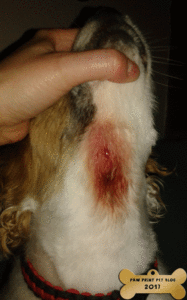
    dog hot spotsMy poor Kitsune commonly develops hot spots as a result of his flea allergy dermatitis.

    Hot spots are also known as acute moist dermatitis.  They are areas of very inflamed, irritated, red skin.  Hot spots are most commonly found on dog’s faces, necks, legs, and hips, although they can occur anywhere.  They may bleed and become infected, especially if your dog is prone to licking, biting, or scratching at them.  Hot spots are commonly caused by parasites, such as fleas, or any other condition that causes your pet to bite, scratch, and lick at themselves. 

    Unfortunately, my Kitsune always has a hard time leaving his hot spots alone.  He bites (if he can reach) and scratches at them until they become a horrible bloody mess.  I often have to resort to putting a cone on Kitsune to get him to leave his hot spots alone long enough for them to heal.

    What is the treatment for flea allergy dermatitis, and resulting hot spots?

    With my own dog, an instance of FAD, and any resulting hot spots, often time means the cone of shame makes an appearance.  Luckily, these days, there are quite a few types of comfort cones available for dogs.  These are a big improvement on the ugly, uncomfortable plastic cones of old.

    Talk to your vet if you suspect your dog is suffering from flea allergy dermatitis.  Many vets will prescribe medications such as corticosteroids or antihistamines to help make your dog more comfortable.  Additional medications may be required if your dog’s symptoms include a bacterial or yeast infection of the skin.

    The best cure is prevention!

    Flea Allergy DermatitisHere’s where we circle back to flea and tick prevention.  I get being cautious about using medications with our pets.  I would absolutely hate for one of my little ones to suffer a negative side effect from their flea/tick prevention.  But you know what I also hate?  Watching my dogs suffer when I know there’s a way for me to prevent that suffering.  And if you can’t tell by the gross photos of Kit’s hot spots above, flea allergy dermatitis and the resulting hot spots very much do cause Kitsune suffering.

    Preventing fleas in the first place is the best way to deal with flea allergy dermatitis.  You can talk to your vet about what flea preventative is best for your individual dog.

    Unfortunately, I never had amazing luck using only natural products to prevent fleas and ticks.  I’ve tried quite a few natural products over the years, but never found our “holy grail” natural flea/tick product.  Between Kitsune’s issues with FAD, and my younger dog, Fenrir, already having Lyme disease, fleas and ticks are just not something I feel like I can afford to mess around with anymore.  Both of my dogs are on flea/tick preventatives from our vet.

    Other things you can do to help…

    Kit is a high maintenance dog, especially in the summertime.  I bathe him often to clean off any allergens that may have gotten onto his fur.  I try to brush him daily, but more realistically probably get it done a few times a week, and I make sure to stay on top of his flea preventative.  He gets high quality home prepared food and I supplement his diet with fish oil for his skin and fur.  When his symptoms get bad, especially when/if he develops hot spots, he requires treatment that is usually a combination of topical and oral meds from the vet.  Sometimes we have to resort to putting booties or a cone on him to prevent him from hurting himself.

    In addition to all that, I also make sure to keep our house as clean as possible.  I vacuum the floors daily to eliminate allergens and to ensure that fleas don’t have anywhere to hide out.  All our bedding gets washed frequently and furniture gets vacuumed/cleaned at least once a week.

    Thankfully, though, it’s been years since my dog has had a FAD flare!

    I guess what I’ve been doing has been working!  The pictures I used of Kitsune with hot spots and FAD were taken back in 2017.  I can’t even remember when Kit last had fleas.  It’s been years!  I’d like to credit his flea prevention, and my efforts to keep him clean and flea free.  But, to be honest, we also moved out of the city a few years ago, and ever since I don’t think I’ve seen a single flea on either of my two dogs.  Of course country dogs can encounter fleas too, so I won’t be stopping my efforts to keep Kitsune comfortable and flea free.

    I’m happy to do whatever it takes to keep Kit as comfortable as possible!

    Do you have a pet that suffers from flea allergy dermatitis?  What are some things you’ve found that help keep your pet more comfortable?  Comment below!

    Flea Allergy Dermatitis

    Alaskan Klee Kai

    Alaskan Klee Kai Sizes

    August 12, 2022

    Size can be an important factor when it comes to selecting what breed of dog is right for you.  Some people just have a preference for dogs of a certain size.  Others may have to deal with dog size constraints, such as renters who are only allowed to keep dogs under a certain weight in their apartment.  When I wrote my Alaskan klee kai breed profile post,  I briefly addressed the fact that this unique breed actually comes in 3 different sizes.  All three recognized sizes, plus sometimes oversized dogs, can occur in the same litter, regardless of the size of the parent dogs.  This can be confusing to anyone new to this breed!  This post is going to be a deep dive into the size of Alaskan klee kai.

    Post Contents:

    • 1 First thing first, what are the three recognized Alaskan klee kai sizes?
    • 2 So what are withers!?
    • 3 How much do Alaskan klee kai weight?
    • 4 How will you know what size your AKK puppy will be?

    First thing first, what are the three recognized Alaskan klee kai sizes?

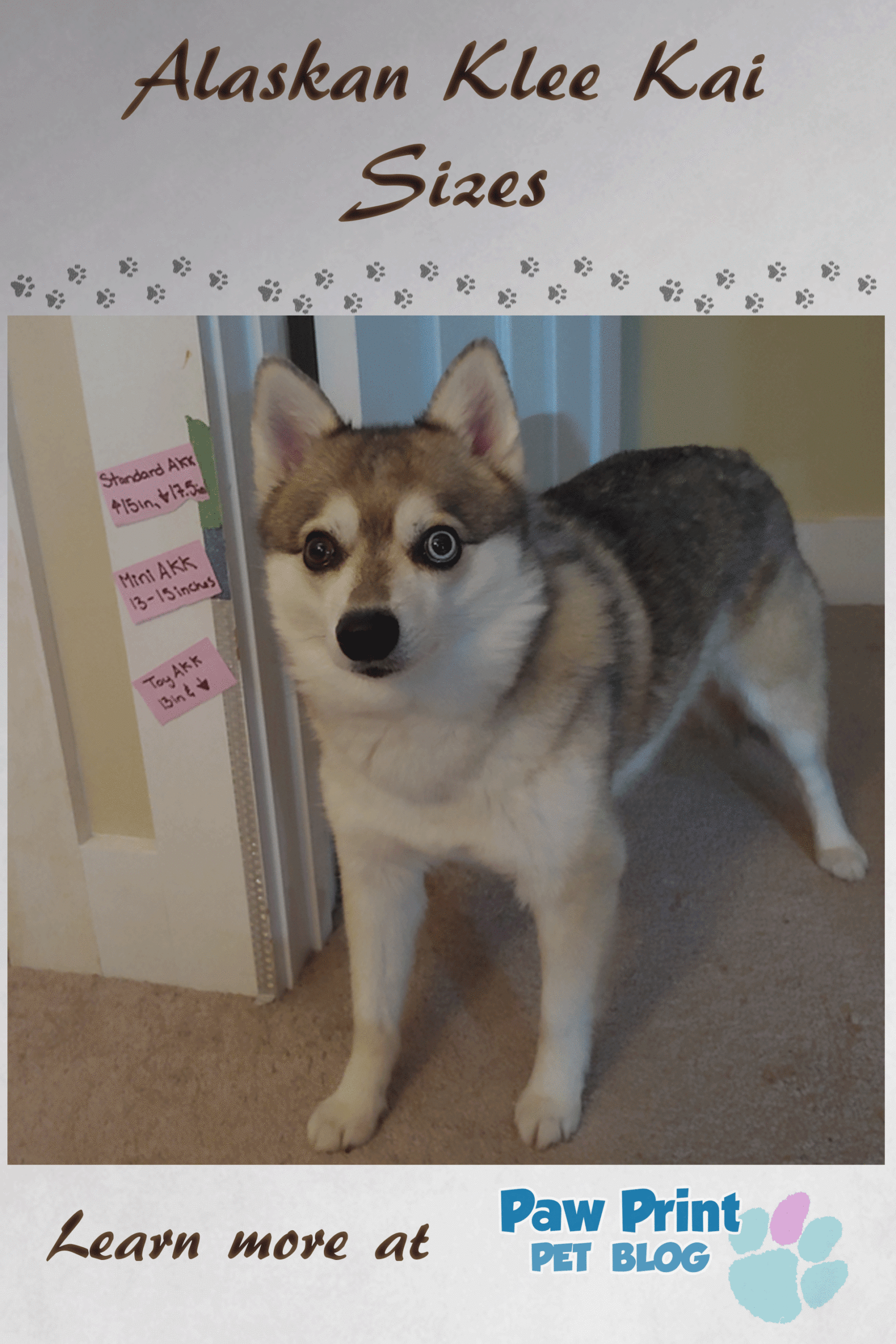
    Alaskan klee kai sizeThe three recognized sizes of Alaskan klee kai are toy, miniature, and standard.  To determine what size an Alaskan klee kai (AKK) is, the dog’s height from the withers is measured. 
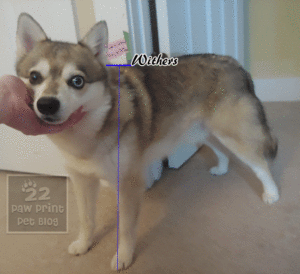
    • Toy sized AKK are the smallest, measuring in at 13 inches tall and under. 
    • Miniature, or mini, sized AKK are over 13 inches, but no taller than 15 inches. 
    • The tallest recognized size of Alaskan klee kai is the standard size.  Standard dogs are over 15 inches tall, but under 17.5″.
    • Any Alaskan klee kai over 17.5 inches tall is considered to be oversized.

    Being oversized is a disqualification as far as the breed standard is concerned, but oversized AKK still make amazing pets!

    • The Alaskan klee kai breed standard

    So what are withers!?

    Alaskan klee kai sizeUnlike in humans, whose heights are measured at the tops of their heads, dogs’ heights are measured at the withers.  The withers are the ridge between your dog’s shoulder blades, right behind the neck.  The withers are considered to be the tallest point of a dog’s body (not including the neck and head), which is why it’s used to measure their height.
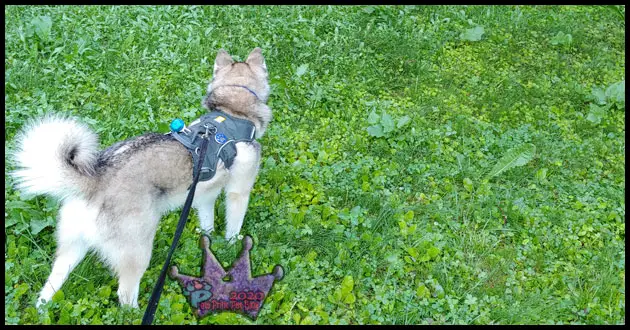
    To find your dog’s withers, you’ll want to locate the top of his shoulder blade, behind the back of the neck.  Dogs are commonly measured at the withers to determine whether they confirm to their breed’s height standard.  These measurements are also used in dog sports.  In agility, for example, your dogs height at the withers will determine how high their jumps are set.

    How much do Alaskan klee kai weight?

    Alaskan klee kai are the ultimate body positive breed.  The AKK breed standard does not decree that these dogs have to be any certain weight, as long as they are a healthy weight for their height.  That can be frustrating for new AKK owners, because most people want some idea of what their puppy will weigh as an adult.

    After years of speaking with other AKK owners, as well as breeders, I can say that, in general, toy Alaskan klee kai will be under 15lbs as adults.  Many toy AKK I’ve met have been around 10lbs.  Miniature Alaskan klee kai tend to trend between 10 to 20 lbs.  Standard sized AKKs tend to be around 15 to 25 lbs.  Oversized individuals tend to be 20+ lbs.  I’ve met a small number of oversized Alaskan klee kai who were almost as large as a small husky!  Keep in mind, though, that these numbers are just averages.  Since there is no weight requirement in the Alaskan klee kai breed standard, your individual dog may, or may not, fall into these averages.

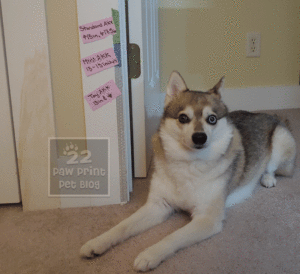
    My Alaskan klee kai, Fenrir, is a large mini.  He is 14.5 inches tall, and weighs 18 lbs.

    How will you know what size your AKK puppy will be?

    With Alaskan klee kai, it’s luck of the draw!  All three sizes of AKK can appear in the same liter, no matter what the size of the parent dogs.  Your best bet, if you’re looking for a specific size of AKK, is to go to a good breeder.  Most breeders develop a knack for determining what size a puppy will grow up to be, although they won’t give you any guarantees as far as size is concerned.  When I got my Fenrir, his breeder estimated that he would grow to be a large miniature.  That’s exactly what he is!   

    Of course, another option is to try to find an adult AKK for adoption.  Once in awhile breeders will have adult dogs that need new homes, and Alaskan klee kai do sometimes turn up in rescues.  By adopting an already full grown, adult dog, you’ll know exactly what you’re getting size wise.

    Comment below!  Did you know that Alaskan klee kai come in three (four if you count oversized dogs) sizes?  If you have an AKK, what size dog(s) do you have?

    Alaskan klee kai size


    Pet Tips, Dog Health

    Lawn Chemicals Linked to Cancer in Pets

    August 11, 2022

    lawn chemicals cancer dogs

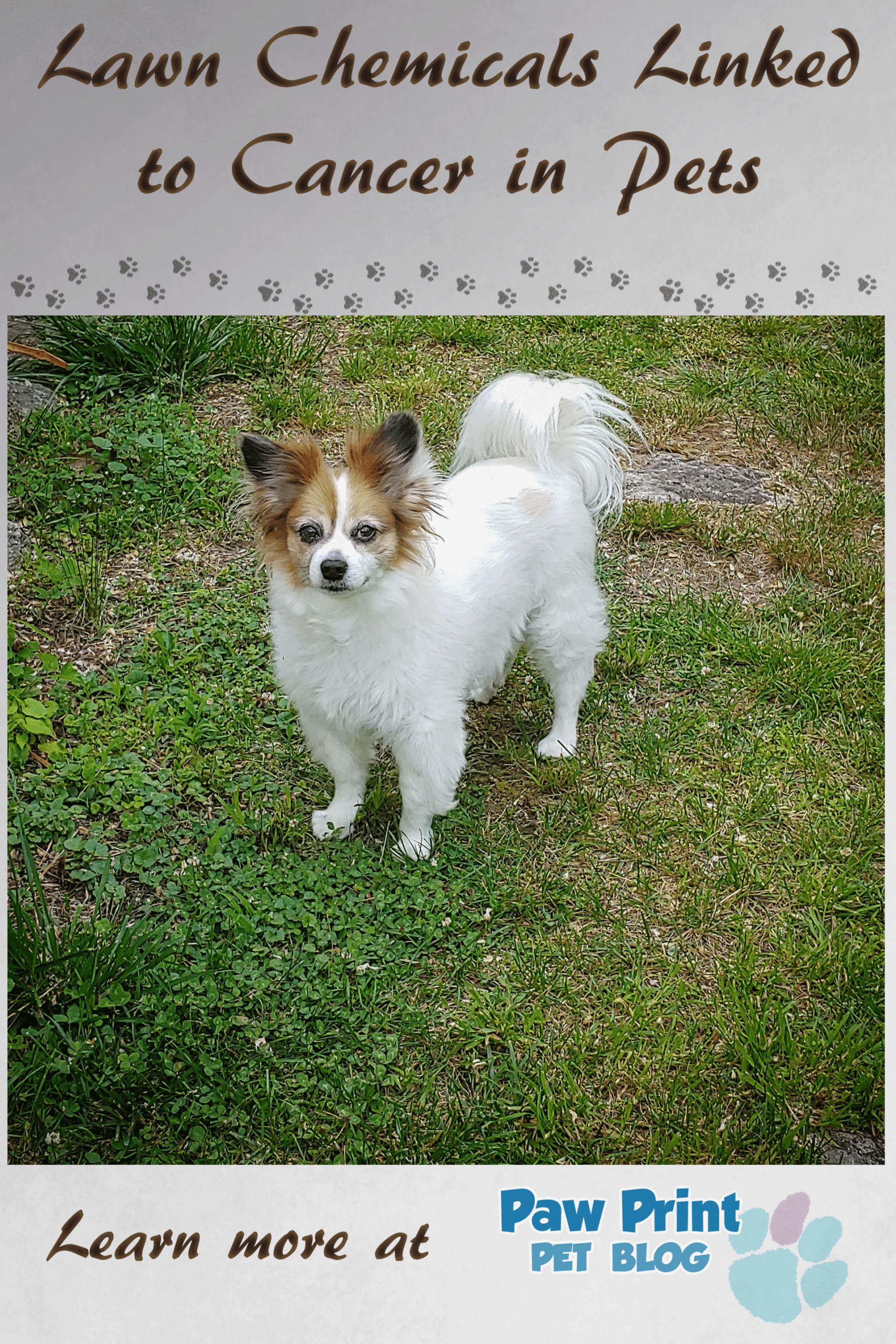
    My dogs and I love spending time playing on our lawn.  Every day Kit has to sniff just about ever inch of the yard.  In typical Kitsune fashion, he’s been known to taste test the grass every now and then too.  One of Fen’s favorite things is to play fetch out in the grass.  When he’s done playing, he does adorably epic sploots and just relaxes out in the sun.  We don’t use any kind of lawn or garden chemicals in our yard.  Most dog owners would probably like to think that enjoying outside time with our pups does them nothing but good.  But if you use lawn chemicals to treat your grass that, unfortunately, may not be the case.

    Post Contents:

    • 1 A number of studies done over years have shown a connection between common lawn chemicals and cancer in dogs.
    • 2 These studies were conducted on dogs.  But it’s very likely that other types of pets (and perhaps people?) could be impacted as well.
    • 3 Of course this doesn’t mean we should stop walking our dogs. 
    • 4 These issues don’t only impact those of us with yards of our own.
    • 5 It stinks that, these days, we can’t even walk our dogs without risking exposure to dangerous chemicals.

    A number of studies done over years have shown a connection between common lawn chemicals and cancer in dogs.

    A study published in 2012, (Abstract of Environmental Health 112(1): 171-6 (Jan. 2012), concluded that “[a]fter adjustment for age, weight, and other factors, use of specific lawn care products was associated with greater risk of [Canine malignant lymphoma].  Specifically, the use of professionally applied pesticides was associated with a significant 70% higher risk of [Canine malignant lymphoma]…Risk was also higher in those reporting use of self-applied insect growth regulators.”  

    Another study, performed by the Department of Veterinary Clinical Sciences at Purdue University, linked common garden/lawn chemicals to the occurrence of bladder cancer in dogs.  Traces of lawn chemicals were found in the urine of tested dogs.  Unfortunately, not only in dogs’ whose owners actually applied the chemicals to their yards.  Researchers explained that wind can carry herbicides for distances up to 50 feet.  Dogs may also come into contact with the chemicals during daily walks.  Wherever the exposure takes place, herbicide chemicals can be carried on paws and fur.  This makes it more likely that pet owners will be exposed as well.

    lawn chemicals cancer dogs

    These studies were conducted on dogs.  But it’s very likely that other types of pets (and perhaps people?) could be impacted as well.

    Dog breeds who are already genetically predisposed to developing bladder cancers, such as beagles, Scottish terriers, and wire hair fox terriers, are thought to be in increased risk to the effects of this type of chemical exposure.  Dogs most commonly come into contact with the chemicals by licking or ingesting treated plants, licking their paws or fur after exposure, inhalation, and trans-dermal exposure.

    Of course this doesn’t mean we should stop walking our dogs. 

    However, pet owners especially are encouraged to eliminate or reduce their use of herbicides.  If you must use them, it’s very important to follow the manufactures directions carefully.  Do whatever you can to reduce your pets’ exposure!

    These issues don’t only impact those of us with yards of our own.

    At least in our own direct environments we have some control over what, if any, products are being used.  However, exposure to potentially dangerous chemicals can commonly take place while walking our dogs.  This is one reason why it can be prudent to keep our pets out of neighbors’ yards.  Exposure can also take place in public areas, such as parks, depending on how your local park management teams care for your park.  It’s thought that upping hygiene measures, such as bathing your dog often and/or washing his/her paws after walks, may help reduce exposure.  If your dog, like my Kitsune, likes to eat grass it’s also important not to allow them to do so in areas that could be treated with chemicals.

    lawn chemicals cancer dogs

    It stinks that, these days, we can’t even walk our dogs without risking exposure to dangerous chemicals.

    What can we really do about them besides be aware of the dangers and of the potential ways to reduce our pets’ (and our own) exposure to them?  What do you think?  Comment below!  Do you avoid areas if you don’t know whether or not they’ve been treated with chemicals?  Or wash your pets’ fur or paws after coming in from a walk?  Do you just take your chances and hope for the best?  It certainly seems like, these days, more and more things are being linked to cancer and, unfortunately, I think it would be impossible to avoid them all.

    lawn chemicals cancer dogs

    Dog Health

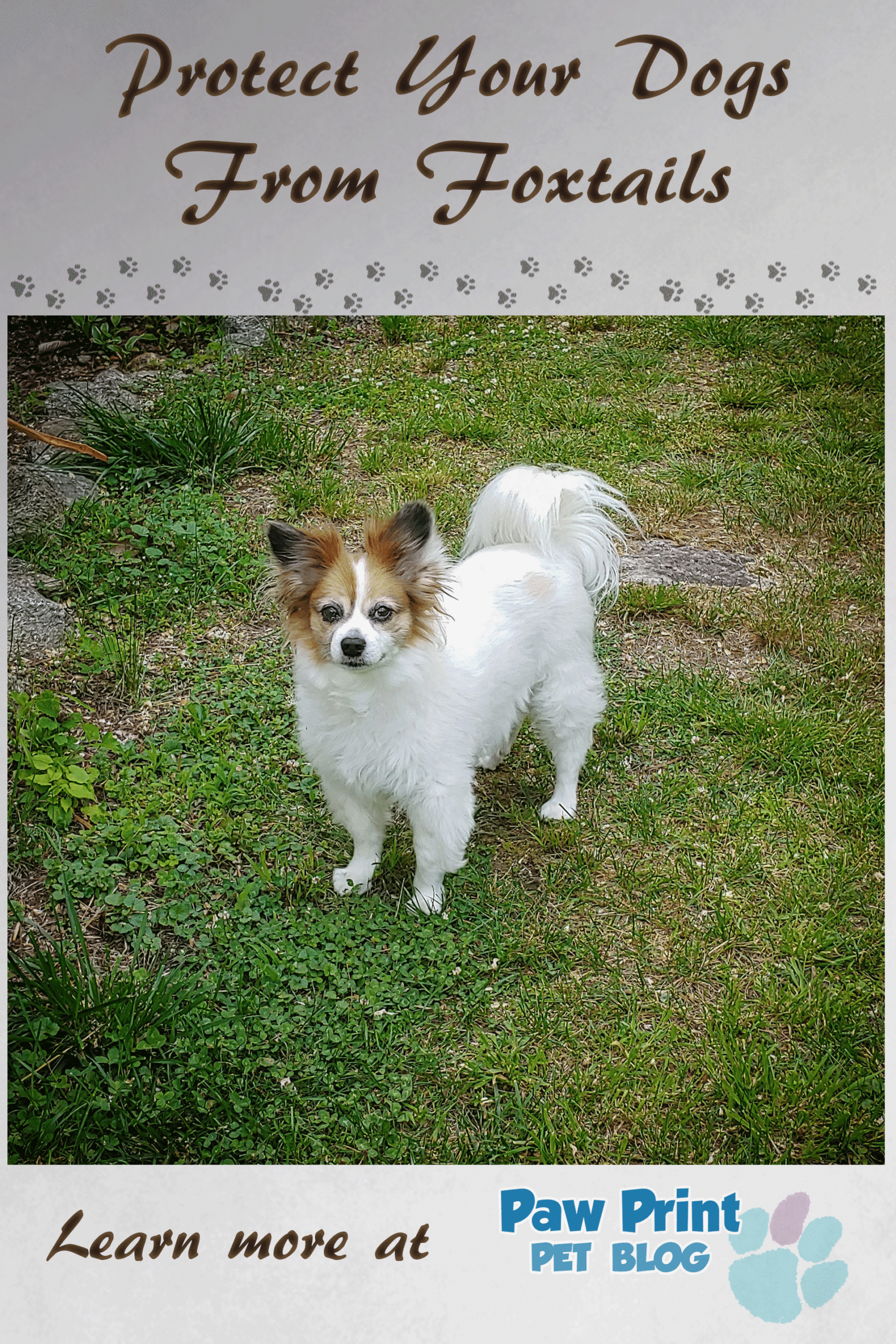
    Protect Your Dogs From Foxtails

    August 10, 2022

    Last weekend the dogs and I went hiking.  A little while after we got home, I found a foxtail stuck to the living room area rug.  After finding it, I made sure to go over both of the dogs thoroughly to ensure we hadn’t tracked any other hitch hikers into the house.  For most people, the word “foxtail” doesn’t conjure up images of horror.  But ask any unfortunate pet owner whose dogs have had a run in with foxtails, and you’ll most likely hear at least a few horror stories.  They may look innocent enough, but foxtails can present some very real dangers to pets.

    Post Contents:

    • 1 What, exactly, is a foxtail?
    • 2 Foxtail injuries…
    • 3 Here are some general tips for preventing injury and dealing with foxtails…
    • 4 Knowledge is power!

    What, exactly, is a foxtail?

    dogs foxtails

    Photo by NY State IPM Program at Cornell University from New York, USA
    (Creative Commons Attribution 2.0)

    A foxtail is a dried spikelet of grass that surrounds the seeds of some types of grass.  They are said to resemble the tail of a fox, hence the name.  They are sometimes also referred to as “spear grass”.  What can make foxtails so hazardous is that they have tiny barbs that can easily catch onto clothing, hair, skin, and fur.

    Because of the way the barbs are designed, if not caught quickly enough, foxtails can migrate deeper into the skin of animals.  They are sharp enough to penetrate tissue.  The barbs (much like a fish hook) are shaped so that the grass can easily be pushed forwards but cannot easily move backwards.

    Foxtail injuries…

    Foxtail injuries are most common in dogs, but they can harm other species (including humans) as well.  In dogs, foxtails commonly get caught in ears, noses, and eyes.  They can embed themselves into the membranes of pet’s ear drums, nasal passages, and eyes.  Foxtails embedded in the skin can cause abscesses.  They are notorious for getting stuck between toes, and have even been found inside dogs’ lungs!  Foxtails can get caught inside dogs genitals, anal glands and colon.  They are often sharp enough to be able to penetrate through the abdominal and/or chest cavities and organs.  Foxtails can lodge inside pets’ gums, lips, tonsils, throats, and digestive tracts.  If not found and removed promptly, foxtails can cause serious injury, infection, and sometimes even death.

    Here are some general tips for preventing injury and dealing with foxtails…

    1. If foxtails grow in your yard, mowing them down is not enough.  If your lawn mower doesn’t collect grass clippings for easy disposal, it’s important to rake or otherwise remove cut foxtails from your yard.  They don’t have to be attached to the living grass to get stuck to your pet.
    2. Keep your pet well groomed.  If their coat is tangled and dirty, it can make it harder to spot foxtails stuck to the fur or skin.  Foxtails can get caught in matted fur and migrate to the skin.  If possible, trim the fur on the bottom of your dog’s feet and around his/her genitals and butt.
    3. Thoroughly check over your pet after he/she spends time indoors.  Pay close attention to between the toes, the anal and genital areas, inside ears, around the face, and the armpits.
    4. Also be sure to check your own clothing/skin after spending time outdoors.  Foxtails brought into the house on your clothing could still pose a danger to pets.
    5. Keep an eye on the general health of your pet.  Look out for any swelling, draining wounds, eye, nose, or ear discomfort, or any other unusual symptoms.  Foxtails between the toes or stuck to paw pads or legs may cause limping.  Take your pet to the vet if he/she has been exposed to foxtails and is displaying any unusual behavior.  Your pets’ symptoms or injuries may not seem that bad, but foxtails can be deadly and the sooner they are removed the better.
    6. If your dog is displaying any unusual symptoms, make sure to mention to your vet that he/she has had contact with foxtails.  Depending on where the plant is lodged, symptoms can vary and may resemble symptoms of other conditions.

    Knowledge is power!

    Hopefully you and your pet won’t ever experience a foxtail horror story of your own, but foxtail injuries are relatively common and it never hurts to be aware of potential issues.  Comment below, have you or your pet ever been injured by a foxtail?

    dogs foxtails

    Papillons

    Do Papillons Shed?

    August 9, 2022

    Papillons are a breed of dog known for their long, silky, flowing fur.  They really are such a beautiful breed!  I recently wrote about papillons’ coats.  Notably, I wrote about the fact that, per the breed standard, papillons should have single coats.  However, one of the questions I get asked most often about papillons is whether or not they shed.  And if they do shed, exactly how bad is it?  With how long their fur can grow, asking about how much these amazing dogs shed makes sense!

    • The official AKC papillon breed standard 

    Post Contents:

    • 1 So, do papillons shed?
    • 2 My shedding experience, with my single coated papillon!
    • 3 Papillons DO shed, but not nearly as much as a double coated dog!
    • 4 Is there a way to ensure your papillon will have a single coat?
    • 5 Well worth the fur!

    So, do papillons shed?

    Yes, papillons shed.  How much an individual papillon will shed can vary quite a bit.  Papillons who conform with the breed standard single coat will shed much less than a double coated dog.  Although papillons are supposed to have single coats, double coated individuals do sometimes appear in the breed.  How much an individual dog sheds can also depend on other factors, such as their health and your grooming regime.    

    • Learn more about how to tell whether your dog has a single, or a double, coat here!

    My shedding experience, with my single coated papillon!

    papillons shedMy 13 year old papillon, Kitsune, has a single coat.  I’ve never considered him to be a heavy shedder.  In fact, I rarely notice his hair around my home.  I do brush him frequently.  Usually a bit of fur will come off on his comb every time I groom him.  The brush picture to the left is from when I brushed him this morning.  To be fair, I’ve been slacking on brushing him this week, so that amount of fur was after a few days of not combing Kitsune.  Usually less fur than that comes off when I brush him.

    I also have another dog, an Alaskan klee kai named Fenrir.  Fenrir has a thick double coat.  Kitsune’s shedding is nothing compared to Fenrir’s.  Kit and Fen are similar sizes.  Fen is 18 lbs and Kit is a bit bigger at 20 lbs.  I think it would take around 100 Kits to equal 1 Fen when it comes to how much they shed on a regular basis!  Maybe even more during the two times per year when Fen blows his coat.

    Papillons DO shed, but not nearly as much as a double coated dog!

    Unless, that is, you end up with a double coated papillon and then all bets are off!  I do occasionally talk to papillon owners who tell me their papillons shed a lot.  I suspect that these owners actually have double, and not single, coated papillons.

    Is there a way to ensure your papillon will have a single coat?

    Papillon mixes and dogs from backyard breeders are a toss up.  If, for any reason, you really prefer a single coated papillon, your best bet is to go to a reputable breeder who breeds to the breed standard and has health tested dogs.  Papillon puppy coats are not always telling, because their coats change a lot from puppy to adulthood.

    Of course, you can also adopt an adult dog!  Once a papillon has their adult coat, you should be able to tell whether they have a single or a double coat, and to get a good idea of how much that individual dog sheds before you bring him/her home.

    Well worth the fur!

    Remember that how much each individual dog will shed can vary, based on many factors such as their coat type, health, what they are fed, and your grooming regime.  Your papillon may shed more or less than my Kitsune does.

    Because even a single coated papillon will shed some, this is not the breed for anyone looking for a dog that doesn’t shed at all.  However, my experience has been that single coated papillons do not shed very much.  The little amount they do shed can be easily managed by brushing them often, which you really should be doing anyways.  Papillons are amazing little dogs.  Their fun-loving, sweet personalities more than make up for any amount of time you’ll spend dealing with their fur!

    papillons shed

    Dog Health

    Can Dogs Catch Colds from Humans?

    August 8, 2022

    Summer colds are the worst!  A few weeks ago I was dealing with a bout of tonsilitis, then my partner came down with a cold.  We live together, so of course I ended up catching it too.  Misery loves company, or so they say.  On top of that, we celebrated our Alaskan klee kai Fenrir’s 7th birthday the other day, and I think we went a bit overboard giving treats to the dogs.  Fenrir was fine, but Kitsune, my senior papillon, developed a bit of an upset stomach.  Luckily Kit got over his upset stomach much faster than I did my cold.  Every time my partner or I get sick, I wonder whether we have to worry about our dogs catching colds from us humans.

    Luckily, as it turns out, dogs contracting colds from humans, and vice versa, is very rare. 

    The viruses that cause what we commonly think of as colds are usually species specific, and don’t have the ability to jump from one species to another.  There have been some instances of dogs, cats, and even ferrets contracting the flu from humans, though, so theatrically it’s not impossible for some of the viruses that make us sick to also have the ability to effect our pets.  But this is very rare and, for all intents and purposes, you shouldn’t worry about your dog catching a cold from you (or vice versa).  

    That’s not to say that dog’s can’t catch colds, just that, for the most part, the viruses that cause our furry friends to feel sick are not the same ones that impact us.  That’s good news for all the pet owners out there who, like me, know that doggy snuggles are the best medicine!

    Dogs can, of course, catch viruses from other dogs.

    dogs colds humansSome of these viruses mimic human cold symptoms such as coughing, sneezing, upset stomachs, runny eyes, and runny noses.  If your dog is acting sick, however, it’s important to keep a close eye on him/her and not just write off symptoms as being a simple cold.  Some symptoms commonly associated with the common cold in humans can be signs of something more series in dogs.  If your dog experiences anything more than mild symptoms, or symptoms last for more than a few days, it’s important to get your furry friend in to see a vet.
    Also remember that it’s important not to medicate your pet without first speaking to your vet.

    There are lots of OTC medications that humans can take to feel better when they are sick, but most of them are not safe to give your pets.  Even the ones that are potentially safe need to be carefully dosed, so should not be administered to pets without vet approval.

    I’m glad that I don’t have to worry about giving my colds to my dogs.  When I’m sick I like nothing more than to cuddle up under a blanket sandwiched between Kit and Fen.  Even crazy Mr.Fen seems to know when I’m not feeling well and, thankfully, tones down his crazy a bit until I’m feeling better again.  Do your pets seem to know when you are sick too?  Comment below!

    dogs colds humans

    Alaskan Klee Kai

    Alaskan Klee Kai Breed Profile

    August 7, 2022

    My beloved Alaskan klee kai, Fenrir, recently just turned 7 years old!  I’ve been wanting to work on this post for quite awhile now, ever since I originally posted my Papillon Breed Profile.  However, I kept putting this post off, literally for years.  I figured it wouldn’t hurt to spend more time immersed in all that is Alaskan klee kai before writing a breed profile on them.  Alaskan klee kai are amazing dogs, but defiantly not for everyone.  I figured that after 6+ years of owning one, I’m finally ready to write this post!

    Post Contents:

    • 1 Breed History:
    • 2 Appearance:
    • 3 Grooming:
    • 4 Health:
    • 5 Temperament:
    • 6 Klee Cats!
    • 7 Small but Mighty!
    • 8 Ideal Owners:

    Breed History:

    Alaskan klee kaiThe Alaskan klee kai is a relatively new dog breed.  The breed originated, as its name suggests, in Alaska.  In the 1970’s, a breeder by the name of Linda Spurlin dreamed of, basically, downsizing huskies.
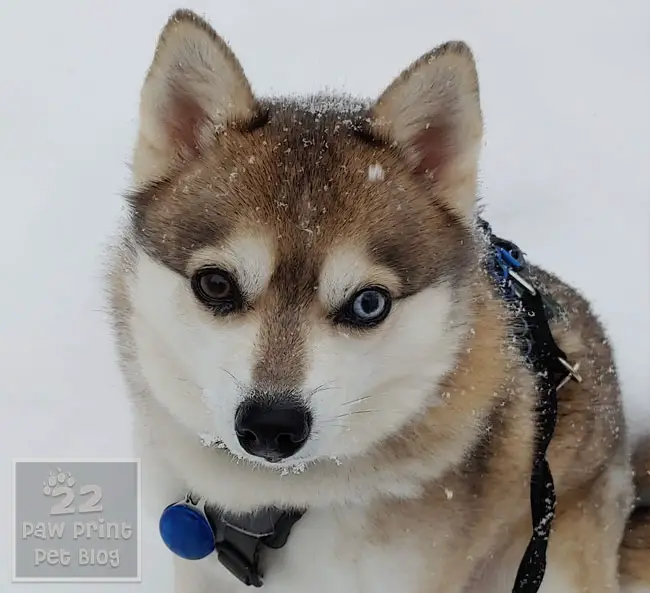
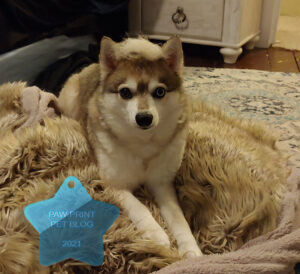
    Spurlin bred Alaskan and Siberian huskies with smaller schipperkes and American Eskimo dogs to create the first Alaskan klee kai.  This resulted in dogs that did well in the harsh Alaskan climate, and looked very similar to Siberian huskies, but that were much smaller than their larger husky cousins.  Fittingly enough, the name “klee kai” comes from the language of indigenous Athabaskan and means “little dog”.  Alaskan klee kai are, quite literally, Alaskan little dogs!

    Fun fact: “Alaskan klee kai” is the plural of Alaskan klee kai!  You’ll sometimes see people add an “s” to the end to make the breed name plural, but this is incorrect.  AKK is a common abbreviation for the breed name.

    Being such a new breed, Alaskan klee kai are not yet recognized by the American Kennel Club.  In 2020, however, it was accepted into the American Kennel Club’s Foundation Stock Service.  In 1997 the breed was recognized by the United Kennel Club.

    Appearance:

    Alaskan klee kai come in 3 distinct sizes, and three recognized colors.  The three sizes recognized are toy, miniature, and standard.  AKK sizes are determined by the dog’s height, measured from the shoulders, and not weight.  Toy size Alaskan klee kai are 13 inches tall and under.  Miniature AKK are 13 to 15 inches tall.  Standards are over 15 inches, but under 17.5 inches.  Any dog over 17.5 inches tall to the withers is considered to be oversized.

    My Alaskan klee kai, Fenrir, is about 14.5 inches tall so is considered to be a miniature Alaskan klee kai.  Fenrir, at his last vet checkup, weighed in at 18 lbs.  This breed is somewhat known for being lanky and lean, especially when they’re young.  Weight does not factor into the breed standard, and weights can vary quite a bit depending on how tall your AKK grows to be.

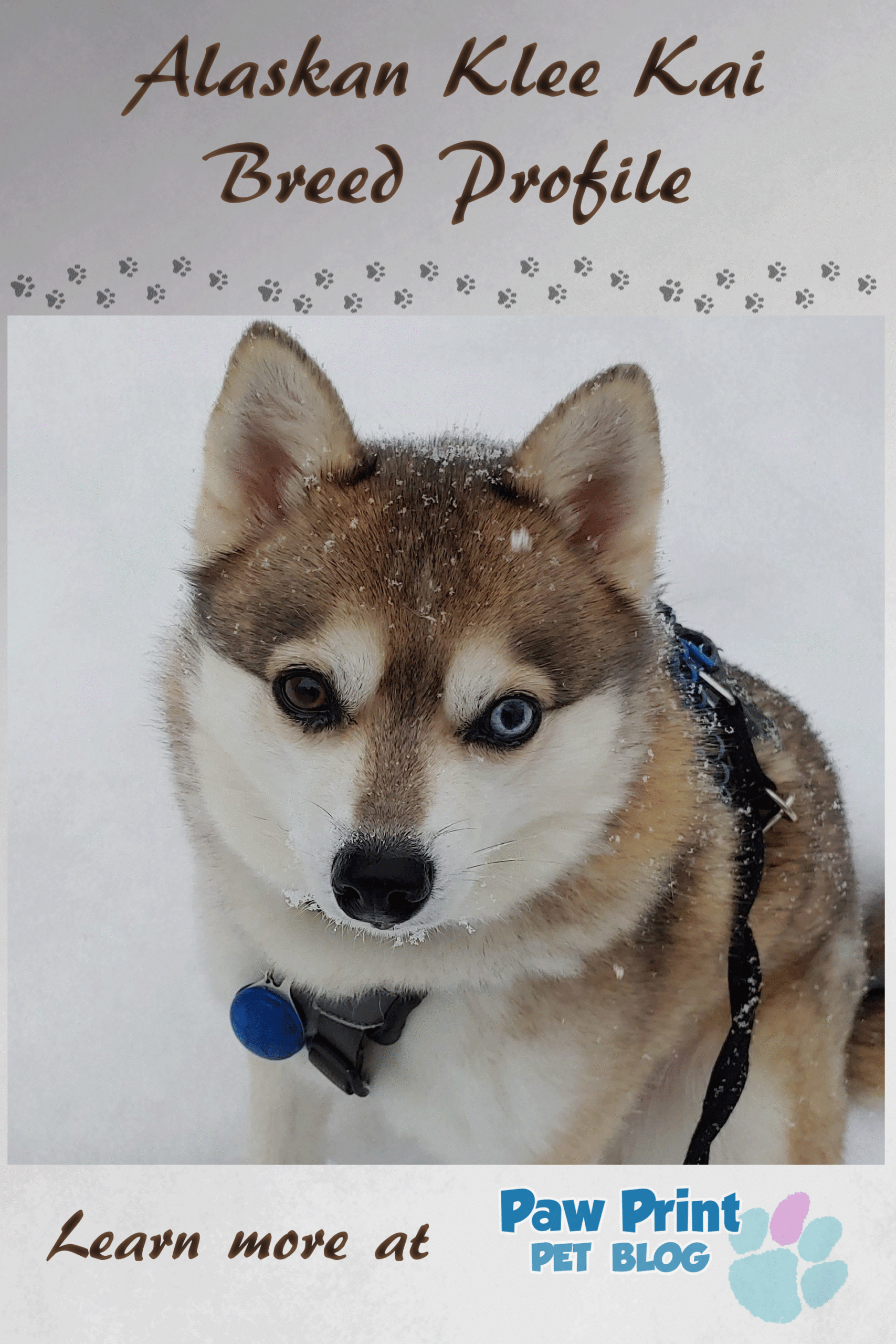
    Alaskan klee kai have thick double coats similar to that of a husky.  The recognized colors of AKK include black and white, red and white, and gray and white.  All white dogs pop up in litters every now and than and while beautiful, any solid colored coats are a disqualification when it comes to the breed standard.  Breed standard Alaskan klee kai have a distinctive facial mask, and tails that curl up over their backs.

    Per the breed standard, Alaskan klee kai can have eyes of any color.  Heterochromia and party eyes are somewhat common in the breed.  Budging eyes, or eyes that are set too deep, are both considered faults.

    Alaskan Klee Kai

    • The Official Alaskan Klee Kai AKC Breed Standard

    Grooming:

    Alaskan klee kaiWith their thick, double, husky like coats, AKK should ideally be brushed often.  As far as grooming goes, they are generally pretty low maintenance but, be warned, this breed does shed a lot.  I once heard a fellow AKK owner joke that Alaskan klee kai have two shedding seasons.  One is from January until June and the other is July until December.  While AKK will blow their coats, or shed out their fluffy undercoats, twice a year, don’t expect the rest of the year to be fur free.  This is not the breed for you if living, wearing, eating dog hair bothers you.
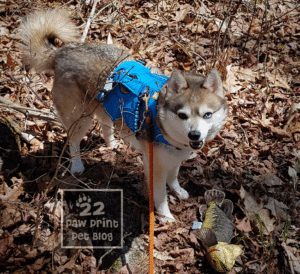
    In general, though, I find cleaning Fen’s fur off my rugs to be more work than cleaning Fen himself.  Once a week I dremel Fen’s nails, and about every other week or so I bathe him.  Baths this frequently aren’t required, but I personally like to keep my dogs on the cleaner side.  If you also decide to bathe often, make sure to use a high quality dog shampoo so you’re not stripping out your dog’s natural oils.

    General maintenance stuff like brushing teeth, cleaning ears, etc., is important.  I also trim the fur on the bottoms of Fenrir’s paws around twice a month.  This keeps his paws cleaner, and helps prevent him from slipping on our wood floors.

    Health:

    Especially since this is a newer breed, breeders and owners are encouraged to monitor their dogs closely for any health issues.  So far, some known issues include thyroid issues, FVII deficiency, and nutritional issues.  Factor VII deficiency is a genetic blood clotting disorder that can cause dogs to bleed more than is normal after injury or surgery, and rarely spontaneously.  Thankfully, responsible AKK breeders can complete a DNA test to establish whether their breeding dogs carry this genetic disorder.  Dogs carrying FVII deficiency should not be bred.

    Alaskan klee kai are pretty notorious for being picky eaters.  While not necessarily a health issue per say, feeding these dogs an inadequate or incomplete diet can lead to health issues.  This has been something I’ve personally struggled with with my own dog.  For most of his life, he’s been underweight thanks to how selective he can be about eating.  If your dog is similar, I suggest working with a vet nutritionist to help find a healthy diet that your dog will actually eat.

    Temperament:

    Alaskan klee kaiDespite looking like little huskies, it’s important to recognize that Alaskan klee kai do not necessarily have the same personalities as huskies.  These are high maintenance little dogs!
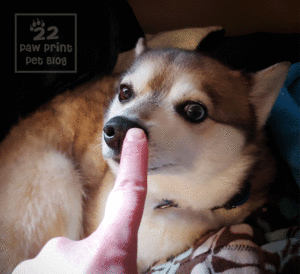
    Alaskan klee kai are very commonly 1 person dogs.  They will be obsessed with their special person, and often want very little to do with anyone else.  It’s not uncommon for this breed to be shy, or weary of strangers.  Alaskan klee kai are the introverts of the dog world.  Now that’s something I can relate too!

    Many of the AKK I’ve met have, in general, been prone to developing anxieties.  Because they bond so strongly with their people, separation anxiety can be common in this breed.  I’ve never had a dog that feeds off my own moods more than my AKK.  Usually this isn’t a bad thing, but during stressful times it can be.  Training can sometimes be a challenge, not because AKK are not intelligent, but because they are oftentimes unmotivated to work for treats.  With my own AKK, I had to learn how to use toys and play as a training reward, because Fenrir has next to no food motivation.

    Klee Cats!

    AKK are sometimes referred to as “klee cats” due to their often times cat-like personalities.  They can be stubborn, demanding, and want attention on their terms.  Although they are not really known for being barkers, this is a talkative breed.  Believe me, they will let you know what’s on their mind in no uncertain terms, usually in the form of all kinds of crazy sounds that you’ve never heard a dog make before!

    These dogs are extremally loving, loyal to a fault to their family members, and super playful.  They’re a lot of fun!  But they are also very high maintenance little dogs that will do best in homes well prepared to deal with their quarks.

    Small but Mighty!

    I hate how often little dogs get underestimated.  The Alaskan klee kai is not a dog to underestimate.  In the years I’ve had Fenrir, I’ve met AKK that excel at all kinds of dog sports.  Everything from weight pull to agility.

    Alaskan klee kai are high energy little dogs.  In my opinion, this is not a small dog breed for couch potatoes.  They need owners who will be willing to commit to providing them with ample mental and physical exercise.  Generally, this isn’t a breed that can be trusted off leash.  Care should be taken to establish a safe, escape proof space to exercise when outdoors.

    Ideal Owners:

    Alaskan klee kaiI absolutely adore my AKK, but he has, by far, been the most challenging dog I’ve ever worked with.  For many years my little pack lived in the city.  While, like I mentioned before, there are perks to raising dogs in the city, in my opinion Alaskan klee kai are not the best city dogs.  They prefer quieter environments, where they can spend most of their time with their families.  AKK are interesting, unique looking dogs, so everyone and then some will want to pet them.  This can be stressful for these shy dogs, who usually prefer not to interact with people they don’t know really well.
    Fen, despite his size, makes an amazing hiking companion.  He also just loves spending time outdoors, whether we’re laying in the grass relaxing or playing fetch on his long line.

    Alaskan klee kai, in my opinion, do best with very committed owners who have the time to provide ample and on-going training, as well as both mental and physical exercise.  In most situations, I don’t think AKK make good pets for first time dog owners, or for anyone who doesn’t take the time to really get to know what they are getting themselves into with this unique breed.

    But for the right people, Alaskan klee kai can make amazing pets.  They love their people on a level that borders on obsessive, so with your AKK around you’ll never be alone.  They are playful and loving, and make amazing little adventure companions.

    Comment below!  Have you ever met an Alaskan klee kai?  Or maybe you have one of your own?  What has your experience with this breed been like?

    Papillons

    Breed Standard Papillons Have Single Coats

    August 6, 2022

    I’ve written about this before, in passing, in a couple of my other papillon posts.  Because it still shocks me how many people, even groomers and people who own papillons, don’t know that this breed is supposed to have a single coat, I was inspired to write a post about it.

    Do papillons have a double coat?

    Breed standard papillons should not have a double coat.  Papillons have a single coat, which consists of a topcoat only.  The undercoat on a double coated dog is the insulating layer of fur that naturally works to protect animals against extreme temperatures.  Papillons lack this layer.

    You can check out the official AKC papillon breed standard here.

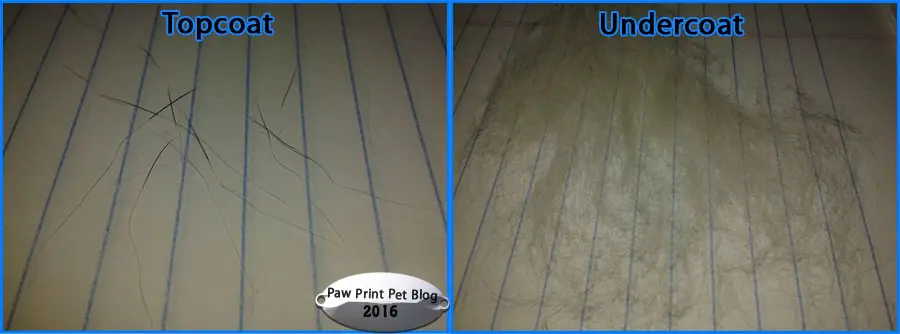
    I wrote this post to help illustrate the difference between a topcoat and an undercoat.  It’s convenient that, besides my papillon Kitsune, I also have a double coated Alaskan Klee Kai, Fenrir.  The following image shows the difference between Fenrir’s top and under coats.

    Breed standard papillons have only topcoats.

    I keep saying “breed standard papillons” because there are papillons out there with undercoats.  It’s not really normal or desired going by the breed standard, but that doesn’t mean that those papillons who have undercoats won’t still make awesome pets.

    While, to pet owners, it may not matter much whether your dog conforms to the breed standard or not, I think it is important to know what type of coat he/she has.

    There are some differences between double and single coated dogs and how they, and their fur, should be cared for.

    papillons single coatsSingle coated papillons, for example, may not deal with extreme cold as well as a double coated dog would.  As I already stated above, they lack the insulating undercoat which serves to keep double coated dogs warm in the winter.  I always keep a close eye on Kitsune when the weather is extreme.  During our winter adventures I sometimes put a coat on him to help keep him warmer.

    Kit sheds a lot less than double coated Fenrir does, which is a nice perk to him not having an undercoat.  In addition, because Kitsune has a single coat, I’ve never had any issues trimming his fur.  This is a hot button issue among “papillon people”.  I’ve gotten a lot of criticism over the years for clipping Kitsune’s fur, even though doing so does not hurt him nor damage his fur.

    I always have to mention, though, that I don’t recommend shaving even single coated dogs down to the skin.  While a single coat may not do as much to protect dogs from extreme temperatures, guard hairs (topcoats) do protect the skin from sun exposure.  Dogs, like humans, can suffer from sunburn if their skin is exposed to the sun’s rays.

    Papillons are well known for their long, silky, flowing coats.  They are often referred to as a “wash and wear” breed, because their fur doesn’t normally require any special care.  Papillons should be brushed regularly, however, to ensure their beautiful fur doesn’t mat.  Pay special attention the the fur on and behind the ears.  This fur is often especially soft, and more prone to developing tangles.

    Comment below!  Does your dog have a single or double coat?  What are some things you do to keep your dog’s fur healthy?

    papillons single coats

    Pet Tips

    My Thoughts on Crate Training

    August 5, 2022

    Crate training can be a pretty polarizing topic among dog lovers.  Some owners swear by it, others feel that it’s cruel.  I’ve received quite a few questions/comments about crate training since I posted a picture of Kitsune laying in an open crate on his Instagram account.  I decided to write a post that outlines my current thoughts regarding crate training.

    Post Contents:

    • 1 There.  My dogs in a crate.  I guess that pretty much sums up my thoughts?
    • 2 A crate is a tool.  Like other tools, it can be used correctly or incorrectly.
    • 3 Using a crate correctly, in my opinion, means actually crate training your dog.
    • 4 Being comfortable in a crate can be a good skill to have.
    • 5 I will say that crate training has been a positive experience for both Kitsune and Fenrir.
    • 6 Crates can be abused/overused, I’m not naïve to that fact.
    • 7 I personally think it’s important to give dogs a space of their own, where they can go when/if they feel like they need some time too themselves.

    There.  My dogs in a crate.  I guess that pretty much sums up my thoughts?

    crate trainingTo elaborate – I’ve always loved animals.  For the past 13+ years I’ve shared my life with dogs.  Before them, though, I kept small/exotic type pets.  Most exotic pets aren’t the types of animals you can let free range around your entire house.  Even my house rabbits, who were fixed and litter box trained, had a large cage.  They were only allowed to explore our apartment under strict supervision.

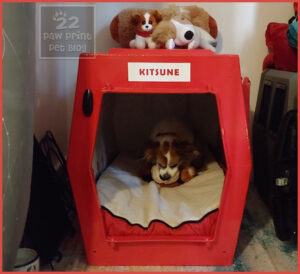
    So I came from a background of utilizing cages for pets, mostly for their own comfort and safety.  Awesome, decked out, usually pretty over the top cages – but cages nonetheless.  Then enter Kitsune, my first dog.  I’m pretty sure he was the most adorable puppy ever…

    crate training

    But puppies, even the cutest of them, are pretty much drunken, incontinent, sugar high toddlers X 1,000.  I’m supposed to let this little beast roam around my house, doing whatever it wants 24/7!?  I kind of want my security deposit back when I move, and I kind of like all my belongings intact.  Most importantly, I need to make sure my new little beastling stays safe.  Commence the crate training!

    A crate is a tool.  Like other tools, it can be used correctly or incorrectly.

    When used correctly, for many dogs, a crate can be a safe, comfortable retreat.  It can be used to teach your dog proper house manners, such as not relieving themselves indoors.  It can be used to keep them safe when you aren’t able to directly supervise them.

    Using a crate correctly, in my opinion, means actually crate training your dog.

    It means building up a positive association with being inside their crate, not just sticking them in there and walking away.  It means knowing your dog and being able to recognize if he/she is uncomfortable with being crated for any reason.  Because, as you will probably see me write over and over again on this blog, all animals are individuals.  Just because I say that crate training worked for my current dogs doesn’t mean I’m saying it will work for 100% of dogs.  It’s up to each owner to decide what’s right for their individual dog and situation.

    Related Posts:

    • The Potential Dangers of Wire Crates
    • Ruff Lands Kennels Dog Crate Review
    • Painting Plastic Dog Crates

    Being comfortable in a crate can be a good skill to have.

    There are situations when your dog may need to be confined in some way.  During an extended stay at the vets, for example, if you ever have to evacuate your home, or during travel.  Situations like these can be stressful enough on their own, without the added hardship of being crated for potentially their first time.  Being able to remain calm, even to relax and sleep, while crated is an important skill for a dog to have.  It’s a skill that can really come in handy in emergency situations, and make otherwise stressful circumstances a bit less traumatic.

    I will say that crate training has been a positive experience for both Kitsune and Fenrir.

    crate trainingI crate trained Kitsune when he was a pup.  He’s a very very smart dog.  When he was just around a year old he really didn’t need to be crated anymore.  He was 100% potty trained and respectful of our home and the stuff in it.  Despite the fact that he no longer needed to be crated, we kept his crate set up in our bedroom.  Over the first 10 months of his life we had worked to build a positive association with his crate.  The sentiment stuck.  Kit still to this day (he’s almost 14 years old now) likes to relax and sleep in his crate.
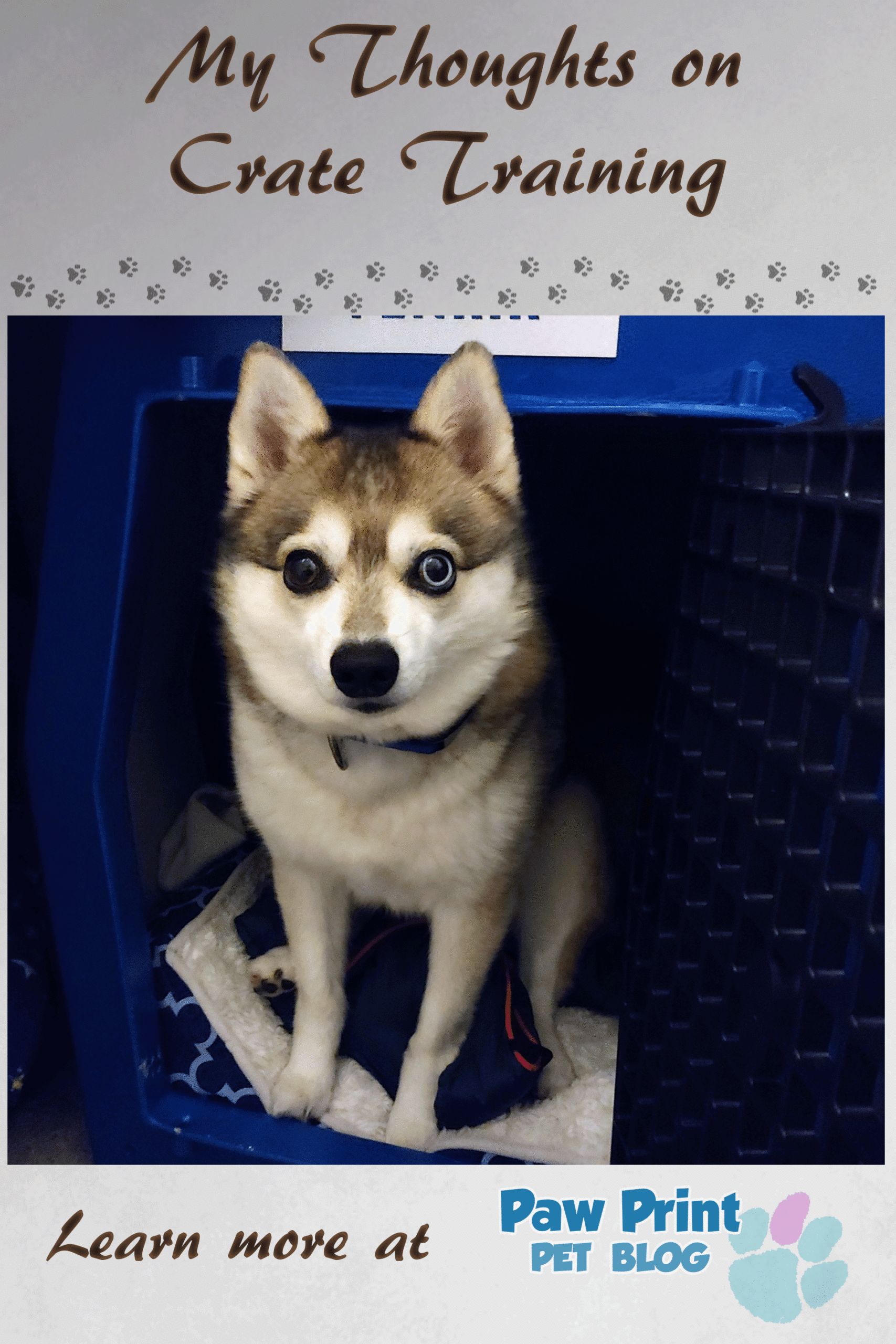

    Fenrir still sleeps in his crate at night.  Despite being 7 now, he’s never mastered the art of sleeping outside of his crate without waking everyone up multiple times a night.  Fen will often even put himself to bed at night.  He goes upstairs to sleep in his crate on nights when my partner and I decide to stay up later than usual.  Fen also naps in his crate, with the door open, during the day.

    We live in a rental house.  It’s in our lease that our dogs are not to be left unsupervised if we’re not home.  Hey, I get it.  Sadly, some pet owners give the rest of us a bad rap, and landlords feel like they’re taking a risk renting to people with pets.  My partner and I both work from home, so our dogs are not left home alone often.  In the rare occasion that they are, we tuck them peacefully into their crates for a short nap until we get home.

    Crates can be abused/overused, I’m not naïve to that fact.

    I hate hearing stories of dogs who are forced to spend a majority of their lives locked away in a crate.  However, that doesn’t mean crate training is inherently a bad thing.

    I personally think it’s important to give dogs a space of their own, where they can go when/if they feel like they need some time too themselves.

    I relate it to a person having their own bedroom – a safe space they can retreat too when they’re feeling overwhelmed with life and need some quiet time, or maybe just want to relax and take a nap.  While crates are not the only way to accomplish this for our dogs, they are a good way to accomplish it – especially if, like us, you live in a home where space is at a premium.  It’s a rule in our house that if our dogs are inside their crates they are to be left alone.  They know that their crates are safe spots, a place they can retreat too when they, for any reason, need a bit of down time.

    Crates may not be appropriate for all dogs but where appropriate and when used correctly, they can become safe retreats for beloved dogs.  They can be used to protect your pet from stressful or potentially dangerous situations, or just to give your furry friend a comfortable place to call his own.  It’s important, if you choose to use a crate for your dog, that you take the time to properly crate train and never force your dog to spend extended amounts of time in his/her crate.

    I’d love to hear from you!  Comment below – if you have dogs now or have in the past, did you crate train them?

    crate training

Older Posts
Newer Posts
It's a beautiful day to play ball in the snow ❄️ It's a beautiful day to play ball in the snow ❄️
Today would have been Kit's 17th birthday. My best Today would have been Kit's 17th birthday. My best buddy...not a single day goes by that I don't think of him. Forever a beloved member of our little pack ❤️
Someone stole his dad's socks 😂 10 years old and s Someone stole his dad's socks 😂 10 years old and still as mischievous as a pup!  This little one makes me laugh everyday and I'm SO thankful for him. 💙
New phone, who dis!? 😅 Sorry for the lack of new New phone, who dis!? 😅 
Sorry for the lack of new Fen pics lately... My old phone broke and it took me awhile to replace it. 
Fen is his happy, sassy, playful self and is doing well. 💙
Fen makes me laugh so much! Today is my partner's Fen makes me laugh so much! Today is my partner's birthday. ❤️ I almost always wake up earlier than him, so this morning I was planning on getting up to decorate for his birthday. I wanted to surprise him with decorations and his presents set out when he got up.

Well...Fenrir ruined it all, because as soon as he saw the wrapped presents for my partner, he got SO excited! And if you have ever had the pleasure of meeting an Alaskan Klee Kai you will know, when they get excited, they just have to make sure everyone knows about it!

Long story slightly shorter, Fen woke my partner up early, on his birthday, all because Fen REALLY wanted to open presents that weren't even for him! I didn't get to decorate, but lesson learned - don't put gifts where Fen can see them because he will get really, really excited about it.

And just so you all don't feel too bad for him...I ended up wrapping one of Fen's Christmas presents and giving it to him to open early! 🤣
Follow on Instagram
Facebook Instagram Pinterest Youtube

Copyright © 2025 Paw Print Pet Blog. All Rights Reserved.

Back to top