• Home
  • Popular Topics
    • Papillons
    • Alaskan Klee Kai
    • Hiking with Dogs
    • Dog DIY
    • Recipes
    • Dog Product Reviews
    • Can Dogs Eat…
    • Dog Health
  • The Paw Pack
    • Kitsune (2008 – 2024)
    • Fenrir
  • Policies
    • Disclaimer
    • Privacy Policy
    • Work with Us
    • Site Map
  • Contact

Paw Print

    Alaskan Klee Kai, Dog Health

    What is Snow Nose? Can Alaskan Klee Kai Get Snow Nose?

    February 25, 2023

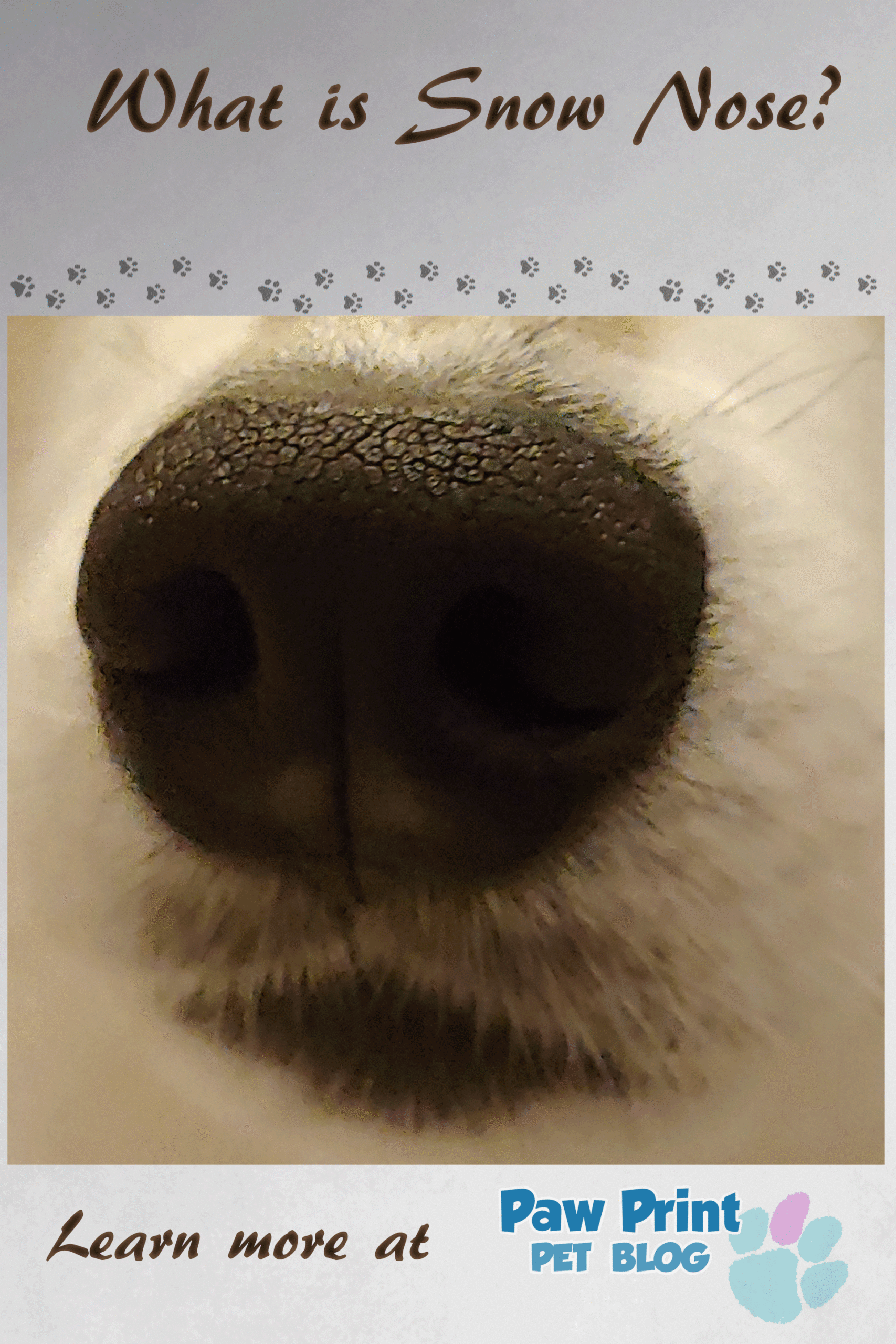
    What is “snow nose” in dogs?  And here’s a hint, the term doesn’t refer to when dogs adorably get bits of snow stuck to their noses while playing outside in the winter.  Snow nose, sometimes called winter nose, is when a dog’s normally dark-colored nose turns lighter usually, as the name implies, in the winter.  What, exactly, is snow nose?  What causes it?  What dog breeds are impacted?  Read on to learn more!

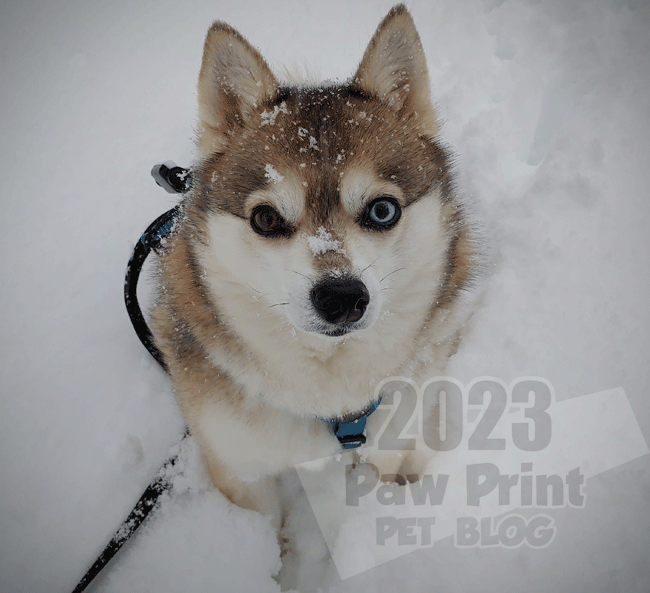
    Alaskan Klee Kai snow nose

    Post Contents:

    • 1 Dog Breeds Prone to Snow Nose
    • 2 What is Snow Nose?
    • 3 Does Snow Nose Only Occur in the Winter?
    • 4 What Causes Snow Nose?
    • 5 Snow Nose is a Cosmetic Issue Only
    • 6 Do Dogs Require Treatment for Snow Nose?

    Dog Breeds Prone to Snow Nose

    Snow nose is a common phenomenon in northern breeds of dogs such as Siberian huskies, malamutes, and, yes, Alaskan Klee Kai!  However, it can occur in any dog with a dark colored nose, no matter their breed.

    What is Snow Nose?

    If you notice your healthy, dark nosed dog’s snoot is suddenly starting to look like it’s losing color, it’s most likely snow nose!  Dog’s with black noses who develop this condition noses will go from being black to pink or tan/brown.  Dogs who naturally have lighter, brown, colored noses may also experience color change, usually to a lighter brown or pink.  How much of the nose changes color may vary.  Some dogs only develop small spots of lighter colors on their noses.  Others noses may completely, or nearly completely, change color.

    Snow nose is hypopigmentation that impacts only the nose.  It’s, basically, a loss of melanin, or pigment in the nose.

    Does Snow Nose Only Occur in the Winter?

    Although the names may suggest that snow nose is a winter condition, and for many dogs it is, snow nose can sometimes occur during other times of the year, and in climates that do not experience cold winters.  Many dogs that develop snow nose will do so during the winter, then regain the normal pigment in their noses again in the spring/summer.

    What Causes Snow Nose?

    Because snow nose is a completely harmless condition, scientists have not spent a lot of time studying it.  The exact cause of snow nose is still unknown!  There is a prevailing theory, though.

    The most plausible theory is that snow nose is caused by a decrease in the amount of sun that dogs are exposed to.  This would explain why most dogs develop snow nose in the winter, even when temperatures are mild.  The color change is theorized to not be caused so much by cold temperatures, but by decreasing amounts of day light.  It’s thought that snow nose may be caused by an enzyme caused tyrosinase.  Tyrosinase is important for the production of melanin.  It is known to work more efficiently when it’s exposed to sunlight.  Tyrosinase is the same enzyme that can cause hyperpigmentation, such as age spots, in humans.

    Snow Nose is a Cosmetic Issue Only

    Alaskan Klee Kai snow noseTrue snow nose is, thankfully, not a condition owners should be worried about.  It doesn’t harm our dogs and, in most cases, it is a temporary condition that eventually reverses on its own over time.

    Snow nose should only impact the color of your dog’s nose.  If you notice other changes to your pup’s snoot, such as a change in texture, moisture levels, or if you notice any irritation then your dog is probably dealing with something other than snow nose.  There are conditions, such as lupus, dermatitis, cancer, and trauma, that can cause color change as well as other issues to your dog’s nose.  If you are concerned at all, or you notice any symptoms besides just a simple pigment change, consult your dog’s veterinarian.

    Do Dogs Require Treatment for Snow Nose?

    Because the exact cause is not known, there is currently no known treatment to reverse or prevent snow nose.  Most cases of snow nose will reverse on their own over time.  Most commonly, dogs will develop snow nose during the winter, then their nose pigment will go back to normal again in the spring/summer.  In some dogs the color change may last longer.  Snow nose is, luckily, harmless.  So whether your dog’s nose goes back to normal with the warmer weather or not, as long as you are truly dealing with snow nose and not another condition, then you don’t have anything to worry about!

    Comment below!  Does your dog ever develop snow nose?  My Alaskan Klee Kai, Fenrir, is 7 now and for the first time ever this winter I noticed his nose develop a few small pink spots.  Thankfully it’s just snow nose and not anything I have to worry about!  I’m interested to see whether or not his nose goes back to normal this summer, and how long it will take for the color change to occur.  And to see if he gets his cute little pink spots again next winter!  I’ll have to come back and update this post in the future.

    Alaskan Klee Kai snow nose

    Alaskan Klee Kai

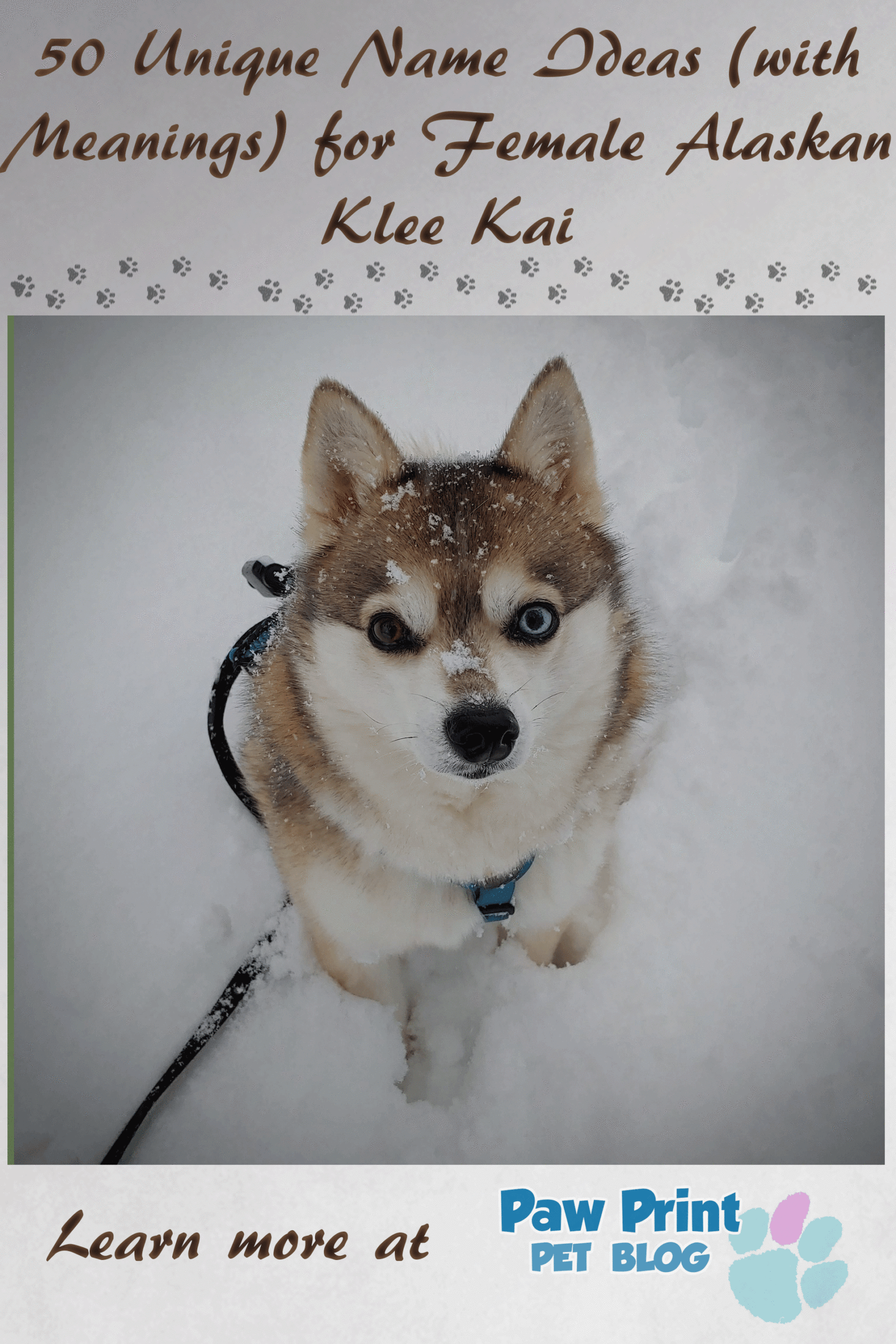
    50 Unique Name Ideas (with Meanings) for Female Alaskan Klee Kai

    February 23, 2023

    The other day I posted my list of 50 Unique Name Ideas for Male Alaskan Klee Kai.  Although I’ve personally, so far, only kept male dogs, I couldn’t forget the girls!  Naming a new pet can be hard.  Especially with puppies, since you’ll likely have to use that name for the next 10+ (hopefully lots more) years.

    • Alaskan Klee Kai Breed Profile

    The word “Klee Kai” comes from the language of indigenous Athabaskan and means “little dog”.  Alaskan Klee Kai are, quite literally, Alaskan little dogs!  They are northern/spitz-type dogs that basically look like miniaturized huskies.  Because of this, snow/winter, wolf, or husky-related names may be fitting for your Klee Kai!  If you’re searching for the perfect name for your new little dog, here are some names I think could be fitting for a female Alaskan Klee Kai!

    female Alaskan Klee Kai names

    Post Contents:

    • 1 Snow/Winter-Themed Names Ideas
    • 2 Location-Related Names
    • 3 Nature Inspired Names
    • 4 Wolf/Husky Inspired Names
    • 5 Random Name Ideas

    Snow/Winter-Themed Names Ideas

    1. Siku: An Inuktitut word for “ice”.
    2. Nilak: An Inuit word that means “freshwater ice”.
    3. Crystal: Like an ice crystal.
    4. Lumi: Finnish word for “snow”.
    5. Olwen: A Welsh name meaning “white footprint”.
    6. Fuyuko: A Japanese name meaning “winter child”.
    7. Talvi: A Finnish and Estonian name that means “winter”.
    8. Skadi: The Norse goddess of winter, mountains, and of the hunt.
    9. Firn: Snow that is more than a year old, usually found on glaciers.
    10. Neve: The Latin word for “snow”.

    Location-Related Names

    1. Alaska: Where Klee Kai were founded!
    2. Juneau: A city in Alaska
    3. Dakota: After the Dakota’s in the US, also means “friend” in Lakota.
    4. Montana: After the US State.
    5. Sierra: From the Sierra Nevada mountain range.
    6. Shasta: Mount Shasta is a mountain in Northern California.
    7. Eismitte: A German word that means “middle of the ice”.  Eismitte was an artic  expedition site in Greenland in the 1930’s.
    8. Cheyenne: A city in Wyoming, based of a Sioux Dakota word that means “one who speaks incoherently”.  Perfect for a talkative AKK!
    9. Phoenix: A city in Arizona, also a mythological bird.
    10. Astana: Astana, Kazakhstan is super cold and can get as low as -61* F in the winter!

    Nature Inspired Names

    1. River: This would be an especially cute name for a blue-eyed AKK.
    2. Ainsley: Means “one” or “Only” “woods” or “meadow”.
    3. Clover: From the wild flower.  Four-leafed clovers are good luck!
    4. Dahlia: The dahlia is a very pretty perennial flower.
    5. Flora: Means “flower”, and is also the Roman goddess of flowers and springtime.
    6. Hazel: Is a type of tree, and also refers to a light brown color.
    7. Iris: This is a type of flower, and also means “rainbow” in Greek.
    8. Juniper: A type of tree in the cypress family.
    9. Maple: Maple trees are common in colder climates and used to make maple sugar.
    10. Primrose: This is a flower whose name means “first rose” Primrose are commonly the earliest spring flower to bloom.

    Wolf/Husky Inspired Names

    1. Tala: Means “wolf” in Sioux
    2. Amarok: A giant wolf in Inuit mythology.
    3. Asena: A wolf from the Oghuz Turkic foundation myth.
    4. Rieka: A German name that means “A woman who has the power of the wolf”.
    5. Ylfa: An Icelandic name that means “a female wolf”.
    6. Lupita: Means “river of the wolf”.
    7. Sassaba: A native American name that means “the wolf”.
    8. Lovota: Means “good natured, a fast wolf”.
    9. Ashina: A Muslim name that means “she-wolf”.
    10. Lupa: An Italian name that means “wolf”.

    Random Name Ideas

    1. Aurora: After the northern lights.
    2. Luna: Means “moon”.
    3. Elsa: After the snow princess from the Disney movie.
    4. Nymeria: Arya Stark’s direwolf on Game of Thrones.
    5. Sansa: A character from Game of Thrones who became the Queen in the North.
    6. Holly: A winter holiday inspired name.
    7. Clara: A character in the Nutcracker, a Christmas favorite.
    8. Faye: Means “fairy”.
    9. Piper: Someone who plays the pipe (instrument).  Another good name for a vocal AKK!
    10. Sadie: A name with Hewbrew origin that means “princess”.

    If you decide to use any of our name suggestions for your female Alaskan Klee Kai you’ll have to comment below and let us know!  What are your dog’s named?  How did you come up with their names?

    (You’ll have to excuse the photos of my Alaskan Klee Kai, Fenrir, in this post, even though he’s a boy.  He’s my only AKK!)

    female Alaskan Klee Kai names

    Alaskan Klee Kai

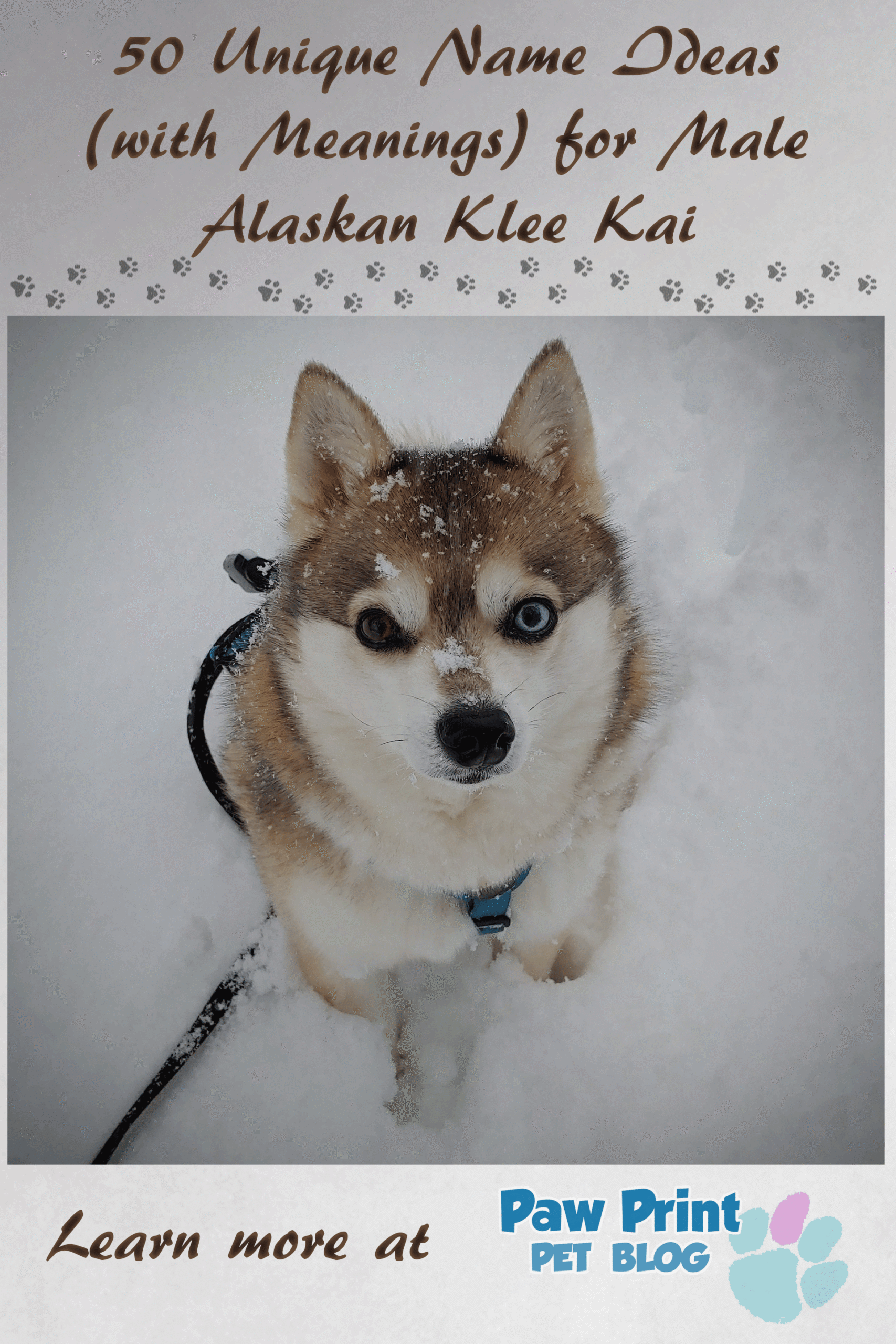
    50 Unique Name Ideas (with Meanings) for Male Alaskan Klee Kai

    February 21, 2023

    My Alaskan Klee Kai, Fenrir, was named long before we actually got him.  Way back when, when my partner and I first started dating, we talked about someday sharing our lives with a husky that we would name Fenrir.  That was before I even knew that Alaskan Klee Kai existed!  Eventually, I learned about the breed and it was love at first sight, although it wouldn’t be until many years later that we brought our Fenrir home.  It can be hard to find the perfect name for a new pet.

    • Alaskan Klee Kai Breed Profile

    The word “Klee Kai” comes from the language of indigenous Athabaskan and means “little dog”.  Alaskan Klee Kai are, quite literally, Alaskan little dogs!  They are northern/spitz-type dogs that basically look like miniaturized huskies.  Because of this, snow/winter, wolf, or husky-related names may be fitting for your Klee Kai!  If you’re searching for the perfect name for your little dog, here are some names I think could be fitting for a male Alaskan Klee Kai!

    male Alaskan Klee Kai names

    Post Contents:

    • 1 Snow/Winter-Themed Names Ideas
    • 2 Cold Location-Related Names
    • 3 Plant/Animal Inspired Names
    • 4 Wolf/Husky Inspired Names
    • 5 Random Name Ideas

    Snow/Winter-Themed Names Ideas

    1. Winter: You can’t get any more winter themed than the name Winter!
    2. Blizzard: A snowstorm.
    3. Flurry: Snow flurries are beautiful and serene.
    4. Glacier: A formation of dense ice.
    5. Hail: Not quite snow, not quite rain.
    6. Yujio: Japanese for “snow boy”.
    7. Frost: For Jack Frost, or the frost you’ll find on your windows on a cold winter’s morning.
    8. Fannar: An Icelandic name that means “snowdrift”.
    9. Squall: A brief snow shower.
    10. Snowburst: A brief, but intense snow shower.  A bit more unique than other snow-related names, such as snowflake or snowball.

    Cold Location-Related Names

    1. Kodiak: A city in Alaska, and also a type of Alaskan brown bear.
    2. Yukon: The area in Canada that borders Alaska.
    3. Timber: The woods.
    4. Nome: A town in Alaska.
    5. Everest: After Mount Everest, the tallest mountain in the world.
    6. Kenai: A mountain range in Alaska.
    7. Rainier: Mount Rainier is located in Washington state.
    8. Arctic: The polar region located at the northernmost region of the Earth.
    9.  Aspen: A city in Colorado known for skiing.
    10. North: For the north pole.

    Plant/Animal Inspired Names

    1. Polar: For polar bears.
    2. Nanook: An Inuktitut name that means “polar bear”.
    3. Moose: The largest member of the deer family, common in colder climates.
    4. Penguin:  A flightless bird most common in cold climates.
    5. Clove: A dried flower bud commonly used to season fall and winter recipes.
    6. Sparrow: A small bird found in many locations around the world.
    7. Kai: Taken from the dog’s breed, Klee Kai.
    8. Otter: A sea mammal common in cold climates.
    9. Cypress: After cypress trees.
    10. Bramble: A prickly shrub, such as a blackberry.

    Wolf/Husky Inspired Names

    1. Beowulf: From the epic poem, is thought to be an Anglo-Saxon name meaning “intelligent wolf”.
    2. Lobo: Spanish for “wolf”.
    3. Wolf: Very wolf related, right!?
    4. Togo: A sled dog who lead a dog sled team to deliver diphtheria serum to Nome, Alaska.
    5. White Fang: After the wolfdog in Jack London’s novel “White Fang”.
    6. Conan:  Means hound or wolf.
    7. Zeev: A name with Hebrew origin meaning “wolf”.
    8. Balto: Another famious sled dog.
    9. Borris: Means “he who is like a short wolf”.
    10. Lupin: From Latin “lupinus” which means “wolf”.

    Random Name Ideas

    1. Ghost: John Snow’s direwolf from Game of Thrones.
    2. London: After Jack London, the author of “Call of the Wild” and “White Fang”.
    3. Tyr: The Norse god of war.
    4. Loki: The Norse god of mischief.
    5. Warg: Wolves in Norse mythology.
    6. Echo: Derived from the Greek word for sound.
    7. Elf: Santa’s helpers!
    8. Grinch: From the Grinch who stole Christmas.
    9. Tinsel: Christmas tinsel!
    10. Yule: The festive winter holiday that Christmas was based off of.

    You’ll have to comment below if you use any of these names, or if you think of any others that I should add to the list!  If you have a dog currently, what is their name?  How did you come up with it?

    male Alaskan Klee Kai names

    Alaskan Klee Kai

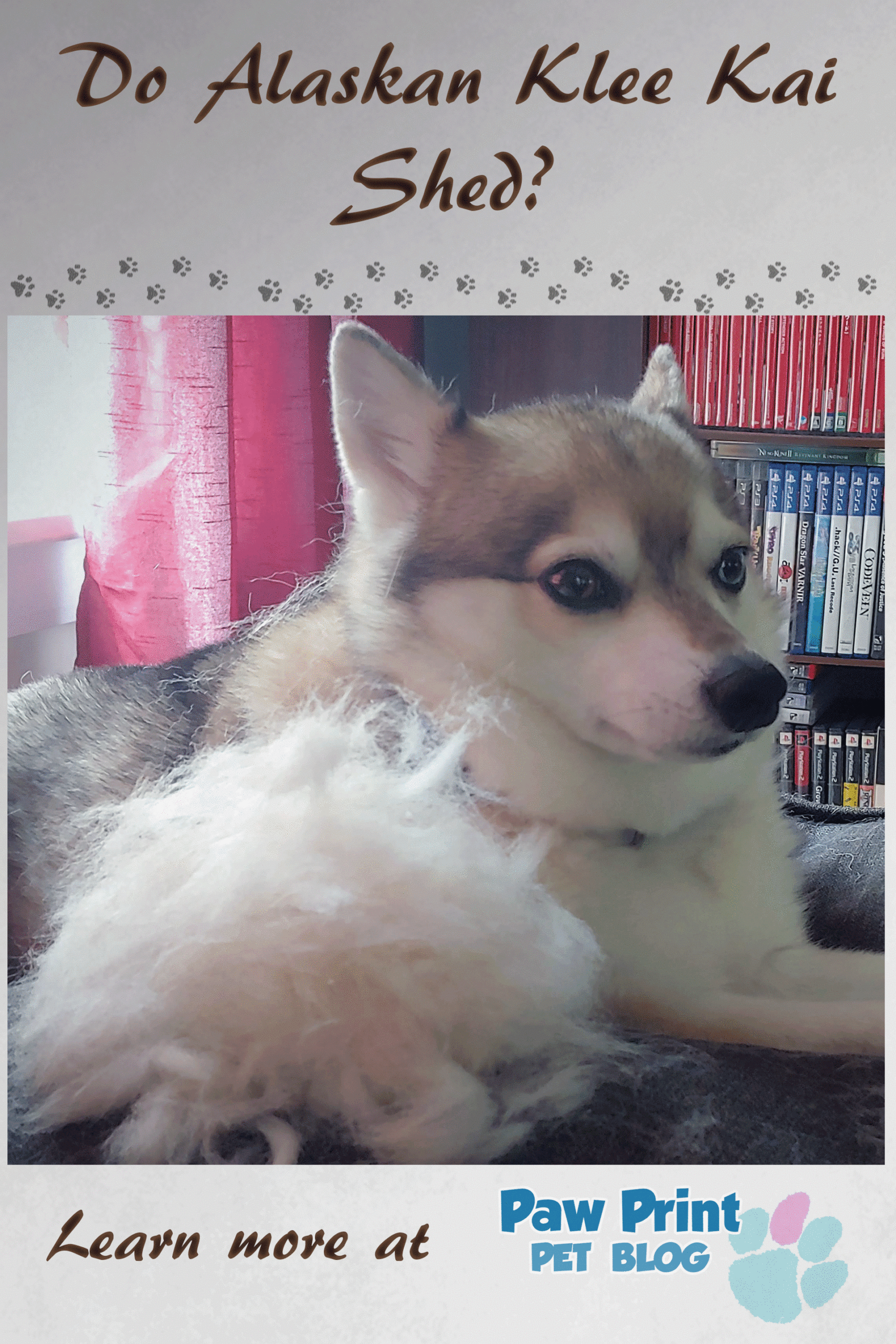
    Do Alaskan Klee Kai Shed?

    February 19, 2023

    I have to admit, of all the questions that I get asked about Alaskan Klee Kai, this one baffles me the most.  Do Alaskan Klee Kai shed?  My (sort of) joke answer is that Alaskan Klee Kai “only” have two shedding seasons per year.  The first is from January until June.  The second is from July until December.  At the risk of this being a very short article…YES, Alaskan Klee Kai shed, A LOT!

    Alaskan Klee Kai shed

    Post Contents:

    • 1 Alaskan Klee Kai Breed History
    • 2 Thus, Alaskan Klee Kai Shed Too!
    • 3 But Alaskan Klee Kai Shed All Year Long!
    • 4 Do NOT Get an Alaskan Klee Kai if You Can’t Deal with Shedding
    • 5 How to Deal with All the Alaskan Klee Kai Glitter
    • 6 Are They Worth all the Trouble!?

    Alaskan Klee Kai Breed History

    The Alaskan Klee Kai is a relatively new breed of dog.  The breed originated in the 1970s.  The Alaskan Klee Kai is such a new breed, in fact, that it is not yet recognized by the American Kennel Club.  In 2020 it was accepted into the AKC’s Foundation Stock Service, and the breed was recognized by the United Kennel Club in 1997.

    • Alaskan Klee Kai Breed Profile
    • Alaskan Klee Kai Sizes

    Because it’s such a new breed, unlike some ancient breeds of dogs, we know how the Alaskan Klee Kai was originally created.  Their founder, Linda Spurlin, created the original Klee Kai by mixing Alaskan and Siberian huskies with smaller schipperkes and American Eskimo dogs.  In case you don’t know much about Alaskan huskies, Siberian huskies, schipperkes, and American Eskimo dogs, they are one in all double-coated dogs that shed quite a bit.

    Thus, Alaskan Klee Kai Shed Too!

    Alaskan Klee Kai shedAs their breed history suggests.  Linda Spurlin set out to create little huskies, and, for better or for worse, the little guys shed just as much as their much larger cousins!  Like other breeds with dense undercoats, Alaskan Klee Kai will blow their coats usually twice per year.  “Blowing their coat” is what we northern dog owners call it when our double-coated dogs basically explode fluff all over the place.  Normally in the spring and autumn, Alaskan Klee Kai will shed out a majority of their insulating undercoat to make way for new fur growth.

    You can think of a double-coated dog blowing his or her coat as the dog changing coats to suit the new season!  In the spring, Alaskan Klee Kai will shed their thick winter coats in preparation for the upcoming hotter weather.  In the autumn, they will shed their thinner summer undercoat so they can replace it with a new, thick winter coat again.

    • How to Tell if Your Dog has A Double or a Single Coat

    But Alaskan Klee Kai Shed All Year Long!

    Some people learn about Alaskan Klee Kai blowing their coats and figure that they can deal with shedding if it only happens twice a year.  Don’t fall for the trap!  If you share your life with an Alaskan Klee Kai you will be eating, drinking, and wearing Alaskan Klee Kai glitter (aka fur) all year round.  Although their regular, daily shedding won’t be anywhere near as excessive as their twice a year “big” sheds, it’s not even close to being an insignificant amount of fur.

    My first dog, Kitsune, is a papillon.  Despite his hair being a lot longer than my Alaskan Klee Kai, Fenrir’s, Kitsune is single coated.  The amount of hair Kitsune sheds verses Fenrir is like night and day.  Kit barely sheds at all.  Fenrir will leave little Fen tumbleweeds all over our house if I don’t vacuum often enough.

    Do NOT Get an Alaskan Klee Kai if You Can’t Deal with Shedding

    If cleaning dog hair off your floors, furniture, etc. doesn’t sound fun to you, don’t get an Alaskan Klee Kai.  If the thought of going out with dog hair on your clothes, or finding fur in your food every now and then, is unappealing to you than this is not the breed for you.

    If you’re trying to decide whether or not you want an Alaskan Klee Kai think about whether or not you’d want a full sized husky.  If the thought dealing with a shedding husky is off-putting to you, then do not get an Alaskan Klee Kai.

    How to Deal with All the Alaskan Klee Kai Glitter

    Brush brush brush your dog, brush them everydaaay (to the tune of ‘row row row your boat’!)

    If your already owned by an Alaskan Klee Kai, or you’re seriously considering getting one, be prepared to invest in cleaning products.  A really good vacuum is an essential product.  A good broom and mop, and dog brushes are really important too.  If you really want to get serious, a forced air drier can be especially useful when your dog is blowing his or her coat.

    In my experience, the best way to deal with all the AKK fur is to stay on top of it as much as possible.  I bathe my Alaskan Klee Kai twice a month and use shed control shampoo and conditioner.  Quite a bit of fur comes off of my AKK in the tub, so make sure you use a drain filter to prevent all that hair from clogging up your drains!  After his bath, Fen gets brushed and dried.  Even more fur will come off when you’re drying your dog.

    Especially when they are blowing their coats, you’ll want to brush your Alaskan Klee Kai as often as possible.  The more hair you can get off of them, the less of it there will be to get all over your house!  If you get your AKK as a puppy, start getting them used to being brushed as soon as possible.  I was stupid and didn’t brush Fenrir as much as I should have when he was a puppy.  It took awhile, once he was an adult, to get him used to being brushed.

    The theory of “more often is better” applies to cleaning your house too.  Sweeping and vacuuming aren’t fun, but the more you clean the less Klee Kai fur you’ll have to contend with at any one time.  Because believe me, you WILL have AKK fur tumbleweeds all over your house if you don’t clean often enough.  I also clean things like bedding relatively often.  Again, be cognizant of things like your drier and drain filters.  Keep them clean for the sake of your appliances!

    Are They Worth all the Trouble!?

    Cute Alaskan Klee KaiAlaskan Klee Kai are a very unique breed of dog.  They are high maintenance, needy little dogs that, in some ways, are more cat like than dog.  If I didn’t know any better, I could be convinced that the breed was created by mixing the world’s most mischievous cat with a high energy, hyper alert, clingy dog.  An…interesting…combination to be sure.  This is 100% not a breed for everyone, and that’s even before you take into account how much they shed.

    • Do Alaskan Klee Kai Make Good Apartment Pets?

    If you don’t like the idea of owning a dog that sheds a lot, then this is defiantly not the breed for you.  The shedding can be managed if you’re willing to put in the work, but it’s a daily grind.  I love my Alaskan Klee Kai, Fenrir, and wouldn’t trade him for anything.  But I have to admit that I did underestimate just how much he would shed before I got him.  However, for me, having Fen in my life is 100% worth dealing with all the fur!

    Comment below!  Do your pets shed a lot?  Do you have any tips for ways you keep your house nice and clean with pets?

    Alaskan Klee Kai shed

    Dog Health, Pet Tips

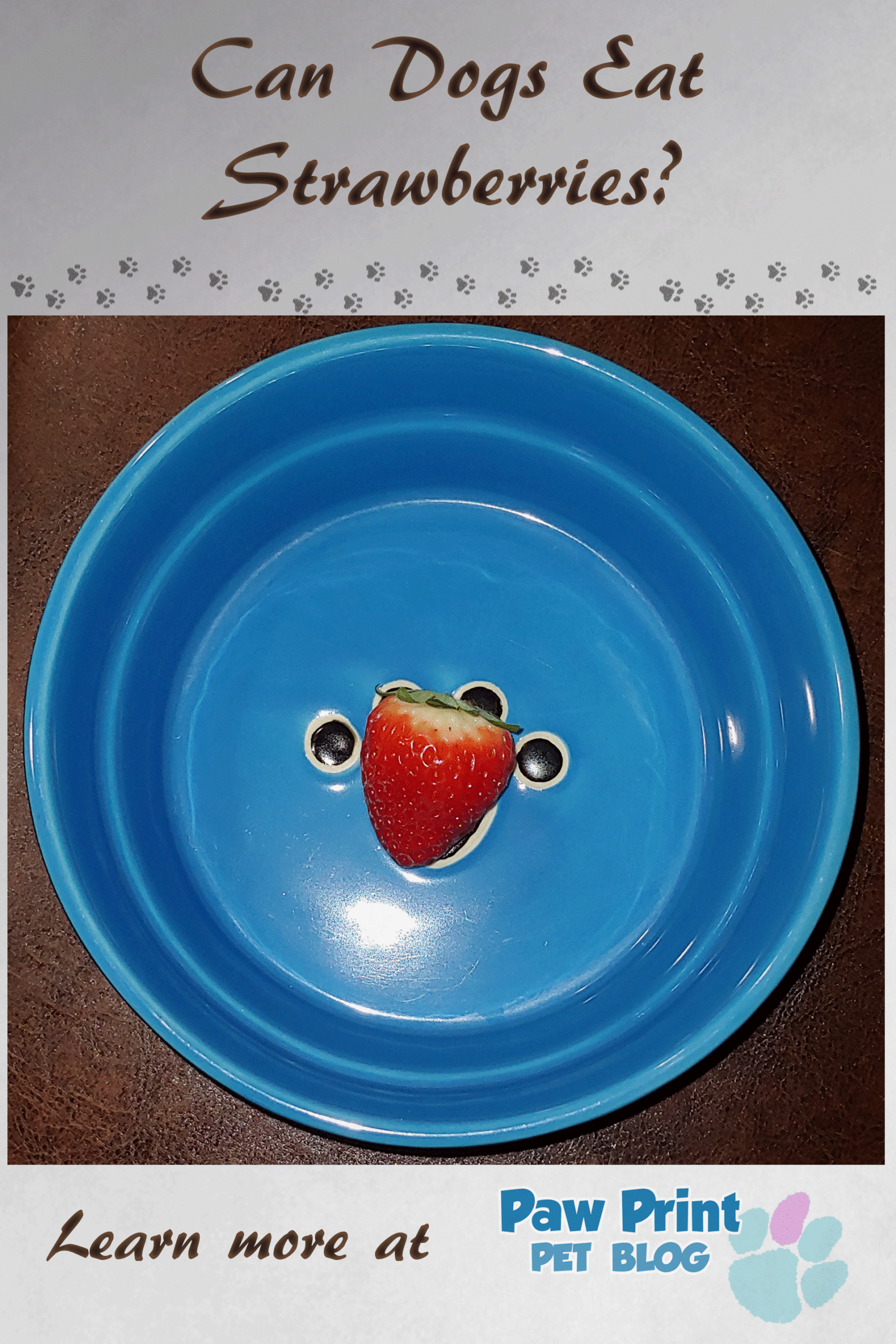
    Can Dogs Eat Strawberries?

    February 17, 2023

    Can dogs eat strawberries?  Strawberries are my all-time favorite food!  In the spring and summer, I love to grow as many strawberry plants as I possibly can in planters on our porch and around our yard.  Growing them in planters inside, or very close to, the house is the only way I’ve found I can grow them without all the various critters in our yard getting to the berries before I do!  Apparently, a lot of different animals enjoy strawberries just as much as I do.  What about dogs?

    Post Contents:

    • 1 Strawberries are Nontoxic to dogs!
    • 2 Are There Any Benefits to Feeding Strawberries to Dogs?
    • 3 Are There Any Drawbacks to Feeding Dogs Strawberries?
    • 4 How to Feed Strawberries to Your Dog

    Strawberries are Nontoxic to dogs!

    Luckily for me, strawberries are safe for dogs to eat.  I say luckily because, as I’ve shared here before, I often enjoy sharing snacks with my two dogs, Kitsune the papillon and Fenrir the Alaskan Klee Kai.  Not to mention the fact that I can be quite messy in the kitchen.  No worries, Kit and Fen are amazing kitchen assistants and love to help me clean up any little food tidbits that I drop.  What do people without dogs even do when they drop food?  Pick it up themselves?  Weird.

    dogs eat strawberries

    Are There Any Benefits to Feeding Strawberries to Dogs?

    Despite often tasting sweet and delicious, strawberries are actually quite healthy.  Like many other fruits and vegetables that dogs can safely snack on, strawberries are low in calories.  They can, in moderation, make great low-calorie snacks for dogs.  I’ve been trying to help my senior dog, Kitsune, lose a bit of excess weight lately.  Feeding him fruits and veggies that are low in calories but high in fiber helps him to feel full without adding a lot of excess calories to his diet.

    Strawberries are a great source of a host of healthy nutrients, like vitamin C, manganese, folate, potassium, and antioxidants.  In humans, nutrients in strawberries have been linked to all kinds of health benefits.  Everything from heart health to cancer prevention!

    • Strawberry Nutrition Facts

    If either my dogs or myself end up living an unusually long time, I’m going to tell everyone that our secret is strawberries.

    Are There Any Drawbacks to Feeding Dogs Strawberries?

    Strawberries, as their taste implies, are high in natural sugars.  Like other fruits that are dog-safe, they should be fed in moderation.  Too much sugar consumed at once can commonly cause GI upset in dogs.

    Also, like in humans, some dogs can actually be allergic to strawberries.  If your pup experiences any adverse effects after trying strawberries for the first time, such as hives, itchy skin, swelling, or trouble breathing, contact your veterinarian.

    How to Feed Strawberries to Your Dog

    dogs eat strawberriesThings like strawberry jam and pie filling are delicious, but should be kept away from your dog.  These types of products have a lot of added ingredients, usually sugars and other things that may not be safe for your dog.  When it comes to offering my own dogs strawberries, my motto is that fresh is best.  Fresh, plain strawberries don’t contain any added ingredients that I have to worry about.

    When I’m cutting strawberries, I’ll often offer my dogs a small slice or two.  Just to note, strawberry plants (the stems and leaves) are not toxic to dogs.  So if you grow your own berries, like I do, and your dog decides to raid your garden, you don’t have to worry too much about them getting into your strawberry patch.  The leaves and stems likely won’t be easy for your dog to digest, though, and may cause GI upset if eaten.  Plus if your dog eats your plants you won’t get as many delicious berries, so it’s best to keep Fluffy out of your garden.

    Comment below!  Have you ever shared strawberries with your dog?  Do they enjoy them?

    dogs eat strawberries

    Dog Health, Pet Tips

    Can Dogs Eat Tomatoes?

    February 15, 2023

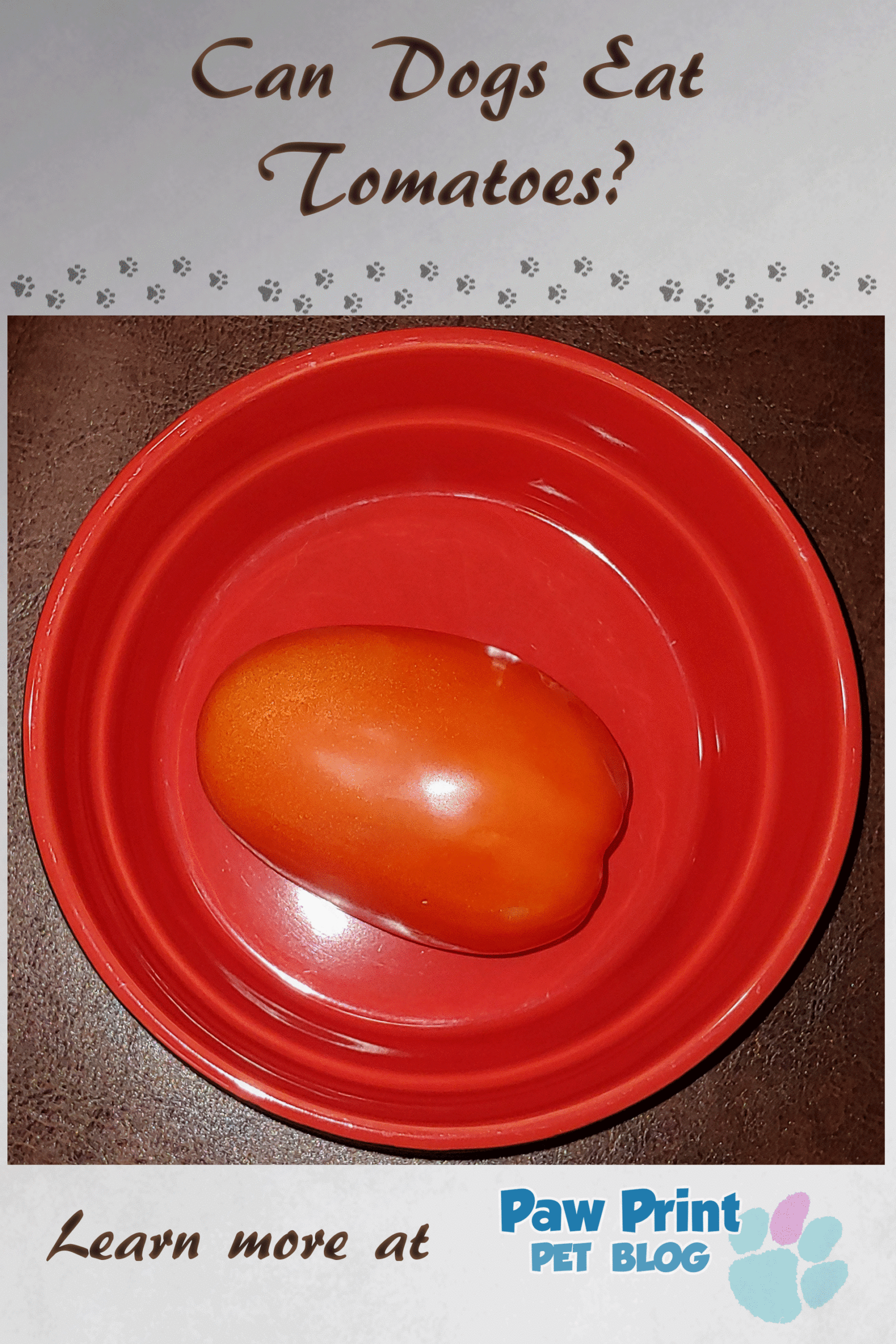
    Is it ok to feed dogs tomatoes?  While I’m cooking or working on food prep, I’ve been known, every now and then, to “drop” little tidbits for my dogs.  There are lots of human foods that can make healthy snacks, in moderation, for dogs!  Ever since he was a pup, one food my now 14-year-old papillon, Kitsune, has enjoyed has been tomatoes.  Every time I slice tomatoes, Kitsune comes running into the kitchen to eagerly await his snackrifice.  I’ve never known another dog to love tomatoes as much as he does!  So by now, you may be wondering, are tomatoes dog safe?

    Post Contents:

    • 1 Only Ripe Tomatoes are Dog Safe
    • 2 Signs of Solanine Poisoning in Dogs
    • 3 Tomato Allergies & Other Issues
    • 4 Are There Any Benefits to Feeding Dogs Ripe Tomatoes?
    • 5 How to Feed Tomatoes to Your Dog

    Only Ripe Tomatoes are Dog Safe

    dogs tomatoesRipe red tomatoes are safe, in moderation, for dogs.  However, unripe, green tomatoes and all parts of a tomato plant, besides the ripe fruit, should be kept away from dogs.  Tomato plants are a member of the nightshade family.  Like other nightshades, the plant produces a chemical, called solanine, that is toxic to dogs (as well as to people!) in large quantities.  Luckily, when tomato fruit ripens the amount of solanine is dramatically decreased.  Solanine levels in ripe tomatoes are low enough that they are no longer considered to be dangerous to consume.

    Besides green, unripe tomatoes, solanine in toxic levels is also found in tomato leaves, stems, and roots.  If you grow your own tomatoes, it’s important to make sure your dogs don’t nipple on any part of tomato plants or eat dropped, unripe fruit.

    Signs of Solanine Poisoning in Dogs

    How quickly, and intensely, a dog is impacted by solanine poisoning can depend on a number of factors, such as the size and general health of the dog, as well as how much solanine he or she was exposed to.  In small amounts, solanine can cause GI upset but no other, major symptoms.  In larger quantities, however, more serious side effects could include the following:

    • More intense GI symptoms
    • Loss of appetite
    • Lethargy
    • Weakness
    • Drooling
    • Confusion
    • Dilated pupils
    • Lack of coordination
    • Tremors
    • Seizures
    • Cardiac issues (abnormal heart rate)

    Luckily, with swift treatment, most dogs recover well from solanine poisoning.  Treatment normally consists of supportive therapy, such as administering fluids to keep your dog hydrated and medications to manage any heart irregularities.

    Tomato Allergies & Other Issues

    Although this is rare, dogs can also be allergic to tomatoes.  Signs to look out for include GI upset, hives, coughing, swelling, wheezing, and difficulty breathing.  If your dog experiences any of these symptoms after trying a new food, contact your vet.

    Like in people, tomatoes can cause some dogs to experience excess stomach acid.  If your dog has a sensitive stomach, or a health concern such as acid reflux, it’s best to avoid acidic foods such as tomatoes.

    dogs tomatoes

    Are There Any Benefits to Feeding Dogs Ripe Tomatoes?

    Like many other fresh produce, tomatoes are low in calories but high in fiber.  This can make them a good alterative to high calorie treats, especially for dogs who are trying to watch their weight.  Tomatoes also also a source of vitamin C, potassium, folate, and antioxidants.  Lycopene, the antioxidant responsible for making ripe tomatoes red, has been linked to a reduced risk of heart disease and cancer in humans.

    • Health Benefits of Tomatoes

    How to Feed Tomatoes to Your Dog

    I’ve always just offered Kitsune, my tomato fiend, small pieces of fresh, ripe tomatoes.  When it comes to dogs and tomatoes, fresh is best!  Canned tomatoes, or tomatoes that have been made into soups or sauces, will contain a lot of other ingredients, such as sugars and salts, that are best avoided for our canine companions.

    Comment below!  Do your dogs like tomatoes?  I’ve always thought it was funny how excited my Kitsune gets over them!

    dogs tomatoes

    DIY

    Broccoli Bites: Delicious Broccoli Dog Treat Recipe

    February 13, 2023

    I originally created this dog treat recipe back in 2017.  It was inspired by St. Patrick’s Day.  I wanted to create a dog treat recipe that would be naturally green, without the need to add a bunch of food coloring.  This was one of the recipes I came up with.  I wouldn’t say it turned out super successful as far as the color goes.  But my dogs both like these treats, which makes them a win in my book!  Strangely, both of my dogs, yes even my super picky Alaskan Klee Kai Fenrir, really like broccoli.  Thus this broccoli dog treat recipe was born.

    Post Contents:

    • 1 Is Broccoli Safe for Dogs?
    • 2 Ingredients:
    • 3 Instructions:
    • 4 Cool and Let Your Dog Enjoy!

    Is Broccoli Safe for Dogs?

    My dogs must get their love for broccoli from my partner (haha),  because I’m not the biggest fan myself.  I really don’t like the way that broccoli smells.  Creating this broccoli dog treat recipe was quite a labor of love for me.

    In some dogs, broccoli can cause GI upset.  Take things slow with these treats if you aren’t sure how well your dog handles broccoli or any of the other ingredients.  I made the treats small so I could use them as training treats, but making them small will also be a good way to introduce them to your dog slowly if you are unsure how he/she will handle any of the ingredients.

    Without any further ado, I give you Broccoli Bites!

    Ingredients:

    • 2 cups loosely packed broccoli florets.  I used fresh, but frozen should work too.
    • 3/4s of a cup of cubed cheddar cheese.
    • 1 cup kefir.  I used homemade kefir.  If you can’t get your hands on any, or don’t want too, store bought (dog safe, check the ingredients list and make sure it doesn’t contain excess sugar or xylitol!) kefir, or plain yogurt should also work.
    • 1 cup flour.

    Instructions:

    broccoli dog treat recipe~ Use a food processor to chop your broccoli and cheese into small pieces.  Mix the chopped broccoli and cheese together with the kefir/yogurt and flour.  The resulting dough should be moist and a bit sticky, but easy to form into small balls by hand.

    ~ Preheat your oven to 350*F.  Lightly flour the bottom of a baking sheet.  Place small balls of your dough onto the floured sheet.  The cooking times I used are for small treats.  You can make them as small/large as you want, but baking times will vary based on the size of your treats.

    ~ Bake at 350*F for 20 minutes, or until treats reach desired consistency.  I was going for a more crunchy treat for my dogs, so I baked the treats for the full 20 minutes then turned off the oven and left them inside while the oven cooled.  For softer treats, bake them for less time and pull them out of the oven as soon as they are done cooking.

    ~ Since these treats contain fresh ingredients and no preservatives, they should be stored in the refrigerator.

    Cool and Let Your Dog Enjoy!

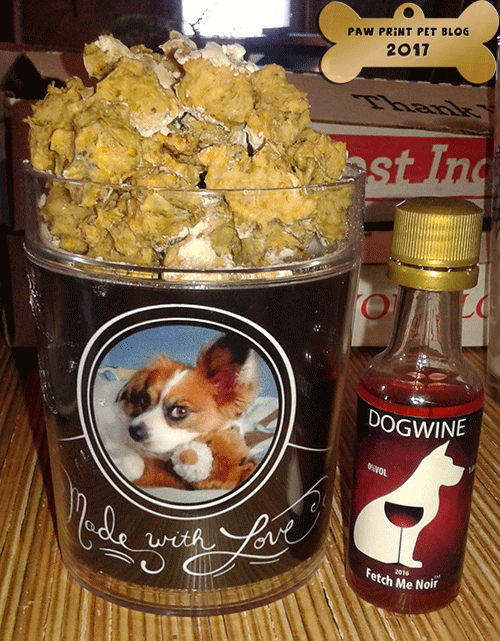
    broccoli dog treat recipeThis recipe made quite a few small treats, probably about double what you see in that cup in the picture.  If you aren’t sure if your dog will like these, if the ingredients will agree with him/her, or you don’t think your dog will go through that amount of treats quick enough, you might want to start by halving the recipe.

    Kit said these go great with a bottle Dogwine or Bowser Beer.  You know, in the spirit of St. Patrick’s Day (don’t worry, it’s made for dogs and is, of course, nonalcoholic).

    If anyone tries making this broccoli dog treat recipe, you’ll have to comment below and let me know how your dog liked them!

    broc dog treats


    Papillons

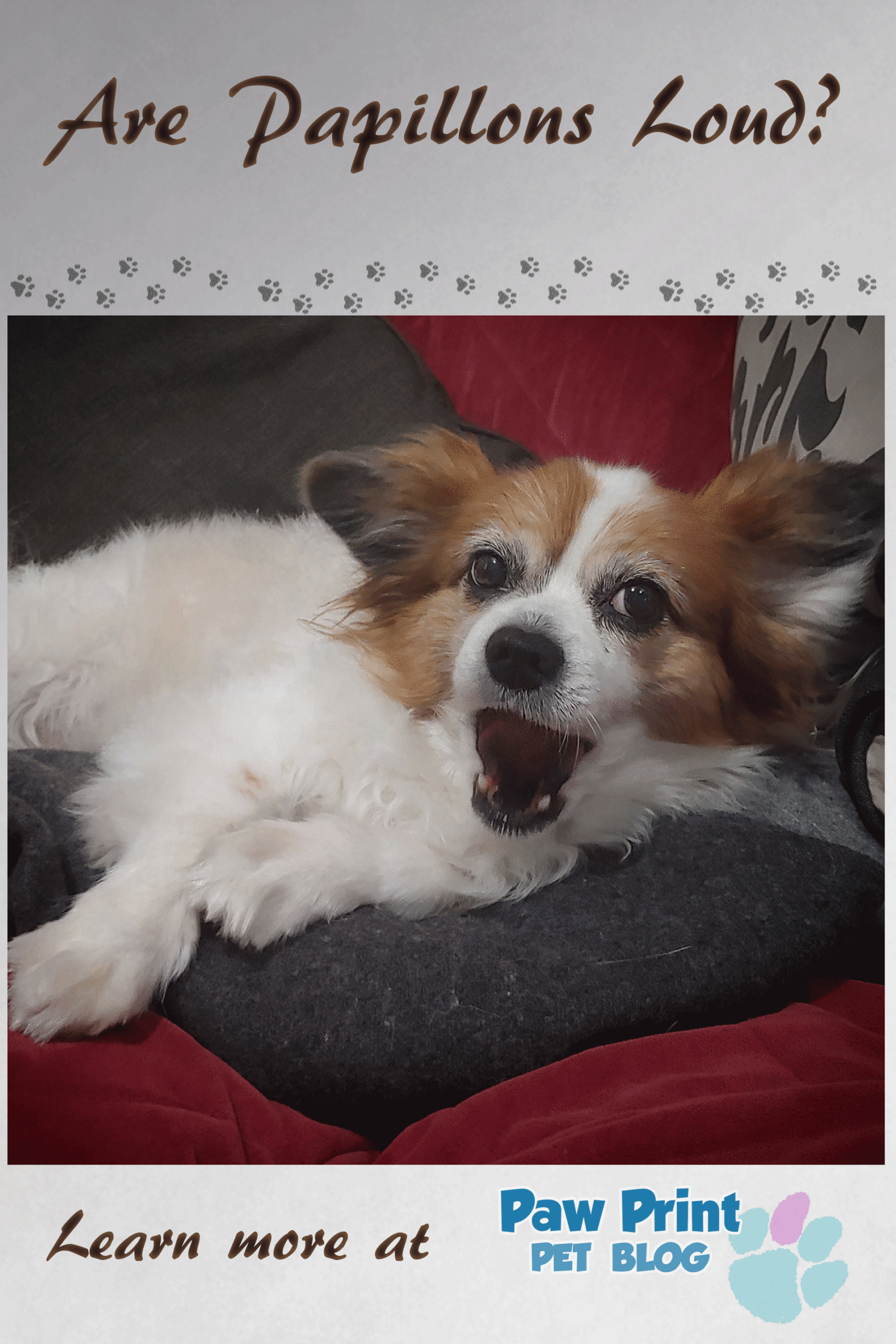
    Are Papillons Loud? 6 Tricks to Deal with Your Yappy Pappy

    February 11, 2023

    Papillons are an amazing toy breed of dog.  Although they are generally small, 10 lbs. or under, they make wonderful adventure companions.  They can make perfect pets for active, outdoorsy families who, for whatever reason, decide that a larger dog isn’t for them.  One factor people often take into account before adding a new dog to their family is how loud, in general, the dog’s breed tends to be.  Small dogs are often stereotyped as being yappy.  If you live in an apartment building, or just don’t like noisy dogs, this stereotype may turn you away from adopting a small breed dog.  So are papillons loud?

    Post Contents:

    • 1 Papillons Do Tend to Bark A Lot
    • 2 Luckily, Papillons are Also Smart!
    • 3 Tips for Dealing with Loud Papillons
    • 4 Keep Up with Training!
    • 5 Papillons, Although Sometimes Loud, are Amazing Dogs!

    Papillons Do Tend to Bark A Lot

    This may not be the answer you were hoping for, but papillons, in general, do tend to bark a lot.  Some people might even refer to this breed as being yappy.  Papillons tend to be alert barkers.  This means, if you live in an apartment building, they may bark every time they hear other tenants in the building.  Or, perhaps when they see a person, dog, or squirrel outside the window.

    Some papillons just seem to be the type of dog that likes to hear themselves bark!  Besides alert barking, my personal papillon, Kitsune, “talks” quite a bit when he’s playing, and when he wants something.  He can be quite demanding when he wants to be!

    Luckily, Papillons are Also Smart!

    If you had your heart set on a papillon and are discouraged to hear that they can be loud, have no fear!  Papillons also happen to be the 8th smartest dog breed!  What does intelligence have to do with barking?  Being smart doesn’t stop them from barking, of course, but it does mean they are relatively, when compared to other dog breeds, easy to train!

    That’s not to say that training papillons not to bark is always easy.  It can be a challenge sometimes for sure.  But if it means the difference between being able to keep your papillon in your apartment with you or not, then training your papillon not to bark so much will 100% be worth your time.

    • Do Papillons Make Good Apartment Pets?
    • Can Papillons Hike?
    • How Long Do Papillons Live?
    • List of US Based Papillon Rescues
    • Papillon Breed Standard

    Tips for Dealing with Loud Papillons

    1. Don’t give in to your papillon’s barking.  If your dog, like mine, likes to demand bark, it’s important not to give in to their demands.  Doing what your dog wants you to do when he or she barks helps to teach them that barking will get them what they want!
    2. Don’t yell at your dog for barking either.  Dogs don’t always understand what we’re trying to convey if we yell at them.  Worst case, sensitive dogs can be upset by our yelling, but still not really understand what we want from them.
    3. Consistency is key.  If you’re working on training your papillons not to be so loud, make sure everyone in your house is on board.  If one person is working on training your dog not to bark, but everyone else in the home is just giving in to the barking, then you’re dog is less likely to learn quickly what you are expecting from them.
    4. Stop barking before it starts.  Learn to identify the things that trigger your dog’s barking.  While you are working on training, doing your best to avoid triggers will make your (and your neighbors) lives easier.  This may mean doing things like keeping window shades closed so your dog can’t bark at things outside, or using a white noise machine to drown out the sounds from outside.
    5. Talk to your trainer and vet.  If your dog is barking mostly when you leave them home alone, it could be due to separation anxiety.  Consider enlisting the help of a trainer or veterinary behaviorist.  If your dog gets especially stressed when left home alone, consider discussing options with your vet.  They may recommend using medication to help keep your dog calm when you leave, in addition to working on training your dog to be more comfortable alone.
    6. Teach your dog what you do want them to do!  Teach your dog a behavior that you’d like them to do instead of barking.  For example, if your dog barks a lot when people knock on your door, teach them to go lay down on their beds when they hear a knock at the door.  This gives them something to do, a way to alert you to a visitor, without making a sound.

    Keep Up with Training!

    papillons loudSo you put in the hard work and trained your papillon not to bark so much?  That’s awesome, but don’t let up now!  Consistency and repetition is key when it comes to teaching our dogs what types of behaviors we want to see from them.  This is coming from personal experience because, I have to admit, in recent years I’ve let Kit’s “quiet” training lapse quite a bit.

    When we moved out of the city my partner and I became a bit less concerned about how loud our dogs were.  We didn’t have any close neighbors to worry about annoying anymore, after all.  Plus Kitsune is 14 now and after the rough year, health wise, that he had last year I tend to let him get away with things now that I wouldn’t have when he was younger.

    So working on brushing up on training Kitsune not to be so loud is for sure on my to do list!  He’s generally a really good dog, but he does alert bark and barks quite a bit now when he wants something, usually food.  I joke about what an amazing little watch dog he is, but in reality if anyone ever broke into our house Kit would probably just try to convince the burglar to help him get into the refrigerator!

    Papillons, Although Sometimes Loud, are Amazing Dogs!

    Papillons are adventurous, sweet, social little dogs that make amazing adventure companions.  Their sometimes excessive barking may be a downside to some.  But for owners who are willing to put in the work, papillons are fuzzy geniuses who are usually easy to train.  If you think this might be the breed for you, and you are ready and willing to put in the time needed to train them, don’t let their tendency to be barkers scare you away.  Sharing your life with one of these amazing little dogs is well worth the effort of training them!

    Comment below!  If you have a papillon, does yours bark a lot?  Do you have any other tips for helping owners to cope with barking dogs?

    papillons loud

    Dog Health

    Does Thuja Work for Removing Dog Warts?

    February 9, 2023

    It’s kind of frustrating, but both of my dogs, Kitsune the papillon and Fenrir the Alaskan Klee Kai, have been exposed to the canine papillomavirus, aka warts.  Kitsune, my sweet social butterfly, I believe was exposed by one of his dog friends back when we still lived in the city.  It was pretty inevitable, after that, that he exposed his dog brother Fenrir too.  Luckily doggy warts have never been a huge deal for either of my dogs.  Recently Fenrir developed very small warts, one on his chin and one on his eyelid.  I did a bit of research about what, if anything, to do about it.  After discussing the situation with Fen’s vet, I decided to try a holistic treatment that is touted as being able to get rid of dog warts, thuja.

    Post Contents:

    • 1 First Thing First,  Dogs Can Get Warts!?
    • 2 How Do Dogs Get Warts?
    • 3 Do You Have to Get Dog Warts Removed?
    • 4 Natural Dog Warts Remedies – What is Thuja?
    • 5 Using Homeopathic Thuja to Treat Warts
    • 6 I Tried Homeopathic Thuja on my Own Dogs Warts
    • 7 Did the Homeopathic Thuja Remove my Dogs Warts?
    • 8 Does Thuja Ever Work?
    • 9 Of course a sample size of one dog does not a scientific study make!

    First Thing First,  Dogs Can Get Warts!?

    It turns out that yes, dogs can get warts.  Warts in dogs are caused by the canine papillomavirus.  While very similar to the virus that causes warts in humans, the canine papillomavirus is dog-specific and cannot infect humans.  The canine papillomavirus is, as the name suggests, a virus that causes growths, often referred to as warts, in dogs by causing a dog’s cells to divide abnormally.  Dogs exposed to the canine papillomavirus most commonly develop cauliflower-like growths around their mouths and gums, lips, noses, paws, and eyes.  However, warts can sometimes develop in other spots too.  When my Kitsune first got one, for example, it was on his back.

    How Do Dogs Get Warts?

    Dogs must be exposed to the canine papillomavirus to develop warts.  Basically, warts are contagious between dogs.  A dog can become infected with the papillomavirus by playing with another dog who has warts, or by sharing items such as bowls and toys.  Not all dogs who are exposed to the virus will develop warts, or develop warts right away.  Dogs may carry the virus asymptomatically.  Actual warts appear most often on dogs who have weakened immune systems.  They are more commonly found on puppies, senior dogs, or dogs who are immunocompromised in some way.

    Do You Have to Get Dog Warts Removed?

    Sometimes.  In a normal, healthy dog, warts will usually resolve on their own.  Your dog’s own immune system can, eventually, learn to recognize the papillomavirus as an invader and develop an immune response against it.  This typically takes anywhere between 2 and 6 months.  Unfortunately, some dogs will have more persistent warts that don’t go away on their own.

    Warts that don’t resolve on their own, especially ones that are large or bothersome to your dog, can be removed either surgically or with cryotherapy.  Treating warts this way, unfortunately, does not guarantee that the wart won’t come back.  The antibiotic Azithromycin has some anti-viral properties and is sometimes used to treat warts in humans.  It has shown positive results in treating dogs as well.

    Natural Dog Warts Remedies – What is Thuja?
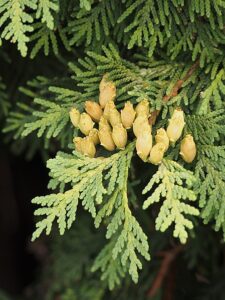
    Thuja occidentalis Photo thanks to Agnieszka Kwiecień, Nova. Licensed via the Creative Commons Attribution-Share Alike 4.0 International license.

    Thuja occidentalis, thuja for short, is an evergreen tree that grows natively throughout eastern Canada and the northeastern US.  Common names for thuja trees include northern white-cedar, easter white-cedar, arborvitae, and swamp cedar.  It’s a medium-sized tree in the cypress family that has red-brown bark and scaley leaves.  It’s Latin name means “tree of life”, because the sap, bark, and branches are thought to have medicinal properties.  Traditionally, herbal remedies created from the tree were used to treat conditions such as scurvy, and skin issues such as thrush, ringworm and, yes, warts.

    It’s very important to note that in it’s unaltered form, Thuja occidentalis is actually toxic to both dogs and people!  In some people it can cause skin irritation, and dogs who ingest the plant itself can experience GI upset.  Do not think that, because homeopathic thuja is often recommended to treat warts, that you can just find thuja growing outside and feed it to your dog!  Homeopathic thuja is diluted to the point that actual thuja is no longer detectable.  You can read more about how homeopathic remedies are created here.

    Using Homeopathic Thuja to Treat Warts

    Homeopathic remedies derived from the thuja tree can be purchased to battle warts.  Hey, there’s even some evidence that it works for curing warts in cows.  Why not dogs?  The instructions for using Thuja Occidentalis 30C for people is to dissolve 5 pellets under the tongue up to 3 times a day.  Recommendations on what dosages to use for dogs vary.  While researching, I came across recommendations to use anywhere from 3 to 10 pellets, once or twice per day.  Homeopathic thuja has no known side effects, and no known drug interactions.

    In humans, homeopathic pellets are supposed to be held under the tongue until they dissolve.  That doesn’t exactly work for dogs.  For dogs, the thuja pellets can be placed directly into your dog’s mouth, or dissolved in water.  For both humans and dogs, I’ve read statements that suggest it can take anywhere from a week to a few months to see the results of using homeopathic thuja to remove warts.

    I Tried Homeopathic Thuja on my Own Dogs Warts

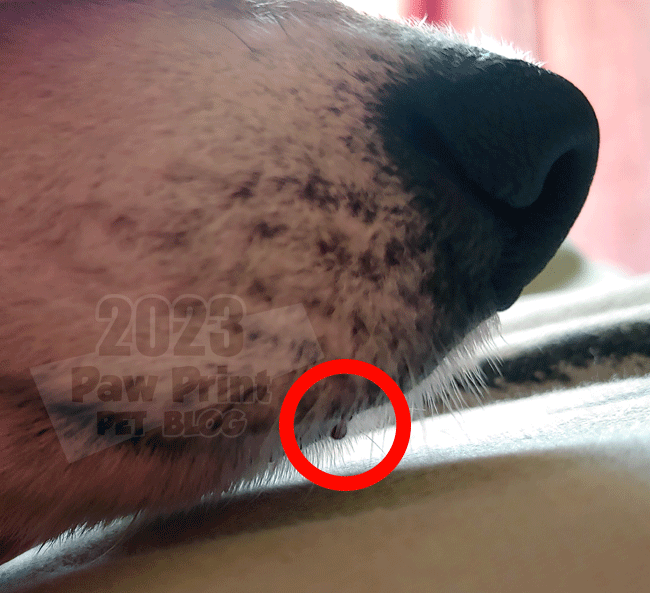
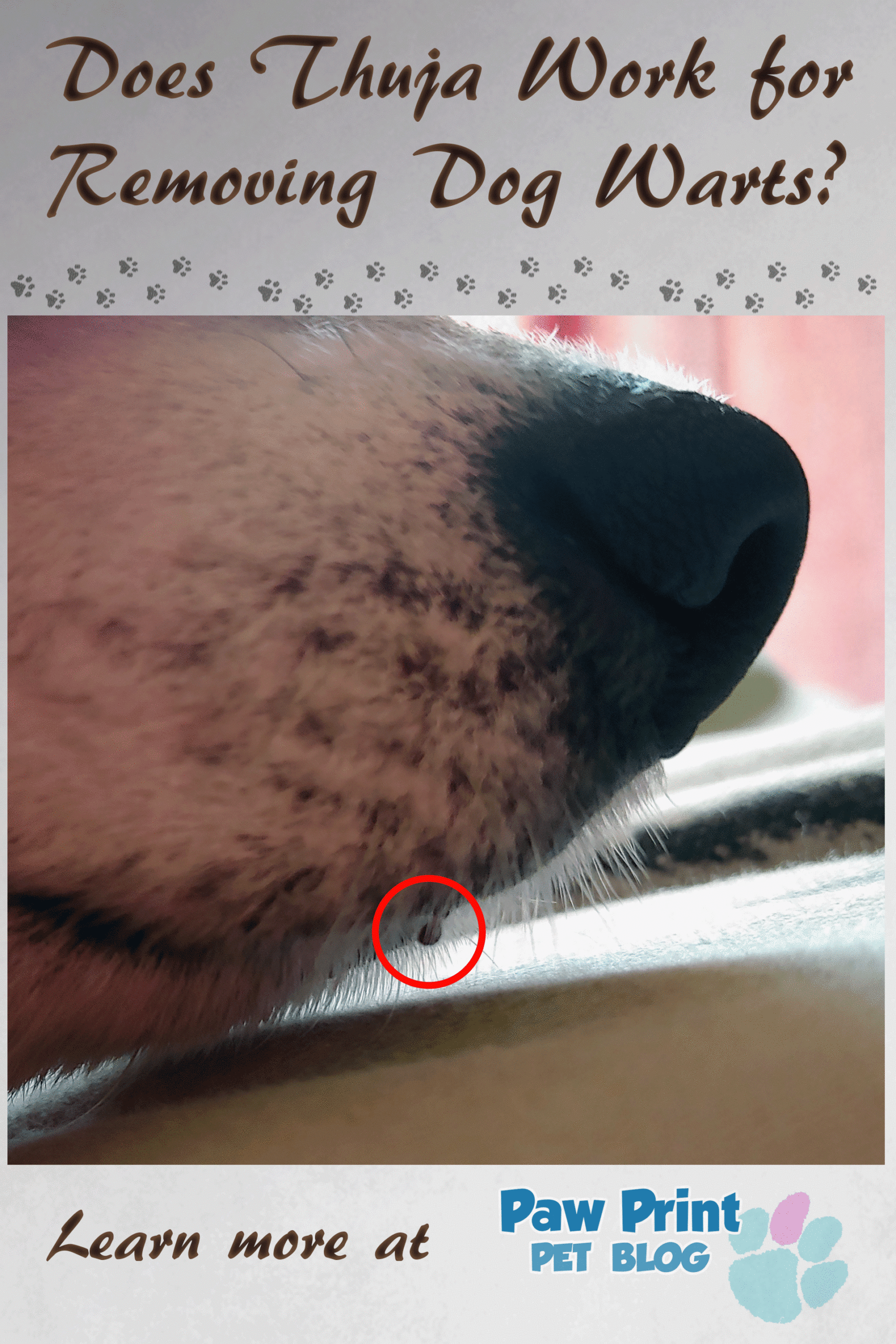
    Around May of last year (2022) I first noticed that my Alaskan Klee Kai, Fenrir, had a few very small warts.  The first one that I noticed was on his lower lip/chin area.  A few days later I noticed a second, very small wart on his right eyelid.  The one on his eyelid was so small I wasn’t able to get a picture clearly showing it. His warts appearing seemed to coincide very closely with a bad bout of pancreatitis that he also experienced in May of 2022.  I believe his illness,  plus the stress of visiting the vet, weakened his immune system.

    I consulted with his vet to determine that they were, in fact, warts.  This is important to do, as there are some skin issues and types of tumors that can sometimes be mistaken for warts.  Luckily Fen’s warts were very small, and not bothering him.  His vet expressed some concern that if the one on his eyelid grew too big we’d probably have to discuss removing it.  But, as they were, his vet and I both felt comfortable taking a ‘wait and see’ approach.

    I discussed trying homeopathic thuja and my vet gave the go-ahead to try it.  She didn’t seem overly confident that it would work, but told me that it wouldn’t hurt Fen to try.  We decided to start Fen off on 3 Thuja Occidentalis 30C pellets per day.  Fenrir is trained to take liquids from a syringe,  so I dissolved his pellets in a bit of water and gave it to him with an oral syringe.
    thuja dog warts

    Did the Homeopathic Thuja Remove my Dogs Warts?

    I bought a 3 pack of Thuja Occidentalis 30C pellets, enough to last around a month and a half on the 3 pellet a day dosage.  Fen did fine taking the pellets.  They didn’t cause any ill effects.  However, they didn’t do anything for his warts either.  Bummer.  After finishing the full three pack of Thuja Occidentalis 30C pellets Fen’s warts hadn’t grown any, but they didn’t shrink or go away either.  I decided not to continue giving him the thuja and went back to pretty much just monitoring his warts.

    It’s now February, around 9 months since I first noticed Fen’s warts.  They never grew any bigger than they were when I first discovered them, and last week when I was grooming Fen I noticed that the wart on his lip/chin area was gone.  The one on his eyelid is still there, but looks a bit smaller than it was before.  I believe that that one’s days are numbered as well.  I stopped giving Fen the thuja around 6 to 7 months ago now, so I don’t think it had anything to do with his warts sudden disappearance.  I’m pretty sure that his own immune system was just, finally, able to fight them off on it’s own.

    Does Thuja Ever Work?
    My own experience with thuja leads me to wonder how often owners think that thuja is working at getting rid of their dog’s warts, but in reality it’s just their own immune systems kicking in.  Who knows?  A lot of people seem to have good luck using thuja to eliminate warts on themselves and their pets.  I wish it had worked for us.  Part of me wonders if I should have maybe tried increasing Fen’s dosage.  Maybe it would have worked better if I gave him more pellets? Or dosed him twice a day instead of just once.  Or continued the treatment for longer?  But I’ll never know now.  At the end of the day I’m honestly just happy that his warts are finally going away.  Even though it wasn’t the thuja that made that happen.

    I was worried that the wart near Fenrir’s eye would grow and irritate him.  Then I most likely would have had to have it surgically removed.  Thankfully that didn’t happen!  Going forward I’m going to work on boosting both of my dog’s immune systems.  Hopefully we don’t have to deal with warts again anytime soon.  If we ever do have to deal with them again, I wouldn’t necessarily be against trying thuja again to see if we get a different result.  Maybe it would work for Kitsune, even though it didn’t seem to work for Fen.

    Of course a sample size of one dog does not a scientific study make!

    If you’re interested in trying out thuja for your own dog I’d 100% say discuss it with your vet.  Just because it didn’t work for my dog doesn’t necessarily mean it won’t work for yours.  I’d love to hear from other owners if anyone reading this has also tried using thuja to cure dog warts before.  What dosage did you use?  Did it work for your dog?  If so, how long did it take before you noticed an improvement?
    thuja dog warts

    Papillons

    Is it OK to Give a Papillon a Haircut?

    February 7, 2023

    Ask this question in almost any breed-specific papillon group and the answer will be a resounding “no”.  Not only will it be a “no”, but, did you know, it’s apparently a sin to give a papillon a haircut?  Who knew?  I seemingly didn’t get that memo, because I’ve been trimming my currently 14-year-old papillon’s fur since he was a puppy!  Over the years I’ve seen people offer lots of reasons why, in their opinion, it’s not okay to cut or trim a papillon’s hair.  But I’ve never experienced any issues doing so with my own dog.  Of course you can trim a papillon’s hair – it’s hair!  While I understand why not every papillon owner will want to do so, whether or not you cut your own dog’s fur should come down to what’s best for you and your individual dog.

    papillon haircut

    Post Contents:

    • 1 Dispelling Myths:
    • 2 “You Should Have Gotten a Short-Haired Dog”
    • 3 “But Cutting a Papillon’s Fur Will Damage it Forever”
    • 4 “But Papillon’s Have a Double Coat, Which You Shouldn’t Trim”
    • 5 Reasons Why Some Papillon Owners May Trim Their Dog’s Fur
    • 6 Why I Personally Keep My Papillon’s Fur Trimmed
    • 7 Considerations to Take Into Account Before Giving Your Papillon a Haircut
    • 8 What Do You Think?

    Dispelling Myths:

    I write this a lot on my blog – every dog is an individual.  Not only that, but every owner is too.  And every dog and their owner live a unique life together.  Just because dogs are part of the same breed does not mean that what’s right for one will be right for all.  Things like health concerns, past traumas, behavioral differences, personal preferences (both the owner’s and the dog’s), lifestyle, and many other factors may be taken into account when deciding whether or not keeping your dog’s fur trimmed is right for you.

    Papillons are a breed that doesn’t typically need haircuts.  Many people consider their long fur, especially their ear fringe, to be a focal trait of the breed.  The official papillon breed standard says their coat should be “abundant, long, fine, silky, and flowing”.  But a papillon with shorter hair is still a papillon indeed.  This leads me to my number one pet peeve comment that I’ve gotten about giving my papillon haircuts…

    “You Should Have Gotten a Short-Haired Dog”

    A papillon with short hair, whether it’s trimmed or just turns out that way, is 100% still a papillon!  Hey, I get it, papillons will full coats look beautiful.  But, to me at least, their fur isn’t what defines the breed.  It’s not even close to my favorite thing about them!

    I’ve been told quite a few times that if I’m going to trim my papillon’s fur I should have just gotten a chihuahua instead.  But I didn’t get my papillon because of how he looks!  I love papillons because of their personalities (dogsonalities?).  They are little dogs that are just packed full of intelligence, athleticism, and sass.  I adore how social and sweet they are.  I love what amazing little adventure dogs they can make.  Nothing against chihuahuas, they are super cute too!  But chihuahuas rank 125th, out of 138, on the list of dog breeds ranked by intelligence level.  Papillons rank in at number 8!  A chihuahua and a papillon, although they can often be similar in size, are defiantly not the same breed.

    Papillons are such an amazing dog breed.  I’ve not come across another dog breed, short haired or otherwise, that I felt like could replace one.  And it’s not about their hair, at least not for me.

    • Do Papillons Make Good Apartment Pets?
    • Can Papillons Hike?
    • How Long Do Papillons Live?
    • Are Papillons Hypoallergenic?
    • Do Papillons Shed?
    • Are Papillons Cuddly?
    “But Cutting a Papillon’s Fur Will Damage it Forever”
    papillon haircut

    Kit a few months after a haircut.

    This hasn’t been my experience at all.  I’ve been cutting my papillon, Kitsune’s, fur regularly since he was a puppy.  In his, so far, 14 years of life I haven’t had any major issues with his fur growing back just as nice, and long, as it was before.  In fact, Kit’s fur grows back surprisingly quickly!  I’ll admit that sometimes I wish it would slow down a bit so that I wouldn’t have to trim it as often.

    In the rare times when I speak with owners who have issues with their papillon’s fur growth after a haircut, I always recommend they speak with their dog’s vet.  Poor hair growth can often be a sign of a health condition or nutritional deficiency.  The only time I’ve ever had an issue with Kit’s fur growing in after a haircut was rather recently when he was struggling with some health issues.  We worked with his vet to get his health concerns more under control.  Almost immediately, his fur started to grow back normally again.

    “But Papillon’s Have a Double Coat, Which You Shouldn’t Trim”

    Nope!  Papillons are actually supposed to be a single coated breed.  It always shocks me a bit at the number of papillon owners who don’t seem to know this.  Apparently, some papillons do have a double coat.  However, this is not the norm and papillons with double coats do not meet the breed standards for coat type.

    • How To Tell if Your Dog Has Single or a Double Coat
    • Breed Standard Papillons Have Single Coats

    If my papillon did have a double coat, I’d probably think twice before cutting it.  I don’t cut my double coated dog, Fenrir’s, fur.  Mostly because growing back a healthy double coat is a bit more complex than a single coat.  But my papillon has the breed standard single coat.

    Because they lack the insulating undercoat, papillon’s fur doesn’t protect them from cold temperatures the way a double coated dog’s coat does.  People against trimming dogs fur will sometimes use a viral thermal image photo in an attempt to “prove” that a dog’s fur keeps them cool as well as warm, but there’s one big problem with their argument.  They grossly misinterpret how thermal imaging works!  Not to mention that this ‘argument’ is often used against papillon owners, despite the fact that most papillons don’t even have double coats in the first place.

    • How Thermal Imaging Works, and What it Has to Do with Dog Grooming     

    I’ve always found it interesting that with other breeds with single coats, such as poodles, Yorkies, cocker spaniels, and Maltese, cutting their fur on a regular bases is perfectly acceptable.  Yet papillon owners are often criticized for giving their dogs haircuts.

    Reasons Why Some Papillon Owners May Trim Their Dog’s Fur

    People against trimming a papillon seem to be against it no matter the owner’s reasoning.  That feels a bit unfair to me.  In my opinion, there are some very valid reasons why a papillon owner might cut their dog’s fur.

    • Health Concerns: When my papillon, Kitsune, was suffering from flea allergy dermatitis I found it way easier to keep his hot spots clean, dry, and medicated when his fur was short.  Can you think of other health concerns that might be easier to treat if your dog had shorter hair?
    • Dogs Against Grooming: Not all dogs are used to being groomed.  Since papillons have such long hair, not grooming them frequently can lead to matting.  Matting is painful for dogs.  Owners with dogs who will not accept grooming may opt to keep them trimmed.
    • Inability to Maintain Grooming: People with health concerns may have a harder time grooming their dogs often enough to prevent matting.  For these owners, getting their dog’s fur trimmed will allow them to keep beloved pets, and keep said pets comfortable.
    • Climate Concerns: People who live in especially hot climates may find that their dogs stay cooler and more comfortable with their fur trimmed short.
    • Lifestyle: I’ve spoken with a handful of hikers who own papillons and keep their dogs trimmed short to avoid how horribly dirty full coated papillons can get on a trail.  This can be more than an aesthetic thing, since sticks, etc., getting caught in your papillon’s fur can cause injuries and pain.
    • Comfort: Believe it or not, some naturally long haired dogs do feel more comfortable when their fur is trimmed short.
    • Personal Preferences: Some owners just like the way that their dogs look with short hair.
    • Other: Can you think of other reasons I didn’t mention here?  Comment below!

    Why I Personally Keep My Papillon’s Fur Trimmed

    papillon haircut

    Snuggly, short haired Kitsune!

    My own papillon prefers to have his hair trimmed.  He’s happier and more comfortable when his fur is shorter.  How do I know?  Well, I’ve known Kitsune for over 14 years now.  So I know him quite well!  When his fur gets too long he gets way more cautious about doing certain things, like jumping up onto furniture.  He doesn’t snuggle with my partner, our other dog, or me nearly as much when his fur is long.  He hates when his hair gets caught on things or pulled, even a little bit.  So, we think, he avoids doing things that he knows could cause his long fur to accidently get caught or pulled.  Snuggling and playing are two of his all time favorite things, and he avoids doing both when his fur grows long.

    My partner and I also both prefer how Kit looks with trimmed fur.  In my opinion, personal preference is a valid reason to cut a single coated dog’s hair as long as you’re not doing it to the detriment of the dog.  Kit’s shorter hair is also way easier for me to maintain with our active, outdoorsy lifestyle.  I don’t have to worry as much about Kit getting sticks and brambles tangled up in his fur during hikes, or snowballs stuck all over his tummy and legs in the winter.

    Considerations to Take Into Account Before Giving Your Papillon a Haircut

    One thing I’ll always suggest to owners interested in cutting their dog’s hair is to make sure you leave enough hair to protect your dog’s skin from the sun!  I don’t recommend you shave your dog down to the skin.  Rather, trim your dog’s hair shorter but still leave some fur there.  You generally want to leave at least an inch of fur on your dog to help protect their skin.

    If you trim your dog’s fur in the winter keep in mind that you may make it more likely that they will require a sweater or coat to keep warm.  However, I haven’t found trimming Kit’s fur to strongly impact his temperature regulation.  Like I mentioned above, single coated dogs lack an insulating undercoat.  Kit’s single coat, whether it’s long or short, doesn’t seem to keep him as warm as a double coated dog’s fur would.

    What Do You Think?

    Comment below!  Have you ever received criticism for giving your dog a haircut because it’s not a breed that is typically trimmed?  If you’re here because you’re considering giving your papillon a haircut, remember that the most important factors you should consider before making your division are your own, individual, dog’s comfort and needs.  Never let others, especially people who don’t know you or your dog, make you feel bad for making a decision with your dog’s best interest at heart.  You know your dog best!

    papillon haircut

Older Posts
Newer Posts
It's a beautiful day to play ball in the snow ❄️ It's a beautiful day to play ball in the snow ❄️
Today would have been Kit's 17th birthday. My best Today would have been Kit's 17th birthday. My best buddy...not a single day goes by that I don't think of him. Forever a beloved member of our little pack ❤️
Someone stole his dad's socks 😂 10 years old and s Someone stole his dad's socks 😂 10 years old and still as mischievous as a pup!  This little one makes me laugh everyday and I'm SO thankful for him. 💙
New phone, who dis!? 😅 Sorry for the lack of new New phone, who dis!? 😅 
Sorry for the lack of new Fen pics lately... My old phone broke and it took me awhile to replace it. 
Fen is his happy, sassy, playful self and is doing well. 💙
Fen makes me laugh so much! Today is my partner's Fen makes me laugh so much! Today is my partner's birthday. ❤️ I almost always wake up earlier than him, so this morning I was planning on getting up to decorate for his birthday. I wanted to surprise him with decorations and his presents set out when he got up.

Well...Fenrir ruined it all, because as soon as he saw the wrapped presents for my partner, he got SO excited! And if you have ever had the pleasure of meeting an Alaskan Klee Kai you will know, when they get excited, they just have to make sure everyone knows about it!

Long story slightly shorter, Fen woke my partner up early, on his birthday, all because Fen REALLY wanted to open presents that weren't even for him! I didn't get to decorate, but lesson learned - don't put gifts where Fen can see them because he will get really, really excited about it.

And just so you all don't feel too bad for him...I ended up wrapping one of Fen's Christmas presents and giving it to him to open early! 🤣
Follow on Instagram
Facebook Instagram Pinterest Youtube

Copyright © 2025 Paw Print Pet Blog. All Rights Reserved.

Back to top