• Home
  • Popular Topics
    • Papillons
    • Alaskan Klee Kai
    • Hiking with Dogs
    • Dog DIY
    • Recipes
    • Dog Product Reviews
    • Can Dogs Eat…
    • Dog Health
  • The Paw Pack
    • Kitsune (2008 – 2024)
    • Fenrir
  • Policies
    • Disclaimer
    • Privacy Policy
    • Work with Us
    • Site Map
  • Contact

Paw Print

    Adventure Dogs, Small Dogs, The Paw Pack

    Can You Take Your Small Dogs Hiking?

    July 29, 2021

    Besides spending time with my dogs, one of my (probably too many) hobbies is hiking.  Nature therapy is the best kind of escape from the stresses of everyday life.  I especially love that hiking gives me a way to combine two things I love – nature and spending time with my dogs.  Yes, I take my small dogs hiking with me!  It always surprises me how often I see small dog owners, often times new owners, assuming that they can’t take their small dogs hiking with them,that small dogs can’t handle long or rigorous hikes, or that their small dogs won’t be able to keep up and will need to be carried.

    Yes, Small Dogs Absolutely Can Hike Too!
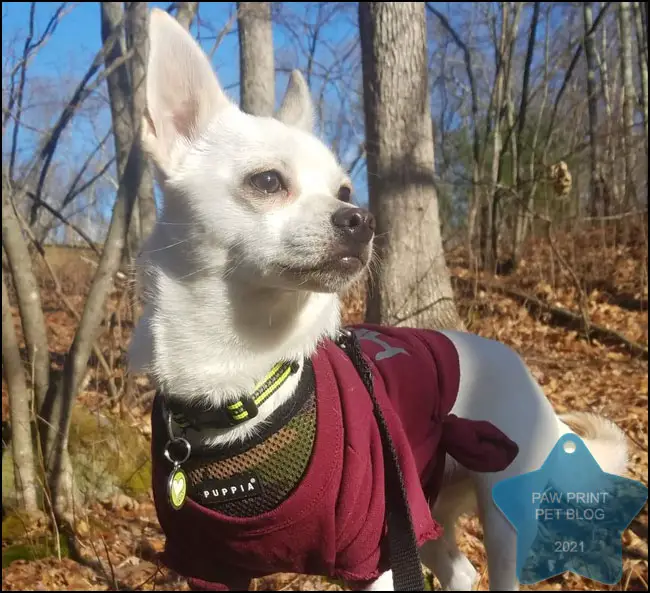
    small dog hiking

    My dog nephew, Garth!

    A dog is a dog is a dog.  Sadly, there are a lot of negative stereotypes that get associated with small dogs.  However, for the most part, most things a large or medium sized dog can do, a small dog can do too!  I never really understood why people seem to assume that small dogs can’t handle activities like hiking.  Would those same people assume that a human’s ability to hike would be based off their height?

    Luckily, for people as well as dogs, mother nature is accepting of us all no matter our size!

    I’m including a picture of my sister’s dog, Garth, in this post.  Garth is a chihuahua mix who loves hiking and exploring in the woods.  My own two dogs, Kitsune and Fenrir, love hiking too!  Kitsune is not only a toy breed dog, a papillon, but he’s also technically a senior dog at 12 years old.  Fenrir is a 16lb, miniature sized, Alaskan Klee Kai who would spend all day playing out in the woods if I let him!

    OK, So Maybe Small Dogs Can Hike – But Are They Actually Good At It?
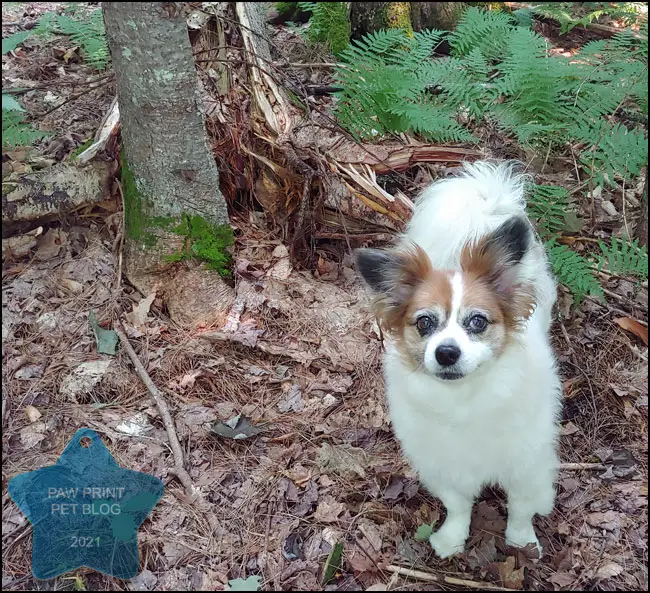
    small dog hikingYes!  Or, I should say, they can be.  I’m not saying anyone should expect their dog to be amazing at hiking his or her first time out in the woods, irregardless of their size.  Like with all other forms of exercise, best practice is to start your (age appropriate) dog off doing shorter, easier hikes, then work their way up from there.

    Once they’re accustomed to hiking, I’ve never had an issue with my small dogs’ ability to keep up during a hike.  Quite the opposite, in fact, I often joke that Kit and Fen can hike circles around me.  I feel like small dogs are often times so under estimated, especially when it comes to their energy levels!  I’m sure there are some small dog breeds that are lazier than others, and energy levels can be different from dog to dog too.  However I’ll say, in general, I feel that small dogs are a lot more capable than people give them credit for, especially when it comes to physical challenges.

    Why Choose A Small Dog As A Hiking Companion?
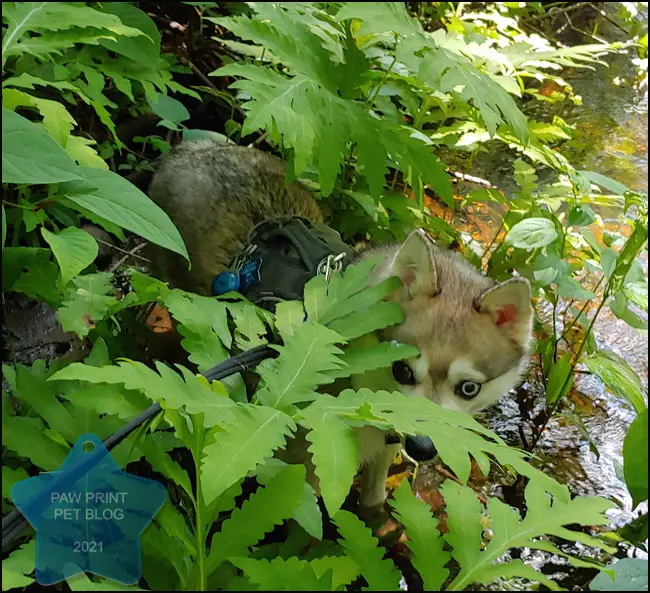
    small dog hikingThere are SO many reasons why someone might choose to share their life with a small dog, most of them not hiking related.  However, there are some benefits to being small when it comes to outdoor adventuring!  One of my personal reasons for selecting smaller dog breeds was because I wanted dogs that I could easily manage, no matter the situation, on my own.  Thinking about things like how I would manage to carry a large injured dog out of the woods by myself was a stressful thought for me.  While I don’t generally carry my small dogs very often, knowing that I can do so in an emergency is comforting for me.

    Adventuring with a small dog also means you don’t have to carry as much heavy dog supplies with you.  Small dogs eat and drink less than their larger counterparts, so you don’t have to lug around as much food and water for them.  Smaller dogs also means smaller poops, which is a huge plus when you’re hiking in carry in/carry out locations.

    I know small dogs aren’t for everyone, but I just adore mine.  Besides being great all around companions, they make amazing hiking buddies!  People we meet on the trails often act impressed with Kit’s and Fen’s hiking skills despite their small statures, but the fact of the matter is that they aren’t really special or unique when it comes to their hiking abilities.  Most small dogs, like dogs of any other size, love spending time outdoors with their people.  With a bit of practice, little dogs can make amazing hiking buddies!

    small dog hiking

    Pets in the News

    Marie Antoinette’s Papillons

    July 22, 2021

    Nearly everyone who has ever had to take a history course knows who Marie Antoinette was.  Most people at least know that she was a French queen who was beheaded via the guillotine.  But, you may be wondering, why am I writing about a historical figure on a pet blog?  Learn more about Marie Antoinette’s Papillons here!

      Marie Antoinette Loved Papillons!

    Marie Antoinette's PapillonsPapillons, the breed of my dog Kitsune, are thought to be one of the oldest toy breed dogs in European history.  Although not always called Papillons, ancestors of today’s butterfly dogs were common among European royalty.  Written histories of early Papillons can be hard to find.  But the breed’s evolution was well documented through works of art.  The earliest Italian paintings of small dogs thought to be the ancestors of today’s Papillons are from around 1500.  Papillons are quite commonly found in early paintings of royal or wealthy merchant class families.

    A Royal Pardon?

    Marie Antoinette's PapillonsMarie Antoinette was supposedly a fan of the breed, so much so that one story suggests that she carried one of her beloved pets with her to the guillotine.  Her Papillon, as the story goes, was pardoned from suffering the same fate as it’s former master, and was cared for, along with another one of Antoinette’s Papillons, inside a house in Paris.  That house, to this day, is still known as ‘The House of the Papillon”.

    While Marie Antoinette’s leadership skills may have been questionable, no one can fault her excellent taste in dog breeds!  Sometimes I wonder if perhaps Kitsune is aware of the royal associations of his breed.  He comes from a long line of royally spoiled pups!

    I always love to hear from my readers – comment below!  If you know your pets’ breed or breed mix, have you ever read any interesting historical stories about them?  I think it can be so interesting to learn about the origins of different breeds.  It’s funny to think that I, apparently, have something in common with a French monarch from the 1700’s.  I’m sure in every other way our lives couldn’t be more different.  How funny that we both have/had an affinity for such an adorably mischievous dog breed.

    Marie Antoinette's Papillons

    Pet Products

    Our Updated Buddy Belt Review

    July 15, 2021

    Can you believe we first posted our original Buddy Belt Review back in 2012!?  I guess time really does fly when you’re having fun.  Lately I’ve been going back to rework some of our older posts.  I think it’s interesting to look back at what we thought of products when we first tried them verses now.  Since Buddy Belts are still available for sale, I figured I’d take a look back at what I wrote about them back in 2012, and update with some new insight nearly 10 years later!

    Post Contents:

    • 1 Excerpts from Our Original Buddy Belt Review
    • 2 First Impressions…
    • 3 Escape Proof?
    • 4 Functionality…
    • 5 So, What Do We Think of Buddy Belts Now?
    • 6 Would I Recommend Buddy Belt Dog Harnesses?

    Excerpts from Our Original Buddy Belt Review

    Buddy Belts were originally developed in 1997, inspired by a miniature Dachshund named Buddy.  They are designed to reduce stress on your dogs neck.  This is important especially for smaller breed dogs who can be prone to tracheal collapse.  The harnesses are made out of leather, and come in an array of colors and sizes.

    *** Neither the makers of Buddy Belt nor FunnyFur.com paid for this review.  All opinions expressed are my own!  This post contains affiliate links. ***

    I got Kit a red (of course) regular addition size 6 Buddy Belt.  The website I got it from also offers a stain guard treatment, which I decided to get.  I also bought a pair of harness liners for $10.  Someone had told me that the leather on the regular addition harness was kind of stiff at first.  Kitsune has sensitive armpits.  Shipping and handling from FunnyFur.com was $11.95, so my order in total was $97.36.

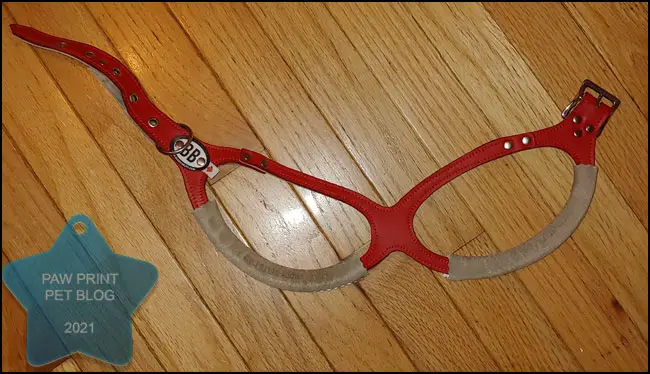
    This is a new picture, of our 10+ year old harness!

    First Impressions…

    The first thing I noticed when the harness got here was that the leather was a lot softer than I was expecting it to be.  I don’t know if this was because of the stain guard treatment I had gotten, or some other reason.  I decided to put the liners on anyways, to hopefully make the area of the harness that goes under the dog’s armpits a little bit softer for Kit.  The liners are made of soft leather and attach around the harness with a strip of Velcro.

    The size 6 I ordered, as far as I can tell, does fit Kit well.  The belt has 5 holes on it so it can fit slightly different sized dogs.  It fits Kit at a comfortable tightness when on the 2nd or 3rd hole.  I am glad that, if I need too, I can make it a bit looser on him.  I think in the winter it should fit fine over a t-shirt or sweater.  The Buddy Belt is a step-in harness.  It’s easy to put on – one leg goes inside each hole of the harness.  I thought the harness placement was a little bit weird at first.  The top of the harness, on Kit at least, falls on top of his shoulder blades.  I guess that’s good because it’s true that the harness does leave his neck completely free.

    Escape Proof?

    Those of you who know anything about Kitsune probably know that he is a very hyper/active dog.  I’ve always used harnesses on him since I got him.  I can’t recall him ever actually fully escaping from a harness, but there have been times when he’s been very close to backing out of them.  Unfortunately, Kit did escape from his Buddy Belt a couple of times.  Thankfully, he’s a good boy and didn’t run off after getting out of his harness.  Although I’d love to be able to recommend these harnesses for all dogs, I’d carefully consider if you have a dog that’s an escape artist, or one that’s a flight risk if he/she manages to escape.

    One thing I’ve found that I’d change about this harness, and this is a very minor thing, is the O ring for attaching your dog’s leash.  I don’t know why they used an O ring instead of a D ring.  I would think that a D ring would lay flatter against the leather of the harness and look a bit nicer.

    There is a section of the top part of the belt that sticks out a bit.  Once in awhile Kit’s leash will get looped around that piece of leather.  Then I’ll have to wiggle his leash around to free it.  It’s not a big deal though.  I can’t think of any way they could avoid this without taking away the ability to make the harness fit a wider range of dogs.  I’d rather deal with the leash getting caught once in awhile then not have the ability to widen the harness.  Like I mentioned I do want the harness to be able to fit over clothing during the winter.

    Functionality…

    Most importantly, Kit seems very comfortable in this harness.  It took him a few days to really get used to it fully, but now that he’s been wearing it for awhile he doesn’t seem to mind it at all.  The first couple of times I walked him on it I think he felt a bit weird having the harness be right on top of his shoulders.  After a few days though he seemed to get used to it and I’m pretty sure it doesn’t bother him at all now.

    I would recommend the Buddy Belt for most dogs, with the exception of those who are escape artists/flight risks.  The Buddy Belt website recommends you use a leather treatment on the harness every 3 months.  That’s something I’m going to look into further.  Hopefully if we take good care of it it will last a long time.

    So, What Do We Think of Buddy Belts Now?

    I’ll be completely honest, I didn’t use Kitsune’s Buddy Belt on him for very long after we completed our review all those years ago.  As I mentioned in my old review, Kitsune was able to back out of his Buddy Belt a handful of times, and that’s saying a lot because he’s really not much of an escape artist.  We still lived in the city at the time, and although Kit has always had a pretty decent recall, the thought of him running loose in the busy city streets were just too stressful for me to continue using this harness.

    I still have the Buddy Belt, and I’ll say it still looks great for being around 10 years old!  Take that as you will, though, knowing that it didn’t see really any use to speak of in those 10 years.  It’s been stored away for most of the time I’ve owned it.  Is it just me that finds that the more expensive a dog product is, the harder it is to get rid of it even if it doesn’t work out for your dog?

    Would I Recommend Buddy Belt Dog Harnesses?

    Knowing what I know now, if I could go back in time, I doubt I’d purchase this harness for Kitsune again.  It was quite expensive, and I don’t really feel like we got our moneys worth out of it.  That’s not to say that every dog owner will have the same experience!  The Buddy Belt website has lots of positive testimonials from happy customers.  One thing I will say, though, is that these days there are lots of harnesses you can buy that are very similar to Buddy Belts, many of them for quite a bit cheaper.  If you’re interested in a Buddy Belt it might be a good idea to try a cheaper, but similar, harness out first.  You can always upgrade to a Buddy Belt later if you find the style of harness to work well with your dog.
    Pet Tips

    Silly Things Dogs Do: Sucking & Kneading Objects

    July 8, 2021

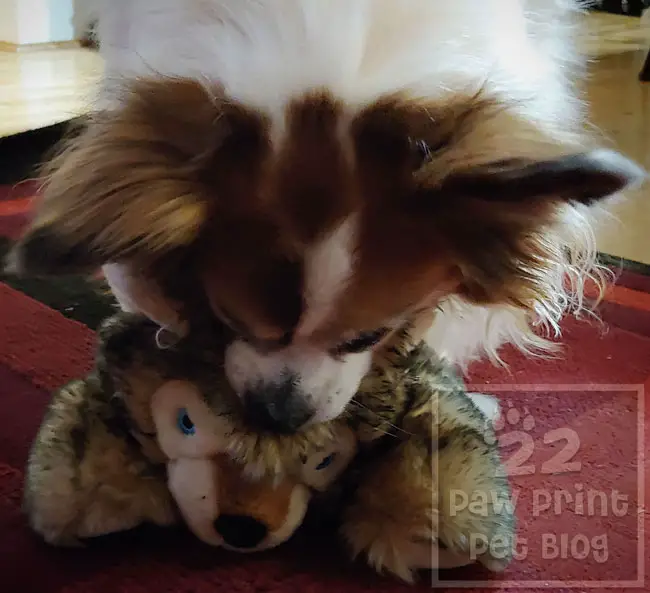
    Why is my dog sucking and kneading random objects (blankets, toys, etc)!?  Kneading is usually a habit associated with cats, but did you know that some dogs do it too?  Some dogs develop a habit of kneading with their front paws, while sucking on a favorite toy or other object.  It’s something my Papillon Kitsune has done since he was a puppy, and since it was always normal for him I never put too much thought into it.  Although not as common for dogs as for cats, this behavior is thought to mimic how puppies nurse from their mothers.  In most cases, it seems to be a comforting behavior.

    Bed Time Behavior?

    My dogs mostly do this ‘dance’ right before bed, when the day is winding down and it’s time to start relaxing.  Kitsune has always done it to his plush toys.  I’ve also heard about dogs who will do it with a favorite blanket, or bed.  Some people think this behavior is displayed mostly in dogs who were separated from their mothers too early, although this doesn’t seem to be the case for most of the owners I’ve talked to.  Kitsune came to live with us when he was 9 weeks old, so wasn’t weaned early.

    Like A Child Sucking Their Thumb, Or On A Favorite Blanket

    Dogs sucking and kneading objects is often compared to thumb sucking in human children.  Although most human babies outgrow thumb sucking, dogs who suck and knead items often do so throughout their lives.  This behavior seems to be more common in dogs who are sensitive in general.  Dogs who are more prone to anxiety, and less independent, may be more prone to sucking and kneading as well.

    Is It OK To Allow Your Dog To Continue Sucking and Kneading Objects?

    dog sucking and kneadingWhatever the reason, sucking on objects isn’t a bad thing as long as they don’t destroy and ingest any pieces of whatever it is they’re sucking on.  Most owners I’ve talked to who have dogs that display this behavior find it quite charming, and don’t discourage their dogs from doing it.  When Kitsune does it, it seems to calm him down and relax him.  Like I mentioned above, he does it almost exclusively right before bed time.  Just like I like to settle down with a good book before bed, Kitsune likes to have a nice snuggle with his toys to relax him before bed.
    Have you ever had a dog that sucked on and kneaded objects?  What other silly behaviors do your pets display?  Comment below!

    Originally posted 11/14/2014.  Last updated 7/24/2022

    Pet Products

    WOpet Boost Automatic Pet Feeder Review

    June 22, 2021

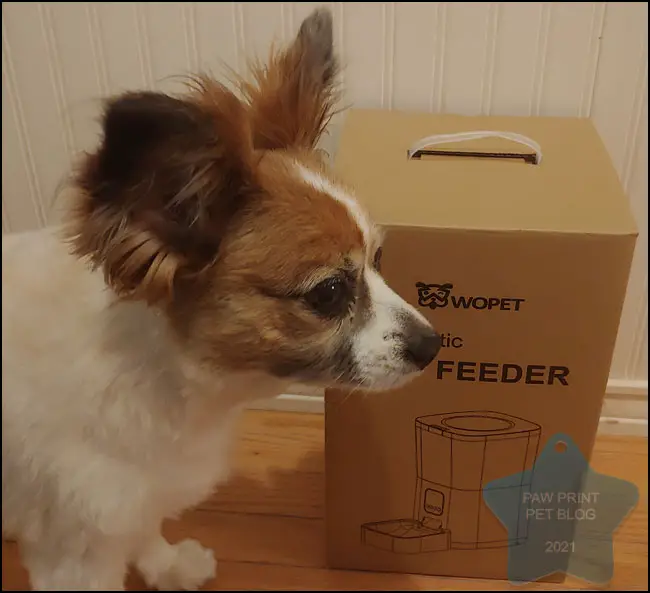
    It’s amazingly adorable how excited my dogs get every time a package comes to our house.  They seem to think everything we get delivered is for them.  To be honest, most of the time they are right!  Our most recent package was from the lovely people over at WOpet.com.  They sent us their WOpet Boost Automatic Dog & Cat Feeder to try out.

    We received our WOpet pet feeder for free in exchange for our honest review.  As always, we strive to share only products we feel our audience will enjoy/benefit from.  All opinions expressed are our own.

    Post Contents:

    • 1 The WOpet Boost
    • 2 So down to the nitty-gritty, do we actually like the feeder?
    • 3 The only problem? 
    • 4 None of this is the feeder’s fault, of course! 
    • 5 WOpet has a handful of other automatic feeders too if you’re interested in one but not completely sold on the Boost.

    The WOpet Boost

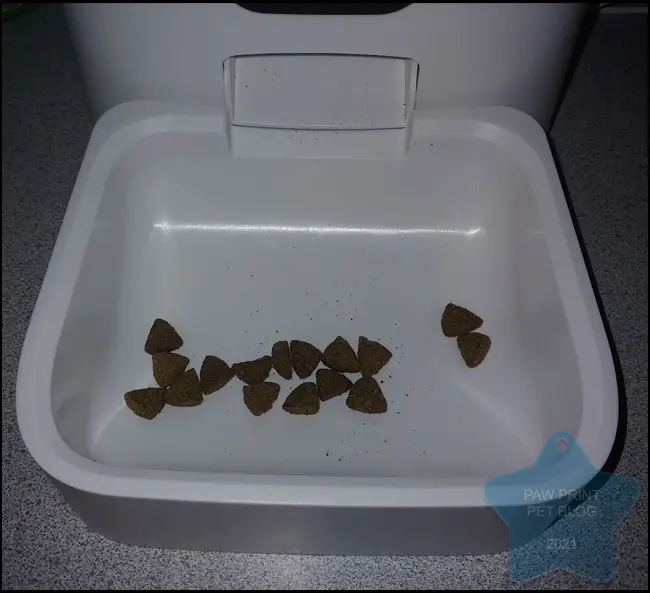
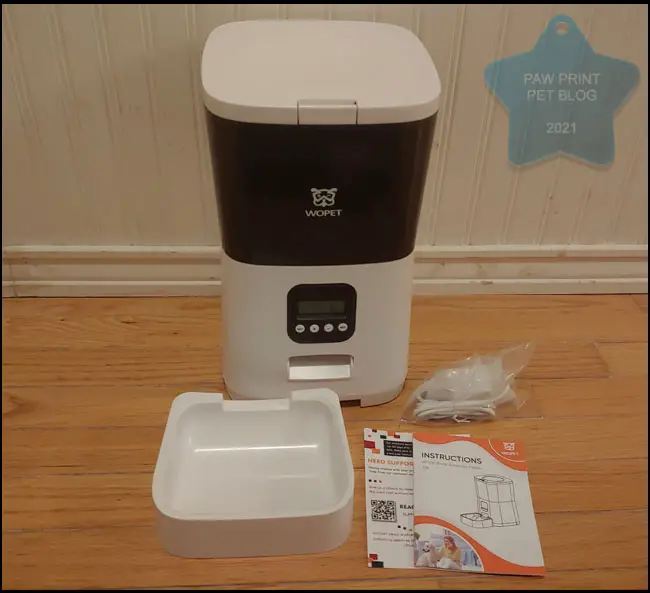
    Automatic Pet Feeder ReviewThe WOpet Boost is a 7L, up to 4 meal automatic feeder that, in my opinion, is best for smaller pets such as cats or small dogs.  The LCD screen is easy to program.  After setting up the time, you can schedule the feeder to dispense up to 4 meals per day.  With this unit, portion control is just a matter of the press of a button!  Each meal can consist of up to 9 portions.  A portion is equal to around 10 grams of food give or take, depending on the type of food you use.
    Automatic Pet Feeder Review

    This is what 1 portion of my Fenrir’s food looks like.

    One feature this feeder has that I thought was really cool is the ability to record a personalized message!  The unit plays your message when it dispenses a meal.  I feel like this might help bring comfort to a pet who’s missing his/her owner, and help them feel more comfortable eating.

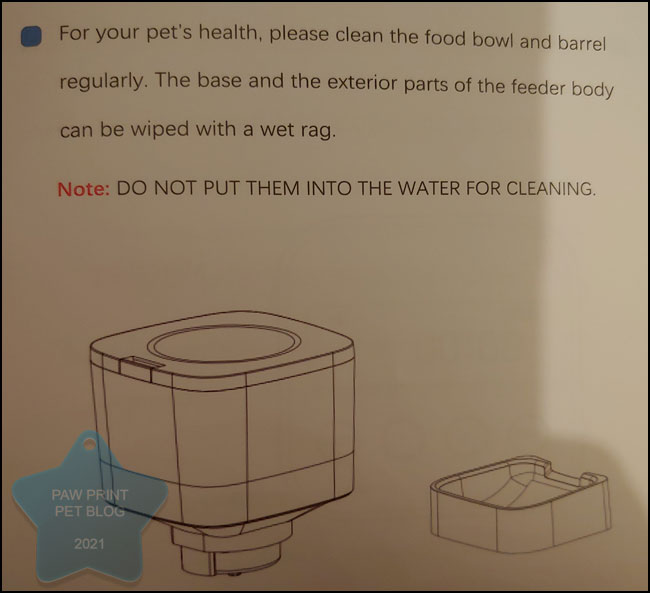
    Automatic Pet Feeder ReviewThe Boost feeder is, thankfully, easy to clean.  The instructions say not to immerse the parts in water, however the lower food bowl and upper hopper both separate from the main section of the feeder so they can be cleaned independently.
    So down to the nitty-gritty, do we actually like the feeder?

    When WOpet asked us to check it out I immediately thought of my Fenrir.  He’s always been difficult when it comes to meal times.  He’s a SUPER picky eater and doesn’t like to eat a lot at once.  I thought this feeder would be great for him!  Instead of trying to convince him to eat two larger meals a day like I’ve been doing, I could schedule the automatic feeder to dispense 4 smaller meals broken up throughout the day.

    Automatic Pet Feeder ReviewThe only problem? 

    Kitsune!  Kit is, to put it nicely, a foodie.  And by that I mean…he just wants to eat everything all the time.  He figured out, long before Fen, that the Boost dispenses food.  Once Kit discovered there was food involved Fen never had even the hope of a chance of beating Kit to the food!  That issue, on it’s own, wouldn’t be the end of the world – I could just use the feeder to feed Kit instead of Fen.  However, when I had the automatic feeder out on the floor Kit figured out almost instantly that there was food in the hopper, and then spent all his time trying to knock it over so he could eat all the food inside.

    None of this is the feeder’s fault, of course! 

    I do wonder, though, if maybe it would work better with dogs that are a bit smaller than mine are, less food motivated than my Kitsune is, or cats.  I’ve been trying to think of a way to keep the feeder so that Fenrir can get to it but Kitsune can’t, but so far I haven’t come up with much.  If anyone has any ideas please let me know!

    I didn’t think of this when I agreed to review this product, but perhaps automatic pet feeders would be more ideal for single pet families?  Or for people who can more easily separate their  pets.  For example, if someone had a cat and a dog, I think this product would be awesome for a cat if you could keep it up on a table maybe where the cat could get to it but the dog couldn’t.

    WOpet has a handful of other automatic feeders too if you’re interested in one but not completely sold on the Boost.

    A few of their models even work with an app over Wifi which I thought was really cool.  They also sell other interesting products, like a treat dispensing pet camera and a really nice looking pet water fountain.

    I hope no one takes this as a negative review.  I wanted to be honest about our experience, without making it sound like we had an issue with this pet feeder itself.  The issues we had were 100% Kitsune being Kitsune!  The WOpet Boost Automatic Cat & Dog feeder is a really sleek product.  It’s well designed with some really cool features, and functionally we didn’t have any issues with it.  My Kitsune is just exceptionally obsessed with food, and not every pet product is going to be ideal for every pet family.  I really do think this pet feeder could be awesome for pet families who don’t live with always hungry land sharks!  😂 What do you think?  Have you ever tried an automatic feeders with any of your pets?

    Pet Tips, Small Dogs

    Always Ask Before Picking Up Small Dogs

    June 18, 2021

    Small dogs often get a bad rap.  But hey, being adorably small isn’t (only) all about cookies and tummy rubs – it’s hard sometimes!  Imagine if you were walking down the street, minding your own business, and a stranger, who was much larger than you, approached.  Without saying anything in any language that you could understand, they just started sticking their hands in your face, trying to touch you, then grabbed you and picked you up.  I know I would pretty frightened!  I think it’d be understandable, even expected, for a human put in that situation to lash out.  Yet, it’s rather common for people to expect dogs to tolerate this type of treatment.  Have random people ever tried to pick up your small dog without asking?

    Small dogs, especially, are often forced to deal with some unique situations.

    While I’m, sadly, sure that it’s common for strangers to try manhandling dogs of all sizes, the number of times complete strangers have tried to randomly pick up my small dogs, without so much as asking me first, boggles my mind.  I know I’m preaching to the choir here, considering my readers are animal lovers, but I just don’t understand why some people feel it’s okay to attempt to pick up unfamiliar dogs without even asking the dog’s owner first!

    Dogs are dogs are dogs, no matter the size, and they should all be treated with respect.

    If you wouldn’t try to scoop up a random Great Dane (lol) or German Shepherd, then you shouldn’t do it to a Chihuahua or Papillon either.  How’s that old saying go…just because you can do something, doesn’t mean that you should.

    Now that my Kitsune is older, I’m especially careful about keeping a close eye on how strangers interact with him.  Kit is the sweetest dog ever, and he loves making new friends, but he’s also 12+ years old, with some of the aches and pains that come with ageing.  It makes me nervous that if a stranger tried to pick him up and wasn’t careful enough they could hurt him.

    It should be pretty common knowledge that a dog who is frightened, or in pain, can sometimes lash out at the cause of their fear/pain.  But of course, these days, being anything less than completely placid can, at best, earn a dog a bad reputation.

    pick up small dog

    Kit says “Hey, this belly isn’t going to rub itself!”

    Kitsune and Fenrir sometimes ask people they know really well to pick them up.  Besides those rare occurrences, they both seem to very much prefer to keep interactions down on their own level.  To be honest, except for when they ask me to pick them up, or in the rare case of an emergency, I rarely even pick up my own small dogs.  I think I could count on one hand the number of times I’ve seen my partner, who lives with us, pick up Fen.

    Small dogs are not toys!

    If there’s something you wouldn’t do to a large dog, especially one you’re not familiar with, you shouldn’t do it to a small dog either.  In the absolute very least, if you want to pick up someone’s dog, ask first!  The person and the dog.  Meaning that, even if an owner gives you permission to pick up their dog, pay close attention to the dog’s body language.  If he/she signals in any way that they’re not comfortable in a situation, don’t force them into an interaction they’re not completely comfortable with.

    /Rant.  What do you think?  If you have a smaller sized dog, have you had to deal with this issue too? 

    Post originally uploaded June 15th, 2015.  Edited/reuploaded June 18th, 2021

    Pet Tips

    How To Tell If A Dog Has A Single Or Double Coat

    May 31, 2021

    Does your dog have a double or a single coat?  My Kitsune is a Papillon, a breed that is often described as being “wash and wear”.  Unlike some other breeds, Papillons, even when they are being shown, are not heavily groomed.  Their fur is left long and flowing, although it is normal to neaten up the fur on the paws, hocks, and personal areas.
    Despite this, I have trimmed Kit’s fur short, to one degree or another, since he was around a year old.  He always seems to feel more comfortable with shorter fur. His shorter fur is less messy and easier to maintain, and my fiance and I both like the way Kit looks after his trims.

    Post Contents:

    • 1 Sometimes “Experts” Don’t Even Know The Difference!
    • 2 Coat Type Isn’t Determined By Whether Or Not A Dog Sheds
    • 3 Double Coats
    • 4 Single Coats

    Sometimes “Experts” Don’t Even Know The Difference!

    Over the years I’ve gotten mixed feedback over Kit’s fur style.  Most people comment that he’s adorable and that his fur looks nice, clean, and is very soft.  My harshest critics, however, always seem to be other Papillon owners.  Last week I talked to a groomer who also happened to own a Papillon.  To say she didn’t like Kit’s haircut would be an understatement.  She informed me that dogs with double coats should never be trimmed, and Kit’s fur would never grow back the same.  Of course she ignored me when I told her I’d been trimming his fur for going on 8 years without any issues at all.  I also tried to politely inform her that Papillons actually have single coats, not double coats, to which she replied that they have double coats because they shed.

    Coat Type Isn’t Determined By Whether Or Not A Dog Sheds

    It shocked me that a groomer wouldn’t know the difference between a double and a single coat.  It’s not determined by whether or not a dog sheds.  The encounter made me wonder.  If a groomer didn’t know how to tell the difference between a double and a single coat, how many other people would?

    Double Coats

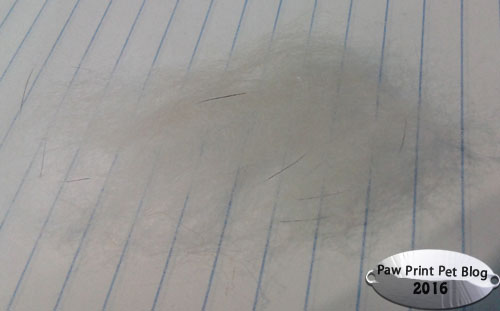
    So I enlisted the help of my 11 month old Alaskan Klee Kai, Fenrir.  He, no doubt about it, has a double coat.  A few strokes with a slicker brush over his back and this is what I get…

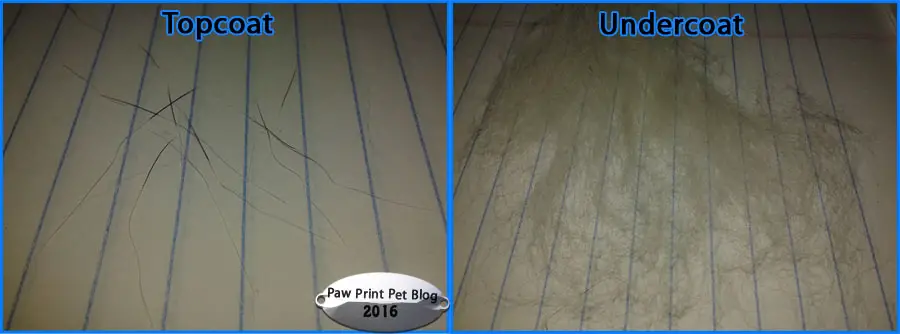
    At first glance, you might notice that it looks like there are two types of fur there.  I broke it down even further…

    Dog single and double coats

    Fen clearly has two types of fur.  His topcoat, sometimes referred to as guard hairs, are straight and thick.  They are mostly white but the tips, the parts that would be furthest away from Fen’s skin, are black.  If you look at the picture I posted of Fen above, these guard hairs are what gives him his grey/black coloration.

    The second type of fur is his undercoat.  It’s all one color, kind of a creamy white color in Fen’s case.  You can probably tell that the texture of his undercoat is not the same as his topcoat.  It’s much softer, and doesn’t naturally lie as straight.

    When Fen sheds, especially when he blows his coat, it’s mostly his undercoat that he’s losing.  But, as you can see from the pictures above, he also loses some of his guard hairs.

    Single Coats

    Papillon single coat fur

    Kit’s fur which, as you can see, looks similar to Fen’s topcoat. Note the lack of abundant, fluffy undercoat.

    Most Papillons, those with the breed standard single coat, only have guard hairs.  This doesn’t mean they don’t shed because, as demonstrated by Fen, guard hairs can be shed.  What it does mean, and I’ve experience this first hand with Kit, is that dogs with single coats may shed a lot less than dogs with double coats.  When Fen sheds he’s losing a small portion of his guard hairs, plus a ton of fluffy undercoat.  When Kit sheds he’s only losing a small portion of his top coat – it’s barely noticeable.

    If anyone is interested I can write more about the role of each type of fur, and why it’s generally ok to trim the fur of a single coated dog, but isn’t usually recommended (although it isn’t as much of a sin as people will have you believe) for a double coated dog.  This post is getting a bit long, so I’m going to leave those subjects for another day.

    Comment below!  What type of fur does your dog have?  Does he/she shed a lot?

    Originally posted 7/15/2016.  Last updated 1/18/2022

    Pet Products

    Review Update: Yaheetech Dog Playpen 2021

    May 6, 2021

    Some of my readers may remember that last January I posted a review for Yaheetech dog playpens.  Although we were really happy/impressed with our pen, I felt like maybe my earlier review didn’t do the best job of showing it off.  This past winter was long, and especially brutal here.  Not long after we received our playpen, good ol’ Mother Nature decided to drop 4 (yes 4!) feet of snow on us at once.  As you can probably imagine, with that much snow on the ground it was hard just walking around outside, forget attempting to build and utilize a new dog pen!

    Post Contents:

    • 1 Since My Last Review…
    • 2 First Impressions…
    • 3 Setting Up Our Pen
    • 4 Probably the most important part of any dog product review – do my dogs like it!?
    • 5 Great For Playing Off-leash!

    Since My Last Review…

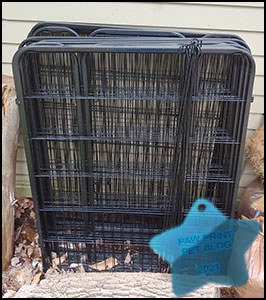
    I tried my best to share the features of the Yaheetech dog playpen without being able to actually assemble the full pen.  To be honest, after taking pictures for January’s review I basically collapsed the pen and let it sit outside behind our house.  Winter sloooowly gave way to spring.  All that snow melting meant that our yard has basically been a giant mud pit.  Finally, this past weekend, I found both the motivation, and a dry spot in our yard, to get outside and set up our pen!

    We received our Yaheetech dog playpen for free in exchange for our honest review.  As always, we strive to share only products we feel would be of interest to our readers.  All opinions expressed are our own.  This post contains affiliate links.  If you make a purchase using one of our links we will receive a small commission at no additional cost to you.

    First Impressions…

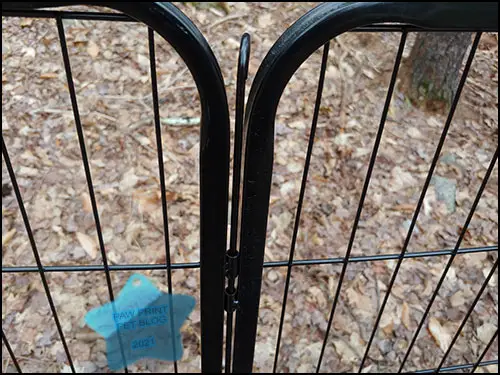
    Right off the bat I was super impressed that the pen panels I had left outside in the elements for 5 months were still in perfect condition.  Besides being a little bit muddy, they looked just as good as they did the day I unboxed them.  Building the playpen was super easy, which I was especially thankful for because I seemed to have misplaced the instructions that came with it.  Our playpen is the 16 panel 40 inch model, so it’s a pretty good size especially considering that my dogs are on the smaller side.  These pens are super modular.  They do come in sets that include more panels, which would make a larger pen.  Alternatively, it would be really easy to buy another set of panels later on and add them to your existing pen, if you ever decided you wanted to expand it.
    Setting Up Our Pen

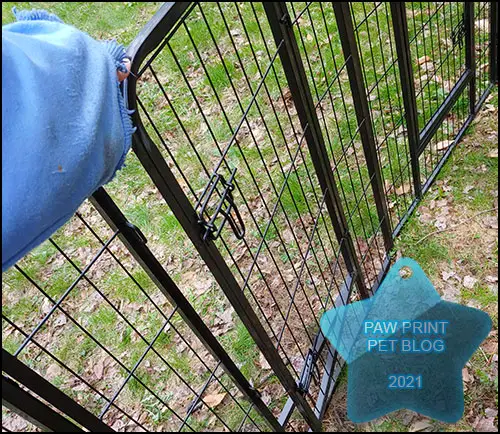
    The pen panels basically attach together with metal stakes.  You slide the stakes down through alternating holes in the fence panels.  I don’t remember if this was in the instructions or not, but I pushed the stakes down further so that the ends of them went into the ground.  I’m sure the pen would still be secure if you didn’t, or couldn’t, do that, but I liked the idea of potentially being able to give our playpen a bit of added stability.

    I like the door on our Yaheetech pen too!  You can set it up to swing in whatever direction works best for you.  Our pen came with two doors.  I set them up to swing in opposite directions because I wasn’t sure which way I’d like them best.  The door being smaller means I can easily slip in and out of the pen without having to worry as much about my dogs (Fenrir!) trying to escape.

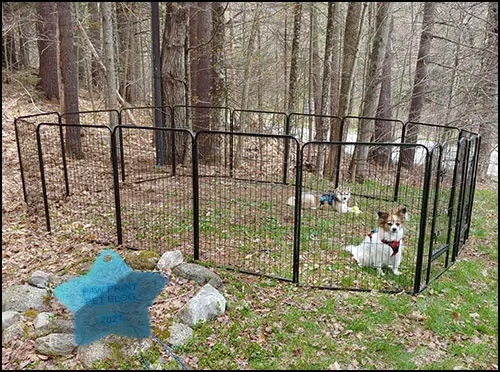
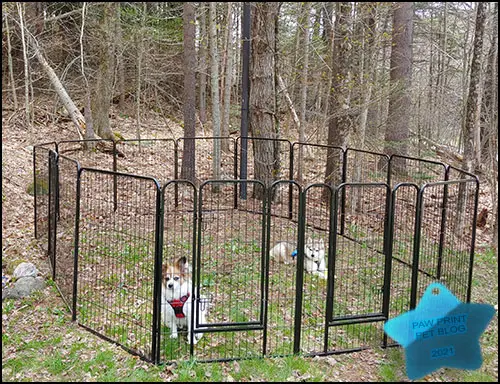
    Here’s probably what most people will want to see most, the completed, full size, pen!

    Probably the most important part of any dog product review – do my dogs like it!?

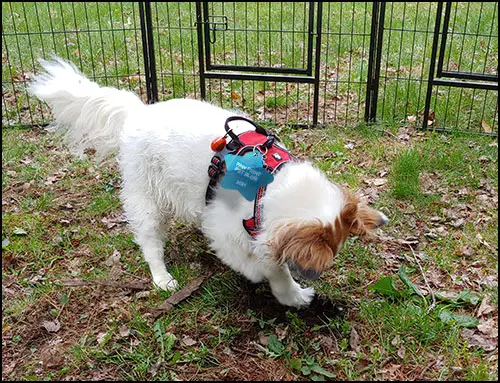
    Kit, as you can maybe tell from those pictures, was a bit unsure of it at first.  Usually, when I take him out in the yard, I stay with him and just let him wander.  At first, after I put him in the pen, he kind of just sat near the edge looking out at my partner and I.  But eventually he did start feeling more comfortable about the whole thing and got right down to business – the business of digging for worms!

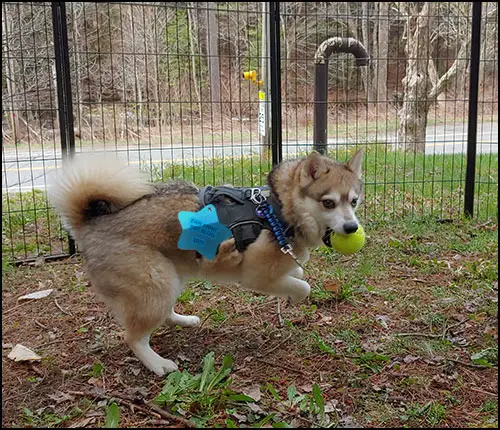
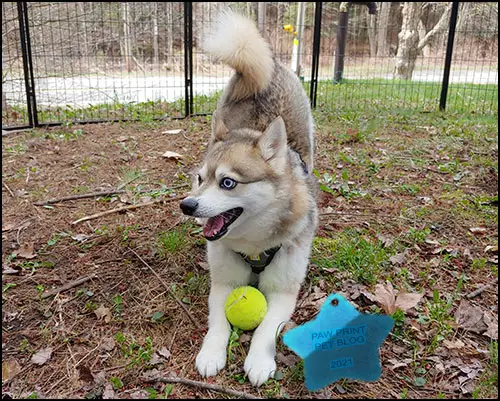
    Fen, on the other paw, was pretty excited about the playpen right from the start.  Anyone who knows anything about Alaskan Klee Kai knows that the breed isn’t known for being great off-leash.  Our yard isn’t fenced, so when I want to give him more freedom to run outside I usually just use a long line.  I don’t think I even need to write too much about how much fun Fen has been having being able to run around off-leash.  I’ll just let these pictures speak for themselves…

    Great For Playing Off-leash!

    Now almost every time I take Fen out in the yard he tries to drag me over to ‘his’ playpen so he can go inside and play fetch.  The pen has also been super convenient for times when I want to have the dogs outside with me, but I can’t give them my full undivided attention.  It keeps them safe and contained while I get other things done, like working on the car or yard work.

    If you want more details on our Yaheetech dog playpen you can check out my first review here.  Of course also be sure to check out the Yaheetech website!  Besides dog pens, they also sell other pet products as well as other types of products too.  I’ve totally been eyeing some of their gardening supplies!

    Thanks so much for reading!  Comment below!  Have you ever used any type of outdoor pen for your pets?

    Dog Health, Pet Tips

    How Often Do Dogs Need Bathroom Breaks?

    April 25, 2021

    I have the pleasure (and curse – when you work from home, you’re always at work!) of working from home, so taking my dogs out regularly has never really been an issue for me.  Maybe it’s because they’re small dogs, or perhaps I’m not the best puppy trainer, but both Kit and Fen were pains to potty train.  Luckily, now that they’re older, they’re both awesome at only going outside.  My dogs rarely actually ask to go out, unless it’s really an emergency.  They normally wait until I take them out to use the bathroom.  How often do you take your dogs out for bathroom breaks?

    What I Do With My Own Dogs

    I take Kit and Fen out, on average, once every 5 hours or so during the day.  They go longer than that overnight.  I don’t like making them wait too long between trips outside.  Holding pee too long can lead to heath issues such as urinary tract infections, bladder, and kidney problems.  Holding poop for extended periods of time can cause constipation, which isn’t fun for anyone!

    How Often Do YOUR Dogs Need Bathroom Breaks?

    how often do dogs need bathroom breaks?

    Kitsune patiently waiting to go out.

    The answer can depend on a lot of factors, including (but not limited too) your individual dog, his/her age, diet, activity level, and general health.  A general rule for puppies is that you can take their age, in months, and add 1.  That’s how many hours they can be expected to be able to hold their bladders for.  So an 8 week (2 month) old puppy can generally go around 3 hours between bathroom breaks.

    A general time frame I’ve seen for adult dogs is anywhere between 4 – 10 hours between bathroom breaks.  I do wonder, though, if the higher estimate is based more on people’s work schedules than it is on maintaining pets’ comfort.  Both of my small dogs can go 10 hours without using the bathroom, but I really don’t like making them wait that long and would only do so under rare, extenuating circumstances.  Bathroom breaks every 5 or 6 hours seems to really be the sweet spot for my duo.

    I understand that not everyone has the luxury of being able to work from home.  People who work long hours can, and do, make awesome dog owners too.  Often this entails enlisting the help of a dog walker, doggy daycare, family members, neighbors, etc, to ensure their dogs get not only regular bathroom breaks, but attention during the day.

    Comment below!  If you have a dog, how often to you take him/her out to use the bathroom?  What do you feel is an acceptable amount of time between bathroom breaks for an adult dog?

    Post last updated: 1/18/2022

    Pet Products

    List of Subscription Boxes for Pets

    April 10, 2021

    Monthly subscription boxes can be a fun, unique way to spoil your pet!  Over the years, my dogs and I have reviewed quite a few different pet boxes.  Since this list continues to be one of our most popular blog posts, I regularly edit it to included any new pet subscription boxes we come across, and to remove ones that are no longer available.

    ** Post last updated 1/19/2022 **

    When I originally posted this list, it was rather short.  Its grown a lot over the years!  If you know of any pet subscription box services that I neglected to add to my list, please feel free to comment below!  I’ve organized the list into categories based on what types of pets they are for, to make it easier to find boxes for each particular type of pet

    Post Contents:

    • 1 Boxes for Dog
    • 2 Boxes for Cats
    • 3 Boxes for Both Dogs and/or Cats
    • 4 Boxes for Other Pets

    Boxes for Dog

    • Pooch Perks:  Pooch packages start as low as $21.15 per box and include high quality toys and treats.  The treats, and many of the toys, are made in the USA.
    • Bully Bundles: A bit different then your average dog subscription box, Bully Bundles sends your dog monthly bundles of long lasting, high quality bully sticks!  Choose between 6” and 12” bully sticks – pricing ranged from $18 to $132 per month.
    • BarkBox: BarkBox was the first pet subscription box we ever heard about!  We actually had a subscription with them for about 8 months.   Pricing is as low as $23 a month (if you purchase a 6 month subscription).
    • PupBox:  This is a monthly development box for your puppy.  As your puppy grows, the products included in each month’s box will change.
    • PupJoy: This box has single or multi dog options that include hand selected items such as treats, and toys personalized for your dog’s size.
    • The Dapper Dog Box: Treats, toys, and bandanas for your best furry friend in every box.
    • TreatLuv: A monthly surprise box containing 5 – 7 natural treats each month.
    • Wigglebutt box: Boxes contain treats, chews, food, and toys.
    • Daisy-Care: Options such as an annual holiday box, a treat box, or a toy box.
    • Wigglebutt Box: Boxes are tailored to dogs size.  Treats are high quality and sourced from the USA, Canada, Australia, and New Zealand.
    • Gnaw Box: Boxes for small or medium/large dogs contain Nature Gnaws chews and treats.
    • Pup Mom Crate: Spoil your dog and yourself for $39.99 per month.
    • Willie & Roo: The health, wellness, and fun box for dogs!
    • Real Dog Box: The freshest dog treats on the planet!  Treat and chew boxes available.
    • Get Wagging Collar Box: Starting at just $20 a month, new collars can be sent monthly or quarterly.
    • Dog Mom Box:  The sub box for dogs and their moms!
    • Kong Box: What dog guardian isn’t familiar with Kong?  They have a sub box now too!

    Boxes for Cats

    • Meowbox:  Meowbox is a goodie box for cats that contains fun toys, and high quality treats sourced from the US and Canada.  Picky kitties can opt to receive boxes that contain extra toys in place of treats.
    • KitNipBox:  KitNipBox is a subscription box created especially for cats!  Prices range from $19.99 to $29 per month.   These boxes include awesome cat products such as toys, healthy treats, and health and hygiene products.
    • Cat Lady Box: A monthly box not only for cats, but for the ladies who love them too!
    • Purrfect Packs: A monthly cat box that contains things like natural treats and toys.
    • Purr Box: Cat boxes that can be ordered as a monthly subscription or one time.
    • Cattitude Box: Sub boxes for cat ladies!

    Boxes for Both Dogs and/or Cats

    • Rescue Box: Spoil your pet while helping animals in need!
    • Vet Pet Box: Boxes for dogs or cats full of goodies hand selected by veterinarians.
    • Jadey’s JuJu: Ethically sourced pet treats, products, supplements, and other goodies.  Boxes available for dogs, cats, or horses.
    • Pet Treater:  Want monthly treats, toys, and supplies for your dog or cat?  Pricing starts as low as $15 per month.
    • Chewy Goodie Boxes: The ever popular Chewy offers goodie boxes for dogs of various sizes, as well as cats.

    Boxes for Other Pets

    • Squawk Box: A monthly box of 4 to 6 goodies for birds.
    • Feathered Fun Box: Monthly boxes for small or large birds.
    • Polly Wanna Bird Box: A busy bird is a happy bird – treat your flock to a box of goodies monthly.
    • Henny+Roo: A box for backyard chicken keepers!
    • Rat Pack: Monthly goodies for rats or guinea pigs.
    • Bunny Box: Based in the UK.  A box for bunnies!
    • BinxBox: A monthly sub box for bunnies, guinea pigs, and more.
    • Happy Bunny Club: A monthly box of toys, treats, and guaranteed bunny fun!
    • Dook Box: A sub box for ferrets.
    • Hamster Mail: Another hamster box!
    • Pocket Pet Pouch: A sub box ideal for hedgehogs and other small pets.
    • Hermie’s Kitchen: Homemade treat subscription boxes available for not only dogs and cats, but hedgehogs, hermit crabs, and rats as well!
    • PETure Perfect: A box of goodies, personalized with your pet’s picture!  The boxes are listed on the site as being for cats or dogs.  However, the company will accommodate for any type of pet!

    ————————————————————————————-
    Whew that’s a long list!  Did we forget one?  Have you tried any of the pet subscription boxes listed above?  Is there one in particular you’d like to see us review?  Comment below and let us know!

Older Posts
Newer Posts
#playhardsleepharder #sleepyhead😴 Fenrir after a f #playhardsleepharder #sleepyhead😴 Fenrir after a fun day of critter watching and playing with toys ❤️ #itsadogslife🐾 #fenrirsnowsong #pawprintpetpack
It's a beautiful day to play ball in the snow ❄️ It's a beautiful day to play ball in the snow ❄️
Today would have been Kit's 17th birthday. My best Today would have been Kit's 17th birthday. My best buddy...not a single day goes by that I don't think of him. Forever a beloved member of our little pack ❤️
Someone stole his dad's socks 😂 10 years old and s Someone stole his dad's socks 😂 10 years old and still as mischievous as a pup!  This little one makes me laugh everyday and I'm SO thankful for him. 💙
New phone, who dis!? 😅 Sorry for the lack of new New phone, who dis!? 😅 
Sorry for the lack of new Fen pics lately... My old phone broke and it took me awhile to replace it. 
Fen is his happy, sassy, playful self and is doing well. 💙
Follow on Instagram
Facebook Instagram Pinterest Youtube

Copyright © 2026 Paw Print Pet Blog. All Rights Reserved.

Back to top