• Home
  • Popular Topics
    • Papillons
    • Alaskan Klee Kai
    • Hiking with Dogs
    • Dog DIY
    • Recipes
    • Dog Product Reviews
    • Can Dogs Eat…
    • Dog Health
  • The Paw Pack
    • Kitsune (2008 – 2024)
    • Fenrir
  • Policies
    • Disclaimer
    • Privacy Policy
    • Work with Us
    • Site Map
  • Contact

Paw Print

    Dog Health

    How to Make Golden Paste

    October 5, 2022

    A couple of weeks ago I posted about the benefits of giving dogs Turmeric.  In that post, I very briefly mentioned the recipe I use to make golden paste.  I like to give my senior dog, Kitsune, golden paste when I can.  He’s currently still on medication (anti-inflammatories) for IVDD, so I’m not currently able to give him turmeric.  But we’re planning on starting to wean him off his IVDD meds later this week.  When I’m able to, I’m planning on supplementing him with golden paste again.  In the past, golden pasted seemed to help with Kit’s teeth and minor GI issues.  Now that he’s been diagnosed with IVDD, I’m hoping that turmeric/golden paste might help with that too!

    Post Contents:

    • 1 A Brief Review of the Benefits of Turmeric
    • 2 Why Golden Paste?
    • 3 How I Make Golden Paste
    • 4 Storing Golden Paste
    • 5 How to Give Golden Paste to Your Dog
    • 6 Contradictions
    • 7 Treat Recipe…

    A Brief Review of the Benefits of Turmeric

    • The Benefits of Giving Dogs Turmeric
    • The active ingredient in Turmeric, Curcumin, is thought to have anti-inflammatory properties.  Inflammation, no matter its cause, causes pain.  Turmeric is thought to help conditions that cause pain due to inflammation, including arthritis, and other joint issues.  Fighting inflammation can also help calm GI issues, and allergies, relieve general pain, and more!
    • Turmeric is thought to benefit dogs’ skin and coat health.
    • Curcumin also has antioxidant properties.  Further testing is needed, but these antioxidants are thought to be able to help fight cancer.

    Why Golden Paste?

    Golden paste, sometimes called turmeric paste, is a mixture (a paste, if you will) that contains turmeric and a few other ingredients that you probably already have laying around your kitchen.  Curcumin in turmeric has been shown to have a number of health benefits, which is awesome!  However, curcumin on its own is hard for the body to absorb and utilize.  There’s not much of a point in supplementing your dog with turmeric if his/her body isn’t efficiently absorbing it.  Enter golden paste!

    The simple ingredients in turmeric paste, including black pepper and a source of fat (coconut oil), have been shown to greatly increase the bioavailability of curcumin.  Essentially, supplementing with golden paste rather than just plain turmeric allows your dog’s body to absorb curcumin much better.  Absorbing curcumin more efficiently means that there’s a better chance your dog will be able to experience benefits from it.

    How I Make Golden Paste

    The recipe for golden paste is simple!

    • 1/2 cup high-quality turmeric powder
    • 1 cup of water
    • 1/4 cup coconut oil
    • 1 1/2 – 2 teaspoons ground black pepper
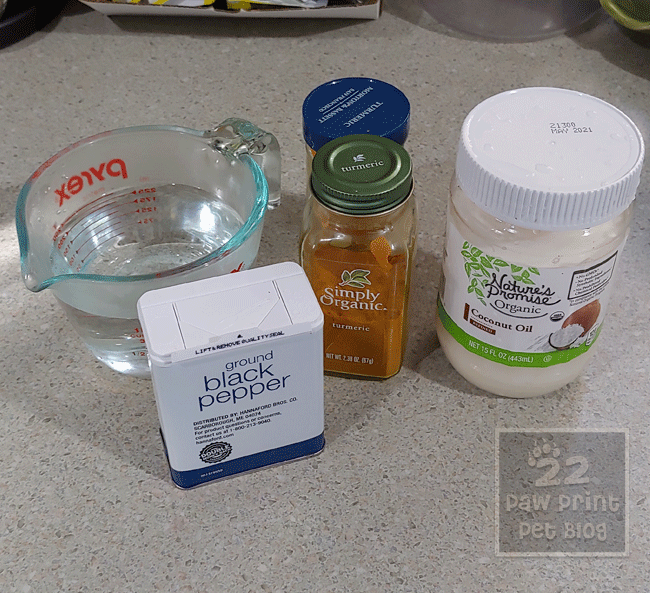
    Ingredients for making turmeric paste

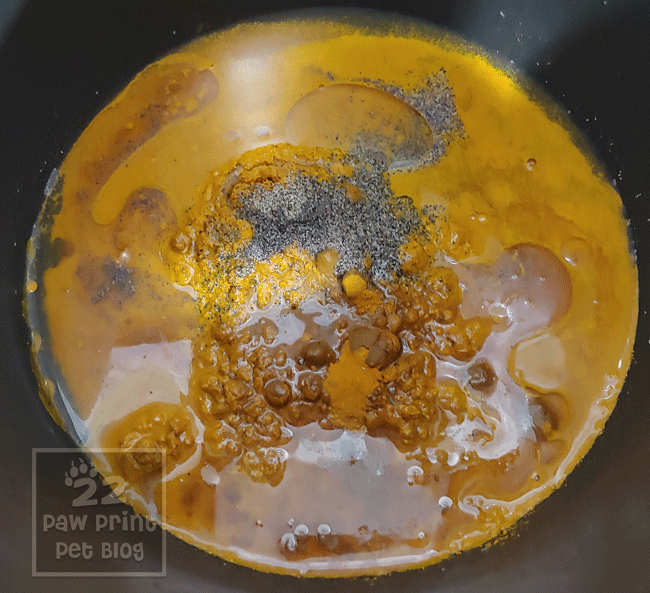
    I combine all my measured ingredients into a pot…
    golden paste

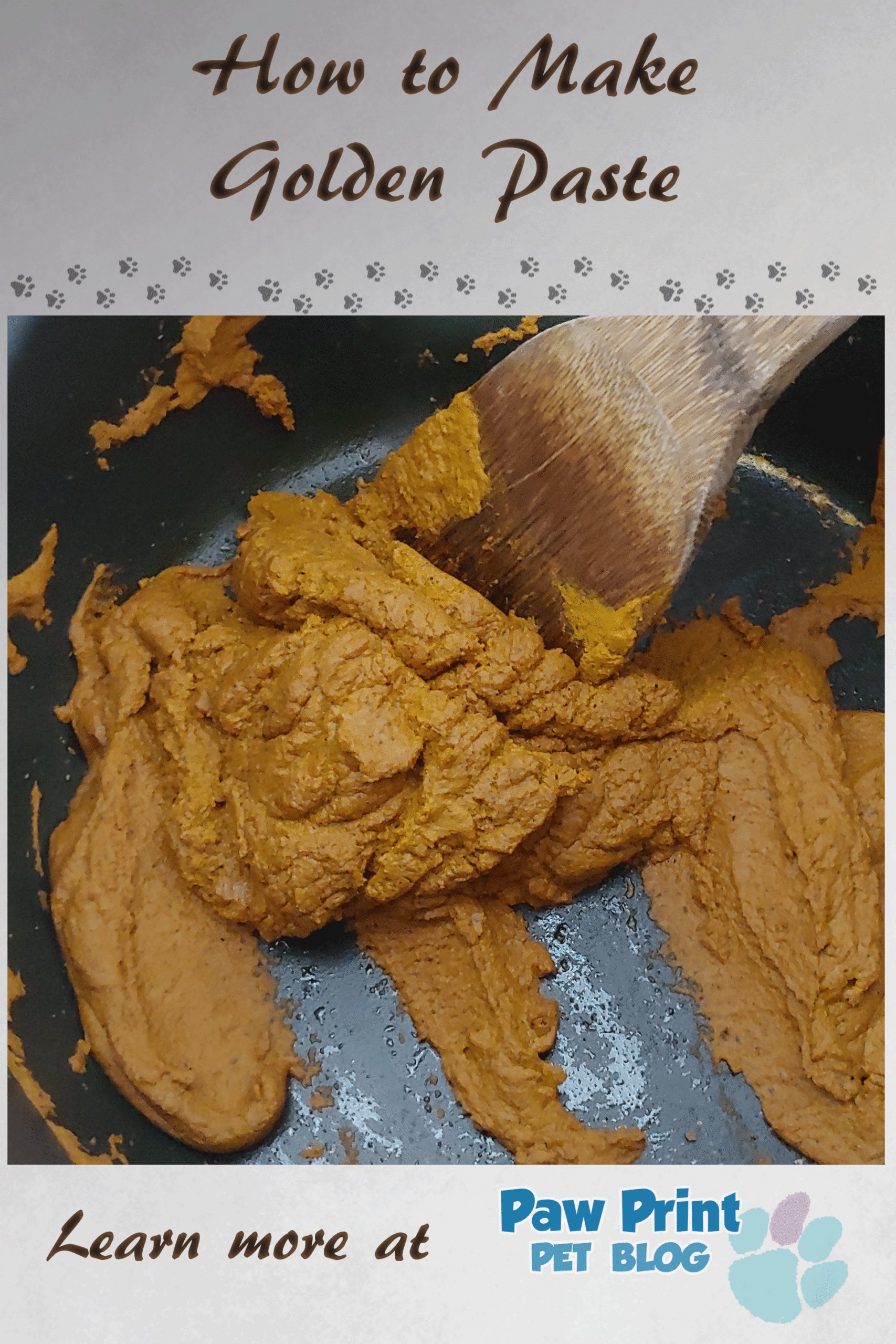
    Turn my stove burner on low, then mix mix mix!  At first, the mixture will look very watery, and you may see some of the oil separate from the rest of the mixture.
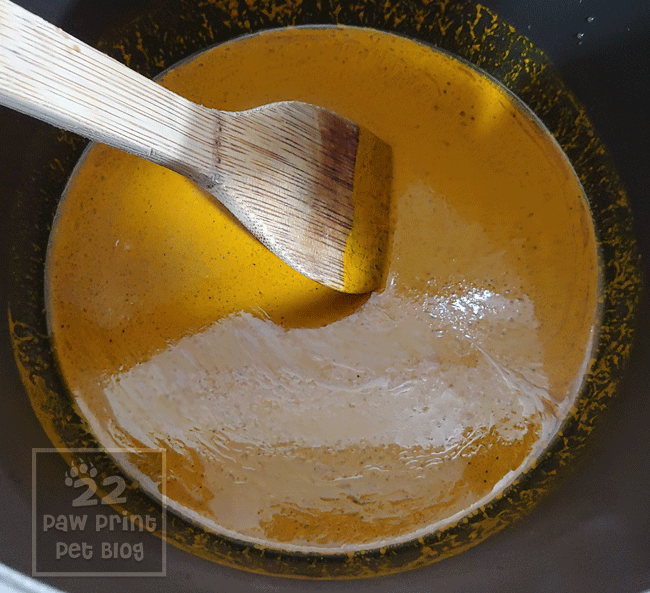
    But, after a short time, the paste will thicken up.  It should also look more uniform at this stage.

    golden paste

    Once your golden paste looks like the photo above, thickened and well mixed, it’s done!

    Storing Golden Paste
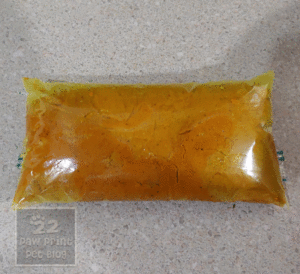
    Storing turmeric pasteA general rule of thumb is to try not to make more turmeric paste than you can use in 2 weeks.  It can be stored for up to 2 weeks in an airtight container in your refrigerator.  I usually like to store my golden paste in a mason jar in my refrigerator.  In a pinch, I’ve also stored it in sandwich bags with all the air squeezed out in between uses.  Yeah, I need to buy new mason jars!

    You can also freeze golden paste for up to 6 months to store it for longer.  The turmeric paste I made for this post I stuck directly into my freezer.  I’m hoping that weaning Kit off his meds goes well, so that in a couple of weeks or so I’ll be able to start giving him golden paste again.

    How to Give Golden Paste to Your Dog

    The general dosage of golden paste is 1/4th of a teaspoon for every 10 lbs. of body weight, per day.  But, with turmeric, it’s important to always start with a smaller dose and work your way up over time.  Turmeric can upset some dogs’ stomachs, so you’ll want to see how your dog handles it before going up to its full dose.  Turmeric also leaves the body quickly, so it can be beneficial to break up your dog’s daily dose.  For example, instead of giving your medium-sized dog 1/2 a teaspoon all at once, give them 1/4 in the morning and 1/4 in the evening.

    I’ll admit, there are not many dogs who will like the taste of turmeric paste plain.  My Kitsune is a notorious foodie, and even he won’t eat turmeric paste plain.  I make him golden paste treats or mix his golden paste in with tasty food to disguise the flavor.

    Contradictions

    Turmeric can interact with some medications, notably with anti-inflammatories, and diabetes medications.  It can cause GI upset and is not recommended for dogs prone to developing kidney stones.  Turmeric can also act as a natural blood thinner and is not advised for dogs with scheduled surgeries.  Discuss whether or not turmeric is appropriate for your pet with your vet, especially if your dog is on any medications or will soon be having surgery.

    Treat Recipe…

    I make Kitsune turmeric treats to get him to eat his daily turmeric paste since he doesn’t like the paste plain.  I’m keeping my fingers crossed that, in the next couple of weeks, my little buddy will be off of his IVDD medications so that I can transition him back onto some of his supplements.  I’m hoping that the anti-inflammatory and pain-relieving properties of turmeric will help us to manage his IVDD in the future.

    Comment below!  Have you ever tried supplementing your dog, or yourself, with turmeric?  Have you ever made golden paste?  What benefits did you see?
    The Paw Pack, Kitsune

    Kitsune’s IVDD Recovery Diary – Week 2

    October 3, 2022

    For anyone who came across this post without reading my other one, my senior papillon Kitsune was diagnosed with cervical IVDD on September 17th.  Our first post about it, which you can see here, outlined his first week of recovery, day by day.  This post is a continuation of Kit’s conservative IVDD recovery, week 2!  This week, I think I’m going to try updating every couple of days instead of daily.  For more frequent/up-to-date updates on Kit, you can also follow him on Instagram, or like us on Facebook!

    • A look back at Kitsune’s IVDD Recovery Diary – Week 1

    We’re doing conservative IVDD treatment with Kit, which means using medication and at least 8 weeks of strict rest to give the injured disc in his neck time to heal.  This is week two!

    Post Contents:

    • 1 Saturday Sept. 24th – Sunday Sept. 25th
    • 2 Monday Sept. 26th
    • 3 Tuesday Sept. 27th – Wednesday Sept. 28th
    • 4 Thursday Sept. 29th – Friday Sept. 30th
    • 5 And with that, we’ve survived week 2 of Kitsune’s IVDD recovery!

    Saturday Sept. 24th – Sunday Sept. 25th

    IVDD RecoveryThis weekend was hard, but I guess for a good reason.  Our biggest problem has very quickly shifted from managing Kit’s pain to dealing with his frustration about being confined.  Last week he seemed relatively content to rest in his crate, but not anymore!  More often than not, now, when we crate him he cries and paws at the crate door to come out.  It was stressing me out all weekend because I was so nervous that he’d get too worked up in his crate and hurt himself.  But letting him out is stressful too because I need to watch him constantly to make sure he’s laying down instead of walking around too much, trying to jump onto furniture, or using the stairs.

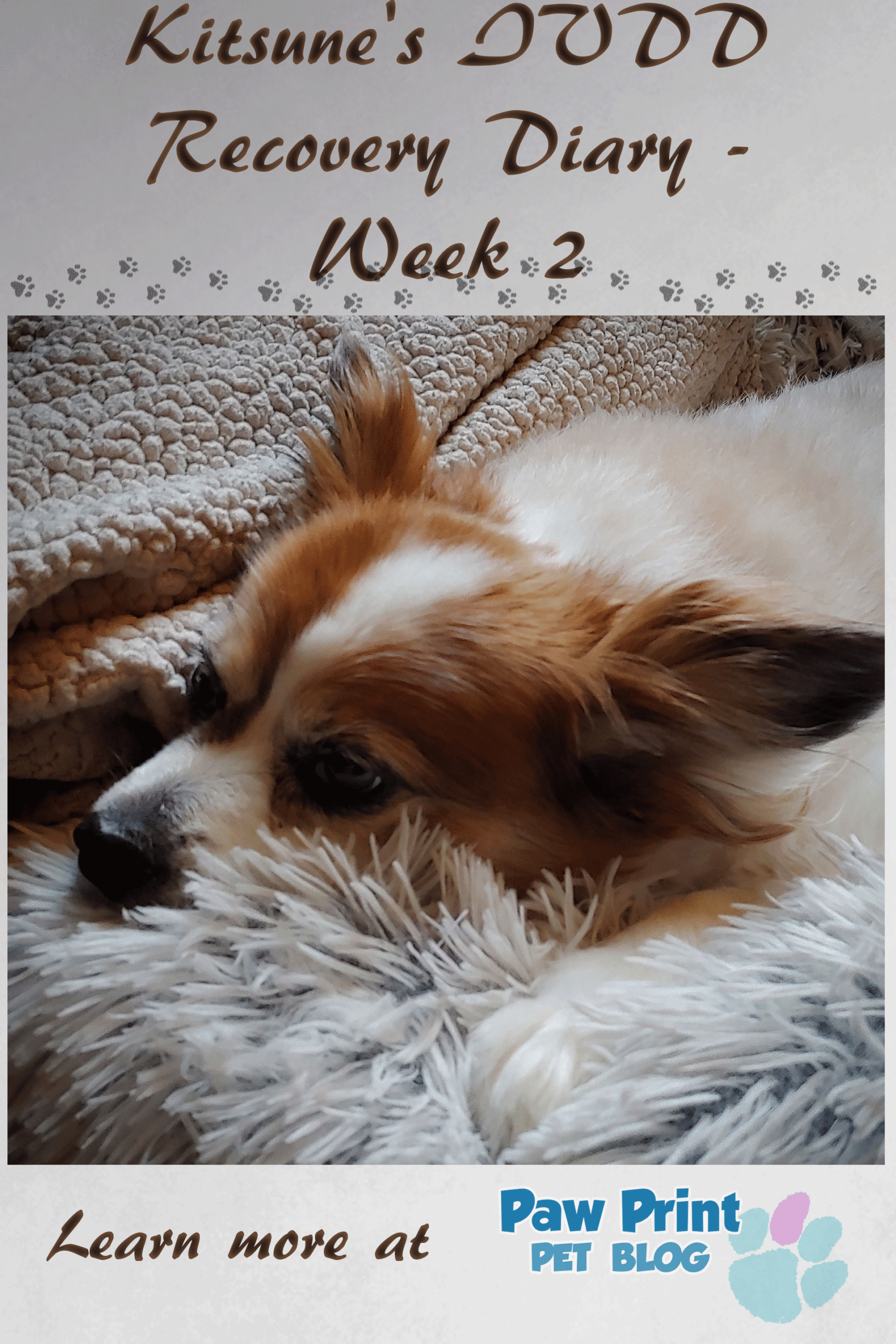

    On Sunday evening I decided to try setting up a blanket on the floor, for some gentle snuggle time.  Kit seemed to appreciate it!

    Monday Sept. 26th

    On Monday I decided to gate off the door of my office so that Kit could spend the day relaxing with me, instead of being crated all day.  There’s no furniture that I have to worry about Kit jumping on in my office.  I brought in one of his dog beds and a bowl of water.  Just like that my office turned into a nice little recovery room for Kit.  He seemed to relax a lot better than he was in a crate and spent most of Monday just relaxing/sleeping in his dog bed.

    I can tell he’s feeling better, though.  On Monday he tried (I stopped him!) to use the stairs.  He also tried eating grass when I took him outside for bathroom breaks.  If you know Kit, you know that he loves eating grass!  But today was the first day since this all started that he seemingly felt good enough to bend his head down long enough to chomp at the lawn.

    Kit’s attempt at the stairs made me nervous, so I bought a cheap baby gate to block the bottom of the stairs.  We already had a gate at the top of the stairs, but not one at the bottom.  It’s supposed to get here on Wednesday.

    Tuesday Sept. 27th – Wednesday Sept. 28th

    I didn’t have anything new to report on Tuesday.  Kit was about the same.  Doing well, but still struggling with the crate rest.

    On Wednesday we went back to his vet for a recheck.  We’re going to keep him on his Prednisone and Gabapentin schedule for another week.  After that, we’re going to attempt to stop the Gabapentin and start tapering off of Prednisone.  So I guess we’ll see how that goes next week.

    The baby gate we ordered got here on Wednesday morning.  It’s nothing special, but it’s been nice to be able to block off the stairs with a gate as needed.  I’m trying to keep Kit in his crate as much as possible, but the vet okayed time outside of his crate as long as he’s not moving around too much.  Relaxing on the floor or a dog bed is ok.  It helps during times when he gets restless in a crate.  I let him out for meals as well.  Our stairs are kind of precarious, even for people, so I for sure don’t want Kit attempting to use them.  Before the gate got here I was using my vacuum cleaner and rug cleaner to block off the stairs (lol).

    Thursday Sept. 29th – Friday Sept. 30th

    Kit has been feeling a lot better, which has been both a blessing and a curse.  I’m SO happy that he’s doing so well, but keeping him quiet still has been becoming more and more of a challenge.  On Friday he wanted to run around in the yard, and, for the first time since all this started, he tried to do his infamous “Kit rolls”.  That’s when he rolls around upside down to scratch his back on the rug.

    During Kit’s vet appointment this week we discussed putting him on a diet to help him lose some weight.  I’ve always kind of struggled with Kit’s weight, but keeping him thinner will hopefully reduce the amount of stress on his spine.  But, I think, between his new diet and side effects of the Prednisone, he’s been pretty cranky when it comes to food lately.  Friday night I was letting Kit sleep on his dog bed on the floor, instead of in his crate.  He woke me up at 3 am freaking out trying to get to the bag of treats that I keep in the bedroom.  I ended up giving him a few to help him get settled in his crate, where he thankfully slept quietly for the rest of the night.

    And with that, we’ve survived week 2 of Kitsune’s IVDD recovery!

    I’m going to continue posting updates, but I think the updates in the future may be fashioned more as weekly updates rather than daily, or every couple of days.  Kit’s been doing so much better.  I’m not sure we’ll be seeing little improvements every day at this point.  Kit currently isn’t in pain, and has no neurological impairment.  His remaining 6ish weeks of recovery are going to be about keeping him as calm as possible, so his disc has the time it needs to fully heal.

    The first two weeks of Kit’s recovery went by a lot faster than I thought they would!  Don’t get me wrong, it’s been exhausting, scary, and stressful.  But it feels amazing to have the first two weeks of recovery down and to see Kit doing so much better today than he was 14 short days ago.  My little old man still has a lot of fight left in him!  When this all started it was so scary seeing Kit in so much pain.  But I have no doubt, now, that soon enough these long weeks of recovery will be well behind us and Kit will be back to being his happy, sassy self.

    IVDD Recovery

    The Paw Pack

    The Story Behind Our Logo

    October 1, 2022

    logoIf you’ve visited any of our social media pages, or our Amazon Merch store, lately you might have noticed that, after many years, we finally have an official logo!  My partner, who creates a lot of the art for my blog, designed it.  Over the past week or so I’ve slowly been uploading it to our social media sites.  Rather than just uploading it and never mentioning it I thought I’d do an official post here to tell the story behind our new logo.
    I don’t think it’s any surprise that our logo features a paw print.  Hey, this is Paw Print Pet Blog after all!  Since I started this blog back in 2010 I’ve always used a blue color scheme.  So when it came to picking colors for the new logo going with blue was a no-brainer.  But why the pink, you might ask.  Why one pink toe on the paw image?  That’s where the story comes in!

    logo

    The first picture of Fen I ever posted on Paw Print!

    Puppy Paws!

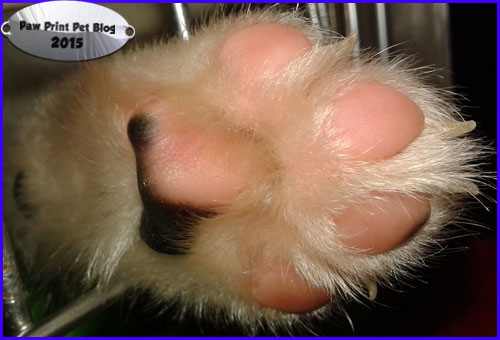
    When puppies are shiny and new, they have adorably soft little paw pads.  In puppies, paw pads can be black, pink, or both.  As puppies age, and learn to really use those little paws, their soft paw pads naturally start to become tougher.  Oftentimes (but not always) as the paw pads toughen up they also change color.  It’s not unusual for pink paw pads to darken and turn black as puppies age.

    Both of my dogs started out as puppies with pink and black paws.  Kit’s paw pads eventually all turned black except….

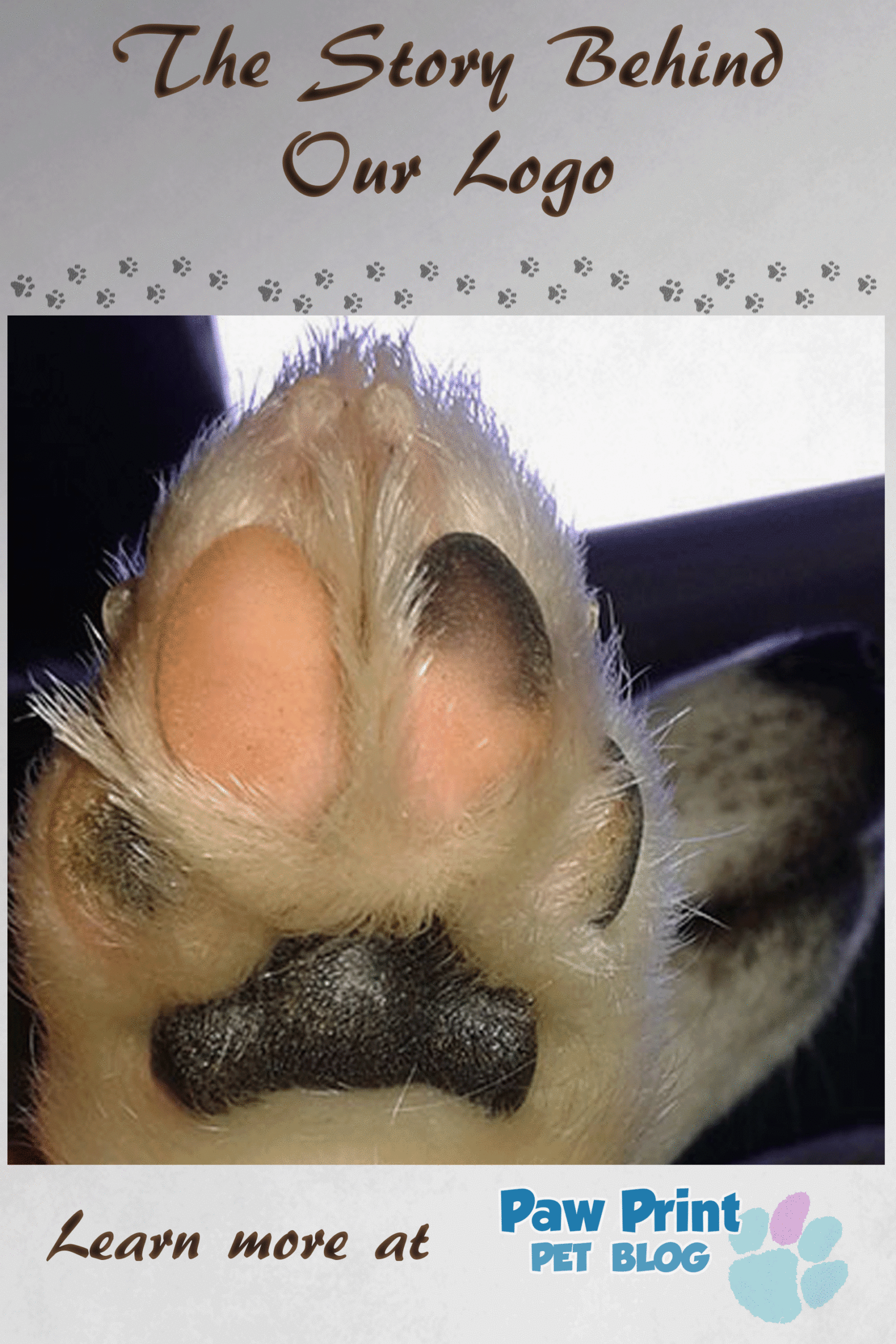
    logoFor what we fondly refer to as his “lucky pinky”.  It’s a bit dirty in that picture, but Kit has all black paw pads except for one toe on one of his back paws that, for some reason, remained pink.

    Two Lucky Pinkies!?

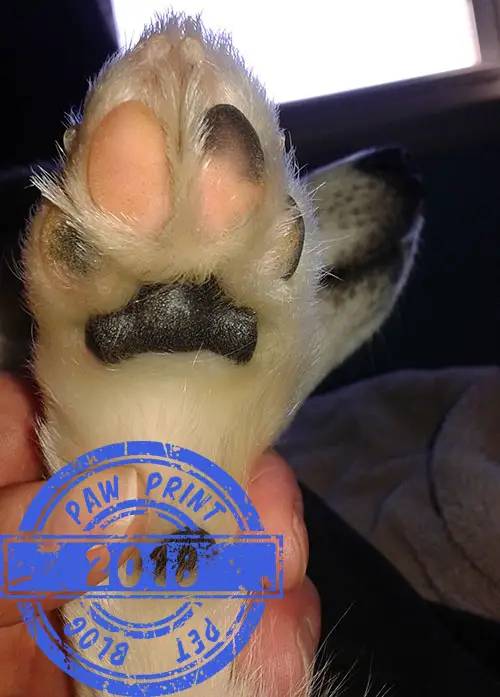
    His lucky pinky was always one of Kit’s cute little quarks that I felt was uniquely him.  I know, of course, that there are other dogs out there that have this, but still not all of them do and it is one of the millions of little things that adds up to make Kit special.  I’ve always loved Kit’s adorable paws, his lucky pinky especially, so imagine my delight when Fen matured and…

    He has a lucky pinky too!  Fen’s paws retained more pink areas than Kit’s did, so his lucky pinky isn’t as pronounced.  But he does have it – one toe on one of his front paws, and it’s the only toe that remained completely pink.

    Our Logo is Born

    Cute right?  For many years now, ever since Kit was young, I’ve been considering getting a tattoo of a paw print with one pink toe.  I was originally considering getting a tattoo that looks like Kit’s paw, but now I don’t know how I’d decide between Kit’s and Fen’s. They are both so adorable!

    I had the same issue when I was helping my partner design our new logo.  I knew from the beginning that I wanted to incorporate a paw print with one pink toe, in honor of my boys.  But I was having trouble deciding if I wanted the logo to be based off of Kit’s paw, or Fen’s.  In the end I told my partner to use his creative license and just do what he thought would look best.  The lucky pinky on our logo ended up not being the same toe as either Kit’s or Fen’s pink toe, which I actually ended up liking a lot.  I feel like this way it kind of represents both of them.

    The new Paw Print Pet Blog logo!

    So there you have it, the story behind our new logo!  I love that it is simplistic but at the same time, to me at least, meaningful.  Now every time you see it you’ll know the meaning behind it too!

    Comment below!  What do you think of our new logo?  Do any of your pets have any silly/unique markings?

    Dog Health

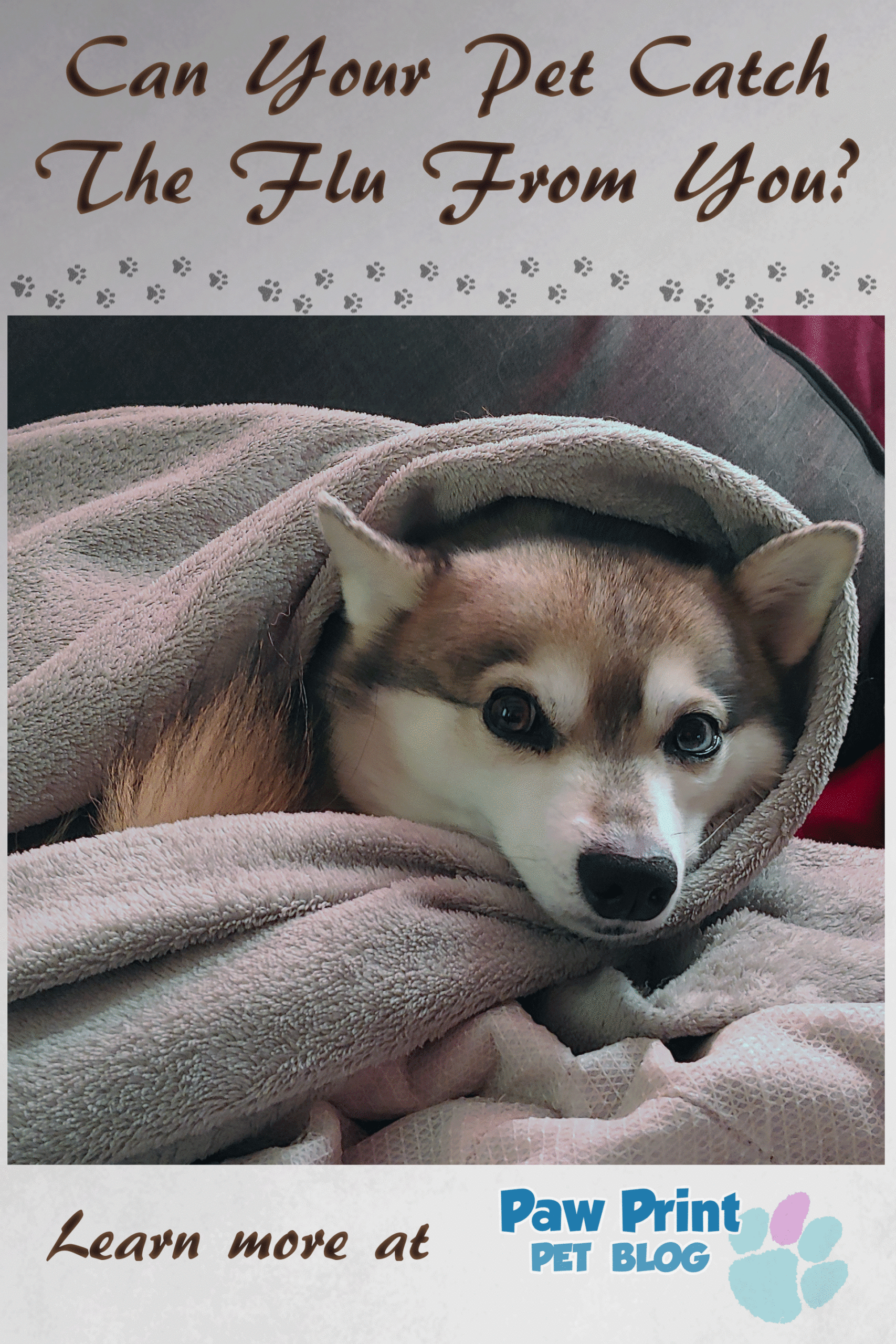
    Can Your Pet Catch The Flu From You?

    September 30, 2022

    Hot chocolate, warm puppy snuggles, sweater weather and…the flu!?  Fall is officially upon us.  If there’s one thing worse than being sick, it’s watching our beloved pets suffer through not feeling well!  Hey, I know first hand.  I’ve been spending the last week plus nursing my senior papillon, Kitsune, through an IVDD flare.  Did you know that there’s are versions of the flu virus that infects dogs (Canine influenza), and that there is increasing evidence that, in rare cases, pets may be able to catch the flu from their human companions?

    Post Contents:

    • 1 Zoonosis
    • 2 Reverse Zoonosis and The Flu
    • 3 Canine Influenza
    • 4 Dog Flu Treatment
    • 5 Final Thoughts

    Zoonosis

    Zoonosis is a term that refers to an infectious disease that can be transmitted between animals and humans.  Examples of zoonotic diseases include anthrax, Ebola, E.coli infections, malaria, Lyme disease, Rocky Mountain spotted fever, and the plague.  Normally, when worrying about zoonosis, people are mostly concerned about humans becoming infected with diseases that can be passed on from animals.  However, reverse zoonosis, or the passing of diseases from humans to other animals, sometimes occurs as well.

    Reverse Zoonosis and The Flu

    dog fluThe first cases of domestic pets catching the flu from humans occurred in 2009.  Two cats developed a severe respiratory disease and sadly, both passed away.  Testing after their deaths confirmed that the cats were infected with the H1N1 virus, most likely caught from an infected human.

    Researchers from Oregon State University released a press release back in 2012 which stated that, in some rare instances, humans appear to have passed the H1N1 flu virus to cats and other animals, some of which have died of respiratory illness.  Researchers suggest that people with influenza-like illness distance themselves from their pets.

    Only 13 cats and 1 dog were confirmed to have developed pandemic H1N1 in the years 2011 and 2012.  An unspecified number of ferrets have also contracted the disease.  It’s safe to assume that the total number of pets effected is probably higher, with a majority of cases most likely going unreported and/or unconfirmed.

    Canine Influenza

    There are currently two versions of influenza that can commonly impact dogs.  H3N8 started out as equine (horse) flu, but is now transmittable between dogs.  It was first reported to cause illness in dogs in 2004.  Canine influenza H3N2 originated in birds, but is now also transmittable between dogs.  H3N2 is also known to be able to infect cats.  This version of canine influenza was first detected in 2007 in South Korea.  By 2015 it had made its way into the US.  So far, there are no cases of either H3N2 or H3N8 causing sickness in humans.

    No matter what version of the flu your dog catches, the symptoms are similar and can include a cough, fever, runny nose, reduced appetite, general lethargy, and eye discharge.  A majority of dogs will recover on their own within a week or two.  However, some will require supportive care and, in rare instances, secondary infections and pneumonia can develop.

    Dog Flu Treatment

    The flu is a virus.  Unless a secondary bacterial infection develops, your vet will most likely not use antibiotics to treat your dog’s flu.  Supportive care is most common, especially ensuring that your dog remains comfortable and stays well hydrated during the duration of their illness.  In most cases, like in people, your dog’s own immune system will eventually fight the flu off on it’s own.

    Keep in mind that the flu can be highly contagious.  If you suspect that your dog might have the flu, keep him/her away from other dogs if possible.  When you call your vet, explain your dog’s symptoms over the phone.  Tell your vet that you suspect your pet may have been exposed to the flu.  Your vet may opt to treat your pet remotely, or preform a basic exam at your car, to avoid spreading the flu among other patients.

    Final Thoughts

    Viruses continually mutate, adapting to find ways to propagate and cause illness even as our immune systems and medical science seeks to eliminate them.  If the swine flu pandemic taught us anything, it’s that zoonotic strains of the flu can pose some very real dangers.  It’s currently unknown whether the human flu virus will begin to infect more pets, or if occurrences will remain rare.  Either way, it’s important to remain vigilant and proactive when it comes to your pet’s health.  If you notice any signs of illness, especially those that are severe or do not improve on their own in a short time, it’s probably best to give your vet a call.  As much as snuggling with our dogs might help us feel better when we’re sick, when it comes to the flu it’s probably better to err on the side of caution and avoid close contact with our animal companions when we’re sick.

    Comment below!  Has your pet ever caught the flu?  What are some precautions you take when you’re sick to avoid spreading your germs to human, and animal, family members?

    dog flu

    The Paw Pack

    My Rabies Shots Experience

    September 29, 2022

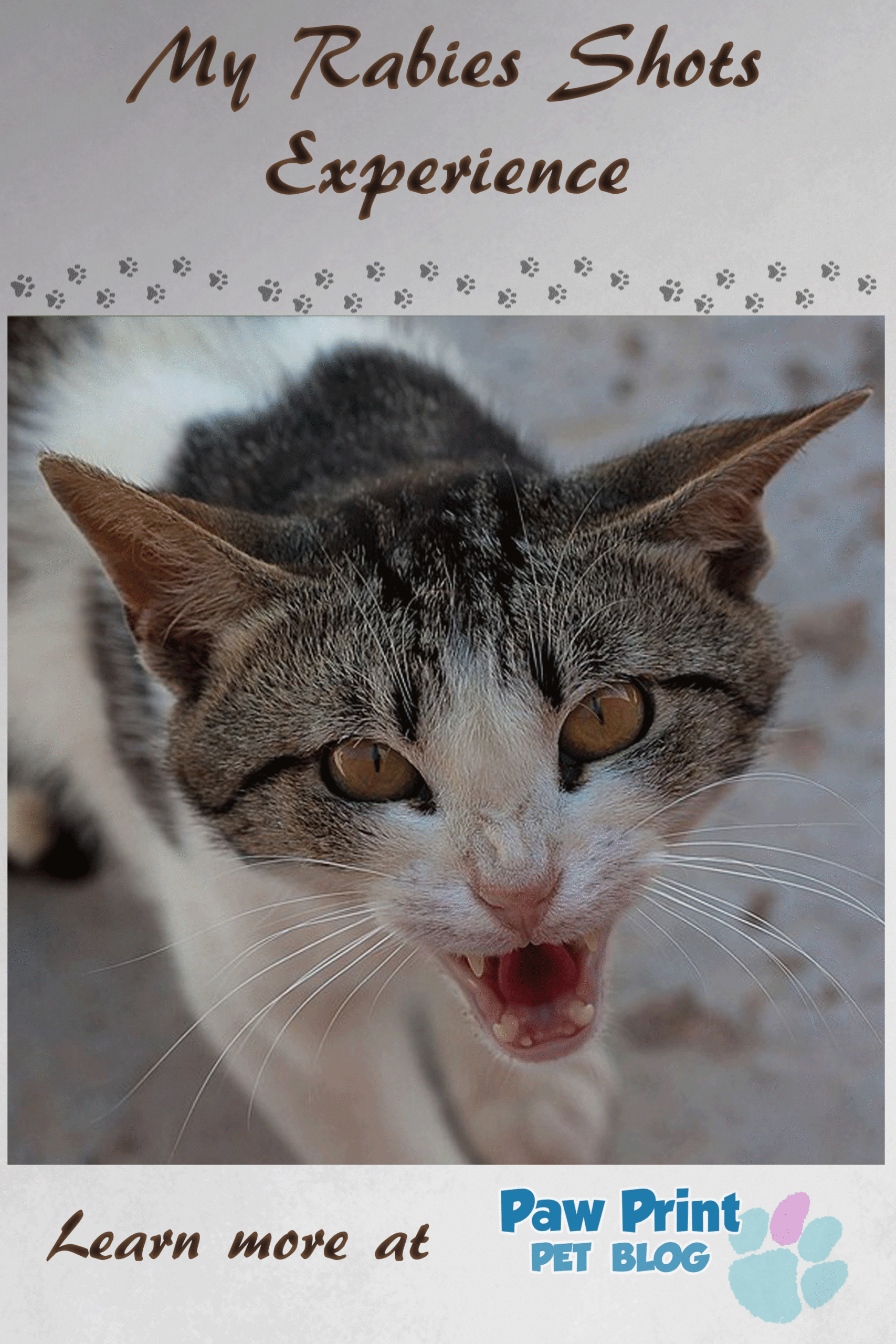
    In November of 2014 I was, as silly as this sounds, attacked by a feral cat.  I was walking my papillon, Kitsune, at the time, when the cat ran towards us from under a car and started biting my legs.  Luckily I was wearing long pants, and none of the bites got through my pants.  However, Kit was with me and when the cat decided to turn it’s attention to Kitsune, I reached my hand down to protect him.  Stupid move, perhaps, but my instincts kicked in and I wanted to protect my little buddy.  The cat quickly latched onto the knuckle area of my right hand.  It bit my thumb and pointer finger on that hand. Ouch!  Kit and I hurried away, stupid move number 2, but my hand hurt and I didn’t really want to risk Kit or myself getting bitten again.

    rabies shot

    Photo via James Arup Photography. Licensed under the Creative Commons Attribution 2.0 Generic license.

    Apparently, what I should have done, was try to capture the crazy cat.  We could have had it scanned for a microchip to see if we could track down an owner.  The cat could have been quarantined for 10 days to see if it had any symptoms of rabies.  Unfortunately, at the time of my bite there were confirmed cases of rabies in the local feral cat population.  The animal control officer tried to find the cat that bit me with no luck.  On their advice, I ended up in the local ER to receive post exposure rabies treatment.  Basically, I had to get a series of rabies shots.

    Post Contents:

    • 1 A Stressful Experience!
    • 2 Time for My Rabies Shot!
    • 3 One Down, Four to Go!
    • 4 The Worst Part…The Cost!
    • 5 Not So Bad!

    A Stressful Experience!

    This post was originally published in Jul of 2015.

    At the time of my cat bite, I had recently changed jobs.  My insurance situation was a mess.  Tell me you live in the US without telling me you live in the US am I right?  Figuring out how I was going to pay for really expensive hospital bills was super stressful.  But I figured that bankruptcy would be slightly more fun than potentially dying of rabies.

    Time for My Rabies Shot!

    The first time I went into the hospital, the day after my cat bite occurred, I received two shots, one in each thigh, of rabies immunoglobulin.  Basically, from my understanding, the immunoglobulin starts protecting you from rabies right away.  I also received my first rabies vaccine, which takes a bit longer to start protecting you.  This is why, depending on your situation, it’s recommended you get the immunoglobulin along with the first vaccine.  I also had to get a tetanus shot.  Along with all the shots, I was started on a course of antibiotics.  Cats can carry some nasty germs in their mouths and we didn’t want my hand to become infected.

    One Down, Four to Go!

    After that first trip I had to return another 4 times for additional rabies shots.  I learned that, for whatever reason, regular doctors offices/clinics don’t carry/administer rabies vaccines, so I had to return to the hospital each time I needed another shot.  Not cool, since of course going to the hospital, even if it’s just for a quick shot, costs more than going to a regular doctors office.

    Luckily my bites healed up well, without any infection.  Eight years later, and I do still have small scars where my bites were.  Luckily they are small and not very noticeable unless you are looking for them.

    The Worst Part…The Cost!

    Everything all said and done, my medical bills totaled a whopping $37,000.  No, that’s not a typo.  Thirty seven thousand dollars!  Not cool.

    But, big sigh of relief, I didn’t end up having to pay out of pocket.  My very new, at the time, insurance company did end up covering most of my bills.  And I didn’t die of rabies, so there’s that.

    Not So Bad!

    rabies shot

    My Kitsune, who I was walking when I got bitten by a feral cat.

    People seem to like to tell horror stories about rabies shots.  About needed shots with huge needles into the stomach and such.  Maybe that was true in the past, but it’s not anymore.  My rabies shots weren’t any worse, really, than any other vaccine I’ve gotten.  In fact, the tetanus shot I got at the same time as my first rabies shot and immunoglobulin ended up making me more sore than any of the rabies shots did!  If anyone is wondering, the rabies shots themselves were just given in my upper arms, basically the same as any other vaccine.  I received 5 rabies vaccines total, in alternating arms each time.

    I guess that’s pretty much my story.  As far as I know, the cat that bit me was never found.  There continued to be reports of cats with rabies in the area that summer, though, so I don’t regret my decision to get the shots.  I have to admit, I’m a bit more weary of outdoor/feral cats since my experience.  I love all animals, but I personally never understood why outdoor/feral cats are so accepted in US cities.  No other type of domestic animal would be allowed to run around the city streets, getting hit by cars and causing havoc.  Not to mention how horrible cats are for native animal populations!

    Comment below!  Have you ever had to deal with a medical issue brought on by an animal?  I’m very glad that my situation turned out well in the end.  I didn’t have to go bankrupt, and (more importantly) I didn’t die of rabies!

    rabies shot

    Dog Health

    What You Need To Know About Leptospirosis

    September 28, 2022

    If you’re a dog owner, you may recognize that Leptospirosis, often called Lepto for short, is one of the yearly vaccines that the vet may recommend for your pet. But what exactly is Lepto? What are the symptoms? How dangerous is Leptospirosis, and how do dogs catch it? It’s important for pet owners to understand what diseases pose risks to their pets, how to recolonize these diseases, and how to prevent or treat them.

    Post Contents:

    • 1 What is Leptospirosis?
    • 2 Where is Leptospirosis?
    • 3 What Happens if Your Dog is Exposed to Lepto?
    • 4 How Will Your Vet Diagnose & Treat Lepto?
    • 5 Avoidance is Best!
    • 6 The Lepto Vaccine…
    • 7 Final Thoughts…

    What is Leptospirosis?

    Leptospirosis is a disease that is caused by a bacteria called Leptospira. Lepto not only occurs in our pets, but can also affect humans and a wide array of other animal species. In humans, Leptospirosis goes by many common names such as Weil’s disease, Canicola fever, Pretibial fever, and more. There are many different types of Leptospira bacteria.  Eight of them are currently known to cause disease in both dogs and cats.

    Where is Leptospirosis?

    Leptospira bacteria are commonly found in wild animals. They spread the disease through their urine. As long as the bacteria remains moist, it can be picked up by other animals. Lepto is most common in areas that receive a high amount of rainfall. The running waters help to transport the bacteria to new locations, and keep it moist so that it can survive. The Lepto bacteria can not survive if it is frozen or dried up. Therefor, it is less common in dry or very cold areas or times of the year.

    Dogs, cats, and other animals can pick up the Leptospirosis bacteria if they drink water from a contaminated puddle or other stagnant body of water such as a pond or unclean standing water source. Dogs can also catch Lepto if they come into contact with urine on the grass or soil.

    What Happens if Your Dog is Exposed to Lepto?

    Just because your dog is exposed to Leptospirosis does not mean they will become sick from it. Some animals are able to produce antibodies to fight off the disease before they show any signs of being ill. In pets that do become sick, it normally takes anywhere from 4 to 20 days for the animal to begin to show the physical symptoms of Lepto. Lepto can cause a wide array of symptoms including everything from fever and depression to signs of liver and kidney damage. Common symptoms include jaundice, vomiting, diarrhea, and fever.

    If not treated on time, Lepto can progress and cause dehydration, nervous system abnormalities, and blood clotting problems. The Lepto bacteria creates toxins in the body that can eventually lead to liver and/or kidney failure.  This may become permanent if the disease is not treated soon enough.

    How Will Your Vet Diagnose & Treat Lepto?

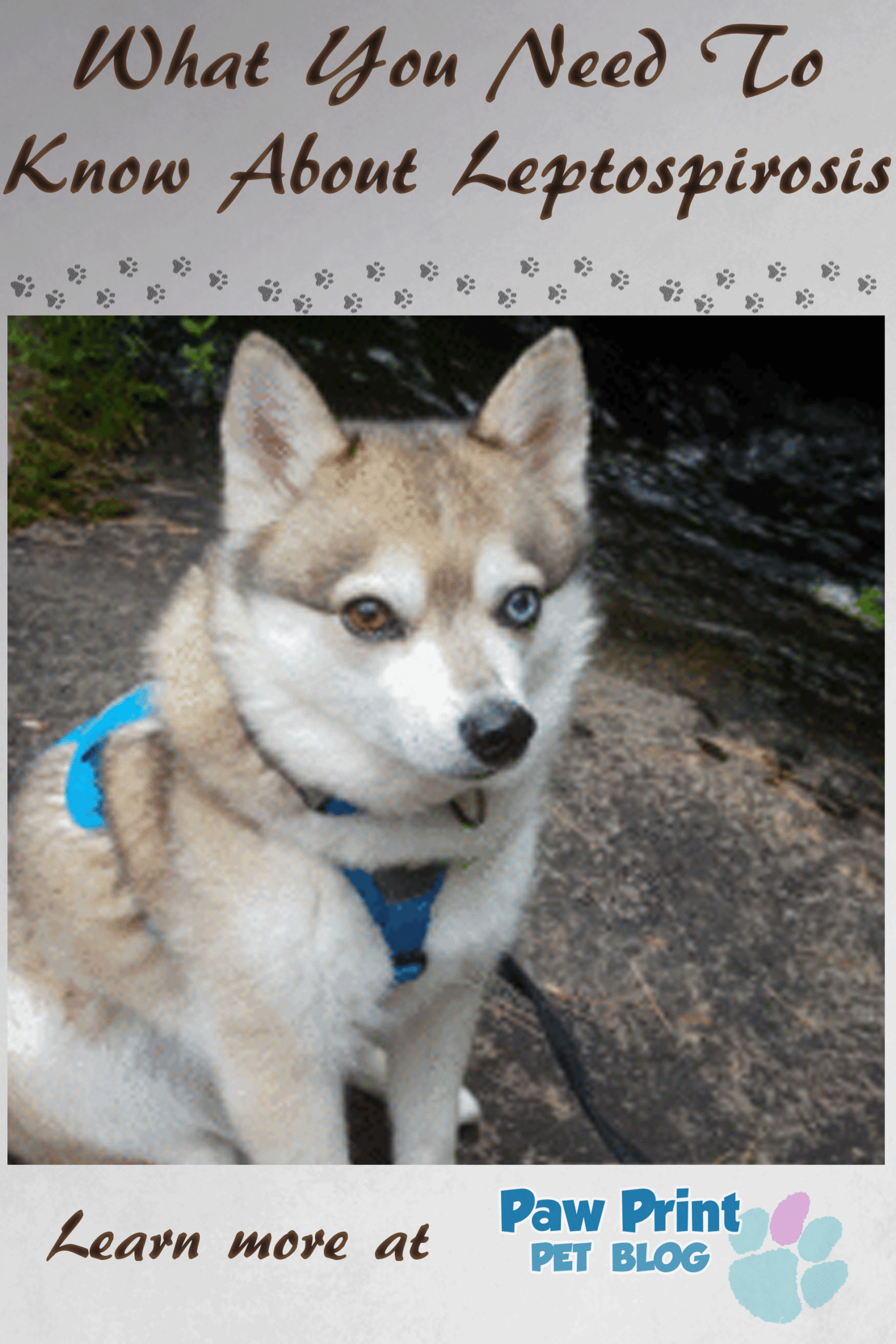
    dog leptospirosisYour veterinarian can diagnose your dog with Leptospirosis based on a blood and urine test, liver and kidney biopsy, and your pets symptoms and history. If you suspect that your dog has Leptospirosis for any reason, be sure to tell your vet so they can start testing and treatment right away. Luckily, the treatment for Lepto is not usually difficult. Many types of common antibiotics are very effective at killing Leptospira. However, pets will also require supportive care to help prevent dehydration and too protect the kidneys and liver from damage. Many pets are able to fully recover from Leptospirosis. Some may experience kidney damage which is not curable and will need to be managed throughout the rest of the pets life.

    Avoidance is Best!

    The best way to avoid Leptospirosis is to avoid exposing your pet to potentially contaminated water. Do not let your dog drink or play in standing water or sniff or lick urine it finds outside. There is a vaccination for Leptospirosis. However, the vaccine has one of the highest reaction rates out of all the canine vaccines.

    The Lepto Vaccine…

    The Leptospirosis vaccine does not cover all strains of the disease. Even for the strains it does cover, it is possible for some vaccinated dogs to still become sick. Also, the vaccine only lasts about a year in your average dog, sometimes less, so you must re-vaccinate on a regular basis. You and your vet should work together to decide whether you feel the Lepto vaccine is right for your pet. Things to take into account include the area where you live, your dogs exposure to areas that may be frequented by infected wildlife or pets, and your pets sensitivity to vaccines.

    Final Thoughts…

    Lepto is becoming increasingly common, especially in Eastern states such as New Jersey, New York, and Massachusetts. Your dogs individual risk of catching the disease should be based predominately on your dog’s lifestyle. If you and your vet decide to vaccinate your dog against this disease, ask your vet to use a Lepto vaccine only and to vaccinate at least a week apart from other vaccines. Using a combo vaccine or giving more than one vaccine at once puts more stress on your pet’s immune system and can make reactions more likely. Whether or not you decide to vaccinate, learn the signs and symptoms of this disease so that if your pet ever does become effected, you can get him/her treatment right away and increase your pets likelihood of overcoming this disease without any lasting damage.

    dog leptospirosis

    Dog Health

    Eye Health & Your Pet

    September 27, 2022

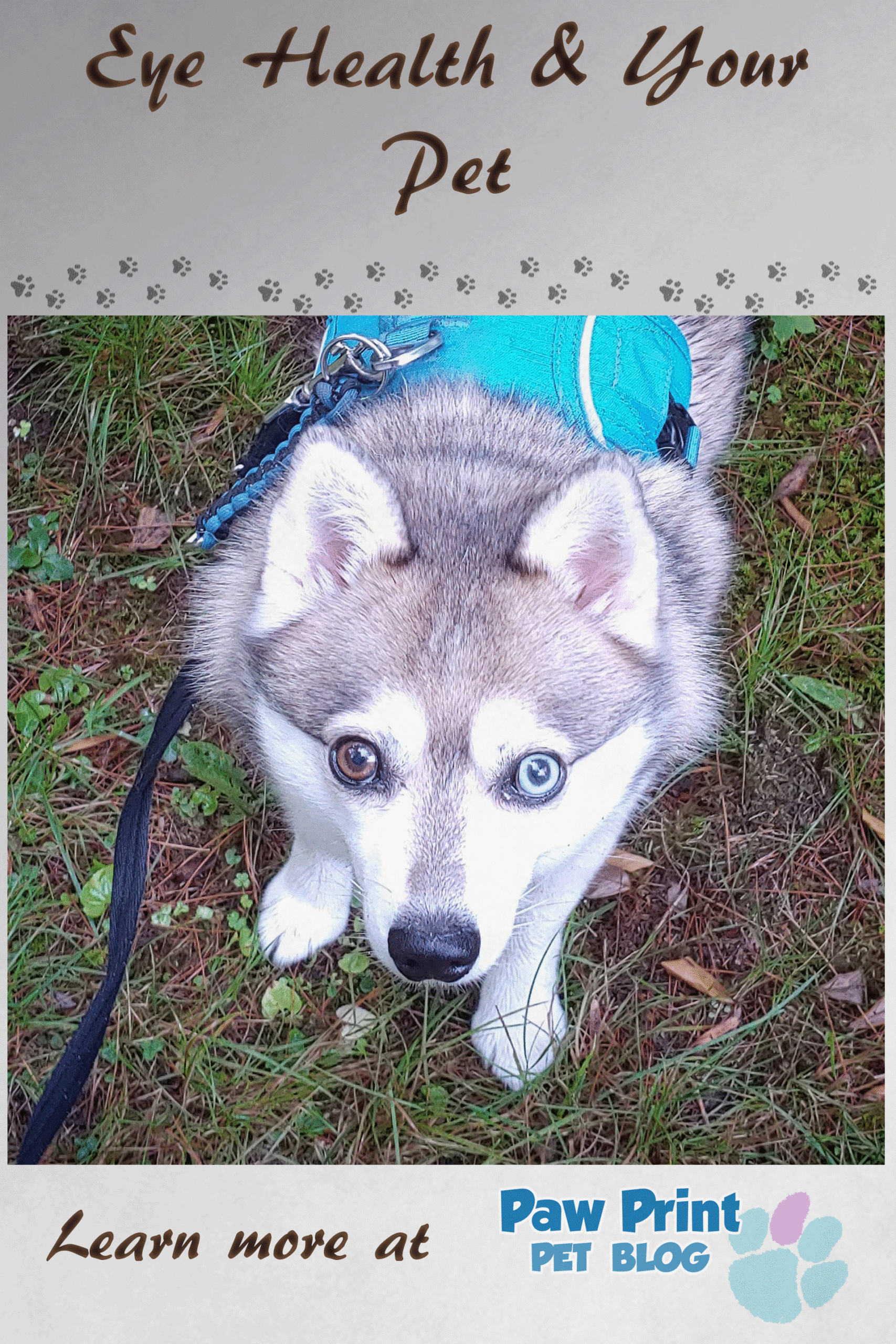
    dog eye healthThe eyes are the window to the soul, or so ‘they’ say.  Most pets certainty know how to use their eyes to their advantage.  Who can resist the infamous sad puppy dog eyes?  Not me!  Unfortunately, like in humans, eye aliments in pets can be a relatively normal part of the aging process.  There are some eye issues that can impact younger pets as well.  I know first hand (I suffered from a corneal ulcer a few years ago) that dealing with eye issues can be a very stressful experience.  Our pets may not stress themselves out by pondering the possible outcomes of their medical maladies, but eyes are super sensitive.  Eye pain/discomfort, and/or sudden vision changes can be harrowing experiences.  So what can we, as caring owners, do to stay on top of dog eye health?  Read on to find out!
    • Heterochromia in Pets
    • Why do Dogs Have Such Expressive Eyebrows?

    Keep an eye out for pet eye problems!

    Hopefully your pet(s) will have healthy eyes for life!  But knowing the signs of potential problems will mean that you will be able to seek medical help for your pet sooner, which can sometimes make all the difference when it comes to preventing more serious complications such as permanent vision loss.  Some symptoms of eye issues in pets include…

    • Excessive/prolonged squinting, or keeping the eyes closed, sometimes accompanied by additional symptoms
    • Any kind of unusual discharge, including discharge that is gray, yellow, or green, or excessive tearing
    • Redness, including redness of the actual eye, or of the inner eye lids
    • Cloudiness
    • Aversion to light
    • Rubbing the eye, either with paws or by rubbing the face on the ground or against furniture
    • Bulging of the eye
    • A change in pupil size, or difference in pupil size between the two eyes

    If you notice any of the above symptoms, or other/additional eye changes in your pet, it’s always best to talk to your vet as soon as possible. 

    Other than just keeping an eye on your pets’ eyes, there are some basic eye care tips.

      • It may be fun, but don’t allow your dog to stick its head out your car window.  The strong wind can dry out and irritate your pet’s eyes, and there is also the possibility that a foreign body (sand, etc.) can become lodged in your pet’s eye.
      • Avoid exposure to irritants such as dust, air borne chemicals, etc. whenever possible
      • Keep the fur near your pets’ eyes trimmed short.  Hair rubbing against the eye can cause everything from just general discomfort, to more serious complications such as scratches and infection.
      • Be careful when washing your pet.  Avoid getting soaps and other grooming products in your pet’s eyes.
      • If your dog is prone to developing tear stains below his/her eyes, make sure to keep them clean.  The tear stained areas below the eyes can become a breeding ground for bacteria, which can potentially cause eye infections.

    Don’t forget to see your vet!  A yearly exam is recommended for most pets, even if they appear to be the picture of health.  Checking the eyes is a normal part of a pet’s yearly checkup, and your vet may be able to spot eye issues that you missed.

    Remember that our pets can’t speak for themselves when something is bothering them.  It’s up to us to be proactive about their health and to be their voice when we notice anything amiss.  Keep your pets eyes healthy and they will surely reward you with a lifetime of adoring glances and yes, the ever persuasive puppy dog eyes!

    dog eye health

    The Paw Pack, Kitsune

    Kitsune’s IVDD Recovery Diary – Week 1

    September 26, 2022

    This is a hard post to start.  On Friday night, September 16th, I noticed that my senior papillon, Kitsune, didn’t seem to be feeling well.  He was walking a bit slow, with his head held down.  I thought he had a stomach ache.  He sometimes walks with his head down a bit when he feels nauseous/is going to throw up.  That night we had eaten steak for dinner, and we gave the dogs a few plain pieces.  I thought that maybe the steak didn’t agree with him.

    He didn’t seem to feel too horrible though.  He was still happily taking treats, and laid down in his bed to go to sleep for the night.  I figured he was feeling better and everything would be normal in the morning.  That night, between 4 and 5 am, Kit woke me up.  I took him outside and immediately noticed that something was wrong.

    Kit was in pain.  He was walking slowly with his back slightly arched.  I brought him inside, put him in his crate, and called the emergency vet.  When I called, they told me that the vet was in an emergency surgery, with a long que of patients.  The wait was going to be 4+ hours long.  Kit’s regular vet, thankfully, had hours that Saturday and they take emergency cases during normal business hours.  Longer story slightly shorter, we got Kit in for an emergency appointment with his regular vet when they opened at 9am on Saturday, Sept. 17th.

    Post Contents:

    • 1 Saturday, Sept. 17th
    • 2 Sunday, Sept. 18th
    • 3 Monday, Sept. 19th
    • 4 Tuesday, Sept. 20th
    • 5 Wednesday, Sept. 21st
    • 6 Thursday, Sept. 22nd
    • 7 Friday, Sept. 23rd
    • 8 More Next Week…

    Saturday, Sept. 17th

    IVDD recoveryAfter an exam, Kit was diagnosed with cervical IVDD.  Although he was in a lot of pain, Kit had no signs of neurological impairment.  His vet said that cervical (neck) IVDD can be the most painful because, when you think about it, there is almost no movement that a dog makes that doesn’t also cause some degree of neck movement.  Kit was prescribed three meds, a steroid (Prednisone), a pain killer (Gabapentin), and a muscle relaxer (methocarbamol).  Kit is also on very strict crate rest.   It normally takes at least 6 to 8 weeks for IVDD to heal, and too much movement during this time can cause setbacks.

    After getting Kitsune home on Saturday, and getting his first dose of meds into him, he seemed to quickly be in a lot less pain.

    Sunday, Sept. 18th

    Sunday was pretty uneventful.  Kit slept a lot, but was feeling a lot better with his meds on board.  I was extra careful to keep him crated and quiet on Sunday, because his regular vet was closed.  I really didn’t want to have to deal with a visit to the further away emergency vet if I didn’t have too.  When Kit was an hour or two away from his next scheduled dose of meds, I noticed his pain started to return.  It wasn’t as bad as it got on Saturday, but he was clearly getting sore before he was due for his next round of meds.  Thankfully, it only seems to take 20 – 30 minutes for his meds to kick in once I give them to him, so he wasn’t in pain long.

    Monday, Sept. 19th

    Monday AM I had a phone conference with Kit’s vet.  We upped his pain meds from every 12 hours to every 8 hours.

    Tuesday, Sept. 20th

    Kit did better on Tuesday after we upped his pain meds.  He’s having much less breakthrough pain.  Tuesday night when I moved him from his downstairs crate to his upstairs crate so we could all go to bed, he was whining a lot.  He didn’t want to be in the crate.  Whining in his crate is pretty normal behavior for Kit, and something we haven’t heard him do the first 3 days of being crated.  Although it was stressful, I’m hoping it’s a small sign that he’s feeling a bit more like himself.  Although it does make me worry about how 8 weeks of crate rest is going to go if he’s already protesting!

    Wednesday, Sept. 21st

    Wednesday was hard, not because Kit was feeling any worse.  Quite the opposite, with his new schedule of pain meds I can tell he’s been feeling a lot better.  But, no matter how good he feels, he needs to stay calm for weeks yet to give his disc enough time to heal.  Keeping Kit calm/quiet today was hard.  He didn’t want to be in his crate and would whine and scratch at the door asking to come out. It was stressing me out, because I was afraid he’d hurt himself by scratching at the crate.

    His new med schedule was also a bit of a struggle.  I need to give him various meds now at 8am, 10am, 4pm, 10pm, and 12am!  The 12am dose is the hardest, because I’ve been so exhausted and just want to go to bed!  I’ve noticed that besides being more vocal, Kit has also been bending his head down to sniff the ground during potty breaks, and scratching at the ground after using the bathroom.  These are all little things that he couldn’t/wouldn’t do at the beginning of the week.

    Thursday, Sept. 22nd

    Thursday was okay!  After the rough day we had Wednesday, Thursday felt easy in comparison.  I had to stop by the vet to pick up Kit’s prescription refills.  He was good for most of the day, and not as restless in his crate as he was yesterday.  The only time he really wanted out was when I was cooking/eating dinner.  He’s been eating a lot more enthusiastically and begging for food a bit.  Kit LOVES food, so seeing him get a bit more back to his normal self feels good.  He even barked at me while I was cooking, which was the first time I heard him bark since before all this started.

    Friday, Sept. 23rd

    IVDD recoveryOn Friday night, I gave Kit his last dose of methocarbamol (the muscle relaxer).  I have to admit, that while I think this med has been helping him to relax and sleep, I’m glad to be done with it.  I can tell it’s been making Kit somewhat lethargic, and uncoordinated.  These can be normal side effects for this medication.  I’ve been giving the methocarbamol to Kit right before bed, so he sleeps off most of the side effects.
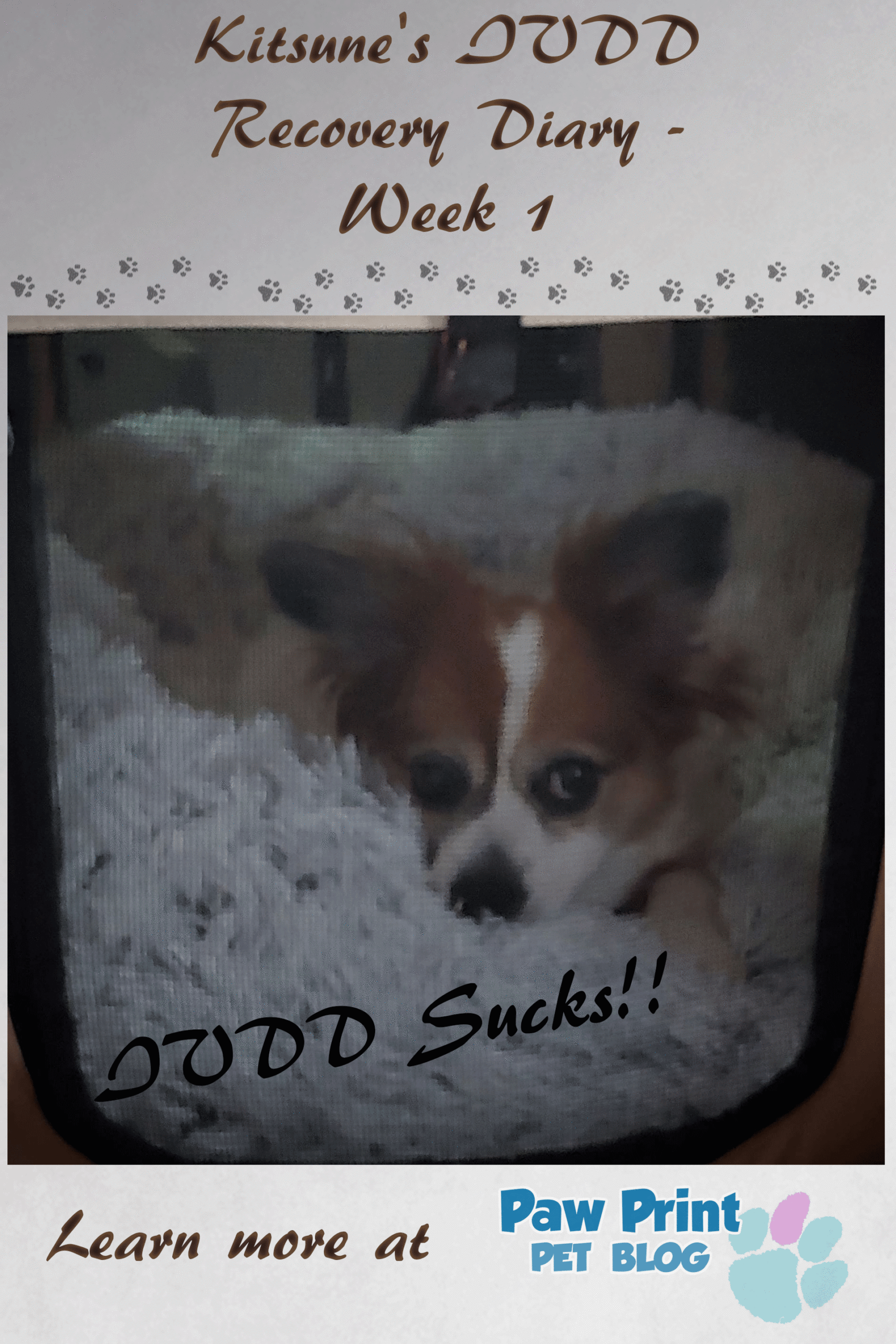
    By the mornings the worst of the side effects are gone, but I can tell he’s not 100% himself while on this med.  It’s a bit frustrating that a med used to help with IVDD causes incoordination.  It makes me worry every morning that it’s his IVDD getting worse, even though I know in my head that it’s just his meds.  As the day progresses, and the methocarbamol wears off, he starts acting a lot more like himself.

    Friday night, around dinner time again, Kit was getting really restless.  I let him out for a few minutes, under strict supervision.  He’s doing a lot better but, at the same time, I can tell he’s still a bit uncomfortable.  Today he wanted to jump up onto one of our chairs in the living room, which of course I didn’t let him do!  But a few times I caught him sitting down somewhat awkwardly and I could tell that he was still feeling a bit sore/stiff.  A far cry from how he was feeling on Saturday morning, though!  So I feel like we are still making progress, a little bit each day.

    The next couple of days, without dealing with the side effects of the methocarbamol, are going to be telling about how Kit is really feeling.  He’ll remain on his other two meds (Prednisone and Gabapentin) for now.  We have a vet appointment scheduled for Wednesday to go over how he’s doing, and to discuss what we’re going to do for his meds going forward.  I’m also going to spend some time today researching/thinking about what we want to do as far as a more permanent solution for keeping Kit off the stairs,  and perhaps look more into ramps that we can use for him to be able to access the furniture once his crate rest is up.

    More Next Week…

    I feel like this post is getting really long, so I’m going to end it here.  I’ll do a similar post next week.  I’m not sure how useful these posts will be to other people, but I know for my own records I like to have stuff like this written down.  Fingers crossed that we’ll never have to deal with an IVDD flare again!  But, if we do, I know it will be useful for me to go back and look at this timeline of Kit’s recovery.  Maybe it could be helpful to other owners who are going through IVDD and wanting to know more about what to expect day to day?

    For more up to date updates on Kit, you can follow us on his Instagram page, or Facebook.  I’m planning on posting these weekly updates here for at least the 8 weeks of Kit’s recovery, but I’ve been posting shorter, more frequent updates on our social media pages.  Thank you SO much to everyone who has sent Kit well wishes this past week.  We really appreciate everyone’s kindness.  Hopefully I’ll have nothing but good news about his recovery going forward!

    IVDD recovery

    Papillons

    How Long Do Papillons Live?

    September 25, 2022

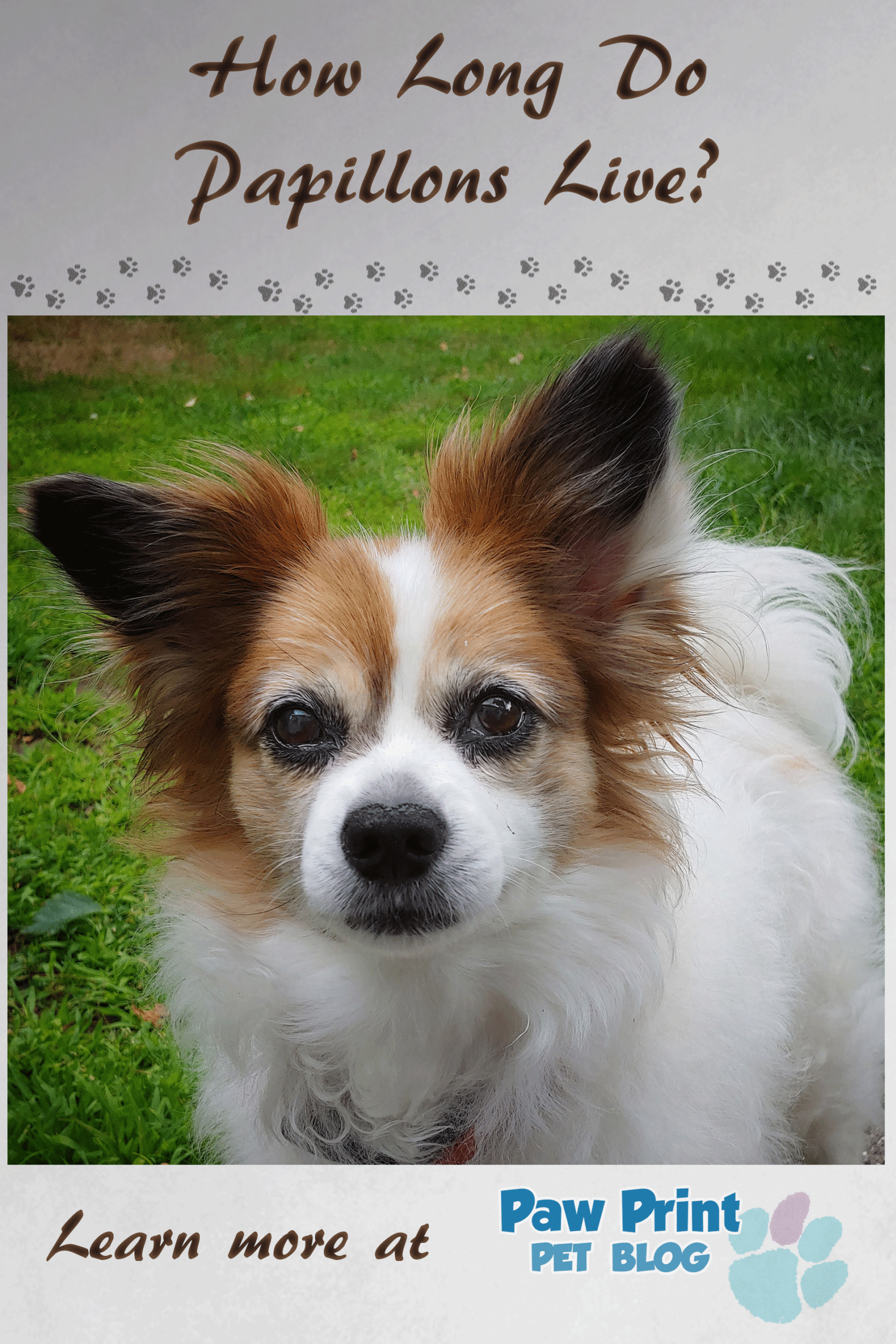
    papillon lifespanNo one ever really wants to think about their beloved pet passing away.  Yet, when thinking about adding a new breed of dog to your family, a very popular question is “how long does this breed typically live?”.  Small dogs, like papillons, in general live longer than larger breeds of dogs.  For most papillon owners, no matter how long our little ones live, it will never feel like it was long enough!  But dogs are a lifetime commitment, and knowing how long of a commitment you’re signing up for ahead of time can be useful information.  If you’re anything like me, you may be specifically looking for dog breeds who enjoy longer lifespans.  Longer lives is one of the many, many reasons why I love small dogs so much.  So, if you’re thinking of adding an adorable papillon to your pack, what can you expect their lifespan to be?

    Post Contents:

    • 1 Lots of Different Factors Contribute to Lifespan
    • 2 The Average Lifespan of a Papillon
    • 3 Tips for Helping your Papillon to Live a Long, Happy Life
    • 4 Other Papillon Posts to Check Out…
    • 5 My Own Experience…

    Lots of Different Factors Contribute to Lifespan

    The answer is it depends, of course.  There’s no way to predict with 100% accuracy how long an individual dog will live.  Things like genetics, lifestyle, vet care, diet, luck, etc. will all come into play when it comes to determining how long your papillon’s lifespan will be.

    The Average Lifespan of a Papillon

    On average, papillons live from between 12 and 16 years of age.  This is a very generalized range, though!  Not all beloved papillons make it into old age for a variety of reasons.  I’ve also met papillons who happily lived into their 20s!

    Tips for Helping your Papillon to Live a Long, Happy Life

    • If you decide to get your papillon from a breeder rather than a rescue, choose your breeder carefully!  Genetics really do matter, and can make the difference between a dog that dies young and one that lives well into old age.  The Papillon Club of America’s breeder directory can be a great place to start your search.  Look for breeders who conduct genetic testing on all of their breeding animals.  Only dogs who are free of genetic diseases should be bred.
    • Find the food that works best for your furry friend.  This will differ from dog to dog, based on individual needs.  Don’t be afraid to ask your vet, or better yet, a veterinary nutritionist, for advice!
    • Speaking of food – Keep your papillon at a healthy weight!  I know how hard it can be to resist those puppy dog eyes, but there are SO many diseases/health conditions that overweight dogs are more prone too.
    • Don’t skip those annual vet visits!  I know they can get expensive, and aren’t always convenient, but they are super important!  Your vet may notice a health condition that you overlooked, and often times the earlier a health issue is treated the better the outcome.  Your vet can also help you make important health decisions, like what vaccines and preventatives are important for where you live.
    • Training is important too.  How does training relate to lifespan?  Training can help keep your furry friend safe by avoiding accidents.
    • Don’t skip out on mental, and physical, exercise.  Give your dog something to live for!  Most dogs love age/ability appropriate levels of exercise.  Mental stimulation is important too!  Exercise those amazing little doggy brains as often as possible.  Papillons are the 8th smartest dog breed, after all!
    • Good luck!  Unfortunately, sometimes how long an individual dog lives just comes down to luck.  There’s not really much you can do to improve your luck, just love your dog everyday you have them.

    Other Papillon Posts to Check Out…

    • List of US Based Papillon Rescues
    • Are Papillons Hypoallergenic?
    • Are Papillons Cuddly?
    • Do Papillons Shed?
    • Papillons have Single Coats!
    • Do Papillons make Good Apartment Pets?
    • The Pros and Cons of Owning a Papillon
    • Papillon Breed Profile

    My Own Experience…

    papillon lifespanThis was somewhat of a hard post for me to write.  My own papillon, Kitsune, will be 14 in a few months.  He’s about right in the middle of the average lifespan range for his breed.  To top if off, we’ve been dealing with some health issues with him lately.  It’s hard to watch a beloved dog grow old.  Current issues aside, though, Kit has been a very healthy, happy go lucky dog throughout his life.  I’m keeping my fingers crossed that his current health issues are just a little blip, and that he’ll be back to his cheerful, healthy self soon.  I so very much hope that he’ll still have lots of happy years ahead of him.
    I’ve been part of papillon groups since I got Kitsune, 13+ years ago now.  Talking to real owners, I’ve heard everything from pups dying early in accidents or due to health issues/illness, to senior papillons living happy lives into their 20s!  I know we all want to be that owner with the 20 year old papillon.  I know I do!  Unfortunately we can’t always control all the factors that help determine how long our beloved dogs live.  All we can do is to do our best with the factors we can control, and love our dogs everyday we have them here with us.

    Comment below!  Are you thinking of getting a papillon?  If you’ve had a papillon in the past, how long did he/she live?

    papillon lifespan

    Pet Tips

    Dog Car Safety

    September 24, 2022

    dog car safetyMy partner, our dogs, and I lived in the city for many years.  We saved a lot of money by not having a car, because, in the city, you don’t really need one.  When we decided that we were, finally, ready to leave city life behind us, we bought our first car.  It was an interesting experience, after going so long without one.  We had to make some adjustments to get used to having a car for sure.  And not just us humans!  My two dogs, Kitsune and Fenrir, had set paw in a car maybe a handful of times each in their entire lives!  Thus begun my crash course in dog car safety.
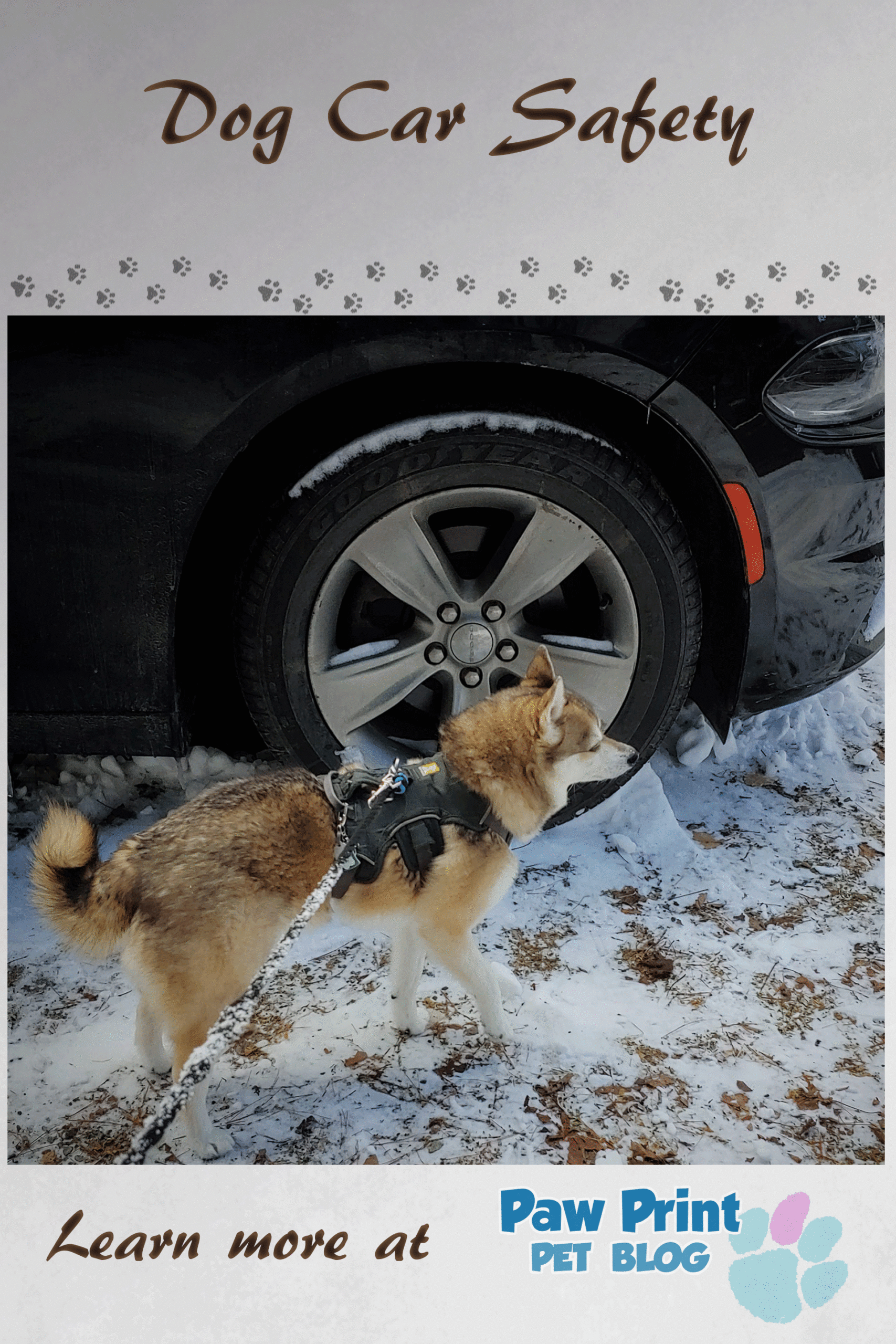
    What’s an adventure without a furry friend or two in tow?  Both my boys are snuggle bugs, and love curling up in our laps.  They can also both be quite hyper at times.  I love their personalities.  But for safeties sake we can’t have them jumping all over the car, or trying to sleep on our laps while we’re driving.  Thus my search for the perfect doggy car seats began.

    Dog Car Seats 411

    I thought my task would be an easy one.  Alas, I quickly learned that when it comes to car safety seats for dogs, things aren’t so cut and dry.  Did you know that most products sold as pet car safety devices aren’t actually crash/safety tested?  Not only does this put our furry friends at risk, but it can spell danger for human passengers as well.  Animals who are not properly contained during an accident can essentially become projectiles.

    Luckily there are some awesome people/associations out there advocating for higher safety standards.  The Center for Pet Safety conducts independent crash tests on popular dog car safety products.  Their most recent test results are from 2015.

    Top preforming products included Sleepypod’s Clickit Sport Utility Safety Harness, Sleepypod’s Mobile Pet Bed, Petego’s Jet Set Forma Frame Carrier, and Gunner Kennels.

    Hopefully, in time, both manufactures as well as consumers will start paying more attention to just how safe pet car seats/carriers/harnesses are.  Crash testing dog car safety products will hopefully become a standard practice rather than an exception.  I’d love to have a much wider variety of safety tested products to choose from when selecting what type of car restraints to purchase for my own dogs.

    What Dog Care Safety Product We Went With…

    They aren’t cheap by any means!  But for my own two dogs we decided to go with Gunner Kennels.  We quickly discovered that Kitsune gets car sick unless he’s either crated, or allowed to sit on my lap.  That meant that using any type of car harness was out for him, and of course letting him sit on my lap during drives isn’t exactly safe.  Kit is an oversized papillon, at around 20 lbs, and I wasn’t sure how well he’d fit into some of the smaller sized, crash tested, crates.  So Gunner Kennels it was!

    Now we just need to get a bigger car!  Cramming two small Gunner kennels in the backseat of our Dodge Charger means we don’t have space to fit anything else in the back.  It’s worth it, to know that my dogs and us humans would be safer were we to ever get in an accident.

    Of course everyone hopes that they never actually find out how well their safety products preform in an actual car crash.  But, as the old saying goes, it’s better to be safe than sorry.  If you drive with your pets in the car do you use any kind of safety seat/harness/carrier?

    Dog Car Safety

Older Posts
Newer Posts
It's a beautiful day to play ball in the snow ❄️ It's a beautiful day to play ball in the snow ❄️
Today would have been Kit's 17th birthday. My best Today would have been Kit's 17th birthday. My best buddy...not a single day goes by that I don't think of him. Forever a beloved member of our little pack ❤️
Someone stole his dad's socks 😂 10 years old and s Someone stole his dad's socks 😂 10 years old and still as mischievous as a pup!  This little one makes me laugh everyday and I'm SO thankful for him. 💙
New phone, who dis!? 😅 Sorry for the lack of new New phone, who dis!? 😅 
Sorry for the lack of new Fen pics lately... My old phone broke and it took me awhile to replace it. 
Fen is his happy, sassy, playful self and is doing well. 💙
Fen makes me laugh so much! Today is my partner's Fen makes me laugh so much! Today is my partner's birthday. ❤️ I almost always wake up earlier than him, so this morning I was planning on getting up to decorate for his birthday. I wanted to surprise him with decorations and his presents set out when he got up.

Well...Fenrir ruined it all, because as soon as he saw the wrapped presents for my partner, he got SO excited! And if you have ever had the pleasure of meeting an Alaskan Klee Kai you will know, when they get excited, they just have to make sure everyone knows about it!

Long story slightly shorter, Fen woke my partner up early, on his birthday, all because Fen REALLY wanted to open presents that weren't even for him! I didn't get to decorate, but lesson learned - don't put gifts where Fen can see them because he will get really, really excited about it.

And just so you all don't feel too bad for him...I ended up wrapping one of Fen's Christmas presents and giving it to him to open early! 🤣
Follow on Instagram
Facebook Instagram Pinterest Youtube

Copyright © 2025 Paw Print Pet Blog. All Rights Reserved.

Back to top