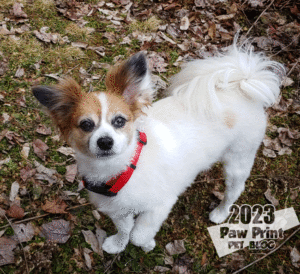
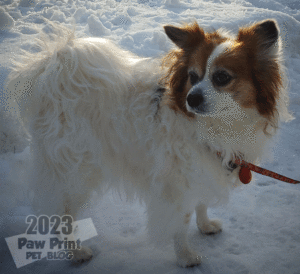
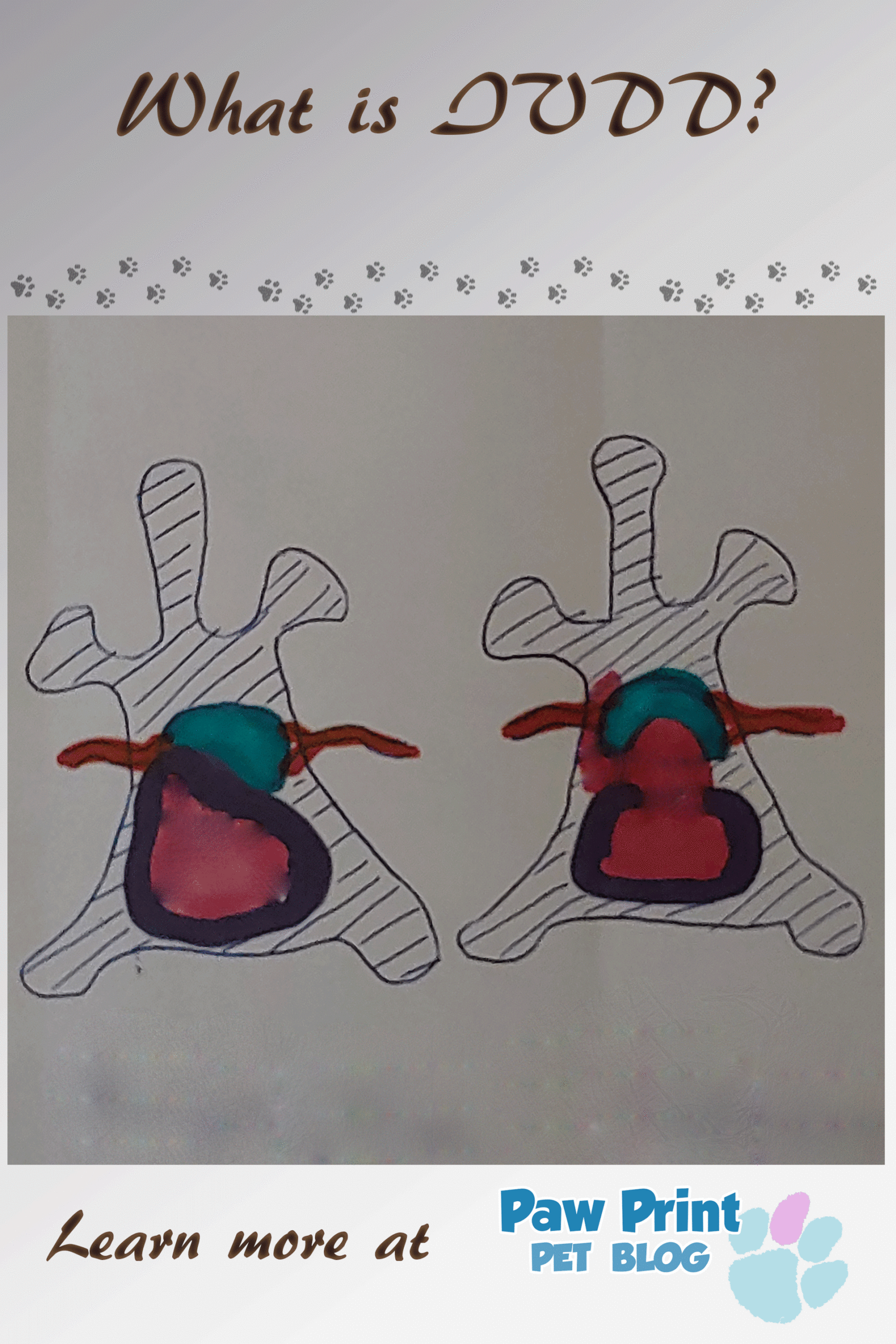
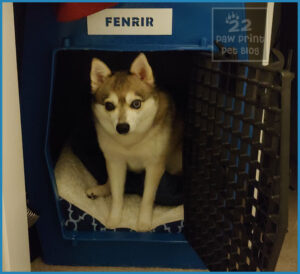
My two dogs, Kitsune the papillon and Fenrir the Alaskan Klee Kai, are both crate trained. I know that crating dogs can sometimes be a fiercely debated topic, but my own dogs being crate trained has really come in handy over the years. When Kitsune was diagnosed with IVDD last September, for example, it was a blessing that he was already so comfortable with spending time in his crate. We had to keep him on very reduced activity for 8 weeks to give the damaged disc in his neck plenty of time to heal. I feel there are many benefits to crate training, and will always crate train my own dogs. However, that doesn’t mean I believe that dogs should be forced to spend excessive amounts of time crated. I only crate my dogs when it’s necessary, and I strive to make their crates a relaxing, pleasant place for them to be.
Post Contents:
Learn More About Crating Dogs:
- My Thoughts on Crate Training
- Ruff Land Kennels Dog Crate Review
- Painting Ruff Land (And Other Plastic) Dog Crates
- The Potential Dangers of Wire Crates
Making My Dog’s Crates Comfortable
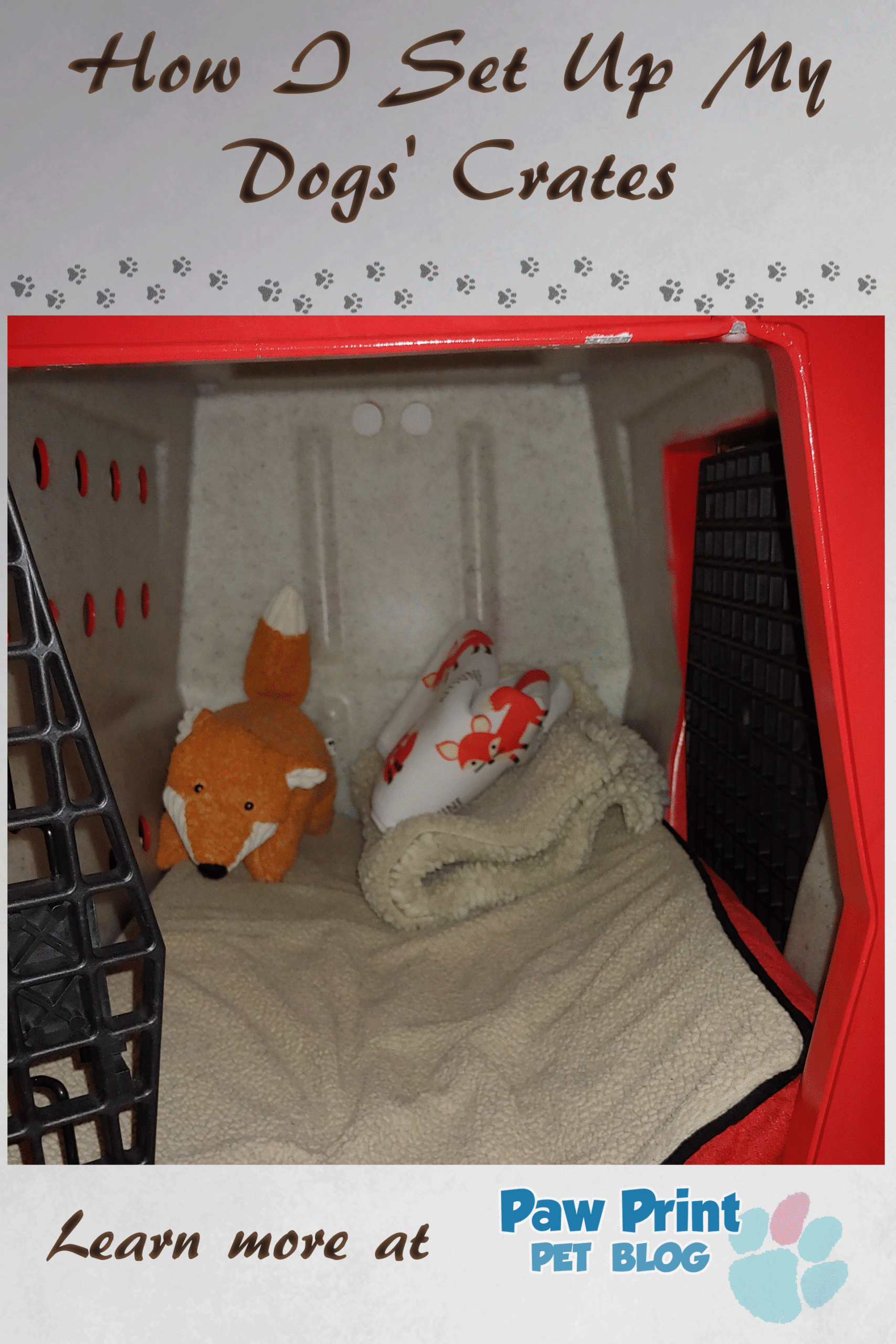
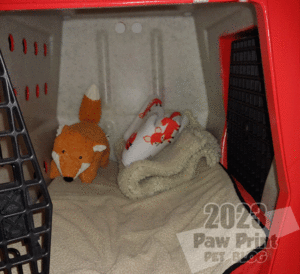 How you set up your dog’s crate will depend, at least in part, on your dog themselves. Different dogs, in different situations, will do best in different setups. Whenever I’m doing something for my dogs, like deciding on how to set up their crates, I try to cater to my individual dogs’ needs as much as possible. However, when it comes to crates, Kit’s and Fen’s setups are pretty near identical currently. I happened to find a setup that just happened to work well for me, as well as for both of my dogs.
I think it’s important to note that my dogs are full-grown, fully potty-trained adults. If you are just starting out with crate training, raising a puppy, and/or using a crate to help with potty training your crate setup will most likely be different than mine. But, for anyone interested, this is how I’ve been setting up my dogs’ crates.

No Crate is Complete Without A Comphy Bed!
 It took me awhile to find the “perfect” crate beds for my dogs. Kitsune is 14 years old now, and really needs comfortable, supportive sleeping surfaces. He has IVDD and arthritis. I’ve found that sleeping on the floor or other hard surfaces really seems to make him sore these days. A lot of the dog beds I found that were designed to be used inside crates just did not offer the type of support I was looking for to keep Kit comfortable.
Luckily both of my dogs are pretty gentle with their bedding, so I didn’t have to worry too much about them scratching up or chewing whatever crate bed I decided to go with.
For awhile now I’ve been using these Brindle beds as crate beds for both Kit and Fen. I admit that they don’t fit perfectly inside of our crates, but they’re made of memory foam so they have quite a bit of give to them. I’m able to squish them down and kind of make them fit into the bottoms of the boys’ crates, if that makes sense. I really like these beds because not only are they supportive and comfortable even for my old man Kitsune, but they are super easy to wash too. They come with a water proof cover that can easily be removed and washed.
Kit and Fen have had their Brindle beds for a bit over 2 years now. Even with frequent washings and being squeezed into my dogs’ crates they are still holding up really well!
Blankets Come Next
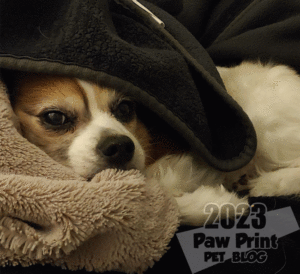 Not all dogs will do well with blankets in their crates, but mine do. Kit likes blankets in his crate that he can ball up and use as pillows. Fen, adorably, turns his into little nests and sleeps curled up in a ball in the middle. I don’t really have any specific blanket recommendations. As of late Kitsune has a few smaller fleece blankets in his crate. Fen has been using an old camp blanket that he really seems to like. Again, if you’re going to use blankets inside your dog’s crate make sure your dog is safe with them. That means no chewing on them! When Kit was going through his IVDD healing period I removed the blankets from his crate because I didn’t want him to hurt himself trying to rearrange them.
My Dogs Sleep with Plush Toys (Yes, It’s Adorable)
Each of my dogs’ also has one dedicated toy that I keep in their crate for them. Kit currently sleeps with his HuggleHounds plush fox. He likes to lay his head on stuff when he sleeps, so his fox toy doubles perfectly as a pillow. Fen’s current crate toy is a cute little plush dinosaur. Fen also has a habit of carrying toys around with him, so he’ll often bring other toys into bed with him too.
I don’t have my dogs sleep with toys just because it’s adorable (even though it is). They serve a bit of a purpose too.
My Crate Cleaning Schedule
I clean my dogs’ bedding pretty often. I try to get it done every other week. That may sound like overkill, but fabric is really prone to holding in odors. My dogs’ crates are in my bedroom and I’ve found that it just keeps things smelling fresher if I clean the boys’ bedding often. But here’s where their bed buddies (toys) come in handy. I don’t wash those. Dogs rely on their sense of smell way more than humans do. By washing their crates so often, I’m washing all their comforting scent off of their bedding. You know, that scent that really tells a dog “this space is mine”.
I don’t wash their crate toys so that, even when I do wash all their bedding, I can put their toys back into their clean crates. I think smelling their own scents in their crates really helps them relax and know that their crates are their own little special place.
The Crates Themselves…
My dogs currently each have large sized Ruff Land kennels. I reviewed Ruff Land kennels previously here. The size large crates are for sure oversized for my small dogs. When it comes to indoor crates, I’ve always felt like bigger is better, as long as you’re not working on potty training your dog. I like to give my dogs extra space to move around and really stretch out and get comfortable. What size crate you use will really depend things like your dog, what you are using your crate for, and how much space you have available.
That’s All She Wrote
And there you have it! I was thinking of including some additional dog crate tips in this post, but I really did not expect this to get so long. I think I’ll save those tips for another day. If you’re looking for advice on anything crate related, comment below and I’ll try my best to help! You can search for crate related posts by using the search bar at the top of the page, to the right of the social media icons. Or click this link to see a list of all my up to date dog crate related posts. Thanks for reading!
We’ve, unfortunately, been dealing with content scrapers stealing our articles lately. You shouldn’t be seeing this article on any site other than pawprintpetblog.com! If you’re reading this article on any other site, we’d love for you to take the time to contact us and let us know and, if you have the time, stop by and visit us on our official site! Thanks you.
 I wasn’t super familiar with IVDD when my dog, Kitsune, first started showing signs of it. The night before we officially got his diagnosis I knew something was off with him, but I thought he just had a stomach ache. Unfortunately, his symptoms progressed throughout the night, and by the next morning I knew that we were dealing with something more serious.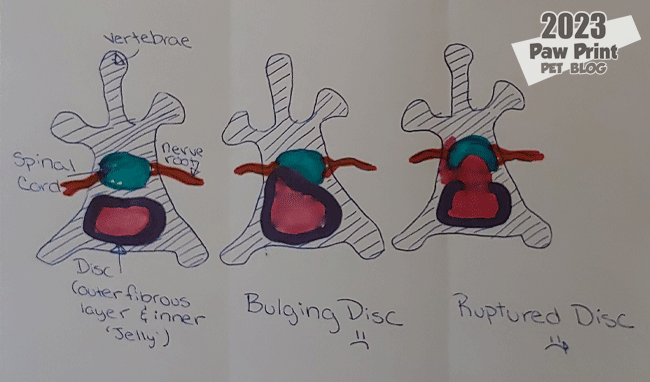

 The main reason I’ve found that small dogs sometimes don’t handle snow and cold quite as well as larger dogs is, quite simply, the fact that they are shorter.
 When the snow starts to get really deep where we live, I make sure to shovel out areas where my small dogs can play without having to struggle through really deep snow.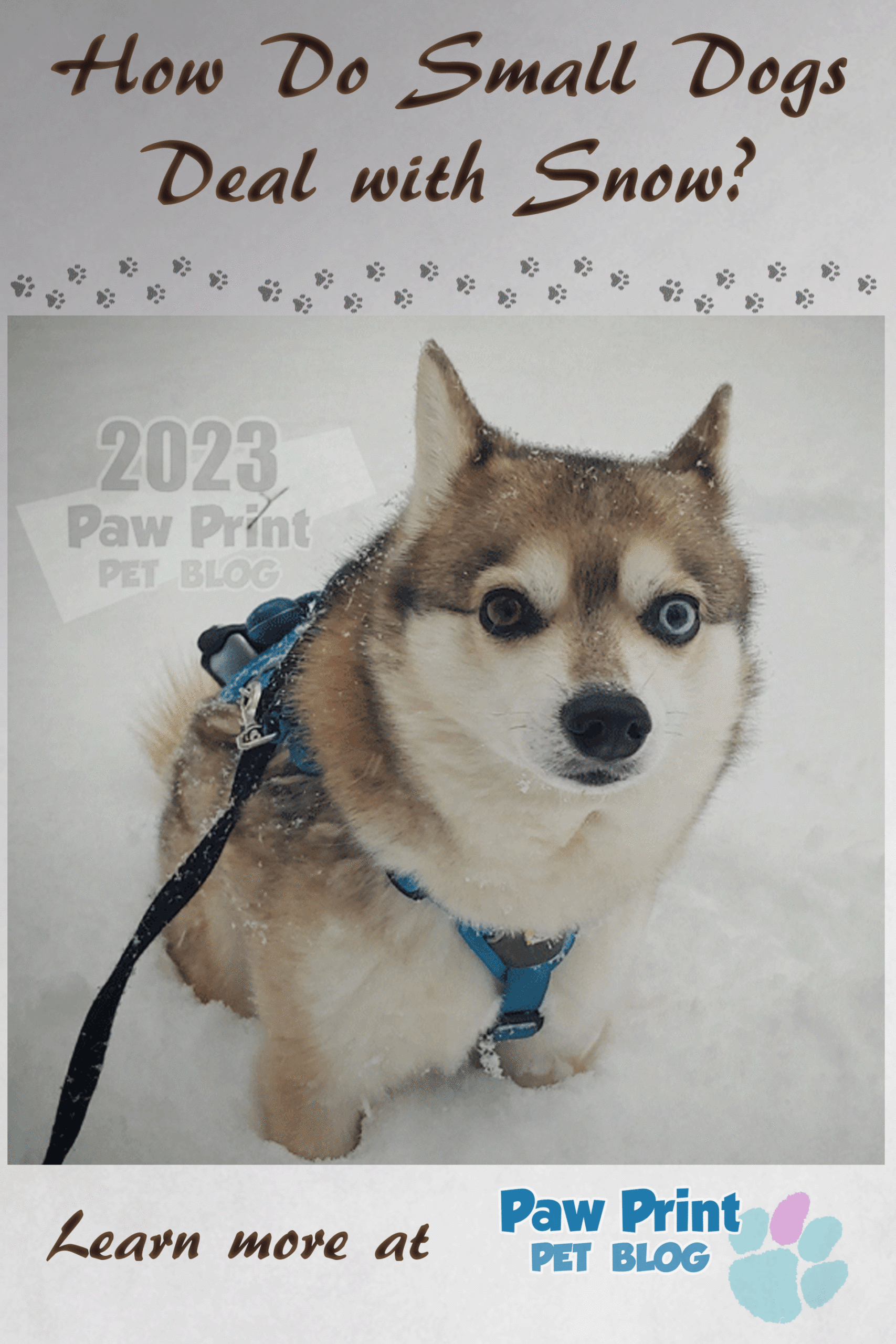
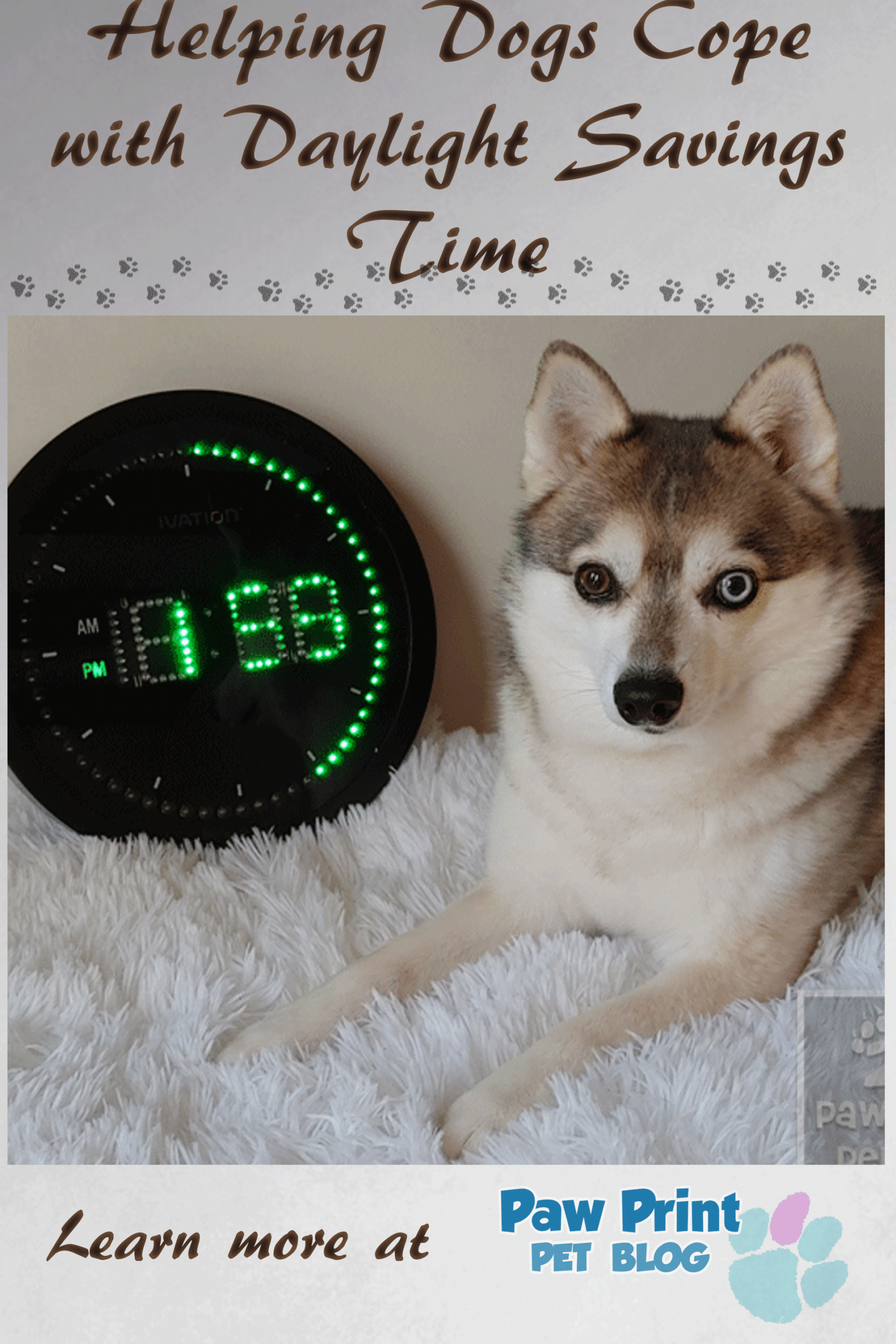
 If I had to go on personal experience alone, I’d say yes, my dogs can tell time! But not in the traditional sense. They, of course, don’t use clocks the way that humans do. But just try and feed Kitsune more than a minute late and see what happens!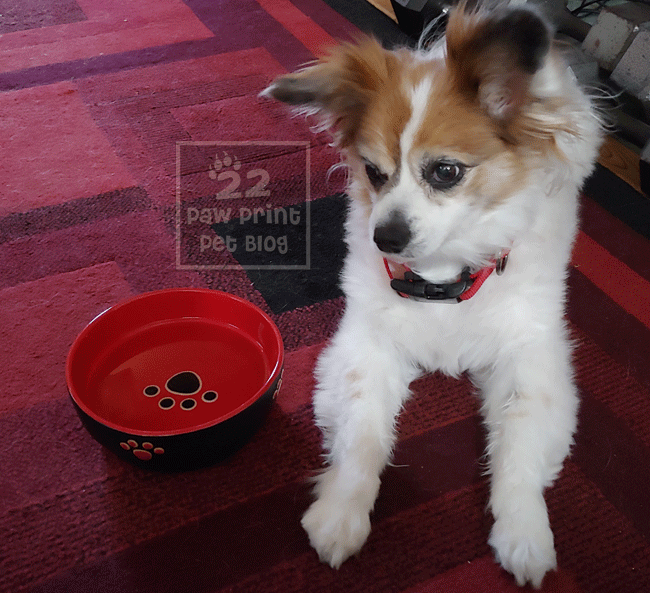
 Moving my house plants outdoors, and working on my outdoor container gardens are some of the things I look forward to doing most in the spring! However, quite a few dangers for our dogs can lurk in our gardens.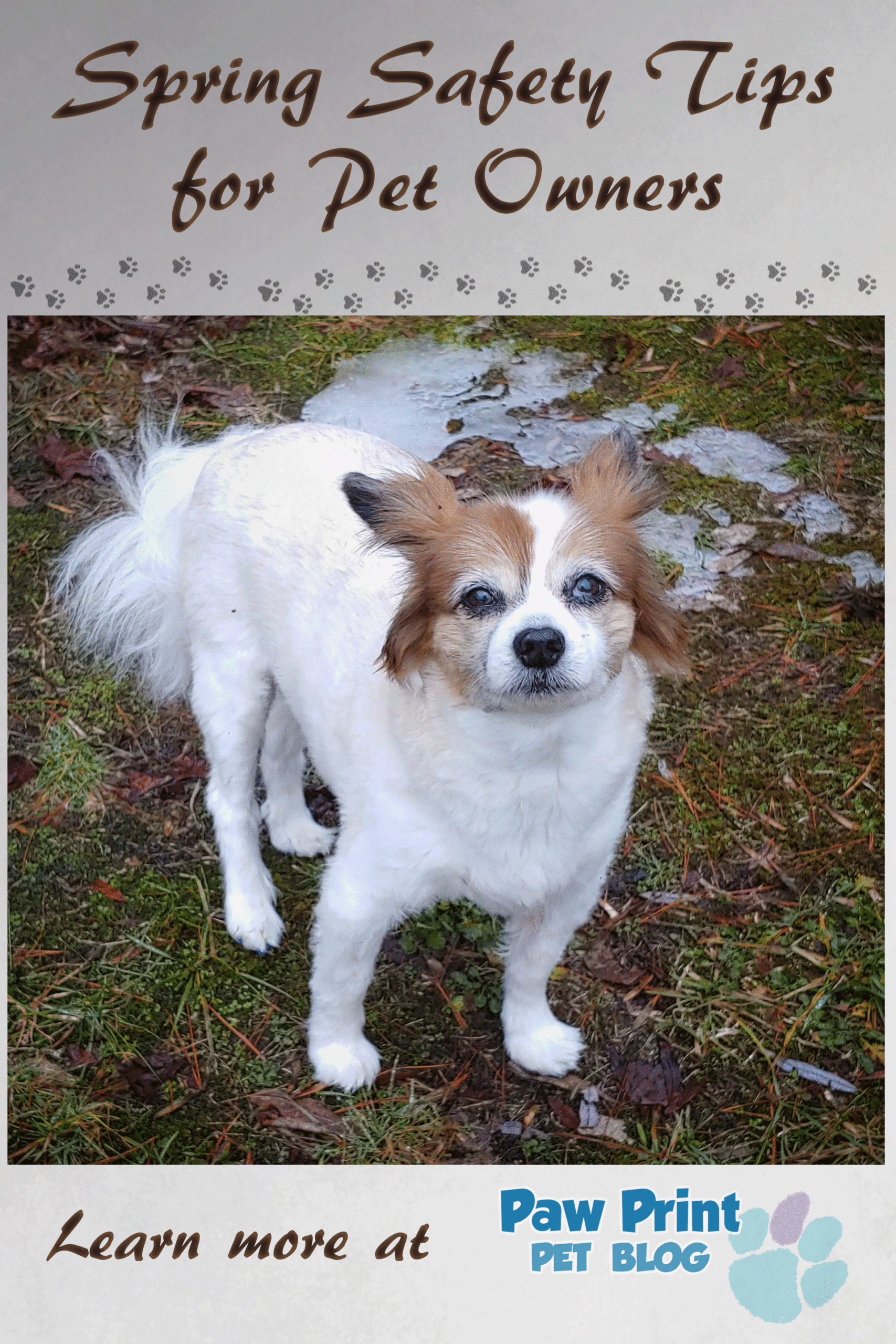
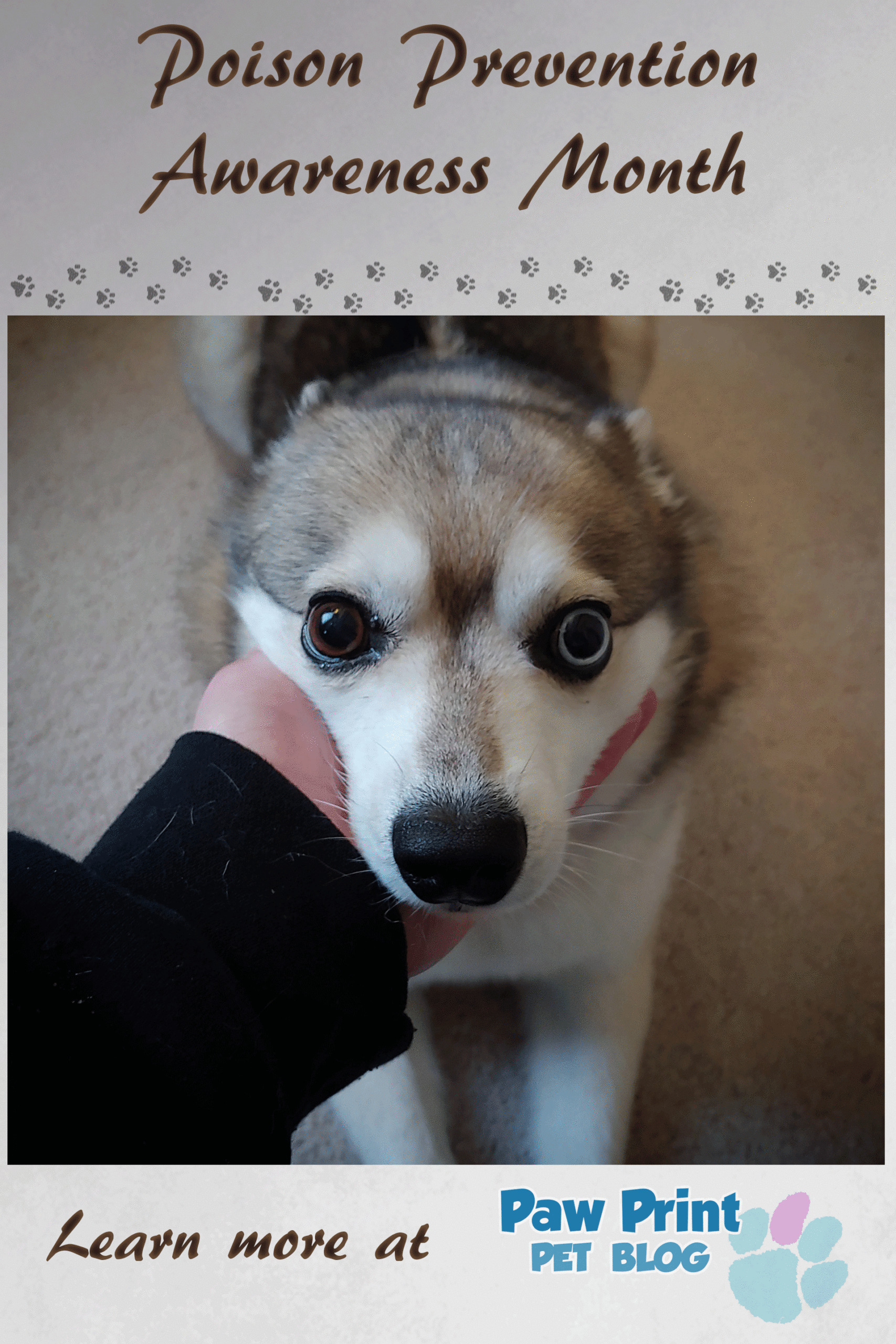
 Poison Prevention Awareness Month, from what I’ve seen, seems to be mostly geared around raising awareness about how to protect children from dangerous substances. Things you may not normally think of as poisonous, such as common household cleaners, medications, and batteries, can all prove deadly. I don’t have children, at least not any of the human variety. Because
 On the night of Friday, September 16th, I noticed that Kitsune wasn’t acting completely normal. These types of things always seem to happen late at night, on a weekend or a holiday. Go figure. Kit just seemed a bit slower than usual. He was walking with his head held down. At first, I thought he just had an upset stomach. Rarely in the past, when Kit has had a stomach ache, he has walked with his head held down for a short time before throwing up.
 Kit was diagnosed with cervical (neck) IVDD. This is important to note because IVDD can occur in any of the intervertebral discs along a dog’s spine, in their necks or their backs. Cervical IVDD is, generally, more painful than IVDD that occurs in the back because of how much movement occurs around the neck. Basically, every movement a dog makes will cause their head and neck to move too, which is quite painful when you have a bulging or ruptured disc in your neck.
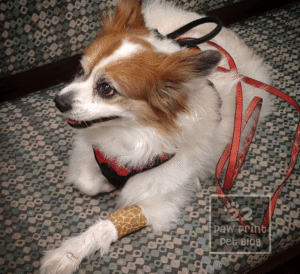 If your dog displays any of these signs of IVDD, it’s important to get them to a vet as soon as possible. Depending on your dog’s situation, IVDD can get worse over time without treatment. IVDD is also very painful, as you can imagine. Leaving your dog in the extreme pain that can be caused by IVDD is inhumane. If your dog turns out to be a surgical candidate, surgical treatment for IVDD has a higher success rate the quicker you can get it done after symptoms appear. With IVDD time is very much of the essence.
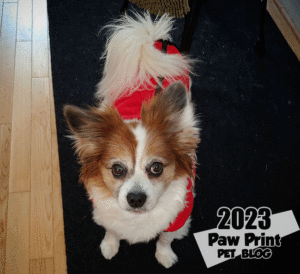 If there’s one message I really want to get across with all my IVDD posts it’s that IVDD does not have to be a death sentence. 7 months out from Kitsune’s IVDD diagnoses you would never know now that anything was ever wrong with him. He’s back to being his happy, sassy self. It makes me so happy now to see him rolling around on the floor to scratch his back, or shaking off after a bathroom break in the rain. Things I used to never put much thought into, but now are clear indications that Kit’s doing so much better after his bout of IVDD.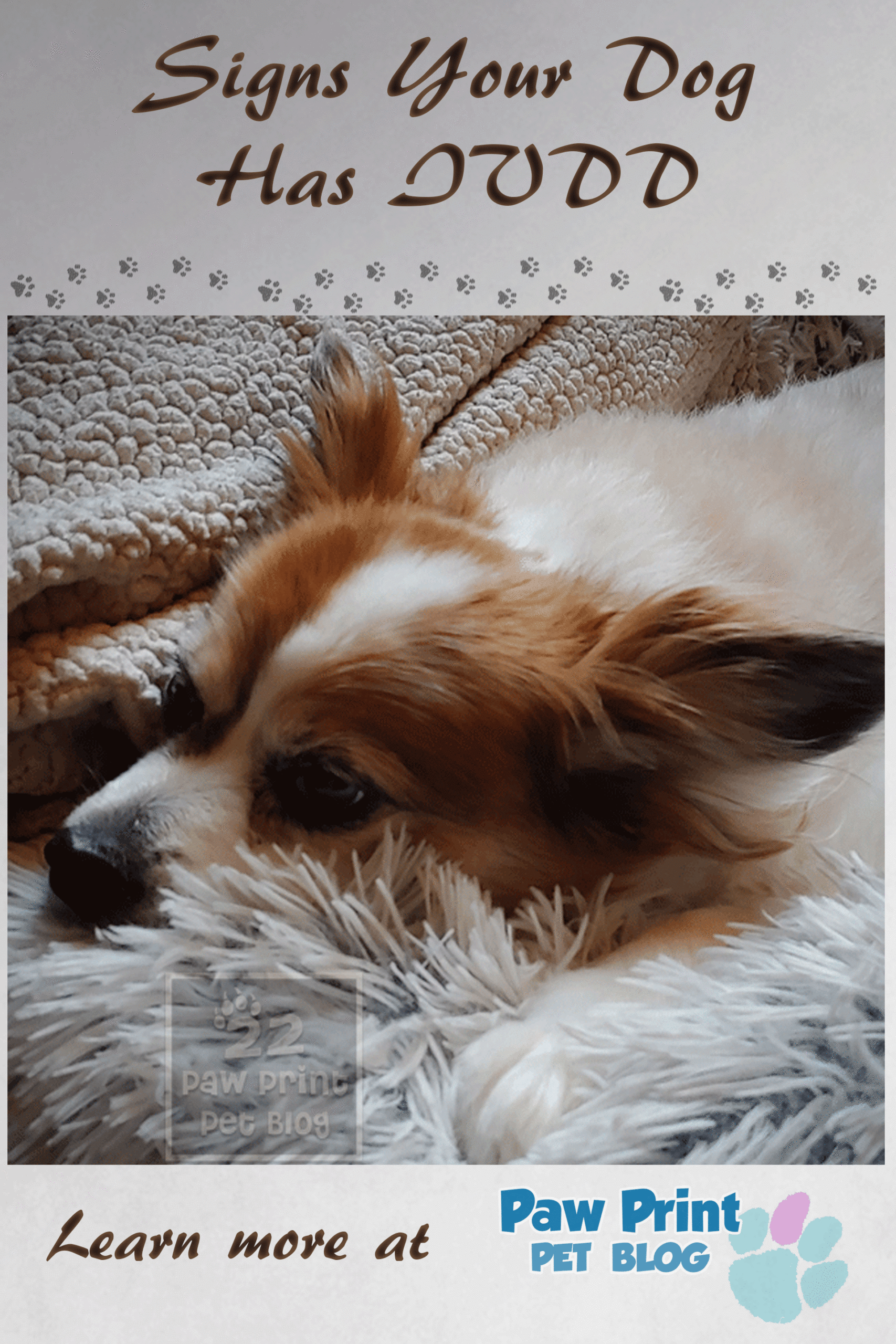
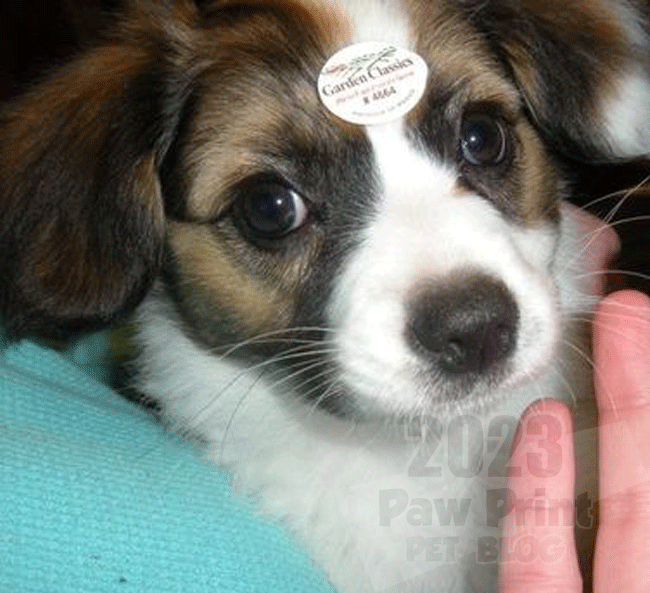
 I was SO excited to bring Kitsune home. I wouldn’t have to spend my days alone anymore. I had been wanting a puppy for years but wasn’t in a position to actually get one until a few months before we got Kit. You’d think I would have been really happy when I finally got my papillon puppy. In many ways I was. But it turned out that raising a puppy was a lot harder than I thought it would be. I very distinctly remember breaking down crying, sitting on the kitchen floor, and telling my partner that getting Kitsune had been a mistake.