• Home
  • Popular Topics
    • Papillons
    • Alaskan Klee Kai
    • Hiking with Dogs
    • Dog DIY
    • Recipes
    • Dog Product Reviews
    • Can Dogs Eat…
    • Dog Health
  • The Paw Pack
    • Kitsune (2008 – 2024)
    • Fenrir
  • Policies
    • Disclaimer
    • Privacy Policy
    • Work with Us
    • Site Map
  • Contact

Paw Print

    Senior Dogs, Kitsune, The Paw Pack

    Happy 14th Birthday, Kitsune!

    December 26, 2022

    On December 26th, 2022 we celebrated my amazing dog’s, Kitsune’s, 14th birthday!  Somehow my sweet, adorable little “puppy” is 14 years old already!

    I know human kids often complain about having birthdays near the big winter holidays.  But it’s so fun to have a birthday to celebrate here the day after Christmas.  Every year on his birthday Kit gets a few presents, and we make him a special birthday dinner.  This year for his dinner Kit got a bit of steak, plain mashed potatoes, and green beans.  He seemed to have a lot of fun playing with his new toy.  There are some clips of him opening and playing with it near the end of the video that I’ll post below.  Because a 14-year-old dog playing with his new birthday toy is just about the most adorable thing ever!

    Post Contents:

    • 1 Kitsune Health Update
    • 2 A Set Back?
    • 3 Kit is Sick of Relaxing!
    • 4 Living in the Moment
    • 5 Happy 14th Birthday, Kitsune!

    Kitsune Health Update

    Kit’s been doing well, which makes me so happy.  2022 hasn’t been the best year for him, unfortunately.  For anyone who doesn’t know, he was diagnosed with IVDD back in September.  His recovery was long but luckily went well, other than the fact that one of the medications he was on, a steroid, to treat his IVDD ended up causing symptoms of Cushing’s Disease.  We’re still not 100% sure whether he is taking a bit longer than normal to get over idiopathic Cushing’s, or if he perhaps already had the beginnings of Cushing’s Disease that was then made worse by his medication.

    Right now Kit is on a bunch of supplements to help support his back, joints, muscles, and liver.  In two months or so he’ll be going back to the vet for follow up blood work so we can evaluate whether his liver enzyme numbers have come down.  We’ll most likely, at that time, decide whether we need to pursue further testing.

    All that doesn’t sound like the best news ever but, luckily, if Kit does end up having actual Cushing’s Disease it’s something we can manage.

    A Set Back?

    dogs 14th birthdayAfter his 8 weeks of rest for his IVDD recovery we got the ok to start letting Kit get back to normal again.  For awhile we were worried.  After having to rest for so long his muscles were weak.  We could tell that Kit was getting sore, especially when he would get up after laying down for awhile.  During his IVDD recovery I had to stop giving him a lot of the supplements I was using to manage his arthritis because they conflicted with the medications he was on.  His vet and I suspected that it wasn’t his back or his neck that was hurting him this time, it was actually his arthritis acting up.

    I put Kit back on all his arthritis supplements as soon as I could, including fish oil and turmeric.  Thankfully, after a couple of weeks back on all his regular supplements again his pain started to ease.  He stopped looking stiff and uncomfortable after getting up out of bed.  It’s been hard, because the weather where we live hasn’t been great lately.  But I’ve been trying to take him on some relaxing walks when I can, to help rebuild the muscle mass he lost during his recovery.

    Kit is Sick of Relaxing!

    As much as we’ve tried to slowly reintroduce Kit to being active again, according to him he’s ready to go, go, go!  Besides a few remaining Cushing’s symptoms that we’ve been able to manage well, Kit is pretty much back to normal.  He’s back to his everyday trouble making, including pestering his younger brother, Fenrir, chasing the deer out of our yard, and trying to knock over the kitchen trash.  His middle name isn’t Trouble for nothing!

    dogs 14th birthday

    Living in the Moment

    Kit is the most adorable little old man ever and I strive everyday to cherish every moment with him.  I really couldn’t ask for a better dog, and I’m going to continue to do everything in my power to ensure that Kit’s senior years are pain free, and full of happiness, love, and fun!

    I’ve kind of tried to get away from doing these types of posts – just general updates on my own dogs.  But a lot of people have been asking me how Kit is doing and I figured his birthday was a good day to post an update.  Maybe I’ll try to find a better balance and go back to posting dog updates a bit more often.  You can also always check in with Kit and Fen over on our Facebook page, or on Kit and Fen’s Instagram pages.

    Happy 14th Birthday, Kitsune!

    And here’s to many more!

    Comment below!  When is your pet’s birthday?  Do you do anything special to celebrate pet birthdays?  Thanks, as always, for reading!

    dogs 14th birthday

    Pet Tips

    Types of Dog Collars

    December 24, 2022

    Types Dog Collars

    Types of dog collars: Do your dogs like wearing their collars?  I remember when my Alaskan Klee Kai, Fenrir, was a puppy he wasn’t crazy about wearing his collar or his harness.  I joked that he was an exhibitionist because he liked to run around ‘naked’.  These days, though, things have changed.  Fen is really good about letting me put his harness on him, and he actually loves wearing his collar.  That sounds weird, right?  But he often gets upset when I take his collar off.  He tries to pick it up and put it back on himself.

    Post Contents:

    • 1 Not all collars are created equal!
    • 2 Basic Dog Collars
    • 3 Martingale Collars
    • 4 Slip Collars
    • 5 Training Collars
    • 6 Dogs, like people, have sensitive necks.

    Not all collars are created equal!

    I use collars exclusively as a form of ID for my two dogs.  I walk them on harnesses.  Being small dogs, I worry about putting a lot of pressure on their tiny necks.  Small dogs are more prone to developing tracheal damage due to the pressure of collars.

    Putting some extra time into researching different types and brands of collars is worthwhile. Finding the perfect collar is important for your pet’s comfort, and can also save you from having to replace your dog’s collar too often.

    Basic Dog Collars

    Types Dog CollarsBasic dog collars are usually adjustable, and buckle closed around your dog’s neck. Some are equipped with safety-release buckles that will allow your dog to pull out of his or her collar if it ever gets caught on anything. Quick-release buckles tend to be less secure though.  Be careful if you’re using them to walk or hold onto your dog. Special breakaway collars are made to come off easily if your dog is in danger of choking.  But this feature can be bypassed during walks so you don’t have to worry about your dog escaping.
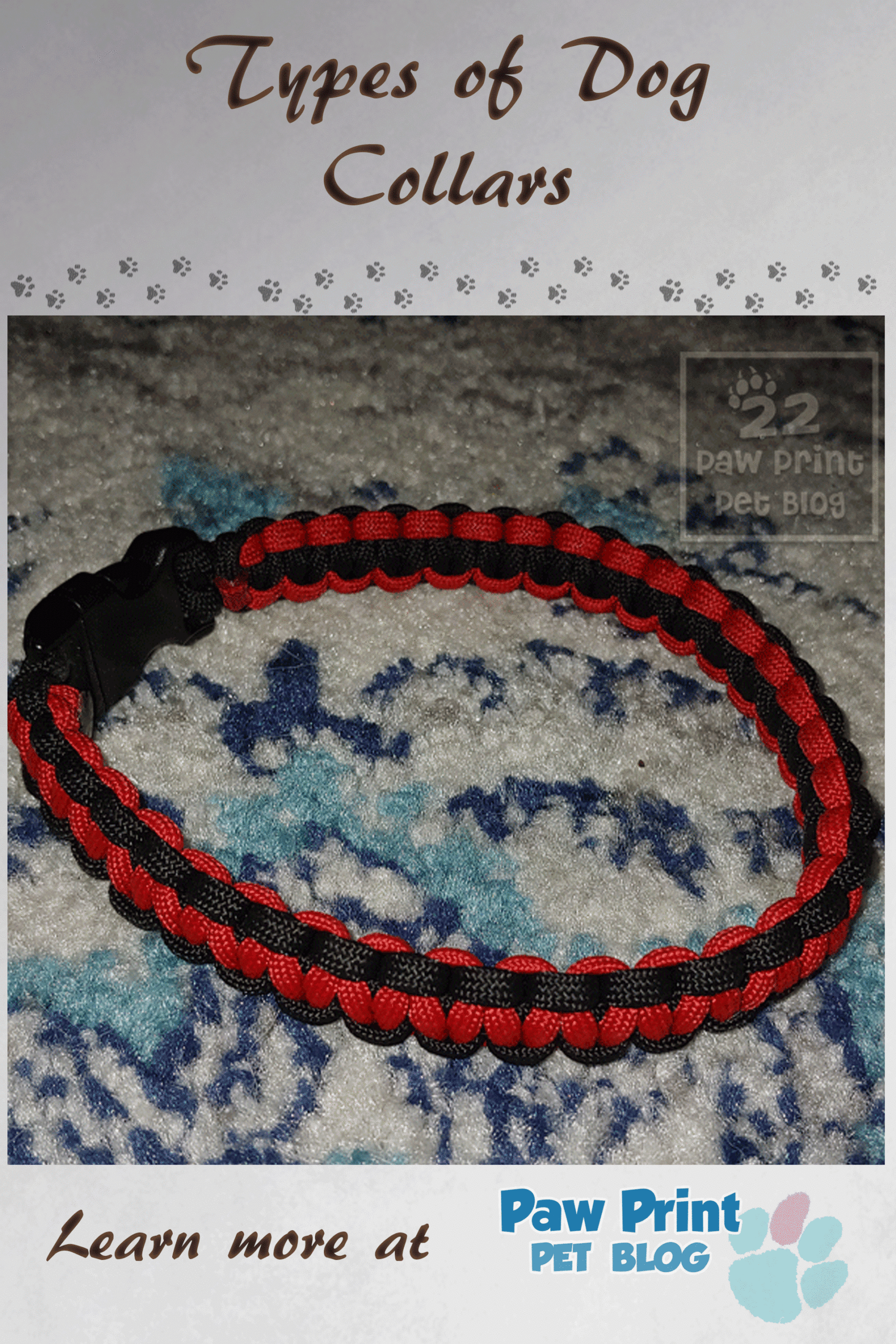
    Basic collars are commonly made from nylon or leather. They come in a wide variety of designs and colors, and can be a great way to show off your pup’s style.  Be careful when choosing leather collars, as some dyed or painted leathers may stain your pets fur, or the color can chip. Rolled leather collars are durable, and work great for dogs with long fur. The rolled leather helps prevent hair loss or damage around where the collar lays. Leather cleaning and care products can be used to clean and maintain your pets collar to help keep it looking clean and new for longer.

    Martingale Collars

    Martingale Collars, commonly used for greyhounds and other sight hound breeds, are collars that help to prevent dogs from being able to slip out of their collars while walking on a leash. They have a special feature that allows them to tighten if your dog tries to pull out of their collar.

    Slip Collars

    Slip collars are usually simple collars designed to be easily slipped over your dog’s head.  They are normally loose and not designed to be adjusted to your dog’s individual neck size the way that basic collars can be.  Slip collars are used often during rescues, when you need to catch a dog and get a collar on them but may not know exactly what size you need.  Slip collars are commonly used temporarily rather than left on dog’s as a form of ID.  Some people use slip collars as a form of training collar, as they are often designed to tighten if your dog pulls against them.

    Training Collars

    Training collars are a hot button issue in the dog world.  I don’t personally use things like choke chains on my own dogs.  Since I don’t know a lot about them, I’m not going to write much about them here.

    Some websites list head collars and harnesses as types of collars too.  For the sake of this post, I’m only going to refer to collars that go around a dog’s neck.

    Dogs, like people, have sensitive necks.

    My own dogs are always walked on harnesses that are designed to avoid putting pressure on their delicate necks.  I always recommend harnesses for walking dogs, but that doesn’t mean I don’t use collars too.  My dogs wear collars as a form of ID.  Although they are both micro-chipped, for someone to get their microchip info they’d have to be scanned by a vet or shelter.  Collars equipped with clear ID info can be easily and quickly read by anyone.

    My boys’ collars, knock on wood, have never come in handy as a form of ID because I’m very careful to make sure they never have any opportunities to wander.  But you never know what’s going to happen, and it’s better to be safe than sorry.  Plus, I do have fun picking out cute collars for my dogs.

    Do you and your dog(s) prefer any specific type or brand of collar?

    Types Dog Collars


    Dog Health, Pet Tips

    Can Dogs Eat Blueberries?

    December 22, 2022

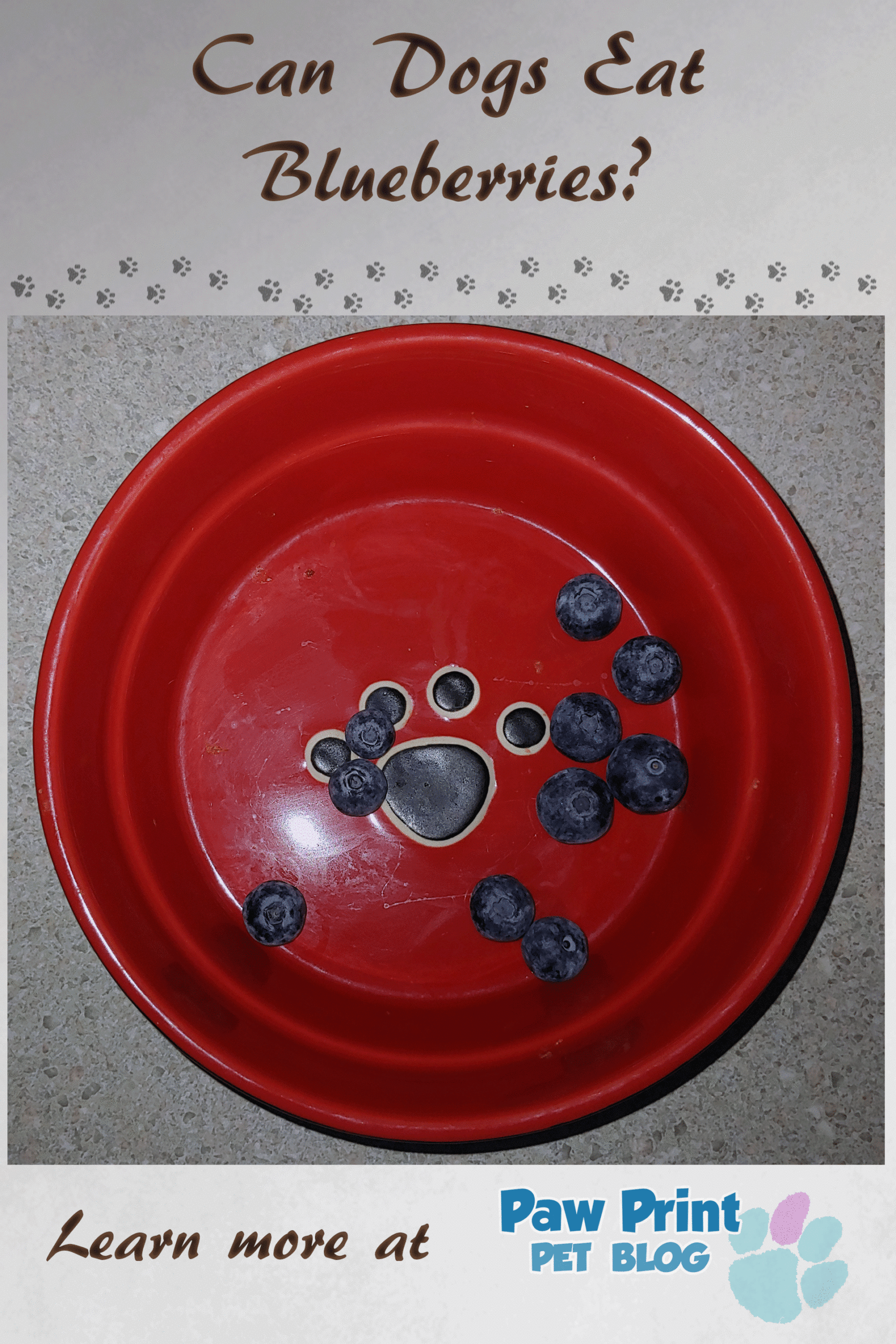
    The other day my partner was prepping to make blueberry pancakes for dinner (breakfast for dinner for the win!) when he dropped a couple of blueberries onto the floor.  My usually very picky Alaskan Klee Kai, Fenrir, dive-bombed the blueberries and ate both of them basically before my partner and I could even think about getting them away from him.  We were surprised, to say the least, since Fenrir isn’t usually the type of dog to eat fruit.  So, how much did we have to worry about Fen’s seemingly new taste for blueberries?  Can dogs eat blueberries!?

    Post Contents:

    • 1 Blueberries are Dog Safe!
    • 2 The Benefits of Feeding Your Dog Blueberries
    • 3 Downsides to Feeding Dogs Blueberries?
    • 4 Both Wild and Cultivated Blueberries are Safe for Dogs

    Blueberries are Dog Safe!

    It turns out – no worries!  Blueberries are completely nontoxic for dogs.  My papillon, Kitsune, has always loved to snack on dog-safe fruits (in moderation, of course), blueberries included.  And can you blame him?  These naturally sweet fruits likely taste good to dogs, the same way that they do to people.  And besides just tasting good, blueberries can be good for dogs too.

    dogs blueberries

    The Benefits of Feeding Your Dog Blueberries

    Blueberries are packed full of healthy vitamins and minerals, including Vitamins A, K, and C, calcium, potassium, magnesium, and phosphorus.  They also contain antioxidants that are thought to help fight against things like heart disease and cancer.  Studies have shown that diets rich in antioxidants can also help improve brain function in senior dogs.

    Blueberries are also low-calorie and contain a lot of fiber.  This makes them great little snacks, especially for dogs who may be watching their weight.  They pack a punch as far as flavor and nutrients go, but don’t contain a lot of calories.  If your dog is on a diet, replacing some of their food with healthy, low-calorie fresh foods such as blueberries and green beans can help your pet feel full without adding a lot of excess calories.  If your dog really likes them, blueberries could even be used to replace higher-calorie treats!

    Downsides to Feeding Dogs Blueberries?

    Blueberries can, especially if you have a smaller dog, present a choking hazard if your dog is the type to try swallowing them whole.  If your dog is one to forgo chewing, blueberries can be cut in half to help avoid choking.

    Blueberries do contain a good amount of natural sugars.  It makes them taste delicious, but means they may not be the best snack for dogs with diabetes or other health concerns.  Talk to your vet if you have any concerns about feeding your individual dog blueberries.

    Blueberries, as well as other snack or treat type foods, should be fed to dogs in moderation.  Too many of them at once may cause GI upset in some dogs.

    Both Wild and Cultivated Blueberries are Safe for Dogs

    Last summer, Kit and I came across some wild blueberry bushes in the woods around our house.  Kit had so much fun picking the individual berries off the bushes and eating them.  Although wild blueberries are smaller and often a darker color compared to their cultivated counterparts, they are also dog safe.

    Does your dog like blueberries?  Now that I know that my Fenrir likes them, I’ll have to make a point to buy them more often.  There aren’t too many fruits that Fenrir will actually eat.  I’m happy that blueberries are one of his accepted fruits now, since they are so packed full of beneficial nutrients.  Plus, now I have one more excuse to buy blueberries often!  I have to admit, I think I like them even more than my two dogs do.

    dogs blueberries

    Pet Tips

    Keeping Your Dog’s Playtime Interesting – Toy Rotation

    December 20, 2022

    Do you use toy rotation to keep your dog interested in their toys?  My dogs have too many toys.  How do I know?  The fact that all their toys haven’t, for a long time now, fit into one rather large toy box was my first indication.  In fact, our dog toy box situation got a bit ridiculous if I’m honest.  Kit and Fen had to dig through a huge pile of toys to find the one they wanted.  Of course, it seemed like “the one” was always at the very bottom of the toy box.

    Our house started to resemble a daycare, and we don’t even have any children!  As smart as Kitsune and Fenrir are, they have never seemed to grasp the concept of putting away their toys.  Most of the time our house was littered with toys the dogs weren’t even playing with.  They just tossed toys all over the floor to make getting to the bottom of the toy bin easier.

    Post Contents:

    • 1 Time to Start Using Toy Rotation for my Dogs!

    • 2 That’s the idea behind toy rotation.
    • 3 Rotating Your Dog’s Toys can be Great for Owners too.
    • 4 My Dog Toy Rotation Schedule

    dog toy rotationTime to Start Using Toy Rotation for my Dogs!

    Turns out, this is not a novel idea.  While I started rotating Kit and Fen’s toys because they are spoiled and have too many of them, toy rotation can also help to keep your dog’s playtime more interesting!  Has your dog ever lost a toy outside, or maybe under the couch, only to find it again weeks or even months later?  It’s like they found a brand-new toy!

    That’s the idea behind toy rotation.

    If you put a specific toy away for a while, then when you reintroduce it to your dog it’s like you’re giving them a new toy all over again!  It can bring new excitement to old dog toys that maybe your pet was getting a bit bored of.  Dog owners, especially owners with very active dogs, know the importance of keeping their dogs entertained!

    Rotating Your Dog’s Toys can be Great for Owners too.

    Especially if you like to spoil your dogs like I do!  I find that I’ve been spending less money on dog toys.  Instead of buying Kit and Fen new toys, I’m able to give them old toys that they haven’t seen for awhile.  They get just as excited over older toys that have been put away for a while as they do when they get something new.

    Also, toy rotation day can be a great time to check over your dog’s toys.  It’s important to make sure that none of them are damaged in a way that could make them dangerous for your dog.  It can also be a great time to clean any of them that need it.

    dog toy rotation

    My Dog Toy Rotation Schedule

    Although my dogs are older, 14 and 7, they both still love to play!  So our dog toys see a lot of use.  Once a month or so, I pick up all of Kit and Fen’s toys and give them a once over.  I throw out any that are broken.  Then I’ll wash the rest and, once they are clean and dry, put them away in a plastic storage container.  I have three(!) containers of dog toys now, that I give to the boys in rotation.  So when one gets put away, a new one gets taken out.

    Doing our dog toy rotation this way usually means that, when a new bin of toys comes out, it’s been at least two months since Kit and Fen have played with those toys.  They always get SO excited on toy rotation day!  Of course, Kit and especially Fen also each have a few favorite toys that I leave out for them all the time.

    So if you need a way to help make old dog toys fun again, or if your pet just has too many toys like mine do, try rotating toys!  It can be a great, free, way to help keep your pet entertained.

    dog toy rotation

    Dog Health

    The Benefits of Fish Oil for Dogs

    December 18, 2022

    Life with my senior pup, Kitsune, has been a bit of a roller coaster lately.  In the past couple of months, we’ve had to deal with IVDD, idiopathic Cushing’s Disease caused by his IVDD meds, then a flair-up of his arthritis when we had to stop giving him the supplements we use to control it, also because of the meds he was on to treat his IVDD.  My poor pup!  Thankfully he’s been off his IVDD meds for a while now.  I’m working hard to get him back into fighting form.  It was really nice to recently be able to put him back on the supplements that were helping him before he was diagnosed with IVDD.  One of them, turmeric, really seems to help manage his arthritis.  I also give him fish oil.  This post will go over the benefits of fish oil for dogs!

    Fish oil is one of the more common supplements you’ve probably heard about for both dogs and cats. Have you ever wondered why that is the case?

    fish oil dogs

    Post Contents:

    • 1 How can fish oil benefit dogs?
    • 2 How can one supplement do all those awesome things?
    • 3 Are there any possible side effects to offering fish oil supplements?
    • 4 Are all fish oils created equal?

    How can fish oil benefit dogs?

    One of the many benefits of fish oil is that it helps to promote healthy joint function, and can help reduce inflammation. Fish oil, in combination with a few other supplements, have worked really well to smooth Kit’s arthritis.  Well enough that I’ve, so far, been able to keep him off of prescription pain medications!  Some of the benefits of supplementing with fish oil can include…

    • A boosted immune system
    • Relief from skin allergies
    • Improved cognitive function
    • Protection against autoimmune diseases
    • Improved skin and coat health
    • Potential protection against cancers
    • Improvement of stomach/digestive issues
    • Protection against heart disease and stroke
    • Renal support/protection
    • Reduced inflammation throughout the body
    • Relief from arthritis pain

    How can one supplement do all those awesome things?

    It’s all about the EFAs – the essential fatty acids. Specifically, for dogs, you want to pay close attention to omega 3 and omega 6. EFAs help promote optimal health, but dogs’ bodies can’t produce them themselves. They need to obtain EFAs from their diet. Insufficient amounts of omega 3 and omega 6 have been linked to health issues such as gout, dermatitis, liver disorders, renal issues, skin and/or coat issues, eczema, allergies, and compromised immune systems.

    Omega 3 fatty acids specifically have been shown to reduce inflammation, which can help a number of health conditions.  Omega 3s are primarily found in fish. Dogs eating commercial diets, or even homemade diets that do not contain a lot of fish, may not be getting enough Omega 3 to be beneficial. In addition to low levels of omega 3 in most foods, omega 3 is also very sensitive to both heat and light. Although many commercial pet food companies add omega 3 supplements to their foods, it is often destroyed when the food is processed. This is why adding a fish oil supplement to your dogs’ food can be so beneficial, even if you are already feeding a food that says it contains omega 3s.

    Are there any possible side effects to offering fish oil supplements?

    While fish oil supplements are generally considered safe, always pay close attention to dosing instructions. Potential side effects can include weight gain, stomach issues (nausea, diarrhea, stomach pain), and fishy smelling breath. Chances of side effects increase with higher dosages. Fish oil supplements are not recommended for pets who have recently had surgery or are otherwise healing from injury, as anti-inflammatories can lead to longer healing times.

    As much as I love fish oil as a supplement for Kitsune, I don’t give it to my other dog, Fenrir.  I’ve tried too in the past, and no matter how low I start his dosage at, I just can’t get it to agree with his stomach.

    Are all fish oils created equal?

    fish oil dogsI’ve been using Nordic Naturals fish oil for Kitsune.  Our old vet, before we moved, recommended this brand of fish oil and it’s served Kitsune well for years now.  It’s derived from wild anchovies and sardines, and is third party tested for purity.  So you know that you’re really getting what you think you are.  Nordic Naturals fish oils are Friend of the Sea certified, and committed to sustainable and ethical fishing practices.  Their fish oils are also manufactured in a zero waste facility!

    Nordic Naturals fish oil comes in a UV protective glass bottle.  This is important because, as I mentioned above, omega 3 fatty acids are light sensitive.  I store our bottle in the refrigerator to protect it from heat.  The liquid doesn’t have an overly fishy odor, and Kitsune has no problem with the flavor.  I just put his daily dose of fish oil over his breakfast in the mornings.  No fuss no muss!  This is not a sponsored post, by the way.  I get asked a lot about what supplements I use for my dogs, so I figured I’d mention the brand of fish oil I use here.

    To be honest, I’ve been happy with the Nordic Naturals fish oil so it’s been years now since I’ve researched any other brands.  Comment below!  Have you ever supplemented your pet with fish oil?  Is there a particular brand you like, or that seems to work especially well for your dog?  What are some other supplements you’ve used that have helped your pet(s)?

    fish oil dogs

    Dog Health, Pet Tips

    Nematodes for Natural Flea Control

    December 16, 2022

    Using nematodes for flea control: Fleas are the bane of pet owners!  Not only do they make our pets, as well as us, uncomfortable, but they are also just plain gross.  Did you know that fleas can carry diseases?  They can also cause secondary parasite infestation (tapeworms).  Fleas are bad enough under normal circumstances, but if you, or your pet, are allergic to their bite, like my papillon, Kitsune, is, the normally pesky pests become even more of a problem.  Flea allergy dermatitis can cause severe itching, skin sores/hot spots, and hair loss.

    Post Contents:

    • 1 Flea Treatment
    • 2 Natural Flea Control Options?
    • 3 What are Nematodes?
    • 4 Using Nematodes as Flea Control
    • 5 Do Nematodes Harm Native Insects?
    • 6 A Safer Alterative

    Flea Treatment

    Flea treatment, especially in severe cases, usually consists of a three-pronged approach.  Not only must you remove the pests that are already on your pet, but the pet’s environment, both indoors and out, should be treated as well.  You don’t want to go through the hassle of removing fleas from your pet, only to have them go outside and catch them again!

    Natural Flea Control Options?

    I prefer using more natural means of pest control whenever possible.  It’s, at times, a delicate balance.  I like to try to reduce the number of chemicals/pesticides I use as much as possible.  But because of Kitsune’s flea allergies, I have to make sure that what I use actually works.  The longer it takes me to successfully eliminate fleas, the more my best buddy has to suffer.

    A nematode. Photo via Vyzhdova V. Licensed under the Creative Commons Attribution 4.0 International license.

    What are Nematodes?

    If you remember anything from your high school science class, you might remember looking at nematodes under a microscope!  Hookworms, pinworms, and whipworms are actually types of parasitic nematodes.  But not all nematodes are bad!  You probably already deduced this from the topic of today’s post, but some species of nematodes can be beneficial as a form of natural, chemical-free, insect control.

    Using Nematodes as Flea Control

    There are types of predatory nematodes that live in the soil and help to control insect populations.  Farmers/gardeners will sometimes use them to help fight against garden pests.  Basically, you can purchase beneficial nematodes and apply them to your yard.  The nematodes will be microscopic, so you can’t actually see them.  But once applied to soil they go to work killing insects, including preadult fleas.  Nematodes attack fleas while they are still in their larval stage, killing them before they ever get the chance to grow into biting adults.

    As the nematodes make meals out of larval fleas and other pesky insects, they will reproduce.  Don’t worry, nematodes sold for insect control are harmless to humans and pets.  If they ever run out of insects to eat, they will die and fertilize the soil.  Other than snacking on larval fleas, predatory nematodes sold for insect control can also help fight against gnats, grubs, rootworms, and other types of insects.

    Do Nematodes Harm Native Insects?

    Not all nematodes are created equal.  In fact, there are types of nematodes that will damage plant roots.  No gardener would want those around if they could help it!  The type of nematodes that can help eliminate fleas are often sold as “beneficial” or “predatory” nematodes.  They feed on insects rather than plants.

    If your environmentally minded, like I am, you may wonder whether or not predatory nematodes will harm beneficial, native insects.  There are actually different types of predatory nematodes, and the types of insects they prey upon will vary by species.  Knowing this, you can select the type of predatory nematode that would work best for the species of insects you are trying to eliminate.

    A Safer Alterative

    Also keep in mind that nematodes are already present in your soil.  To quote the UCR Department of Nematology, “Nematodes have been reported from every continent on earth and occur in deserts, swamps, the oceans, the tropics and Antarctica”.  Using targeted species of predatory nematodes to combat common pest insects, such as fleas, is safer for the environment, as well as people, pets, and beneficial insects, than using pesticides.

    There is obviously no surefire way to 100% prevent your pet from coming into contact with fleas while outdoors, especially if you visit public parks or areas where other animals frequent.  However, nematodes can be an effective, chemical free, way to arm your own yard against fleas.

    Comment below!  If you have any pets, what forms of flea control are you currently using?  Have you ever added nematodes to your flea fighting arsenal?

    nematodes flea control

    Pet Tips, Dog Health

    Should You Learn to Groom Your Dog at Home?

    December 14, 2022

    It’s a good question! I originally posted this blog in 2020, in the midst of the Covid pandemic.  At the time, dog groomers were not being classified as essential workers.  Grooming salons that did remain open were often urging owners to forgo regular salon grooming, at least temporarily.  What was an owner to do?  Regular grooming is an important part of proper pet care.  Is it worth it to learn to groom your dog at home?  

    Post Contents:

    • 1 That depends!
    • 2 Self Sufficiency
    • 3 Spending time grooming our dogs can double as a home check up.
    • 4 But what does basic grooming consist of and what, if anything, would be better left to the pros?
    • 5 What about cutting nails and hair at home?
    • 6 What it really all comes down to is what level of grooming you and your dog are comfortable with doing at home.

    That depends!

    What type of grooming does your dog require on a regular basis?  Just a quick brush and a nail trim, or something more complex like a haircut?  How familiar/comfortable are you, and your dog, with grooming tools?  A person who is inexperienced with a specific tool, paired with a dog who may be unfamiliar, or even fearful, of said tool could be a recipe for disaster.  Is your dog anxious, old, hyperactive, sick, or otherwise compromised in any way?  Some dogs, more so than others, can really benefit by being groomed by someone with a steady, experienced, hand.

    Self Sufficiency

    I’ve always been a proponent of owners being at least somewhat self-sufficient when it comes to their pets’ personal hygiene.  Grooming our dogs on a regular basis can be an awesome way to spend some quality time with our pets.  I joke that I groom my dogs myself because no professional groomer would spend as much time as I do stopping to rub their bellies.  Nor would they tell them how handsome they are nearly as many times as I do.

    Spending time grooming our dogs can double as a home check up.

    It can be easy to miss medical issues that may lay hidden your dog’s fur.  Especially if you have a long haired dog!  Back when my papillon, Kitsune, broke his tail he never showed any signs of being in pain.  I discovered his newly kinked tail tip during one of his regular weekly grooming sessions!  Other things to look out for can include any new lumps and bumps, fleas and other parasites, new skin or fur abnormalities, hidden injuries, etc.

    But what does basic grooming consist of and what, if anything, would be better left to the pros?

    At the very least, brushing your dog on a regular basis is a great thing to do at home.  A lot of dogs don’t enjoying having their teeth brushed at first, but dental health is really important, so getting some kind of dental care established at home is ideal too.  If you, and/or your dog, aren’t ready to jump right to regular teeth brushing, consider at least offering healthy dental chews and perhaps using a dental spray while you work towards getting your canine pal used to his/her toothbrush.  Depending on how often your dog needs to be bathed, doing that at home can be advantageous too.  I tend to bathe my dogs at least once every other week.  I’d personally hate to have to take them to the groomers that often.

    What about cutting nails and hair at home?

    I cut my dogs’ nails at home, but I totally understand why some owners choose not too.  I’m pretty confident with a pair of nail clippers (and a nail dremel when it comes to Kitsune).  I trim Kitsune’s hair at home too (and once in awhile the fur on the bottoms of Fen’s feet).  But I had some experience with cutting dog’s hair even before I got Kitsune.  I really enjoy grooming my dogs myself, but don’t recommend people who have never done it before jump right into giving their dog(s) home haircuts.  At best, your first dog haircut will probably look pretty rough.  At worst, wiggly dogs can be hurt by clipper blades wielded by inexperienced hands.

    What it really all comes down to is what level of grooming you and your dog are comfortable with doing at home.

    That will, of course, vary from person to person, and dog to dog.  Grooming is important, but so is safety!  If you’re not comfortable clipping your dog’s nails or hair at home, that’s ok.  If you can’t get to a groomer, veterinarians usually offer basic grooming services such as nail trims and emergency haircuts (removing mats, etc.).

    Do your best when it comes to grooming your pets.  If something feels outside of your, or your dog’s, comfort zone don’t be afraid to call in the experts!  Learning to groom your dog at home can be advantageous in so many ways, but don’t risk accidently hurting your dog if you’re not 100% comfortable grooming at home.  Basic tasks such as bathing, brushing teeth, and brushing are easier to do at home.  Things like clipping nails and haircuts can require a bit more skill, and present a bit more risk if you make a mistake.

    Comment below – we always love to hear from our readers!  Do you groom your dog at home normally, or take them to someone for grooming?

    home dog groom

    Senior Dogs

    US Senior Dog Rescues

    December 12, 2022

    This post contains a list of US based senior dog rescues!  I have a newfound love for senior dogs that is 100% my (almost) 14-year-old papillon, Kitsune’s, fault!  For Adopt a Senior Pet Month last month, I wrote a little bit about what it’s like living with a senior dog from the point of view of a puppy lover!  Kit is my first dog, so of course, that also makes him my first senior dog.  He’s taught me so much about what it’s like to share life with an older dog.  Not the least of which has been breaking the stereotype of senior dogs being lazy and boring.  Not this senior, says Kit!

    senior dog rescuesIn the post I did for Adopt a Senior Pet Month, I also wrote a bit about the sad reality for senior dogs in animal shelters or rescues.  Despite how amazing they can be, senior pets are often overlooked by potential adopters.  I get it, puppies are adorable and packed full of potential.  But there’s just something so special about senior dogs.  Each and every one of them deserves to live out their golden years in peace, comfort, and surrounded by love.  If you’re not ready to deal with the craziness that is all things puppy, but want to share your life with a furry friend, why not consider adopting a senior?


    Here is a list of US-based senior dog rescues!  This list is not all exclusive.  If none of these rescues are local to you, try searching for a senior dog rescue in your area, or start by checking out…

    Post Contents:

    • 1 Your Local Shelter!
    • 2 Muttville Senior Dog Rescue
    • 3 Tails of Gray
    • 4 The City of Elderly Love Rescue
    • 5 Senior Dog Haven & Hospice
    • 6 Young at Heart Senior Pet Adoptions
    • 7 Vintage Pet Rescue
    • 8 More Coming Soon?

    Your Local Shelter!

    I just had to put this option first.  It’s a sad fact that senior dogs need loving new homes throughout the US, and a majority of them never get the benefit of finding themselves in a rescue that specializes in older pets.  Chances are high that at any given time there will be older pets needing new homes right at your local animal shelter.  If not, let your local shelter employees know that you’d love to offer an older dog a new home.  They’re usually more than happy to take down your contact information and get in touch as soon as a dog matching what you’re looking for becomes available for adoption.

    Muttville Senior Dog Rescue

    Muttville Senior Dog Rescue is based out of California.  They take in senior dogs in need and find them loving new homes as part of their adoption and hospice programs.

    Tails of Gray

    Tails of Gray rescues senior dogs no matter how dire their situation.  They work hard to rehabilitate dogs who may need a little bit of extra care, then find them the perfect new families.  Tails of Gray is based in the San Francisco area.

    The City of Elderly Love Rescue

    Based out of Philly, The City of Elderly Love Rescue is 100% doner funded, and volunteer staffed.  They rescue both senior dogs and cats.  Besides finding adoptive homes for the cities elderly pets, this rescue also has a hospice program and helps local community members struggling to care for their senior pets through their “Let’s Stay Home Fund”.

    Senior Dog Haven & Hospice

    Senior Dog Haven & Hospice rescues dogs age 7 and up and finds them new homes within a 2 hour radius of Wilmington, Delaware.  Their hospice program works through a team of fosters who work to ensure that every dog under their care receives loving care before a pain free goodbye.

    Young at Heart Senior Pet Adoptions

    Young at Heart Senior Pet Adoptions rescues senior dogs and cats.  They are based out of Woodstock, IL and believe that “love has no age limit”.  How true!

    Vintage Pet Rescue

    Vintage Pet Rescue is based in Rhode Island.  They rescue senior dogs from shelters or take them in from owners who can no longer care for them, and do occasionally have seniors available for adoption.

    More Coming Soon?

    This isn’t, by any means, an all inclusive list.  Did I miss your favorite, or local, senior dog rescue?  Comment below and let me know, so I can add them to the list!  Keep in mind that this particular list is for rescues that, at least occasionally, have senior dogs for adoption.  I came across quite a few senior pet sanctuaries and, while the work they do is amazing too, the point of this post is to help connect potential adopters with senior dogs in need.

    Have you ever adopted a senior pet?  Tell us about your senior pets in the comments below!

    senior dog rescues

    Dog Health, Pet Products

    Saving Shelter Pets is as Easy as Walking your Dog: Wooftrax Review

    December 10, 2022

    Do you use any pet-related apps?  For many years now, one of my favorite dog-related apps has been Wooftrax (formally Walk For A Dog).  Available for both Android and iPhones, Wooftrax is an app that makes helping to save the lives of shelter pets fun!  I’ve had this app installed on my various phones now for over 7 years!

    WooftraxWooftrax makes helping shelter pets as easy, and fun, as walking your dog!  The app uses GPS through Wi-Fi or a cell signal to track the distance you walk, your miles per hour, how long you spend walking, and even shows a map of your route!  It’s awesome for pet owners who may be trying to maintain an exercise routine and want to keep track of their walking stats.  But what really makes this app awesome is the fact that it lets you select a shelter to walk for.  Your selected shelter receives donations for each mile you walk!

    The app makes money by showing ads and from sponsors.  The more you walk, the more money you earn for your selected shelter.  Kitsune, Fenrir, and I are currently walking for PRONE – Papillon Rescue of the North East, a papillon rescue that we recently featured on our list of US-based Papillon rescues.  The list of shelters you can walk for is extensive.  You can select any shelter from the list, even if they’re not local to you.

    Wooftrax now lets you create walking groups, and participate in challenges.  Those are features it didn’t have when I first joined.  As of the time I’m writing this, the ‘Winter Walking Challenge’ is currently running.  You can join the challenge to earn an extra donation for your selected charity.  You can also set your own daily goals, like how many walks you want to take per day, and how many miles you want to walk.

    This app is awesome if you have a dog!  You can use the app during any walk, no matter the duration.  Since my dog, Kitsune, just recently recovered from IVDD our walks have been on the puny side.  We’re working on rebuilding Kit’s muscles, so haven’t been walking much more than 15 – 20 minutes with him a day.  But that’s ok!  Even short walks add up over time.

    When we moved into our current rental house, I was worried that Wooftrax wouldn’t work for us anymore.  Our cell connection here is super spotty.  Because of this, Wooftrax doesn’t always tack our walks as accurately as it did back when we lived in the big city.  But it works well enough that we get a pretty good representation of our route.

    With the new year right around the corner, why not make a resolution to walk with your dog(s) more?  Spending time outdoors with my two dogs is my favorite form of exercise.  All the more awesome that I can use the time we spend walking together helping shelter pets too!

    Wooftrax

    Dog Health

    Titer Tests

    December 8, 2022

    What are titer tests?  Are they appropriate for your pet?  Vaccines, whether for people or our pets, have always been a hot-button issue.  I have spent a fair amount of time researching to decide what vaccinations I feel are necessary for my two dogs.  Of course no one wants their pet to contract potentially deadly diseases, especially if there is a way to protect against them!  But vaccinations, unfortunately, do come with some risks too.  I’ve always been on the side of appropriately, but not over, vaccinating my dogs for diseases that are potentially deadly and/or common due to where we live and our lifestyle.

    Post Contents:

    • 1 Are We Vaccinating too Often?
    • 2 What are Titer tests?
    • 3 What Vaccinations Can Titers be Used For?
    • 4 Current AHAA Recommendations
    • 5 Do I Titer Test My Dogs?

    Are We Vaccinating too Often?

    This file is licensed under the Creative Commons Attribution-Share Alike 4.0 International license. Photo Credit: Whispyhistory.

    It was common for many years for veterinarians to recommend vaccinating pets yearly.  But studies are now starting to show that many common vaccinations actually provide pets with disease protection for much longer.  This leaves many pet owners wondering if vaccinating so frequently is necessary.  For pet owners who want to do what they can to ensure their pets are protected against disease, but who also don’t want to needlessly over-vaccinate, having your vet perform yearly titer tests is an alternate option.

    What are Titer tests?

    To put it simply, a titer (pronounced tight-er) test is a blood test.  Your pet’s veterinarian will draw blood from your pet to determine if your pet currently has antibodies against certain diseases.  Vets commonly report results from titer tests in terms such as strong and weak.  A strong titer result means that your pet has high numbers of antibodies against the disease in question.  A weak titer result means that, while your pet does have antibodies present, they are not present in high numbers. 

    Your veterinarian should be able to explain your pet’s results and recommend a course of action.  A weak titer result doesn’t necessarily mean that your pet needs to be re-vaccinated.  However, if titer testing shows that your pet does not have antibodies present at all, depending on your situation it is probably a good idea to re-vaccinate your pet.

    What Vaccinations Can Titers be Used For?

    It’s important to note that, although you can run titer tests for rabies, US laws still require that your pet be vaccinated against rabies.  Some vets, groomers, dog sitters, etc. will accept titer results in lieu of regular vaccinations, however not all do.

    Veterinarians commonly run titers to check for immunity against the core diseases – parvo, adenovirus, and distemper.  When non-core diseases come into question (ex. kennel cough, Lyme, Leptospirosis, etc.) it’s usually recommended that, rather than run titers, the dogs lifestyle, health, and vaccine tolerance be taken into account.  This is because, for the core vaccinations, the titer numbers required to protect your pet from infection have been established.  This means that your vet can tell, by looking at your pet’s titer results, whether or not he or she is still fully protected against these core diseases.  This is not yet true for other vaccines.

    Current AHAA Recommendations

    AHAA stands for The American Animal Hospital Association.  Vet clinics that are AHAA accredited will follow AHAA care standards.  The current AHAA vaccination standards for dogs recommends boosters every 3 years for the core vaccines (distemper, adenovirus, distemper).  Rabies vaccinations should be administered as required by law.  In many states this is also once every 3 years after the initial puppy vaccine.  That’s a big improvement over the days of old, when all vaccines were recommended to be given yearly.

    AHAA recommends that titers be used for dogs who have a history of vaccine reactions, vaccine related immune issues, or whose owners are opposed to frequent revaccination.  Many vaccine directions warn against vaccinating dogs who are ill.  Your vet may consider running titer tests if your dog is sick or elderly.

    Do I Titer Test My Dogs?

    Titer Tests

    Thankfully neither of my dogs have ever experienced vaccine reactions.  I take Kit and Fen to an AHAA accredited vet and have been vaccinating them according to the current AHAA standards.  However, my Kitsune will be turning 14 later this month and has been experiencing a couple of health issue (unrelated to vaccines) over the past couple of months.  He’s due to receive his core vaccine booster this summer.  At that time I’ll be discussing whether we should opt to run titers rather than vaccinating him with our veterinarian.

    Vaccinations save lives, but I don’t like the idea of over vaccinating my pets.  I appreciate that titer testing is available for owners who want to stay on top of their pets’ immunity status without having to blindly vaccine frequently.  While the 3 year boosters for core vaccines are certainly an improvement over getting them done yearly, there seems to be building evidence that even once every 3 years is overkill when it comes to the core vaccines.

    What do you think?  Comment below!  Have you ever had your veterinarian run a titer test on your dog?  Would you consider it in the future?

    Titer Tests 101


Older Posts
Newer Posts
It's a beautiful day to play ball in the snow ❄️ It's a beautiful day to play ball in the snow ❄️
Today would have been Kit's 17th birthday. My best Today would have been Kit's 17th birthday. My best buddy...not a single day goes by that I don't think of him. Forever a beloved member of our little pack ❤️
Someone stole his dad's socks 😂 10 years old and s Someone stole his dad's socks 😂 10 years old and still as mischievous as a pup!  This little one makes me laugh everyday and I'm SO thankful for him. 💙
New phone, who dis!? 😅 Sorry for the lack of new New phone, who dis!? 😅 
Sorry for the lack of new Fen pics lately... My old phone broke and it took me awhile to replace it. 
Fen is his happy, sassy, playful self and is doing well. 💙
Fen makes me laugh so much! Today is my partner's Fen makes me laugh so much! Today is my partner's birthday. ❤️ I almost always wake up earlier than him, so this morning I was planning on getting up to decorate for his birthday. I wanted to surprise him with decorations and his presents set out when he got up.

Well...Fenrir ruined it all, because as soon as he saw the wrapped presents for my partner, he got SO excited! And if you have ever had the pleasure of meeting an Alaskan Klee Kai you will know, when they get excited, they just have to make sure everyone knows about it!

Long story slightly shorter, Fen woke my partner up early, on his birthday, all because Fen REALLY wanted to open presents that weren't even for him! I didn't get to decorate, but lesson learned - don't put gifts where Fen can see them because he will get really, really excited about it.

And just so you all don't feel too bad for him...I ended up wrapping one of Fen's Christmas presents and giving it to him to open early! 🤣
Follow on Instagram
Facebook Instagram Pinterest Youtube

Copyright © 2025 Paw Print Pet Blog. All Rights Reserved.

Back to top