• Home
  • Popular Topics
    • Papillons
    • Alaskan Klee Kai
    • Hiking with Dogs
    • Dog DIY
    • Recipes
    • Dog Product Reviews
    • Can Dogs Eat…
    • Dog Health
  • The Paw Pack
    • Kitsune (2008 – 2024)
    • Fenrir
  • Policies
    • Disclaimer
    • Privacy Policy
    • Work with Us
    • Site Map
  • Contact

Paw Print

    Pet Tips

    Pet 4th of July Safety

    June 30, 2022

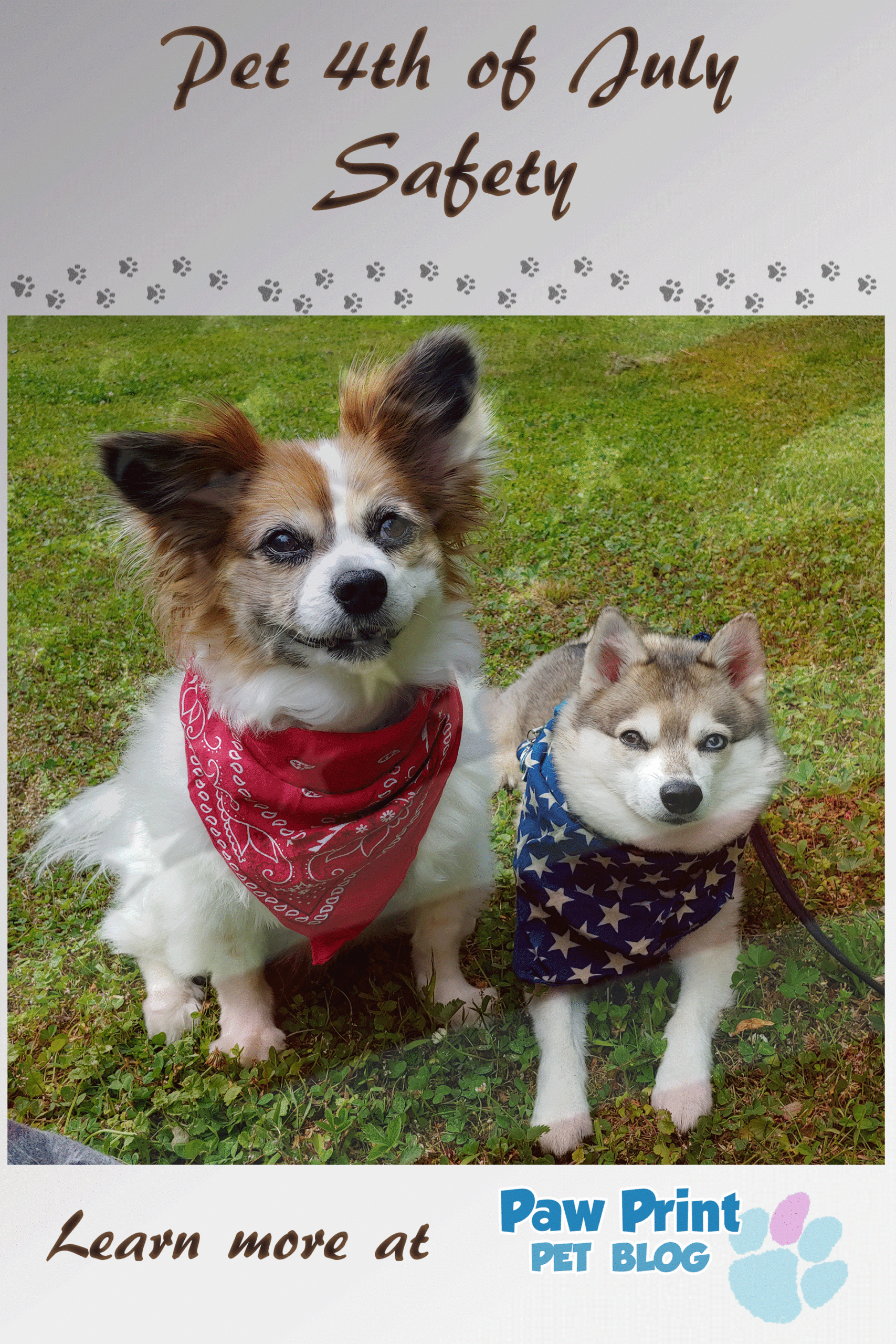
    Pet 4th of July SafetyHappy (almost) 4th of July! As many of us prepare for the festivities that will take place this holiday; fireworks, cookouts, etc., it’s important to also make sure you keep your pets safety in mind.  More pets go missing around the 4th of July than any other time of year.  Fear of fireworks is common, but they aren’t the only danger associated with American Independence Day.  Here is our list of pet 4th of July safety tips:

    • If serving alcohol this weekend (or any time, really) make sure to keep it away from your pets.  Alcohol is toxic to animals and can cause symptoms such as weakness, coma, and, in sever cases, respiratory failure and death.
    • Make sure to keep items such as matches and lighter fluid out of pets’ reach.  Some types of matches, if ingested, can cause kidney disease.  Lighter fluid is a skin irritant and can also be dangerous if inhaled or consumed.
    • If you want to use products such as sunscreen or insect repellent to protect your pet, make sure to use products specifically designed for use on animals.  Human products can contain ingredients that are toxic to pets.

      Pet 4th of July Safety

      Fen says “But we can have some hotdog right!?”

    • If your dog is anything like my Kitsune, he’ll be begging like crazy for a bite of your burger (or whatever else you cook up this weekend).  Try to keep your pets on their normal diet if at all possible.  While a small amount of pet safe human food should be ok, sudden changes in your pets’ diet can cause stomach upset.
    • Keep items such as insect coils and candles out of your pets’ reach.  Besides the obvious danger of fire, these types of products can hurt your pet if ingested or inhaled.
    • Glow jewelry is not highly toxic, but pets make want to chew on them and swallowing pieces of plastic is never a good thing!  The liquid that makes the jewelry glow can cause excessive drooling and indigestion.
    • Never use fireworks around pets!  Many types of fireworks contain toxic ingredients (arsenic and other heavy metals, for example) and exposure to lit fireworks can result in severe burns.
    • Most pets don’t appreciate firework displays as much as humans do and would be happier left safely at home.  If your pet is afraid of fireworks, provide them with a safe place to wait out the noise.  Background sounds (such as a TV) may help to drown out the scary noises outside.  You can try distracting your pet by playing a game or working on training with some especially tasty treats.  In severe situations, you may want to talk to your vet about prescription medications to help calm your pet during times of intense fear.

    Do you do anything special to keep your pet safe and happy during the 4th of July?  Do you have any 4th of July safety tips you’d like to share?  Feel free to comment below!

    We hope that everyone who will be celebrating this weekend has a safe, fun holiday!

    Pet 4th of July Safety

    Dog Health

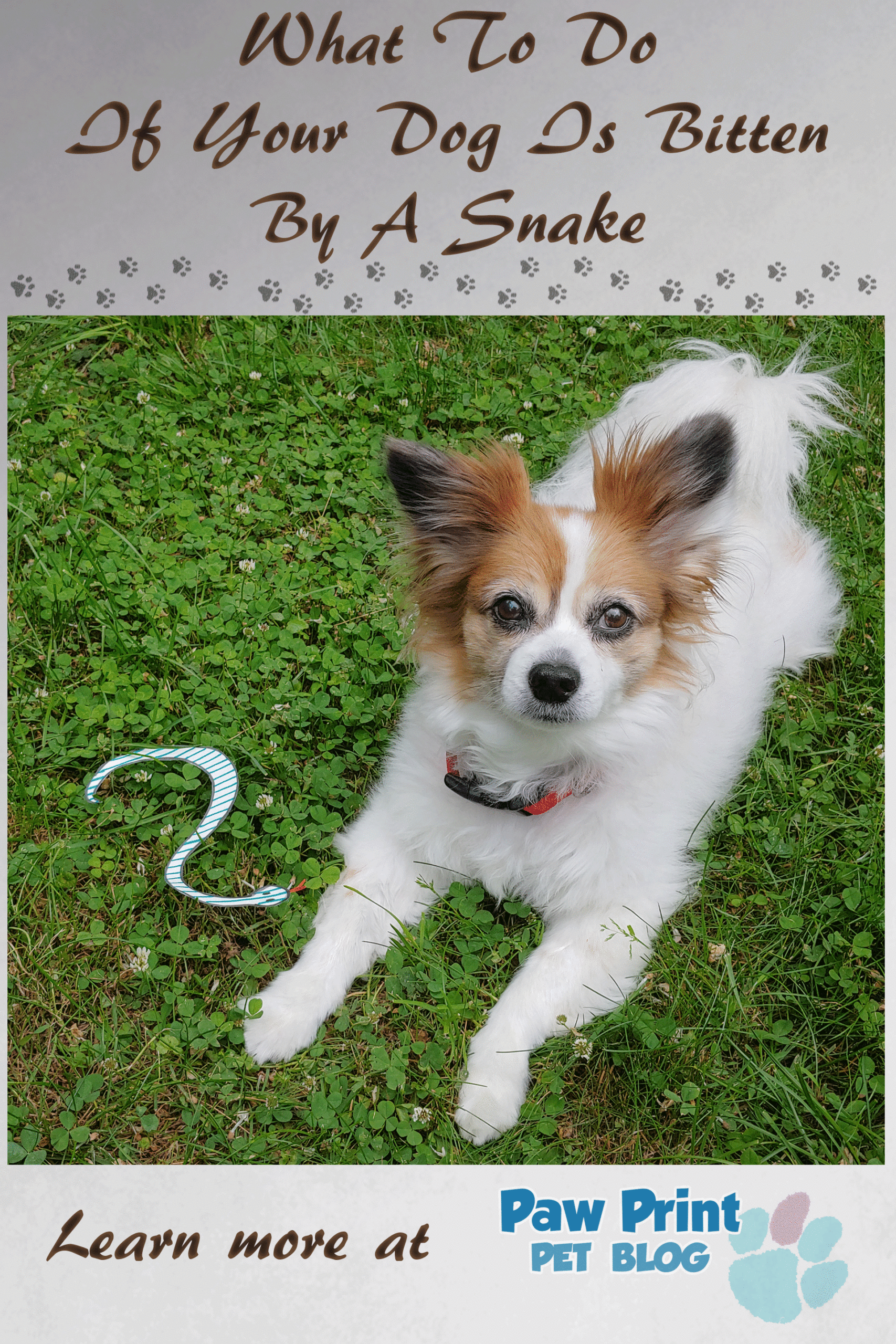
    What To Do If Your Dog Is Bitten By A Snake

    June 23, 2022

    dog bitten snakeIt’s crazy to me that it’s already officially summer!  For me and my two dogs, Kitsune the papillon and Fenrir the Alaskan klee kai, the nice warm weather means enjoying as much time as possible outside!  I especially love hiking with my dogs, yes even though they are small.  Spending time out in nature, just me and my pups, can be so relaxing.  But that doesn’t mean that I can completely let my guard down.  Not to be a complete downer, but there are a lot of potential dangers lurking in the woods.  Like snakes…in the grass.

    When Kitsune was younger, he was bitten by a garter snake on the paw during one of our walks.  Thankfully, garter snakes, the most common snake species where I live, are non-venomous.  They are relatively small as well, so a bite from one isn’t really a bit deal.  Still, the bite on Kit’s paw was bad enough that it caused him to cry out, and limp a bit afterwards.  There was a bit of swelling and the bite area seemed to be tender.  As  directed by his vet, I gently washed Kit’s paw and had him rest for the rest of that day.  By the time I took him out to use the bathroom later that day, he was putting weight on his paw normally again.

    We were lucky that the snake that bit Kit wasn’t venomous.  There are four main types of venomous snakes in the United States – Coral Snakes, Rattlesnakes, Copperheads, and Cottonmouth/Water Moccasins.  How your dog reacts to a snake bite will depend on many factors such as what kind of snake he/she was bitten by, the site of the bite, the age of the snake, etc.

    Post Contents:

    • 1 Here are some steps to take if you know, or think, your dog has been bitten by a snake:
    • 2 Did you know…
    • 3 General snake bite care
    • 4 Knowledge is power

    Here are some steps to take if you know, or think, your dog has been bitten by a snake:

    1. Stay calm and try to safely identify the snake if possible.  Take a picture of the snake if you can do so quickly and safely.  If you don’t know much about snakes, just try to remember as much about it as possible.
    2. If you know the snake in question is a venomous species, or you are unsure, get your dog to his/her vet for treatment.  It may take time for symptoms to develop if the snake was venomous, and the sooner you get your dog medical care the better.
    3. Some sites will recommend using a tourniquet after a bite by a venomous species, however most vets now seem to recommend you forgo spending time doing this yourself and just get your pet into a vet ASAP.
    4. Keep your dog as quiet and calm as possible.  This may help to slow down the rate at which venom is spread.
    5. If you need to travel to get to a vet and your dog is experiencing a lot of swelling, benadryl may help.  If you don’t know the dosage for your dog call your vet and tell them you’re on your way, but ask how much benadryl is safe to give in the meantime.

    Did you know…

    The correct terminology for an animal, such as a snake, that bites or stings to inject toxins is “venomous”.  “Poisonous” refers to animals that are toxic when eaten.  It’s easy to think of it this way.  A venomous animal is dangerous if it bites you.  A poisonous animal is dangerous if you bite it!

    General snake bite care

    For most snake bites, venomous or not, your vet will probably shave and clean the area.  Depending on the severity of the bite your vet may prescribe medications such as antihistamines, pain medications, and/or antibiotics to prevent secondary infections.  If the snake was venomous your dog will most likely require strict motoring.  Antivenom can be given if necessary.  Your dog may require additional medications and supportive care based on the severity of symptoms.

    Knowledge is power

    Luckily, I’m quite familiar with our local snake species.  Back when Kit was bitten, I knew right away that the snake was nonvenomous.  With his vet’s blessing, I opted to care for and monitor Kitsune at home.

    I know not everyone likes snakes, but it’s always a smart idea to have at least a basic knowledge of what species are present in your area.  It can save you a lot of stress to be able to identify when a bite has occurred from a nonvenomous species, or to be able to ID venomous species so you, or your pet, can receive the correct treatment as quickly as possible.

    Comment below, has your pet ever been bitten by a snake?

    dog bitten snake

    Pet Tips

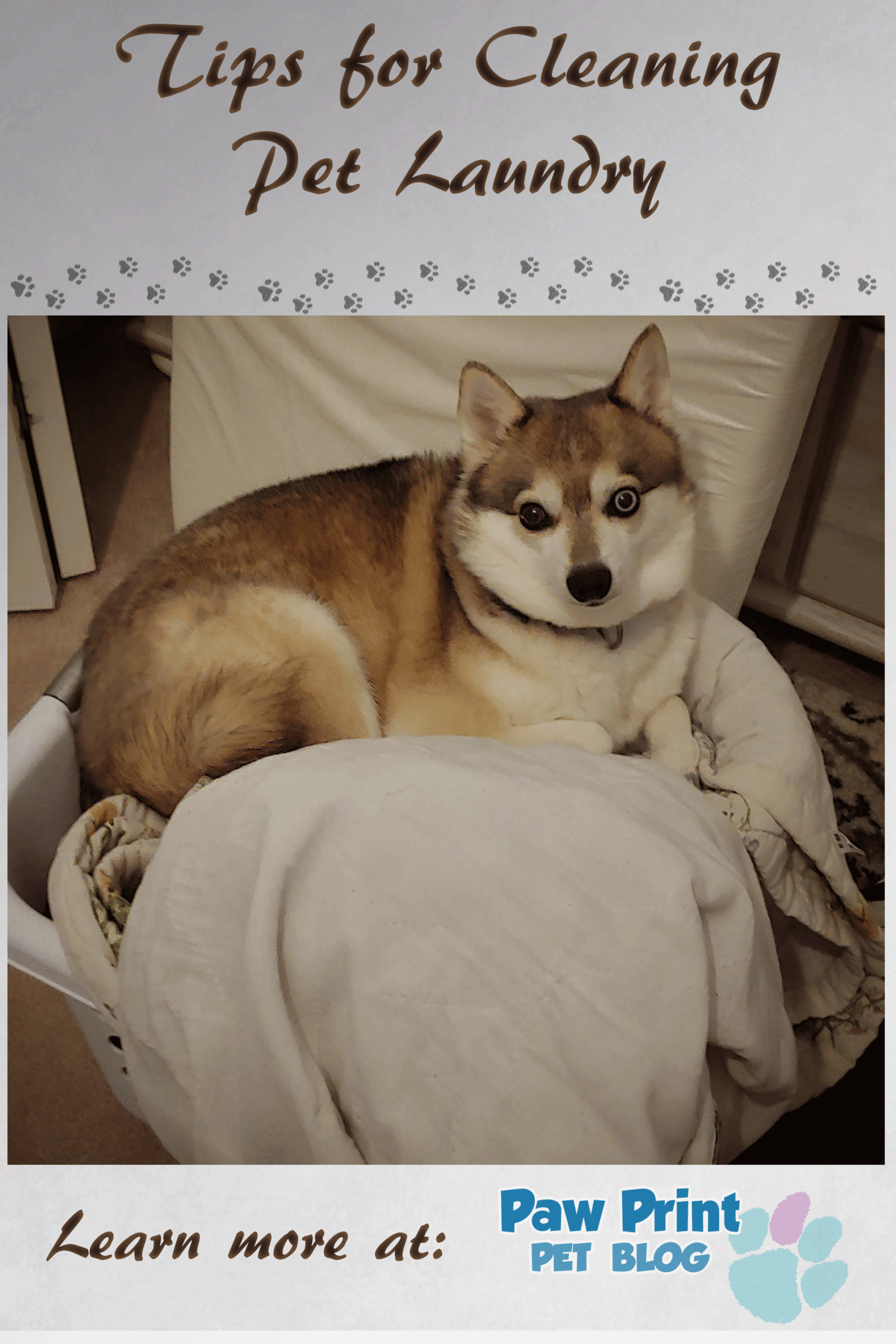
    How I Clean Pet Laundry

    June 16, 2022

    My papillon, Kitsune, suffers from flea allergy dermatitis.  When I say suffers, he really suffers.  A single flea bite is enough to send him into a frenzy where he’ll scratch and bite at himself until he bleeds.  He sometimes loses spots of fur, and his skin gets dry and crusty.  Yeah, it’s not pretty.

    Luckily, since we moved out of the city, we haven’t had to deal with fleas.  Still, because of how badly Kitsune reacts to them, I make sure to use preventatives in the warmer months.  A big part of keeping fleas and other pests at bay is making sure that our house is cleaned often.  Plus hey, who doesn’t like a nice clean house?

    Seasonal allergies, especially to tree pollen, are also an issue at our house.  My partner, Chris, and I both deal with allergies, especially in the spring/early summer.  Keeping the dogs, and our home, clean goes a long way towards keeping major allergy attacks at bay.  Besides vacuuming often, I do my best to keep up with the laundry – the pet laundry especially.

    Post Contents:

    • 1 I keep pet laundry separate.
    • 2
    • 3 Before washing my pets’ laundry, I remove as much fur from it as possible.
    • 4 Finding the right laundry products…
    • 5 I dry most of my pets’ laundry in the drier.
    • 6 Washing and drying plush toys with squeakers has been hit or miss for me. 
    • 7 The types of things I’ll usually wash in machines include blankets, some plush toys, pet beds, and dog clothing.
    • 8 How often is too often?

    I keep pet laundry separate.

    pet laundryIt’s not that the dogs, or their laundry grosses me out, but the dogs’ stuff will often have fur on it.  I like to avoid transferring this to our clothing if at all possible.  Kit and Fen spend a lot of time outdoors, so them tracking in pollen on their fur is a concern during allergy season.  I use a plastic hamper to hold pet laundry until laundry day.  It’s not the prettiest method of storing dirty laundry, but it gets the job done.  I especially like that it’s easy to clean out and disinfect as needed.

    Before washing my pets’ laundry, I remove as much fur from it as possible.

    For items like blankets or plush toys, I’ll shake them out a bit before washing them.  Larger items like pet beds can be vacuumed with a vacuum hose.  I don’t personally pretreat any of my pet items, so I can’t offer much advice there.  I don’t usually have issues with major stains on pet items and if I did, my dogs wouldn’t care.

    Finding the right laundry products…

    If you purchase laundry products, look for detergents that are hypoallergenic and free from perfumes and dyes.  Pets can have sensitive skin and dogs in particular are sensitive to strong odors.  For this reason as well, fabric softener isn’t usually recommended when washing pet laundry.

    I dry most of my pets’ laundry in the drier.

    I’ve noticed that doing so helps to remove any remaining stuck on fur.  Be careful if you’re drying things like dog sweaters or fuzzy plush toys.  Pet clothing, like human clothing, will often have a tag with care instructions that will tell you if it’s safe to be machine dried or not.  Plush toys that have fuzzy fur can be destroyed if the drier is too hot, so it’s often best to air dry them.

    Washing and drying plush toys with squeakers has been hit or miss for me. 

    Sometimes they’ll come out unscathed, but other times their squeakers will be ruined.  If I’m washing a toy that my dogs are rather impartial too, I’ll often take the risk and throw them in the washing machine.  If it’s something they especially like, I’ll err on the side of caution and opt to hand wash.

    The types of things I’ll usually wash in machines include blankets, some plush toys, pet beds, and dog clothing.

    Things like collars, leashes, and the dogs’ harnesses I usually just hand wash.  That way I don’t have to worry about them getting tangled up in the machines, plus they are easy to hand wash, and dry pretty quickly.

    How often is too often?

    Like with human laundry, there is a fine line between keeping clean and over-washing.  Over-washing things like dog blankets, beds, and toys can decrease their lifespan.  Not washing them often enough can leave our homes smelling not so fresh.  So how often is too often?

    pet laundry

    What is with dogs and wanting to lay in freshly washed laundry!?

    Well, it depends.  In the spring and summer, for example, I tend to wash my dog’s bedding every other week.  This keeps it clean, parasite (fleas and ticks), and pollen free.  In the winter, however, when parasites and pollen aren’t really an issue, I tend to let dog bedding go longer in between washes.

    Plush toys, leashes, harnesses, and collars I wash as needed.  My dogs don’t wear clothes very often, but when they do I generally have them wear something a few times before washing.  But your mileage per wash will vary depending on a lot of different factors, such as the climate where you live, the season, and how dirty your dog tends to be.

    Did I forget anything?  Comment below!  Let us know if you have any tips for keeping pet laundry fresh and clean or just share what you do with your pets’ laundry.

    pet laundry

    Papillons

    Papillon Breed Profile

    June 10, 2022

    Papillon is French for butterfly.  I’ve always felt it was a fitting name for the breed of dog sometimes otherwise referred to as continental toy spaniels.  Named for their huge, fringed, ears that are marked to resemble butterfly wings, Papillons are (normally) dainty, elegant dogs.  Thought not many would argue against their beauty, to talk about papillons’ appearance only would be doing the breed a huge disfavor.  More important than their striking appearance, to me at least, is their extreme intelligence and amazing personalities.

    Post Contents:

    • 1 Breed History:
    • 2 Appearance:
    • 3 Grooming:
    • 4 Low, But Not No, Maintenance
    • 5 Temperament:
    • 6 Small but Mighty!
    • 7 Health:
    • 8 Ideal Owners:

    Breed History:

    “Portrait of Clarissa Strozzi” 1542

    Apparently it’s not only modern day lovers of the breed who find these tiny dogs adorable.  Because the evolution of the papillon is well documented through ancient works of art.  Although they were not yet called papillons, the earliest Italian paintings of small dogs thought to be the ancestors of today’s papillons are from back around the 15th century.  Dogs resembling papillons are quite commonly found in early paintings of royal or wealthy merchant class families.  Papillons are thought to be one of the oldest toy breeds in European history.  Descended from a type of spaniel, the breed has changed a bit over the centuries – most notably becoming smaller than their ancient cousins.

    • Papillons in Fine Art
    • Marie Antoinette’s Papillons

    Appearance:

    papillon

    licensed under the Creative Commons Attribution 2.0 Generic license. Photo by Jen Smith.

    Today’s papillons are considered to be a toy breed of dogs.  Per AKC standards, they should stand between 8 and 11 inches tall at the withers.  There is no set standard weight for the breed, however they are generally under 10 lbs.  My papillon, Kitsune, is an example of a throwback.  Throwback papillons are individuals who grow to be larger than what the current breed standard calls for.  This is thought to be caused by ancient genetics, from back when the breed was larger, cropping up in modern bred dogs.  Other reasons for a papillon growing to be oversized can include poor breeding, and too many snacks (being overweight).

    Via Pleple2000, Wikimedia Commons.

    The most recognizable physical trait of the papillon is, of course, their large, fur fringed ears.  One thing to note is that some papillons, referred to as phalenes (phalene means moth in French), actually have drop ears.  Papillons and phalenes are the same breed, with the only difference being how their ears are held.

    Generally, papillons are a dainty breed that should have an elegant appearance.  Per the breed standard they should have soft, long, single coats.  The fur on their face and front of the legs remains short, but grows long on the ears and over the rest of the body.  The breed standard says they should always be parti colored – or white with patches of other colors.  To complete their butterfly look, their ears should be a color other than white.  This color should extend down over their eyes, creating a mask like pattern.  Their bodies can be any color, and are usually mostly white with patches of color.

    • Official Papillon Breed Standard
    • The Pros and Cons of Owning a Papillon

    Grooming:

    Papillons are often referred to as a “wash and wear” breed.  Despite their long hair, they are often considered to be low maintenance when it comes to grooming.  Frequent brushing goes a long way towards keeping your papillon clean and tangle free.  I personally use a comb on my papillon.  Many types of pet brushes designed for shorter coated dogs will only brush the surface fur of a papillon.  Because mats forming close to the skin are both common and painful for papillons, you want to ensure you are gently brushing through the entire length of their fur, all the way down to the skin.

    Trimming the fur of papillons is a hot button issue amongst fans of the breed.  Opinions range from it being sacrilege to clip a papillon’s fur short, to it being perfectly acceptable.  I’ve never personally had any issues with owners who choose to keep their papillon’s fur clipped short, as long as enough fur is left to protect the skin from sunburn.  Papillons are supposed to be a single coated breed, meaning that they lack the dense insulating undercoat that some dogs have.  Clipping a single coated dog does not have the same drawbacks that clipping a double coated dog does.  In fact, I’ve been clipping my papillon’s fur for over 13 years now with never a single issue caused by doing so.

    Low, But Not No, Maintenance

    Whether you choose to leave your papillon’s fur naturally long or trim it up a bit, care should be taken to clean up key areas including the feet and personal areas.  Long fur growing between the paw pads on the bottoms of the feet can cause your papillon to loose traction on slippery surfaces, and can attract dirt and burrs.  Trimming the fur around your dog’s private parts will go a long way towards keeping your furry friend cleaner.  If fur on the tail, or any other part of the body, gets long enough to drag on the floor it should be trimmed to help maintain cleanliness and for the safety of the dog.

    Show groomers also typically trim the hair on the back of the hocks and shape the fur on the top of the feet.  Some show breeders will remove whiskers as well.

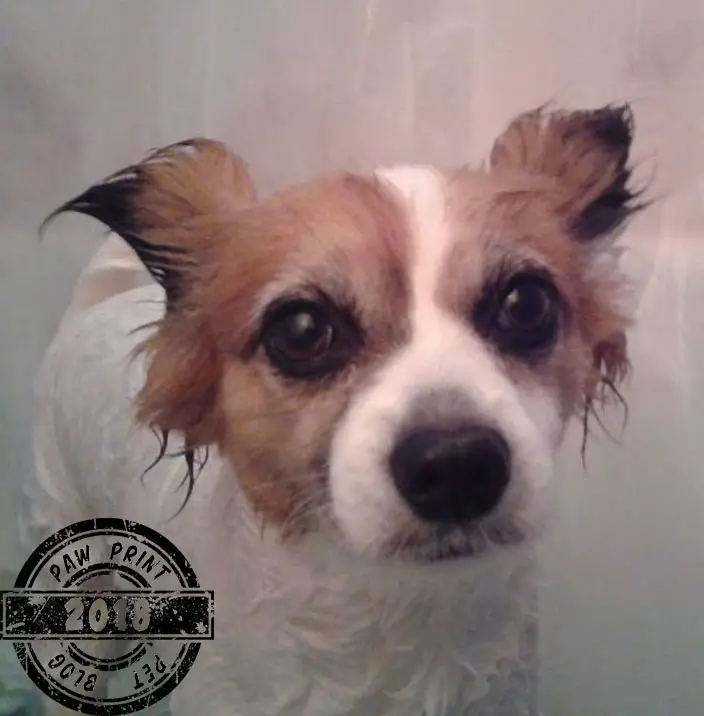
    Grooming isn’t all about the fur!  Make sure to also clean your papillon’s ears and teeth, and trim his/her nails.  Bathing can be as frequent or as sparse as needed for your individual dog.  My papillon suffers from seasonal allergies so, to help keep him clean and to decrease his allergy symptoms, I bathe him once a week for most of the year.  For best results, always use a high quality shampoo designed for dogs.  Detergent free shampoos are less harsh on the skin and fur especially if you bathe often.
    • Show Grooming
    • How to tell if a dog has a single or double coat

    Just to note: It’s important to remember that each dog, like each person, is an individual.  Breed profiles can give you a general idea of what you can expect from a specific breed of dog however, not all dogs will conform to breed expectations. 

    Temperament:
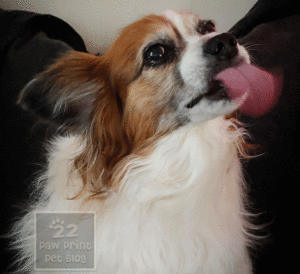
    papillonFinally I get to write about what really draws me to this breed!  Papillons are true beauties with brains.  They hold a place of honor amongst the list of top 10 smartest dog breeds.  My personal papillon is also highly food motivated.  This combination means he’s a quick study, usually learning (and remembering) a new trick after only a single training session!

    Papillons, in general, are social butterflies.  My Kitsune personifies this well. I don’t think he’s ever met a stranger.  He loves both people and other animals.  I said other animals on purpose because I don’t just mean other dogs.  Kit has always been very gentle and sweet with other types of animals as well, including those that are much smaller than he is.  That doesn’t mean all papillons will be like this.  Their spaniel ancestry means that some papillons do have a higher prey drive.

    Papillons are said to often times not recognize their small stature.  Care should be taken around dogs who are larger than they are, because papillons will not often back down from a fight even when the odds are not at all in his/her favor.

    Small but Mighty!

    Although they may look like dainty little house dogs, in reality most papillons are anything but.  This is a very high energy breed, and an ideal family will be able to provide their papillon with plenty of physical and mental exercise.  Most papillons can easily keep up during even long walks or hikes, and papillons excel at dog sports such as agility.  Be careful, because a bored papillon usually doesn’t mean good things for your belongings.  Papillon’s high intelligence paired with their energy level means that they are experts at getting in to trouble when not provided with antiquate outlets for their energy.

    Papillons can be barkers and most will alert their owners to things like people at the door, but their reactions rarely go beyond barking.  This is not a breed normally prone to shyness, anxiety, or aggression.  My papillon will bark if he hears someone at our door, but if anyone ever broke into our home I have no doubt he would great the intruder with a wagging tail and a toy.

    If you’re looking for a ‘one person’ dog this may not be the right breed for you.  Kitsune knows who his family members are, but in a house full of people he’d be just as likely to snuggle with someone he just met as he would be with me.  Speaking of snuggling – opinions seem to vary about whether or not this breed is snugly.  My papillon has earned himself the nickname “King of Snuggles” so I think you know where my opinion lies.  However, I’ve heard that some individuals are much more independent.
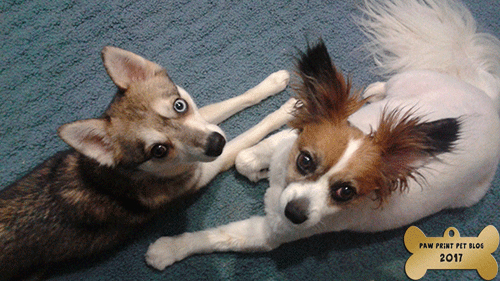
    Health:

    The average lifespan of a papillon is said to be between 12 to 15 years (I wish they lived forever!).  If well bred and cared for, they are generally a healthy breed.  Some common health issues to look out for include dental problems, luxating patellas, collapsed trachea, and progressive rental atrophy.  My papillon suffers from quite a few different allergies, and from talking to other owners this also seems relatively common in the breed.  Back/spinal issues such as IVDD also seems to be relatively common, especially in older papillons.

    Ideal Owners:

    papillonPapillons can make great pets even for apartment dwellers.  Generally, the main issues to be considered would be the fact that the breed does tend to bark a lot, and that you have to make sure you give them enough exercise and mental stimulation.  If those issues don’t put you off then I’d say most papillons would make great apartment pets.  Because they are usually friendly and social, living in a busy building full of other people and dogs shouldn’t bother them.

    An ideal papillon owner would be someone who’s looking for a small dog to accompany him/her out on adventures!  Papillons are small, but very high energy.  They love getting outside to explore new areas and meet new people.  Though they may look regal and dainty, these dogs are in no way couch potatoes.  Don’t let their small size fool you – papillons live life large.  They have large personalities, trumped possibly only by their capacity to love.  If you’re an active family or individual looking for a small dog to accompany you on big adventures, a papillon just might be the right dog for you!

    Do you have a papillon of your own?  Tell us about him/her in the comments below!  If anyone has any questions feel free to ask those as well, I’ll do my best to answer them.

    papillon

    Pet Tips, Adventure Dogs, Dog Health, Small Dogs

    My Favorite Harnesses for Hiking with My Small Dogs

    June 2, 2022

    I love hiking with my two small dogs, Kitsune the papillon and Fenrir the Alaskan klee kai.  Yes, small dogs, and even seniors (my Kitsune is 13!) can hike!

    Post Contents:

    • 1 Harnesses > Collars for Small Dogs
    • 2 The Trachea is a Fragile Thing…
    • 3 And So are the Eyes!
    • 4 Harnesses for the Win!
    • 5 Not All Harnesses are Created Equal…
    • 6 So, What Type of Harnesses do I recommend?
    • 7 What I use on my own Dogs…
    • 8 Keep an Extra on Hand!
    • 9 Dispelling Myths

    Harnesses > Collars for Small Dogs

    harness hiking small dogsSome dog breeds, mostly smaller breeds, greatly benefit from being walked on a harness rather than having a leash attached to their collars.  This is because smaller dogs are more prone to developing tracheal damage from the pressure of collars against their delicate necks, among other reasons.  “Smaller breeds are more prone to it because they are small in size and naturally have smaller, weaker cartilage in the windpipe” (source).

    Collapsed trachea is a condition that is relatively common in small and toy breeds of dogs.  Using a collar to walk a small dog is one of the risk factors for the development of this condition.  Using a properly fitted harness instead of a collar to walk your dog doesn’t guarantee that your pet will never develop collapsed trachea.  But it can lower their risk.

    The Trachea is a Fragile Thing…

    A dog’s trachea, or windpipe, much like a humans, is supported and held open by rings of cartilage that circle around it.  In a dog suffering from collapsed trachea, the cartilage rings weaken and allow the trachea to become loose.  The trachea no long has the proper amount of support to keep it open normally, so it collapses down against itself.  The symptoms of collapsed trachea depends on how severe the condition is, and can range from a mild cough to difficulty breathing.

    To reduce your small dogs chances of developing this condition, walking them on a harness is recommended. Collars can still be used to hold ID tags. You should avoid holding your small dog by the collar, unless it’s during an emergency.

    And So are the Eyes!

    Interestingly enough, I recently learned that putting pressure against your dog’s neck can also negatively impact their eyes.  Too much force against a dog’s neck can significantly increase their intraocular pressure (source).  This can be particularly dangerous to dogs already at risk for, or with, eye issues such as glaucoma, or thin/weak corneas.

    Harnesses for the Win!

    A harness, when fitted correctly, will take pressure off your pets neck. There are many different types and styles of harnesses, so picking the right one for your dog might take some trial and error. Harnesses come in as many colors and designs as collars do, so you can still have fun choosing fun styles for your pet!

    Not All Harnesses are Created Equal…

    harness hiking small dogs

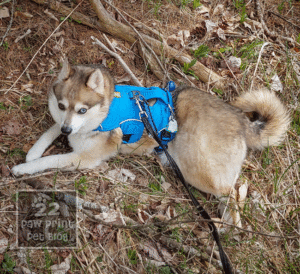
    This is the harness Kitsune was wearing when he hurt his shoulder.

    In my opinion, it’s important to select a harness that not only fits your dog well, but that also doesn’t interfere with their natural gait.  This is especially important for hiking, as your dog will, most likely, not only be walking but will also have to navigate obstacles that may involve climbing, jumping, etc.  Non-restrictive harnesses should leave your dog’s front legs and shoulders free to move naturally.

    Harnesses with straps that run across the front of a dogs’ chest and over the shoulders are not only restrictive, but can lead to injury.  I, unfortunately, learned this the hard way while using this type of harness on my papillon, Kitsune.  Back in 2019, Kit suffered from a soft tissue injury in his shoulder when an off-leash dog ran into him at the park.  When the dog plowed into him, the front strap of his harness put enough force against his shoulders that it caused injury.  His vet confirmed that he, most likely, would have escaped the incident unscathed if it wasn’t for the style of harness he was wearing.  I know it was kind of a freak accident, but ever since then I refuse to use this style of harness on my own dogs.

    Oh and, (not so) fun fact, Kit was also able to back out and escape from this type of harness.

    Kit’s new harness!

    So, What Type of Harnesses do I recommend?

    My favorite style of harnesses for small dogs, and the type I use on my own dogs, are Y style harnesses.  When fitted correctly, Y style harnesses leave your dog’s front legs and shoulders free to move naturally.

    Out of all the different harness we’ve tried over the years (check out our Buddy Belt review!), I have a few favorites now that have become my “go to” harnesses.  Of course, what harness works best will depend a bit on your individual dog.

    What I use on my own Dogs…

    harness hiking small dogsFor my Alaskan klee kai, Fenrir, there’s only one type of harness that I’ve felt comfortable using on him for years now.  That’s the Ruffwear Webmaster harness.  Fenrir can be a bit of an escape artist.  But since switching to the Webmaster for him he hasn’t been able to escape from his harness a single time!  This is especially important since, being a northern breed, I’m not as confident about Fenrir’s recall as I am Kitsune’s.
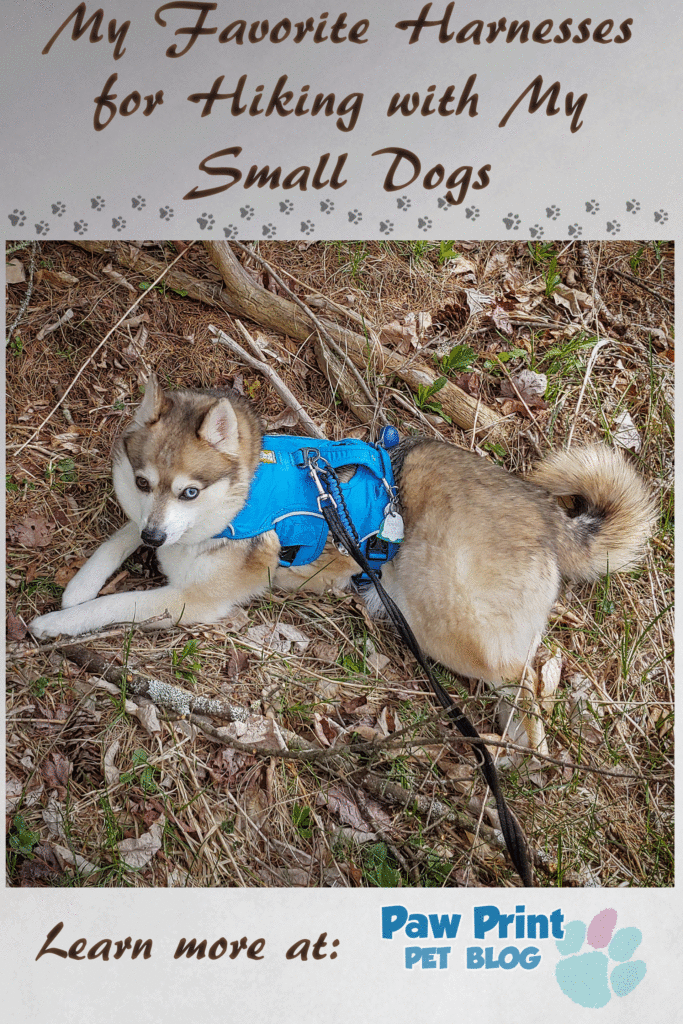
    While Ruffwear harnesses are awesome, they are also quite expensive.  I thought about getting a Ruffwear Front Range harness for Kitsune, but then found this similar/knock off brand instead.  Kit’s been wearing that Juxzh Truelove harness since 2019 and it’s held up really well!

    Lupine makes some great, simple, nylon harness if you’re looking for something on the lighter side.  Kitsune also has a Roman style Lupine harness.  I use it in the summer to keep him cooler.  It’s also great in the winter if I need something that’ll fit over a sweater.  Lupine also has an amazing, even if chewed, lifetime guarantee on their products!

    If you have a really small dog, or a puppy, Puppia harnesses are great.  I used Puppia harnesses for both Kit and Fen when they were tiny little puppies.  I had trouble finding another type of harness that would fit them when they were so little!

    Keep an Extra on Hand!

    I learned this the hard way!  It’s best practice to keep at least one well fitting spare harness around for each of your dogs.  When Fenrir was younger, he chewed up his harness!  These days I’m not so much worried about my dogs chewing their harnesses, but hiking can be hard on harnesses.  It’s great to have a spare on hand for times when I need to wash my dogs’ regular harnesses.

    Dispelling Myths

    I feel the need to say, it’s a myth that wearing a harness causes dogs to pull!  Pulling on leash is a training issue, plain and simple.  Some dogs may pull more while on a harness verses a collar because it’s more comfortable for them to do so.  Harnesses don’t put pressure on their necks while pulling, which is what discourages some dogs from excessively pulling while being walked on a collar.  Dogs 100% can be trained to walk on a loose leash while wearing a harness!

    Comment below!  Do you use a harness for your dog(s)?  Do you have any brands/styles you especially like?

    harness hiking small dogs

    Dog Health, Pet Tips

    How Much Water Should Your Pet Drink?

    May 26, 2022

    Does your pet drink enough water?

    Two weeks ago now, I took Fenrir, my Alaskan Klee Kai, in for his annual checkup.  Thankfully he got a clean bill of health.  Except for the fact that 3+ years after his original diagnosis, he still tests positive for Lyme disease.  The first time he tested positive was back in 2019.  Despite little Fen otherwise being the picture of health, I decided to follow up on his positive Lyme snap test.  Our vet ran a Quant C6 blood test (to check his Lyme antibody numbers).  We also ran a urinalysis to check his kidney function.  In some unfortunate cases, Lyme disease in dogs can lead to something called Lyme nephritis, a potentially deadly condition when Lyme disease impacts the kidneys.

    Collecting urine samples from little male dogs is quite the task, let me tell you!  It took me a handful of times, and getting peed on more times than I care to admit, before I got a sample that was good enough to bring into the vet.  I didn’t end up dropping off Fen’s urine sample until around a week after his original appointment.  That meant I had plenty of time to think…scratch that, overthink, things.

    Post Contents:

    • 1 Fen is ok!
    • 2 How much water should our pets drink?
    • 3 How to encourage your dog to drink more water?
    • 4 And with that, I need to go get some water…

    Fen is ok!

    Water Pet DrinkThankfully, earlier this week Fen’s vet got back to me with his test results.  His Lyme antibody numbers are low (that’s a good thing) and the tests we ran to check his kidney function came back normal!  I’m SO happy that that’s one less thing for me to stress about, for now.
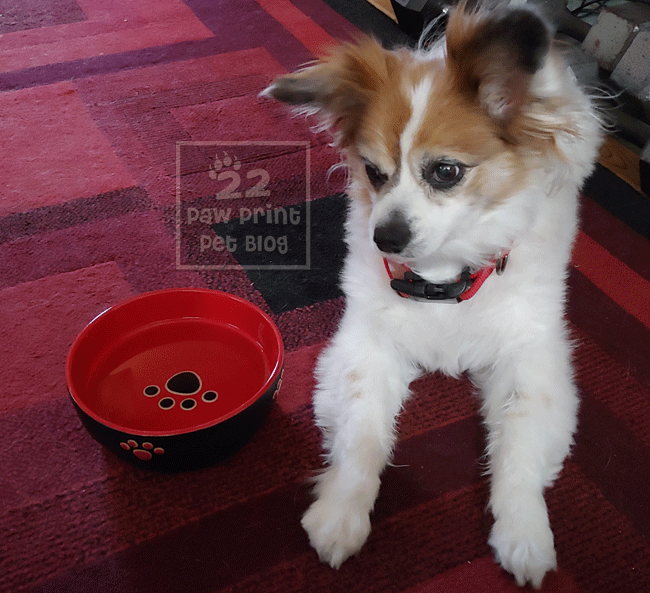
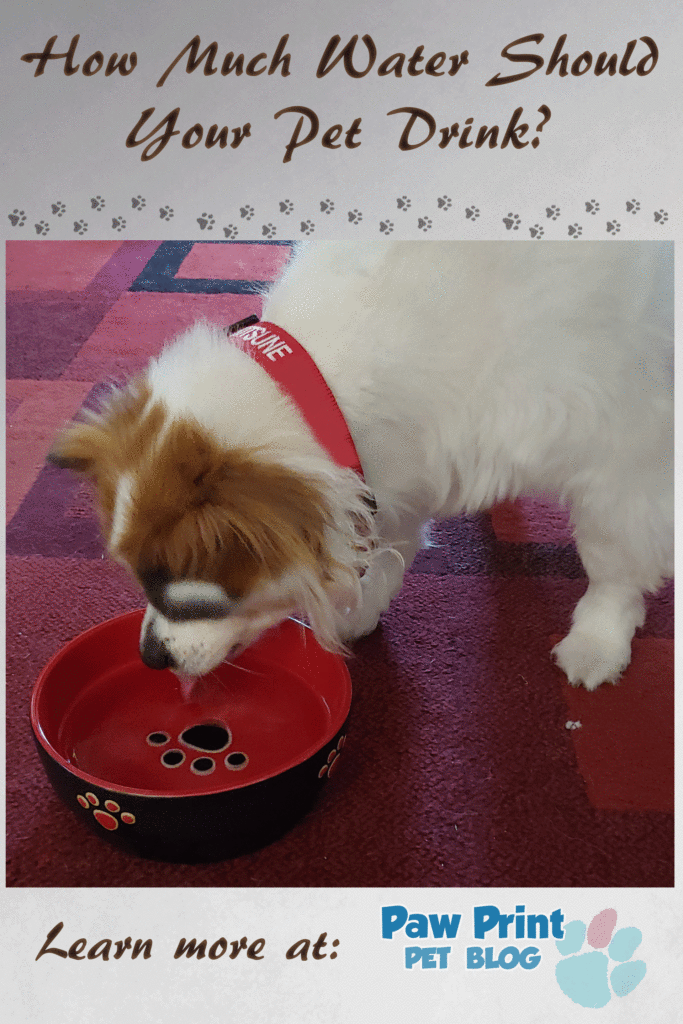
    All this research about kidneys and urine tests really put the topic of dogs and how they process water in the forefront of my brain.  Despite Fen’s kidney results all coming back normal, his vet did mention that his urine was quite concentrated.  This can be normal sometimes, such as when you’re testing first morning urine.  But, it can also be a sign of dehydration.

    How much water should our pets drink?

    I think every good pet owner already knows, pets should have constant access to fresh, clean water.  Giving your pet clean water everyday is one of the easiest things you can do for them.  After all, unlike topics such as selecting your pet’s food, dental products, deciding how often to bathe them, and even what type of bowls to use for them, giving your pet water daily is pretty much a no-brainer!

    But you should be monitoring how much water your pet drinks.   Sudden changes in the amounts of water your pet consumes can be an indication that something is wrong.  In addition, there are health issues that can be caused from not drinking enough (dehydration, kidney issues, organ failure), and even from over drinking (electrolyte imbalances, hyponatremia, bloat).

    How much your pet should drink daily will depend on a lot of factors.  Things such as the weather/temperature, how active your pet is, their size, and diet.  A general rule for dogs is that you want to see them drink around 1 ounce (1/8th of a cup) of water for each pound of body weight daily.  However, this is not a set in stone type of rule.  Because there can be so many different factors that impact how much our pups drink, it’s a good idea to take the time to learn what’s a normal amount of water consumption for your individual pet.  This way, you’ll more easily be able to recognize when/if they begin to deviate from their personal norm.

    Water Pet Drink

    How to encourage your dog to drink more water?

    I’m on a quest now to attempt to up Fenrir’s water intake.  He does drink normally on his own, and (thankfully) his kidneys are healthy, but I think a bit more water daily might do him some good.  Plus, it’s getting warmer here, and we’ve been spending a lot more time adventuring outside.  Staying hydrated is especially important when it’s hot, and when you’re being physically active.

    Around when we moved last September, I switched Kitsune and Fenrir (temporarily, or so I told myself) to kibble.  I was having a hard time keeping up with making their home made diet while we looked for a new rental and packing.  When Fen gets stressed he tends to develop a lot of stomach symptoms too.  I found a sensitive stomach kibble that both dogs seemed to like and do well on.  I had every intention of switching them back to their regular, homemade, diet after the move.  Where the heck have the past 8 months gone!?  We’re still not fully unpacked, by the way!

    Long story slightly shorter, I’m finally getting back to feeding the boys a fresh, homemade diet.  It’s quite a bit more work than just throwing some kibble in a bowl, but I think the added water content in the fresh food will be a good way to up Kit and Fen’s liquid intake, among many other benefits.  I’ve also been offering them dog safe, flavored liquids such as a bit of bone broth or goat’s milk with their meals.

    Using a water fountain verses a regular bowl seems to help encourage some pets, especially cats, to drink more.  I’ve also noticed that my dogs, Fenrir in particular, are picky about their water.  He drinks more if his water is fresh and clean, and less so if it sits for awhile or gets dirty.  I’ve found that cleaning his water bowl and offering fresh water a few times a day seems to encourage him to drink more.  Picky little mister!

    And with that, I need to go get some water…

    Filling your pet’s water bowl each day may mostly be a mindless task.  But monitoring their fluid intake can definitely be beneficial.  Sound off below!  Do you monitor how much water your pet drinks each day?  Has doing so ever helped you discover, or prevent, a health issue?

    Water Pet Drink

    Pet Tips

    Dog Collar Safety

    May 12, 2022

    Dog Collar SafetyPutting a collar on your dog is something so common place that you probably don’t even think much about doing it. Collars and leashes can save lives!  They keep pets away from dangers such as traffic and other animals.  And they can be central to helping lost pets find their way home again. But what a lot of dog owners don’t always realize, or realize too late, is that collars can also be dangerous.
    Post Contents:

    • 1 A sad story…
    • 2 Unfortunately, Damsel is not the only dog who’s lost her life this way.
    • 3 What can you do to help protect your furry friend from collar injuries?
    • 4 It’s important, no matter what your dog is wearing, to supervise your pet.
    • 5 If you are worried about leaving your dog without any form of ID, you can consider getting your pet micro-chipped.

    A sad story…

    Kelly M. never used to think twice about putting a collar on her 5 lb chihuahua, Damsel. All that changed in early 2008, when an unfortunate accident involving her collar cost 6 year old Damsel her life. Kelly explains…

    “I had left food out to defrost on the table when I went to work that day. I kissed Damsel good bye and left her home alone. It’s the same routine that we had followed for the past 4 years. When I got home that night, I found Damsel hanging about two feet from the ground off of one of our decorative metal kitchen chairs. Her collar had gotten caught on part of the chair. She hung herself to death in our kitchen. I was devastated. We think that she was trying to jump up onto the chair, probably to try to get the food off the table, when her collar got caught. I thought I was doing the right thing by leaving her collar on. I wanted her to have ID on in case she ever got out. But instead, my mistake cost my best friend’s life.”

    Unfortunately, Damsel is not the only dog who’s lost her life this way.

    A quick search of the internet and you could turn up hundreds of stories of dogs, large and small, who where killed or injured because of their collars. Some of the stories are about dog’s getting their collars caught on things, like Damsel did. Some of them involve dogs playing and getting their collars caught around the mouths of other dogs. No matter the situation, the stories are not usually happy ones. Even in the best of cases, where someone is around to free the dog, the dogs involved are left frightened, stressed, and sometimes injured. That’s not even getting into the mental anguish that an incident like this can place on the dog’s owners.

    What can you do to help protect your furry friend from collar injuries?

    Dog Collar SafetySome owners, especially small dog owners, prefer to use a harness on their dogs. Harnesses usually go around a dog’s chest and midsection, leaving their necks free. They can be great for walking.  You don’t have to worry about putting any pressure on your dog’s sensitive neck.

    It’s a misconception that all dogs who wear a harness will pull on the leash. Like with many other things, the key is training. Dogs can be trained to walk on a loose leash while wearing a harness. Most harnesses will have a spot where owners can clip their dog’s ID tags, much like a collar would. If a dog’s harness gets caught, since most harnesses do not go around dog’s necks, the chance of strangulation is reduced. However, dogs may still injure themselves due to caught harnesses.

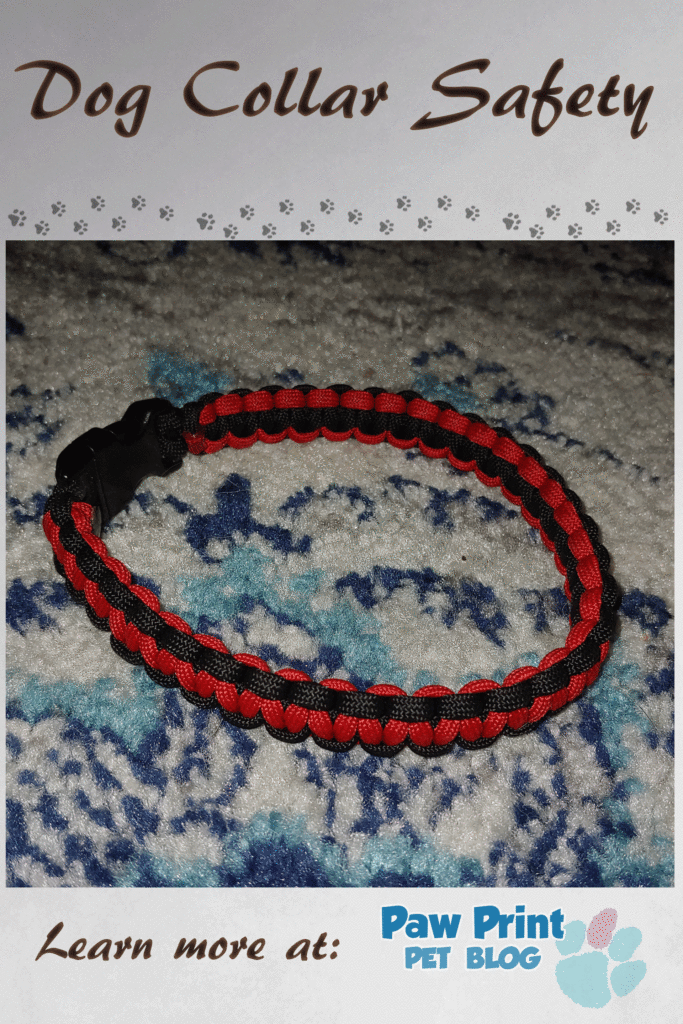
    Did you know that you can also purchase breakaway collars for dogs?  Breakaway collars, more commonly seen for cats, are specially designed to come off when pressure is applied.  The dog collar  I linked too features two D rings on each side of the buckle.  You can basically bypass the breakaway buckle with a leash clip, for those who walk their dog by their collar.

    It’s important, no matter what your dog is wearing, to supervise your pet.

    Do not leave dogs unattended while they are wearing collars, harnesses, or clothing of any sort. During times when you cannot provide supervision, it’s usually best to let your dog remain al natural. This could mean when you leave your dog home alone, when you are sleeping, or even when you are home but just too busy to keep an eye on your pooch.

    Both of my dogs, Kitsune the papillon and Fenrir the Alaskan Klee Kai, wear collars as a form of ID, despite the fact that I do walk them exclusively with harnesses.  But, as you can image, talking to Kelly about what happened to her sweet little chihuahua all those years ago left a lasting impression on me.  I make sure to never leave my dogs home alone, or otherwise unsupervised, with collars on.  At night, and when my partner and I both leave the house, the collars come off.

    If you are worried about leaving your dog without any form of ID, you can consider getting your pet micro-chipped.

    Micro-chipping is a permanent form of ID that doesn’t pose the type of risks that leaving your dog in a collar can. If you absolutely need to leave a collar on your dog, opt for a safety collar.  Some of them have safety buckles that will unclip under pressure (like the one I linked too above), while others feature portions of elastic that will stretch under pressure. Both these types of collars will allow your dog to escape in the event that it gets caught on something.

    Collar safety is something that is often times overlooked by pet owners. But choosing the correct collar, and remembering to always supervise your pet while they’re wearing a collar, can mean the difference between life and death.  Luckily, safety collars and harnesses come in many shapes, sizes, and colors, so you can choose a safer option for your pet without hampering your pooch’s style.

    This post originally went up on 6/13/2016.  It has been edited for readability and to add relevant information. 🙂

    Dog Collar Safety

    Dog Health, Pet Tips

    Can Dogs Eat Zucchini?

    April 30, 2022

    Post Contents:

    • 1 Can Dogs Eat Zucchini?
    • 2 Do Dogs Like Zucchini?
    • 3 Benefits Of Feeding Dogs Zucchini
    • 4 Any Precautions?
    • 5 Remember that no one food, no matter how healthy it is, will be a complete diet for your dog.  Zucchini is an awesome snack, but it should only be fed in addition to a healthy, well balanced diet.

    Can Dogs Eat Zucchini?

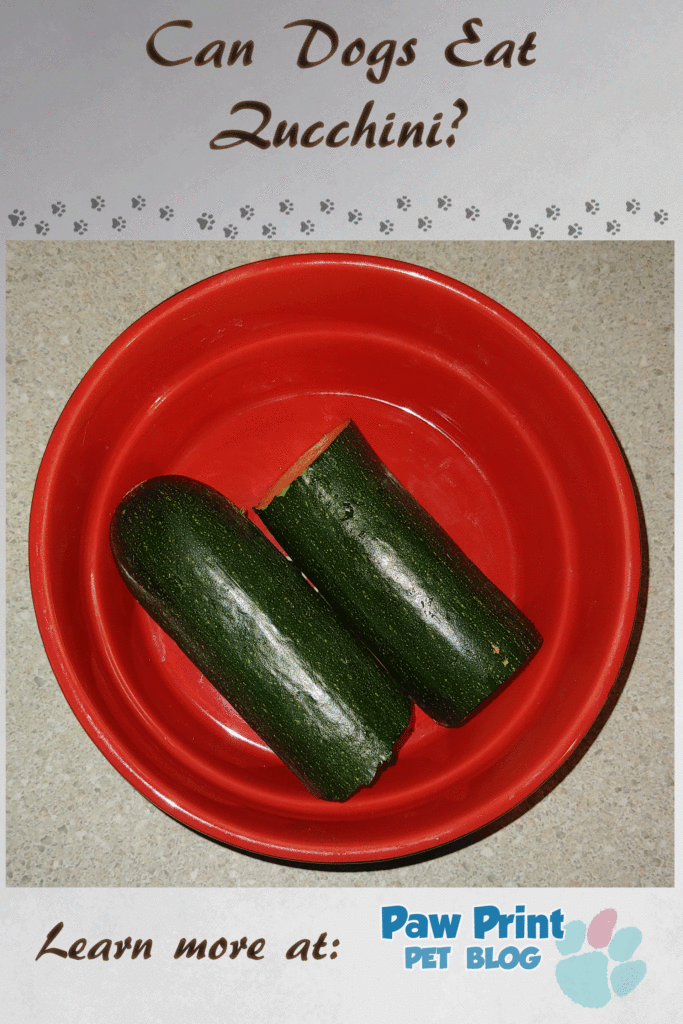
    dogs zucchiniI kind of already answered this question the other day, when I posted about winter squash.  As I said in that post, “all varieties of squash are safe for dogs to eat.”  Zucchini is a squash!  It’s a type of summer squash, rather than the winter squashes I posted about previously.  But it is a squash, nonetheless, and yes, zucchini,  like all other squashes, is safe for dogs!

    Do Dogs Like Zucchini?

    Mine do!  Surprisingly, even my Mr.Fen will eat it.  Most people don’t eat it raw, but it’s perfectly ok to offer pieces of raw zucchini to your dog.  Of course, you can also feed it cooked – as long as you cook it plain without any seasoning.  I wouldn’t offer your pup fried zucchini, even if you enjoy it yourself.  But grilled, baked, steamed, or boiled are all fine for your dog.  I personally prefer it grilled, so my dogs have only ever tried it grilled and raw.


    Benefits Of Feeding Dogs Zucchini

    dogs zucchiniZucchini is relatively low in calories.  If your dog enjoys it and needs to shed some pounds, grated zucchini could make a good food topper.  If your dog will chew on it raw, it can also be used as a healthy, low calorie snack.
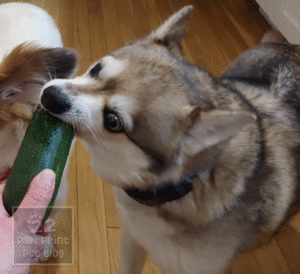
    Zucchinis contain lots of good stuff like vitamins B and C, calcium, folate, beta-carotene, and fiber.

    Any Precautions?

    Nothing major!  Like any new food, you’ll want to introduce zucchini slowly.  Too much of it at once, especially if your dog has never had it before, may cause stomach upset.  If you are feeding cooked zucchini that you prepared for yourself your best bet is to feed only plain pieces to your dog.  If you do decide to share some kind of zucchini dish, make sure all the other ingredients in the recipe are dog safe!

    Unlike the winter squash that I posted about before, it’s perfectly fine to allow your dog to consume zucchini seeds and skin.

    Looking for more ideas for healthy “human” foods you can share with your dog?  Check out my other blogging from A to Z challenge posts!

    Remember that no one food, no matter how healthy it is, will be a complete diet for your dog.  Zucchini is an awesome snack, but it should only be fed in addition to a healthy, well balanced diet.

    dogs zucchiniAnd with that – Z is for zucchini, we have reached the end of the April 2022 Blogging from A to Z challenge!  It’s been real, and it’s been fun – but has it been real fun?  I’m sure my dogs, Kitsune and Fenrir would say so!  I normally give them bits of dog safe ‘human’ foods as snacks, but upped the snack game for sure this April so that I could get lots of pictures for my (almost) daily food posts.
    My biggest challenge completing the A to Z challenge this year was the fact that my laptop, sadly, stopped working about a week into April.  I’ve been having to work, and blog,  evenings and nights using my partner’s computer after he’s done working on it for the day.  I’m exhausted.  Although I’m sure Kit and Fen will be disappointed that the month of snacks is over, I’m going to very much enjoy going back to my once a week blogging schedule!

    Thank you so much to everyone who’s stopped by to visit our challenge posts!  I hope you maybe learned something new, and were motivated to add some fresh foods to your dogs diet.

    dpgs zucchini

    Pet Tips, Dog Health

    Can Dogs Eat Yogurt?

    April 29, 2022

    Post Contents:

    • 1 I Already Wrote About Kefir And How, In Many Ways, It’s Better Than Yogurt…So Why The Yogurt Post?
    • 2 The Benefits Of Giving Dogs Yogurt
    • 3 What To Look Out For
    • 4 I Don’t Regularly Feed My Dogs Yogurt

    I Already Wrote About Kefir And How, In Many Ways, It’s Better Than Yogurt…So Why The Yogurt Post?

    dogs yogurtBesides the fact that I needed a dog safe food that starts with Y, I understand why not every dog owner would want to go through the process of making kefir for their dogs.  Most people are much more open to the idea of feeding yogurt verses fermenting milk in their own kitchen.  It may not be the powerhouse of a probiotic that kefir is, but is yogurt still beneficial?

    The Benefits Of Giving Dogs Yogurt

    dogs yogurtMost people feed yogurt for its probiotic properties.  It’s thought to be able to help with intestinal issues such as gas and upset stomach.  There are a couple of potential problems with this theory.  One is that, like I mentioned in my kefir post, the beneficial bacteria found in yogurt doesn’t normally colonize the intestinal tract.  They act more as helpers, providing food and a proper environment for the good bacteria already in the gut to preform optimally.
    Another issue is that some yogurt brands sold in grocery stores are pasteurized.  This heating process is used to kill off any potentially dangerous pathogens, but it also kills any beneficial bacteria present.

    If your looking for probiotic benefits, I’d look into using a probiotic supplement.

    However, that doesn’t mean yogurt is necessarily bad.  Some yogurts do contain live cultures that, as I already mentioned, can help the good bacteria already present in the gut preform better.  Yogurt also provides calcium, protein, potassium, and folic acid, among other nutrients.

    What To Look Out For

    Make sure you never feed your dog yogurt that contains Xylitol!

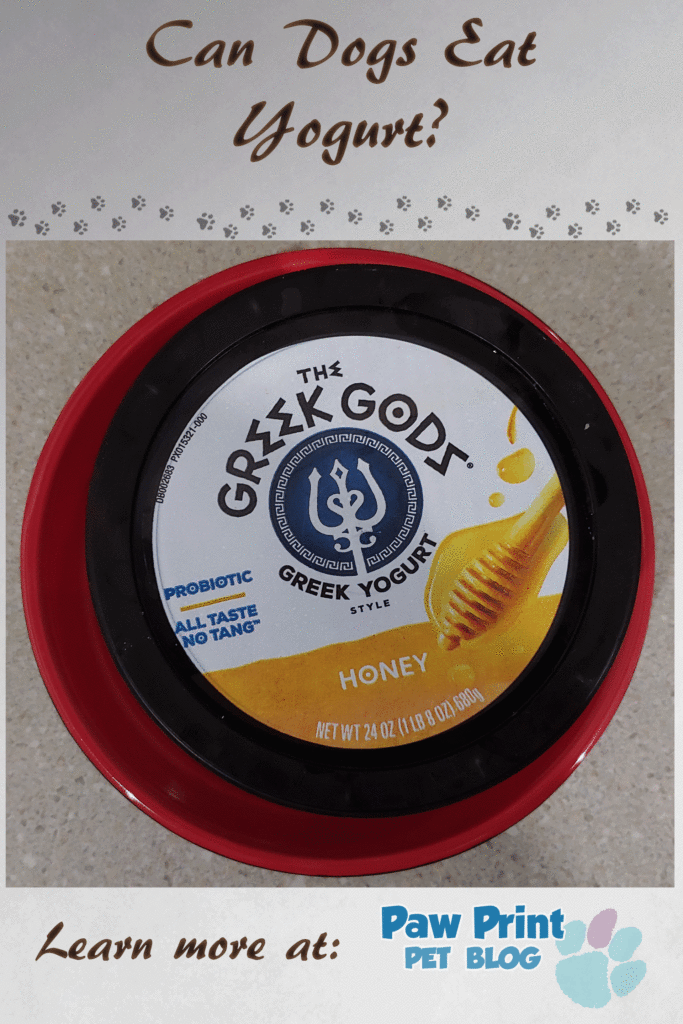
    Plain, unflavored yogurt is best when you’re buying it for your dog.  Flavored yogurts can actually contain high amounts of sugar, which can cause GI upset, pretty much the opposite result that most owners are looking for when they feed their dogs yogurt.  Yogurt can also cause symptoms in dogs who are lactose intolerant.

    I Don’t Regularly Feed My Dogs Yogurt

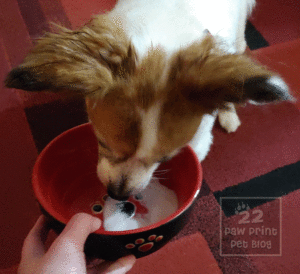
    Especially not since we discovered kefir!  However, I do occasionally eat yogurt myself, and will often let my dogs lick my bowl or yogurt container clean.  If you bought yogurt especially for your dog, I’d offer only small amounts at a time, perhaps as a food topper, at least until you know that your dog reacts well to it.

    dogs yogurt

    Dog Health, Pet Tips

    Can Dogs Eat Xigua – Watermelon?

    April 28, 2022

    Post Contents:

    • 1 Xigua Is Chinese For Watermelon
    • 2 Summer Is Coming.  Can Dogs Eat Watermelon?
    • 3 What Are The Benefits Of Feeding Dogs Watermelon
    • 4 How To Feed Watermelon

    Xigua Is Chinese For Watermelon

    dogs watermelonApparently, it means “western fruit”, because watermelon is not native  to China.  Ok, I have to admit that I had a hard time finding a dog friendly food that started with X for the Blogging (Snacking!) from A to Z April challenge.  So I’m reaching a bit today.  But you have to admit, that cheating a bit for one day out of the 26 isn’t so bad!
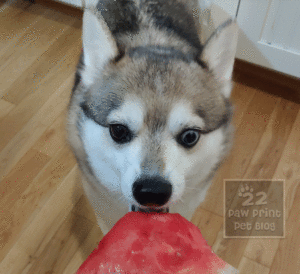
    I can’t believe that the A to Z challenge is already almost over.  It’s been a particularly crazy month, blogging almost daily.  I didn’t share this here before.  Hey, I didn’t want to complain!  But my laptop actually blogged its last around a week into the April challenge.  I’ve been using my partner’s desktop since then, which is awesome, but a bit frustrating because my partner also works from home.  So basically, I’ve been nocturnal for most of April – blogging and working from my partner’s computer at night when he’s done with work.  But I digress…


    Summer Is Coming.  Can Dogs Eat Watermelon?

    dogs watermelonChilled watermelon is one of my favorite summertime snacks.  Of course at our house, you can’t eat without an audience.  If I’m eating something healthy, and pet safe, I’ll often share a bite or two of my snack with my little buddies.  I had pet rabbits long before I ever got my first dog, and most of my rabbits over the years have loved watermelon.  Sometimes I seriously wonder if Kit thinks he’s a bunny.  He begs for fruit and veggies just as enthusiastically as he does meats.
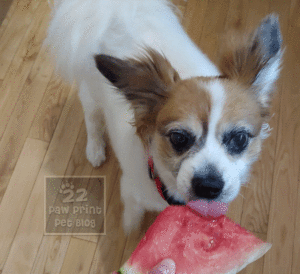
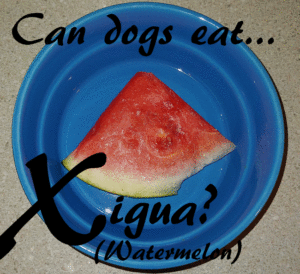
    Well luckily for Kit, watermelon is safe for dogs.  You should feed your dog the red part of the melon, aka the part people also enjoy, and avoid feeding seeds or rind.

    What Are The Benefits Of Feeding Dogs Watermelon

    dogs watermelonAs the name suggests, watermelons are mostly water.  This is one of the reasons why they make such good summer snacks.  Munching on watermelon is a sweet way to re-hydrate when it’s hot outside.
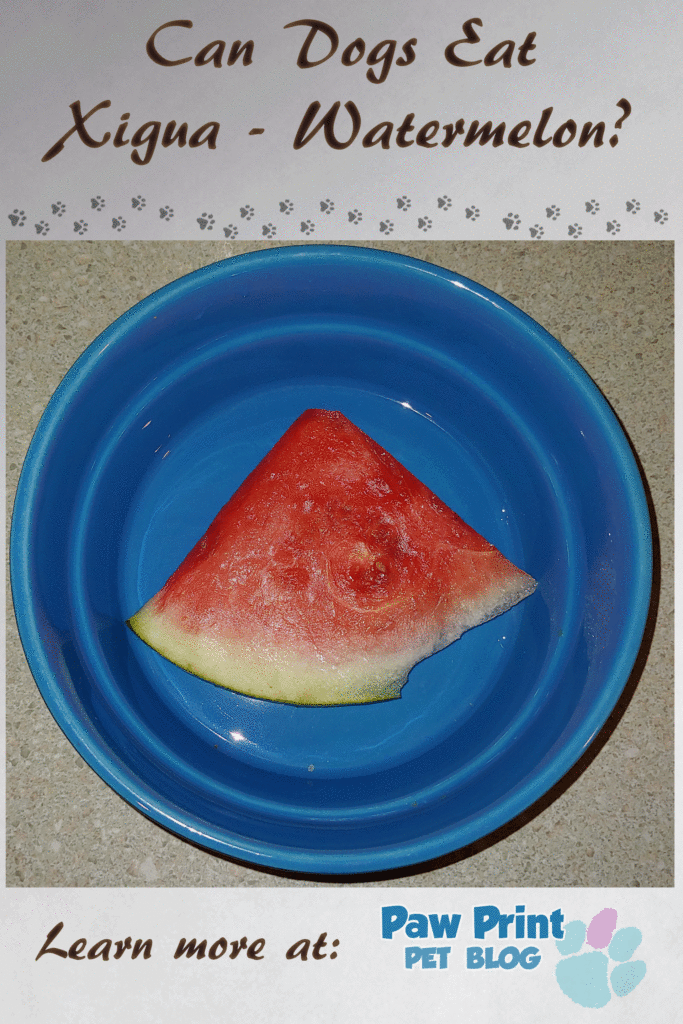

    Watermelon is also a source of vitamins A, B, and C.  It also contains antioxidants and amino acids.  Lycopene and choline in watermelon may help to reduce inflammation.  Watermelon contains fiber that can help the GI tract function normally and Vitamin A helps to support healthy skin and fur.

    How To Feed Watermelon

    Easy enough – I just cut it into pieces and feed it plain.  Don’t overdo it – too much of anything, even fruit, can cause GI upset.  Like I already mentioned, avoid feeding seeds and watermelon rind.

    Looking for more ideas for healthy “human” foods you can share with your dog?  Check out my other blogging from A to Z challenge posts!

    Have you ever let your dog try watermelon?  Does he/she like it?

    dogs watermelon

Older Posts
Newer Posts
It's a beautiful day to play ball in the snow ❄️ It's a beautiful day to play ball in the snow ❄️
Today would have been Kit's 17th birthday. My best Today would have been Kit's 17th birthday. My best buddy...not a single day goes by that I don't think of him. Forever a beloved member of our little pack ❤️
Someone stole his dad's socks 😂 10 years old and s Someone stole his dad's socks 😂 10 years old and still as mischievous as a pup!  This little one makes me laugh everyday and I'm SO thankful for him. 💙
New phone, who dis!? 😅 Sorry for the lack of new New phone, who dis!? 😅 
Sorry for the lack of new Fen pics lately... My old phone broke and it took me awhile to replace it. 
Fen is his happy, sassy, playful self and is doing well. 💙
Fen makes me laugh so much! Today is my partner's Fen makes me laugh so much! Today is my partner's birthday. ❤️ I almost always wake up earlier than him, so this morning I was planning on getting up to decorate for his birthday. I wanted to surprise him with decorations and his presents set out when he got up.

Well...Fenrir ruined it all, because as soon as he saw the wrapped presents for my partner, he got SO excited! And if you have ever had the pleasure of meeting an Alaskan Klee Kai you will know, when they get excited, they just have to make sure everyone knows about it!

Long story slightly shorter, Fen woke my partner up early, on his birthday, all because Fen REALLY wanted to open presents that weren't even for him! I didn't get to decorate, but lesson learned - don't put gifts where Fen can see them because he will get really, really excited about it.

And just so you all don't feel too bad for him...I ended up wrapping one of Fen's Christmas presents and giving it to him to open early! 🤣
Follow on Instagram
Facebook Instagram Pinterest Youtube

Copyright © 2025 Paw Print Pet Blog. All Rights Reserved.

Back to top