• Home
  • Popular Topics
    • Papillons
    • Alaskan Klee Kai
    • Hiking with Dogs
    • Dog DIY
    • Recipes
    • Dog Product Reviews
    • Can Dogs Eat…
    • Dog Health
  • The Paw Pack
    • Kitsune (2008 – 2024)
    • Fenrir
  • Policies
    • Disclaimer
    • Privacy Policy
    • Work with Us
    • Site Map
  • Contact

Paw Print

    Dog Health

    Selecting the Best Dog Food Based on Your Dog’s Individual Needs

    November 14, 2022

    pppp

    In the past, I’ve avoided posting too much about what I feed my dogs.  Finding the best dog food for Kitsune and Fenrir hasn’t always been the easiest of tasks.  As a biologist, a pet blogger, and a concerned pet guardian, I understand the importance of a healthy diet.  For many dogs, the ultimate healthy diet is a properly balanced raw or home-cooked, fresh food diet.  I discovered raw diets for dogs shortly after we got Kitsune, and spent hours researching how to provide a properly balanced raw food diet.  Unfortunately, not for lack of trying, I’ve never really been able to get a raw diet to agree with Kitsune.

    Post Contents:

    • 1 What was I doing wrong?
    • 2 Two Dogs = Two Foods
    • 3 Feeding Kibble IS NOT a Sin!
    • 4 SO Many Options!
    • 5 Subject to Change

    What was I doing wrong?

    best dog food

    When Kit was a puppy, we discovered that he has some food sensitivities.  As much as he loves food, I’ve had to be careful about what I feed him.  Try as I might, I could not get a fully raw diet to work for him.  After ruling out any medical issues, discussing his unique needs with a vet nutritionist, and personal research, we eventually came up with a diet plan that works well for Kit.

    Fen, on the other hand, actually tolerates raw food really well!  Which I’m happy about because finding the best dog food for Fenrir proved to be a bit of a challenge for me as well.  Fen is an Alaskan Klee Kai, a breed that’s a bit notorious for being picky eaters.  Fen definitely fits that mold!  Just try to feed him the same meal for more than a few days in a row.  He’s sure to turn up that adorable little nose of his.

    Two Dogs = Two Foods
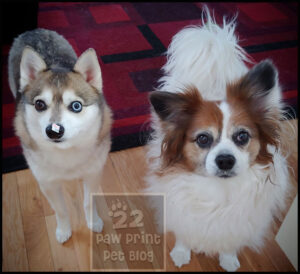
    best dog foodBeing a two-dog household, of course it would make life easier if Kit and Fen could just eat the same food.  But, the fact of the matter is that the “perfect” food for one dog might be horrible for another.  Like how Fen does really well on raw food, but it tends to make Kit throw up!  Thankfully, with my two dogs, I’ve kind of found a way for us to meet in the middle.

    Most of Kit’s and Fen’s meals are home cooked recipes that I create using the website BalanceIt.com.  Both Kit and Fen LOVE their home cooked meals.  Making their food myself means that I can change up recipes as often as I need to to keep Fen interested in his food.  Keep in mind, if you’re interested in feeding home-cooked meals to your dog it’s super important to make sure you are balancing their diet!  An unbalanced diet will lack important nutrients, and can lead to health issues.

    Fen, like I mentioned above, does fine eating raw.  Although I mostly feed home-cooked currently, I do give Fen a premade raw as a backup food.  He also gets raw meaty bones regularly for his teeth.  I used to give Kit raw meaty bones too, but even that small amount of raw wasn’t really agreeing with him so I stopped.  No worries, Kit gets dental chews instead.  So he doesn’t feel left out!

    As many raw or home-cooked feeders will attest too, back up foods come in handy!  Sometimes you just don’t feel like cooking for your dog.  Or you forget to defrost their raw food.  Or you forget to buy some of the ingredients you needed for a recipe.  Que the backup food!  For Fen, I keep a bag of Instinct Frozen Raw Bites in my freezer.  Kit gets Farmina kibble.  Back off kibble haters!

    Feeding Kibble IS NOT a Sin!

    Resorting to feeding Kit kibble, albeit high quality kibble, once upon a time made me feel a bit like a failure.  Especially before I dived into the deep end of home cooking for my dogs.  Kit ate exclusively kibble for years before I started home cooking.  I tend to run in crazy dog people circles, where feeding your dog…gasp…kibble…is often looked down upon.  Thankfully, I’m way past caring much about what other people think of me at this point.    

    SO Many Options!
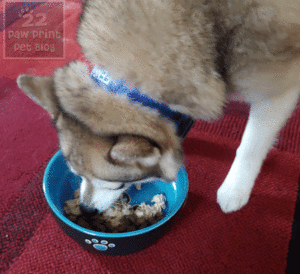
    best dog foodThis day and age, there are so many options available when it comes to feeding our pets.  Besides the growing body of knowledge about home prepared diets, there are hundreds of companies selling commercially prepared foods, everything from common kibble to commercial raw diets.  Taking into account the shear number of available options, plus the fact that not all foods work for all pets, selecting the best dog food for each of your pets can really be a daunting task.

    Luckily you don’t have to go in alone!  There are so many amazing resources out there for pet owners who want to find the food that will work best for their pet.  Your pet’s veterinarian can be a great source of knowledge.  An increasing number of general practice vets seem to be supporting higher quality foods, some of them even recommending and helping owners to create balanced raw/home cooked diets.  If your general practice vet isn’t cutting it when it comes to feeding advice, look for a vet nutritionist in your area.  They specifically study pet nutrition and are a wealth of knowledge!

    Subject to Change

    Also keep in mind that your pets’ diet is something that can very much be subject to change.  As you learn more about what does and doesn’t work for your pet, more about specific diets, or your pet’s dietary needs change, it’s ok to try new foods.  Just because Kitsune is doing well on home cooked, and Farmina kibble now doesn’t mean that will necessarily be what I feed him for the rest of his life.  I am continuously assessing my pets’ health, including how they are doing on their current food, and making changes as needed.

    I feed what works best for my individual dogs at their current stage of life, and you should too!  Dogs aren’t robots that we can all stick the same fuel into and expect them to run optimally.  Dogs are living, breathing creatures with individual needs, health concerns, living situations, likes, dislikes, etc.!  People would never expect one single diet to work perfectly for every human in the world, and we shouldn’t expect that of our dogs either!  Take the time to feed your dogs the food(s) that work best for them as an individual!     

    I’d love to hear from you!  What are you currently feeding your pets?  How did you go about selecting the right food for them?
    Best Dog Food


    Senior Dogs, Kitsune, The Paw Pack

    What It’s Like Living With a Senior Dog, From a Self Professed Puppy Lover

    November 12, 2022

    November is Adopt a Senior Pet Month.  It appears that I’ve, somehow, found myself to be the owner of a senior dog.  My beloved papillon, Kitsune, will be turning 14 next month.

    Post Contents:

    • 1 I love Puppies!
    • 2 A New Experience
    • 3 Senior pets in shelters are often overlooked by adopters because of their age.
    • 4 Older animals make amazing pets! 
    • 5 I think a lot of people have preconceived notions of what senior pets are like. 
    • 6 Old dogs SO CAN learn new tricks! 
    • 7 You can 100% still have fun with a senior dog!  Sometimes that fun may be at a slower pace, and we may have to accommodate a bit to match our dogs changing abilities, but none of that means that you and your senior pet can’t still have fun together.

    I love Puppies!

    I’m a sucker for punishment.  When it comes to my pets the crazier, more mischievous they are the better!  And what’s more mischievous than a puppy?  One thing that’s ultimately true of all puppies, however, is that they grow up.  If they’re lucky, they grow old, albeit always much too quickly for those that love them.  Although I’ve cared for senior pets before, my sweet Mr. Kit, being the first dog that my partner and I got on our own, is also the first senior dog that I’ve had the privileged of sharing my life with.

    A New Experience

    senior dog Living with, and caring for, a senior dog for the first time in my life has been an interesting experience thus far.  Kit has always been an amazing teacher, and that fact hasn’t changed now that he’s older.  He’s helped me gain a newfound appreciation for just how amazing senior pets can be.  But I also feel like there’s sometimes some pressure to portray life with older animals as all sunshine and rainbows.  Sometimes it is.  There’s something so special about snuggling up next to an animal that I share an almost 14 year bond with.
    But sometimes life with a senior dog is stressful.  So far, I feel like the hardest part about watching Kitsune grow older has been the increase in health issues.  Kitsune’s doing really well right now, thankfully, but the older he gets the more I find myself thinking about what it will mean to lose him someday.  That’s really, really hard.  On the plus side, it does make me appreciate the time we spend together that much more.  I wouldn’t change a thing about the life Kit and I have shared together.  I love him all the more now thanks to the 13+ years we spent growing together.

    Senior pets in shelters are often overlooked by adopters because of their age.

    Sadly, senior dogs, in general, spend more time in shelters waiting to be adopted.  They also generally have higher euthanasia rates compared to their younger compatriots.  Seeing senior animals in shelters always seems especially sad to me.  They so deserve to be warm, happy, and loved – beloved members of a family where they will be cherished in their golden years, not forgotten about in a cold shelter kennel.

    Older animals make amazing pets! 

    senior dogMany people come to appreciate the fact that senior pets are, in general, easier to live with.  With them, you don’t usually have to worry about things like potty training, teaching basic manners, frenzied play biting, and destroyed furniture.  Most older dogs don’t require as much direct supervision as puppies do.  With a senior dog, you know exactly what you’re getting!  You don’t have to worry about Fido growing too big and exceeding the size limit in your apartment building, or hitting puberty and suddenly developing behavioral issues that you, perhaps, weren’t totally prepared for.
    I think a lot of people have preconceived notions of what senior pets are like. 

    They’re lazy, all they do is sleep, they’re not as fun as younger pets.  I think, perhaps, before experiencing living with a senior dog myself I may have, at least subconsciously, bought into those notions myself.  I’m sure some senior pets are quite lazy, and so would make amazing companions for less active people.  I wouldn’t, however, call my Kitsune lazy!  He’s not quite as crazy as he was as a puppy, sure, but I’d describe it more as him developing an (appropriate) off-switch more so than becoming lazy.

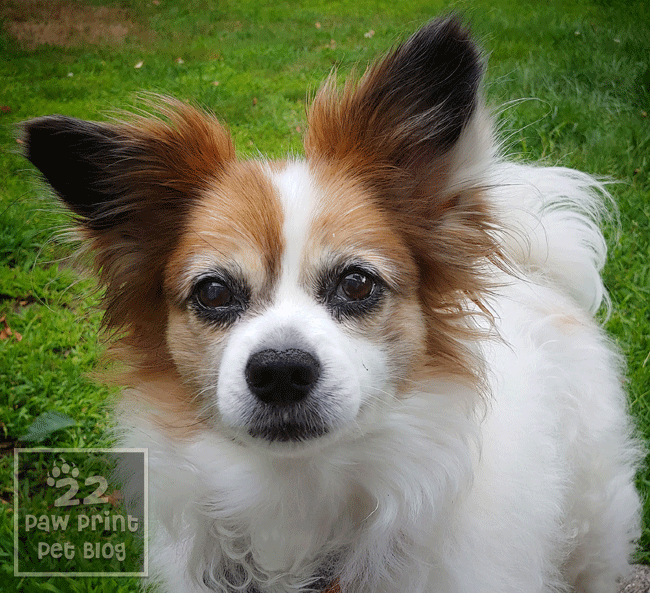
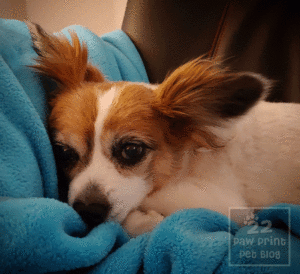
    Kitsune, at almost 14, is the perfect combination of snuggles and fun!  He’s very happy to spend a rainy day snuggled up inside with us, something that would have been a struggle for him when he was younger.  He’s just as happy spending time with us outdoors.  He still loves exploring the woods with me, chasing (but never actually catching) squirrels and birds, and playing with our younger dog, Fenrir.  In fact, Kitsune oftentimes still outplays Fenrir, despite Kit being 6 years Fen’s senior.  Kit even still humors my love of mischievous pets by getting into a bit of trouble every now and then.

    Old dogs SO CAN learn new tricks! 

    I feel like I can’t emphasize that enough.

    As Kit has gotten older,  I’ve found myself having to foray into some lower impact activities with him.  Especially now that he has IVDD, he may not be able to run around and jump quite like he did when he was a puppy.  But that doesn’t mean his mind has slowed down any!  We do nose work together, a completely new (to us) dog sport that Kitsune learned entirely in his senior years!  More recently, since we moved onto a 5 acre wooded property a bit over a year ago now, I’ve been training Kit to find deer sheds (antlers).

    senior dog

    You can 100% still have fun with a senior dog!  Sometimes that fun may be at a slower pace, and we may have to accommodate a bit to match our dogs changing abilities, but none of that means that you and your senior pet can’t still have fun together.

    senior dog My Kitsune still does silly, goofy things every singly day.  He makes me laugh all the time.  Watching him run around and play now, I’d say, brings me even more joy than it did when he was a puppy.  His snuggles are sweeter too.  He knows exactly the perfect spot to snuggle up next to me in bed at night – that spot by my legs where we can lay touching each other, but I can still maneuver around him without kicking him in my sleep.  I know, by just the tone of his bark, whether he wants food, or attention, or help getting his annoying ‘little brother’ away from him.  Despite his propensity to be loud and boisterous, he somehow always knows when what I need most in the world is a quiet, warm snuggle.
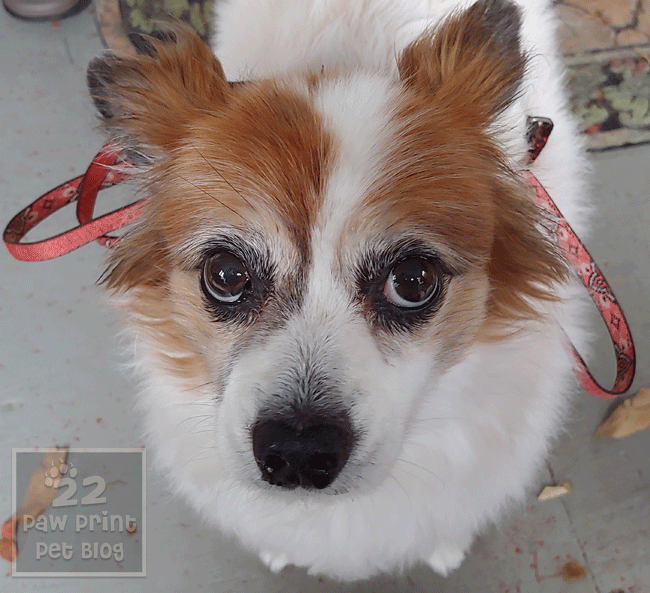
    So no, caring for a senior pet, as with any pet, is not all fun and snuggles.  It’s stressful at times.  Heartbreaking at others.  Yes, it can be expensive too.  But I wouldn’t trade my Kitsune for any puppy.  Senior dogs are amazing, and it took living with one for me to finally realize just how much so.

    I couldn’t find who to attribute this quote to, but the sentiment rings so true for me…. “I love puppies, but there is nothing like the sweet soul of an old dog”.

    If you’re ready to adopt a pet of your own, please try to remember not to overlook senior animals just because of their age!  Remember that old age is not a disease.  Senior pets need love too, and they have so, so much of it to give back in return. 

    senior dog

    Pet Tips

    Helping Your Dog Cope with Schedule Changes

    November 10, 2022

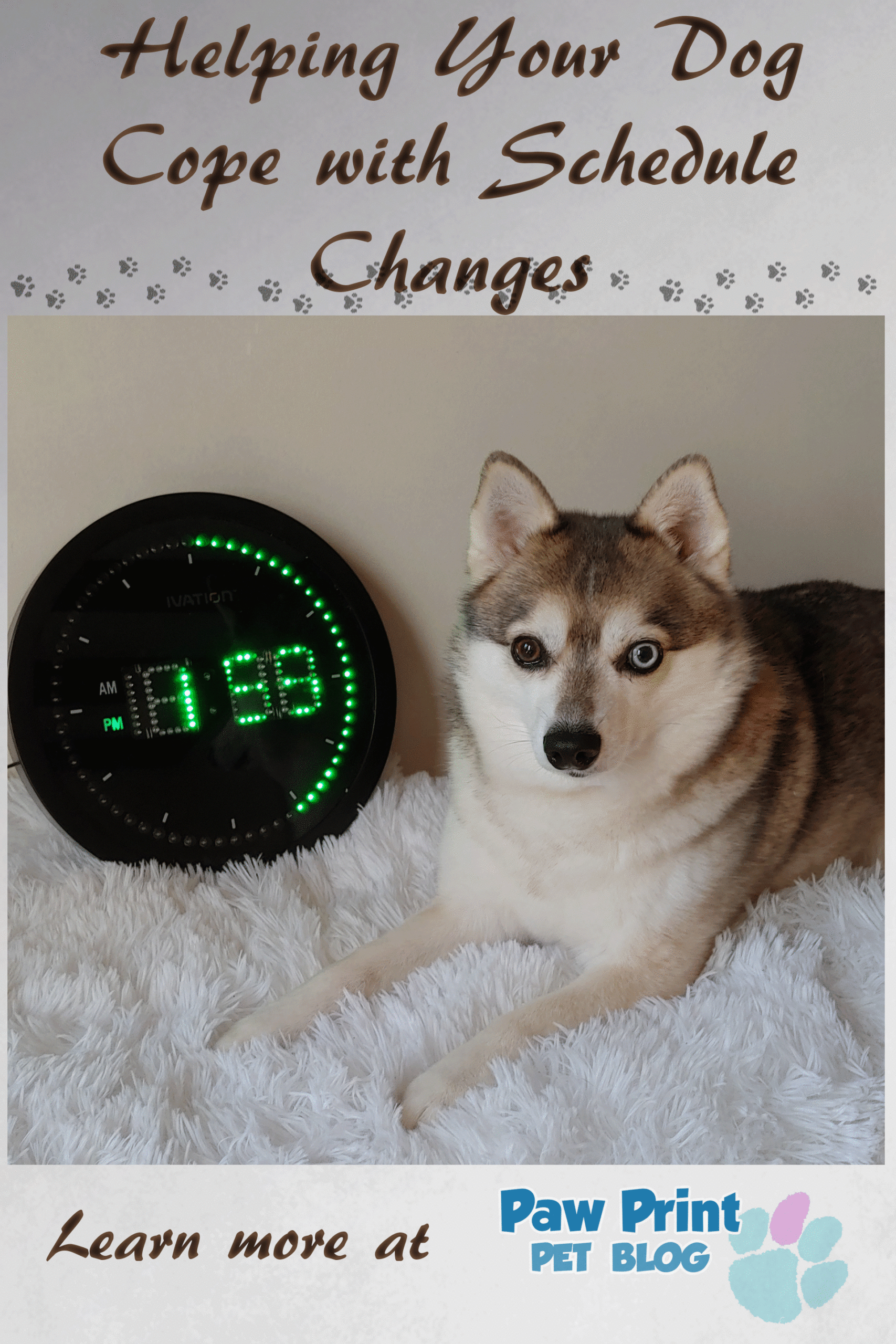
    Dogs don’t understand daylight savings time.  That fact has been made abundantly clear to me throughout the past week.  When daylight savings time ended last weekend, I suddenly found myself at the mercy of my dogs’ inner clocks.  Adjusting to schedule changes, whether they involve an hour’s difference or a completely new routine, can be hard on your dog!

    dog schedule changes

    How can I resist these faces!?

    Up until rather recently, both of my dogs were on medication.  Kitsune for IVDD (check out the latest update on his recovery here), and Fenrir for pancreatitis.  When it rains it pours, or so “they” say.  I had to give the pups their meds at certain intervals, which meant that their food (and medication) schedule was a bit stricter than what we’re normally used to.  Once Kit and Fen were both off their medications (yay!), they, of course, continued to demand their meals at the times they were used to.  That wasn’t too much of a problem.  At least not until daylight savings time ended last weekend.  What was once 8 am was now 7 am, and Kit has been waking me up around 6, just for good measure.

    Post Contents:

    • 1 Luckily Dogs are Pretty Adaptable Creatures
    • 2 Take Things Slow
    • 3 Lots of Exercise!
    • 4 Relaxing Settings
    • 5 Prevent Bathroom Stress
    • 6 Patience & Time

    Luckily Dogs are Pretty Adaptable Creatures

    Most of the time, with a bit of help from their humans, dogs can take changes to their schedule in stride.  Hey, it’s not like they have to worry about things like getting to work on time!  Usually, the worst parts of schedule changes, for a dog, are things like getting fed “late” and not getting bathroom breaks at the times they are used to.  Thankfully, there are some steps we can take to help our furry friends adjust to changes in their schedules.

    Take Things Slow

    To help Kit and Fen adjust to their slightly altered schedule recently, I decided to take things slow.  Rather than making them wait an hour later for their meals, I started off by only changing their feeding time (from their perspective) by half an hour.  I did the same with their walk and bathroom schedules.  This same technique can work for other types of schedule changes as well.  For example, if you’re starting a new job and need your dogs to get used to you being gone all day, start off (if you can) by leaving them home alone for a short time.  Increase that amount of time a little at a time.  In my experience, this tip really helps dogs to adjust more slowly over time.  However, it might not always be possible to do this if you experience a sudden or unexpected change to your schedule.

    Lots of Exercise!

    A well exercised (both mentally and physically) dog is a more relaxed dog.  Even when your schedule gets busy, remember to take time out of your day to play with your pup.  Cater to your dog’s individual needs as far as exercise is concerned.  For example, my senior dog, Kitsune, still has a lot of restrictions we have to follow when it comes to exercise thanks to his IVDD.  But he’s a super smart dog!  I may not, currently, be able to physically exercise him as much as I’d like.  Mental stimulation can be just as engaging to a dog as physical exercise!  So challenge those pups appropriately, body and mind!

    dog schedule changes

    Relaxing Settings

    Help keep your dog relaxed during potentially stressful times.  For example, use a crate to help keep your dog calm when you leave the house if he/she is already crate trained.  If not, set aside an area of your house where your dog can relax unmolested.  Keep their area calm, dark, and quiet.  Or, perhaps, play some calming music or leave on the TV if that helps your dog to relax.

    Prevent Bathroom Stress

    If your dog is used to a specific bathroom break schedule, try to adjust this slowly.  If you cannot, make sure you still give your dog plenty of bathroom breaks.  Consider using potty pads if you’ll be gone for long periods of time, or during your dogs normal bathroom times.  Or, better yet, hire a dog walker or family member/friend to help you take your dog out regularly until they have more time to adjust to their new schedule.  Don’t freak out if your dog has an accident or two, especially if you’ve just changed up their schedule.  Just clean things up and move on.  Fido will adjust in time.

    Patience & Time

    Most importantly, dogs just need some time to adapt and get used to their new schedules.  It usually doesn’t take dogs too long to adapt, depending on the dog.  Be patient and kind and remember that your dog, unlike a human, doesn’t understand why their lives have changed.  Depending on the dog and how drastic the schedule change was, expect your dog to take anywhere from a few days to a few months to fully adjust to their new normal.

    No matter how busy your schedule gets, make sure to set aside some time to spend with your dog.  Whether you’re playing with them, visiting the local park, or just snuggling up on the couch, there’s no part of their day that your dog enjoys more than being with you!

    Comment below!  Have you ever had to help your dog deal with schedule changes?  What are some things that seemed to help and how long did your dog take to fully adjust?  As for Kit and Fen, getting fed an hour “later” is hardly a massive schedule change.  Although, if you ask Kit, it seems to be a pretty huge deal.  Luckily I’ve been taking things slow and I have no doubts that in no time they’ll be accustomed to their slightly altered schedules.  And I’ll be able to sleep past 6am again!

    dog schedule changes

    DIY

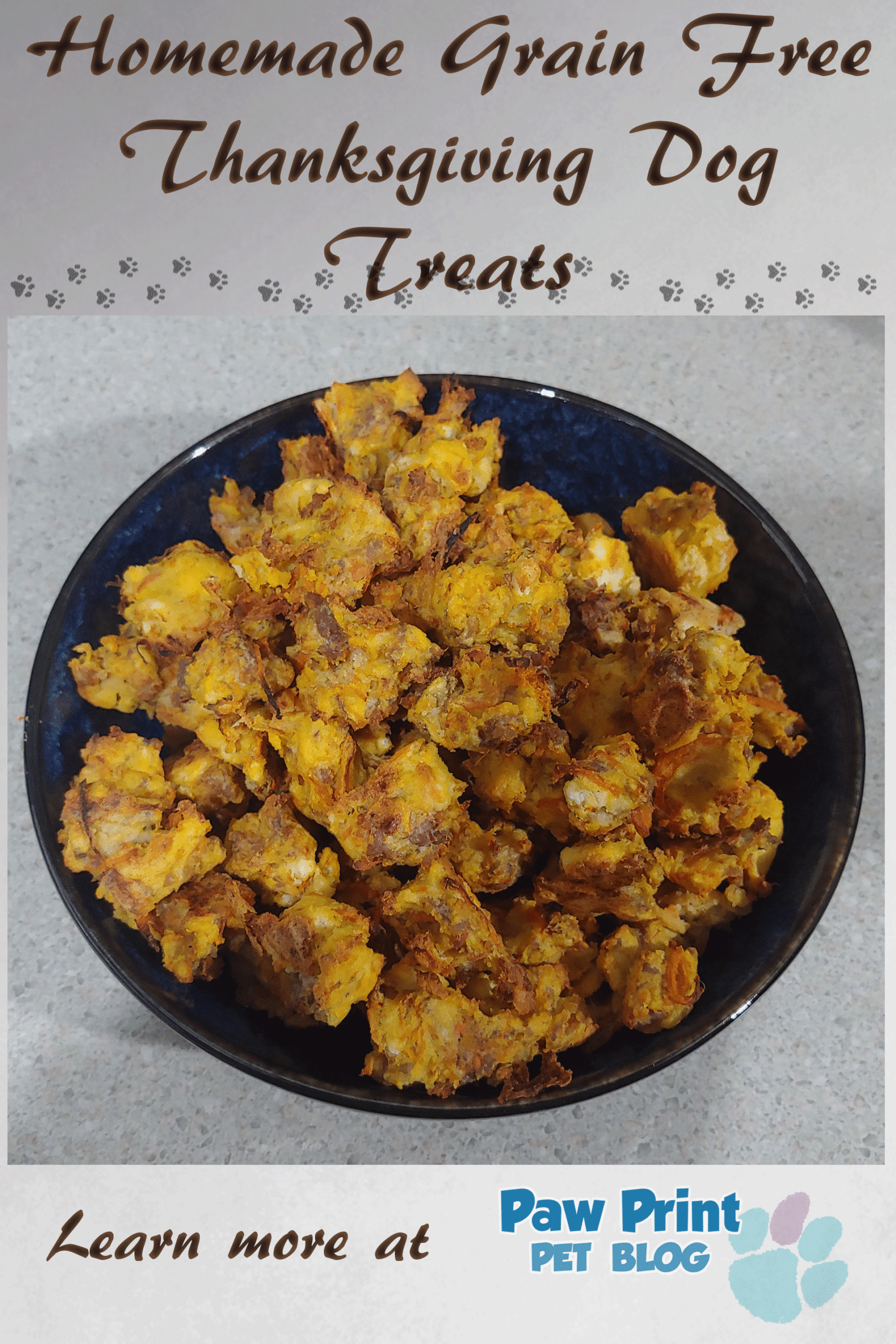
    Homemade Grain Free Thanksgiving Dog Treat Recipe

    November 8, 2022

    puppy dog eyes

    How can I resist these faces!?

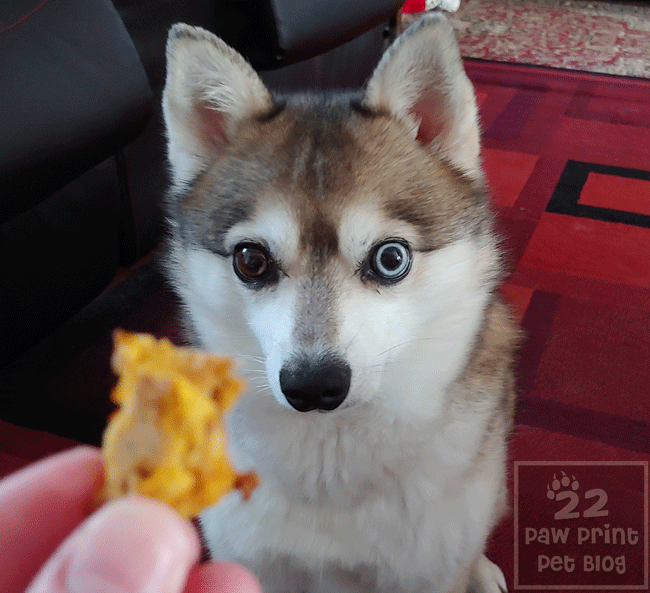
    I recently wrote about Thanksgiving foods dogs CAN have, for those of you who just can’t resist those puppy dog eyes this Thanksgiving.  But I know that not everyone is keen on giving their dogs table scraps.  Between my papillon, Kitsune, being on a diet and my Alaskan Klee Kai, Fenrir, recently dealing with a bout of pancreatitis, I’ve been super careful lately about what I feed my dogs.  This Thanksgiving dog treat recipe is grain-free and picky dog approved.  If you’re looking for an alternative to giving your dogs table scraps this Thanksgiving, consider making them homemade treats! They’re fun and easy to make, and your dog will love them!

    I originally created this grain free Thanksgiving dog treat recipe in 2010!  For some reason, my original post didn’t include any photos.  This year (2022) I decided to remake the recipe so I could get some photos of the process.  It had been quite a while since I last made these treats.  I won’t let so much time pass before making them again, though, because both of my dogs went absolutely crazy for these treats!  Yes, even my Alaskan Klee Kai who, for those who don’t know, is a breed that is rather notorious for being picky.

    Thanksgiving dog treat recipe

    Post Contents:

    • 1 Kitsune’s Grain Free Thanksgiving Treats
    • 2 Ingredients:
    • 3 Directions:
    • 4 Enjoy!

    Kitsune’s Grain Free Thanksgiving Treats

    One of the awesome things about this recipe is that you don’t have to be super exact about following the instructions!  I just use one carrot, for example, no need to actually measure out how much carrot you are using.  If your measurements for the ground meat or mashed potatoes are off a bit that shouldn’t really matter either.

    When making these myself, I shape them into smallish training treats.  They make a large bowl full of small treats.  Because these don’t contain any preservatives, they don’t last forever and need to be stored in the refrigerator.  If you’re worried about your dog being able to eat these before they go bad, consider cutting the recipe in half.

    Thanksgiving dog treat recipe

    Ingredients:
    • 8 oz ground turkey (any other type of ground meat works as well).
    • 1 medium – large carrot grated or shredded.
    • 2 eggs.
    • 1.5 cups of plain (no salt, no butter!) mashed potatoes.  You can use real or instant mashed potatoes, as long as they are plain.
    Directions:
    1. Grate or shred your carrot.  Smaller carrot pieces work better, but do what you can.  Hopefully your grater is in better shape than mine is!  My carrot pieces ended up on the larger size due to issues with my grater and the recipe still came out fine.
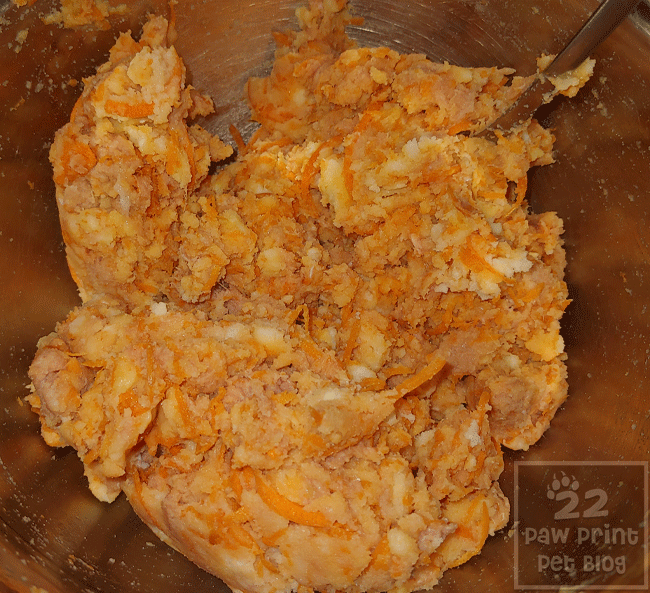
    2. Measure out your ingredients, crack your eggs, and place everything into a mixing bowl.  Mix until your dough is as uniform as possible.  It may be a bit chunky.  That’s ok!Thanksgiving dog treat recipe
    3. Preheat your oven to 400*F.
    4. Roll the mixture into treat shaped balls, or shape as desired.  I placed my treats onto an ungreased cookie sheet to avoid using butter or oil.  They do stick to the cookie sheet a bit, so grease your cookie sheet, or use parchment paper, if desired for easier cleanup.
    5. Bake the treats for 20 – 30 mins, or until desired texture is reached. The longer you let the cookies bake, the crispier they will be.  I aim for slightly softer, but still fully cooked, treats.  If you make larger treats they will need to be baked for longer.
    6. Make sure to allow the treats to cool fully before offering to your dog.  If your dog is anything like mine, they’ll be begging for treats even before they come out of the oven!
    7. Store in refrigerator, or freeze for longer storage.

    Enjoy!

    If anyone tries this recipe you’ll have to comment on how it went, and whether or not your dog liked them!  Sometimes my homemade treats can be a bit hit or miss with my Fenrir.  He’s so picky!  But he really loved these.  We hope that all our readers, and their families, have a fun Thanksgiving!

    Thanksgiving dog treat recipe

    Alaskan Klee Kai, Pet Products

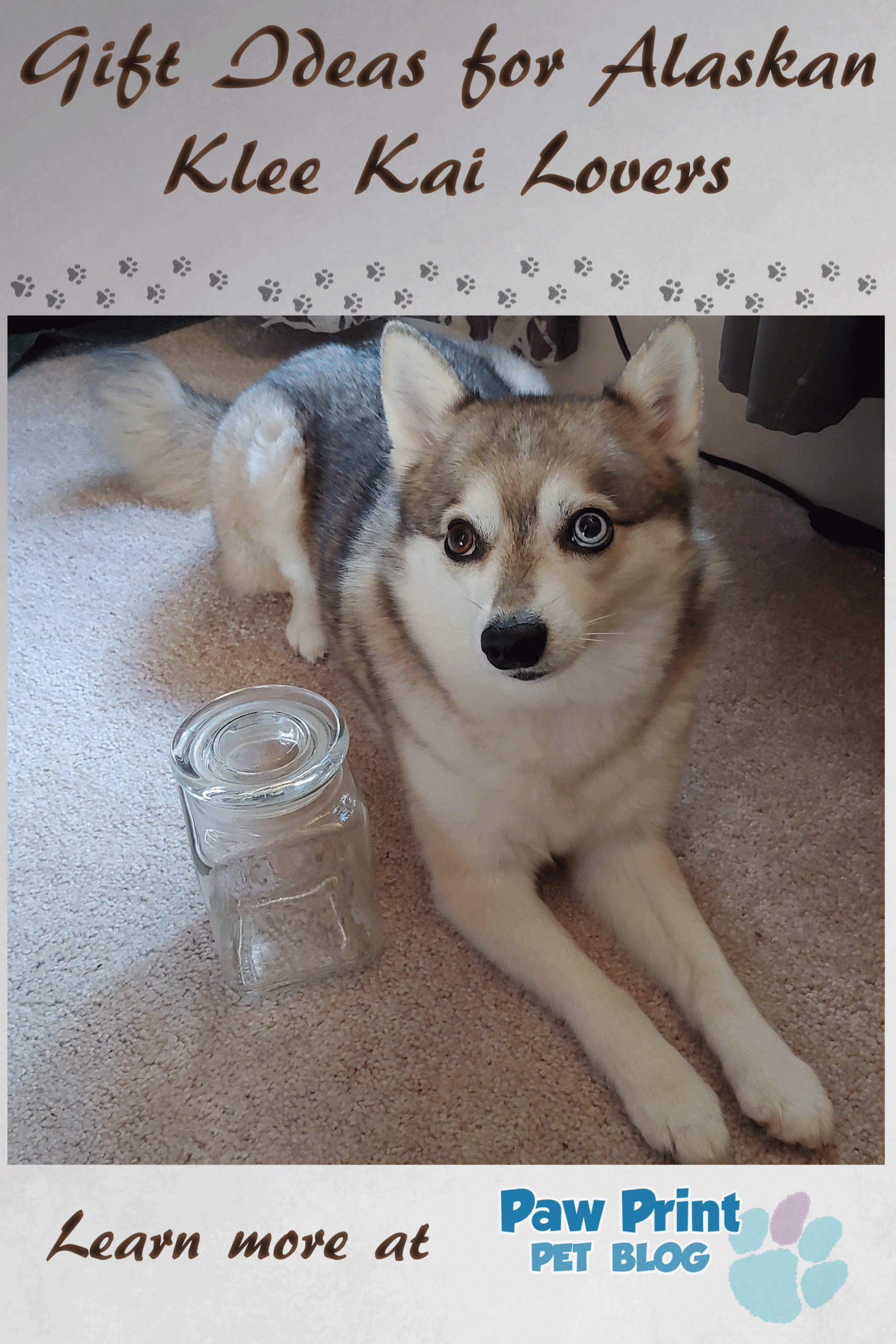
    Gift Ideas for Alaskan Klee Kai Lovers

    November 6, 2022

    Late last month I wrote a post that featured gift ideas for papillon lovers.  I thought it was hard to find unique papillon-themed gift items.  It turns out, that was cake compared to Alaskan Klee Kai gift ideas!  When I first got my Alaskan Klee Kai (AKK), Fenrir, the breed was still relatively rare.  They are not common now by any means.  However, I feel like more people are aware of the breed these days.  Still, I had a hard time finding high-quality Alaskan Klee Kai themed gifts.  I feel like a lot of what I did find is just husky, or malamute, products remarketed to appeal to AKK owners.  I guess, in theory,  you could get a husky item and just tell people it’s an AKK!  However, for this post, I’m going to focus on gift ideas labeled as Alaskan Klee Kai products.

    Post Contents:

    • 1 Alaskan Klee Kai Jewelry
    • 2 Alaskan Klee Kai Hats
    • 3 Alaskan Klee Kai Stickers
    • 4 Alaskan Klee Kai Ornaments
    • 5 Random Klee Kai Items
    • 6 More Coming Soon?

    Alaskan Klee Kai Jewelry

    I was able to find some cute Alaskan Klee Kai themed jewelry pieces!

    • This pendant is my favorite.  Something about it, maybe the long snout, actually reminds me of a Klee Kai!
    • This pendant is nice too!  The 3D ears and tail are cute, and it’s a bit cheaper than the first pendant if you’re shopping on a budget.
    • This filigree pendant is beautiful and elegant.  The same design can also be purchased as a pin or armband.
    • The snowflake design on this pendant is so perfect for representing little snow dogs.
    • Something about this pendant actually reminds me of an Alaskan Klee Kai too.  I think it’s the snout and the eyes.

    Alaskan Klee Kai Hats

    I couldn’t find any AKK clothing items that I thought were particularly well-designed.  Most of them just seemed like standard designs where someone replaced the name of another dog breed with Alaskan Klee Kai.  I found a couple of hats that I thought were kind of cute, though.  They’re simple and unisex and (at least I think) could make good gifts.

    • This baseball hat comes in solid colors on Etsy, or you could go with this very similar-looking acid-washed style on Amazon.
    • An Alaskan Klee Kai beanie!

    gift Alaskan Klee Kai

    Alaskan Klee Kai Stickers

    Is it weird that I think stickers could make cute, budget friendly gifts?  AKK stickers let you make anything you own AKK themed!

    • These chibi AKK stickers are really cute, and are somewhat customizable.
    • These AKK stickers are cute too!  I love their sassy little faces.

    Alaskan Klee Kai Ornaments

    Maybe it’s the time of year I’m writing this?  When I was searching for AKK items, a lot of holiday ornaments came up.  I picked a couple that I thought were cute.

    • This ornament is nice, and you can customize it with a name.
    • This one could be a husky just as likely as an AKK, but it’s cute!

    Random Klee Kai Items

    I found a few more items I thought might make gifts, but that didn’t fit into the other sections.

    • This Alaskan Klee Kai picture frame is unique and would make a good gift for an AKK owner.
    • I found quite a few AKK themed tumblers.  This one was my favorite.

    More Coming Soon?

    I wish I had been able to find a better variety of Alaskan Klee Kai gift items.  If you find any that you want to share, please comment below!  I’ll try to circle back and update this post if I find anything else worth sharing.  If you purchase anything from this list, as a gift or for yourself, you’ll have to comment and let everyone know how you liked it!

    gift Alaskan Klee Kai

    Pet Tips

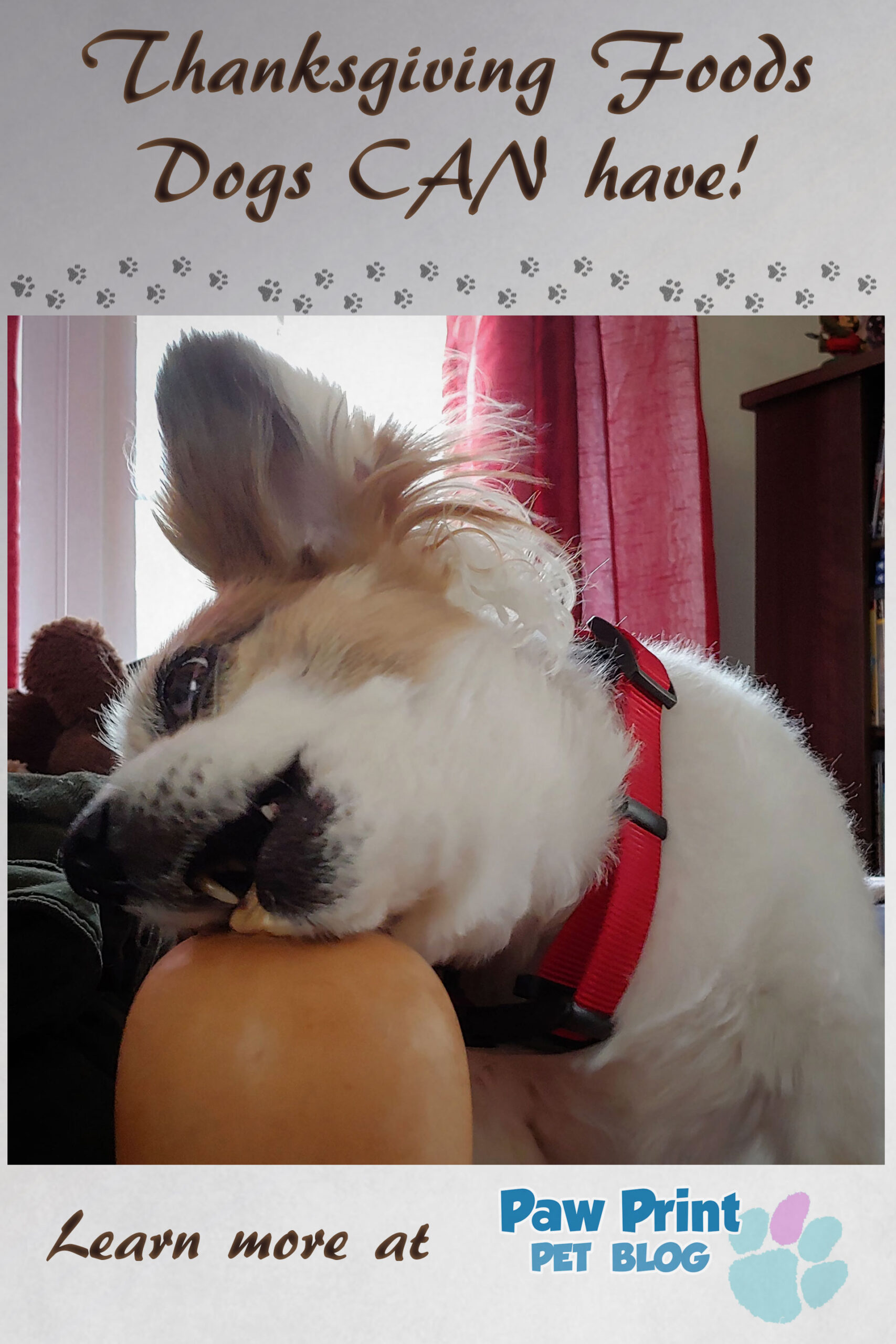
    Thanksgiving Foods Dogs CAN have!

    November 4, 2022

    thanksgiving foods dogsThanksgiving is almost upon us!  Lately, I’ve been starting to see countless numbers of images and articles that offer tips for keeping pets safe around the holidays.  This includes lists of holiday human foods that are not safe to feed your pet.  But did you know, that with a bit of forethought, there are some Thanksgiving foods that are safe to offer your pet in moderation?  If you have a hard time not giving in to your pooches’ puppy dog eyes, here are some healthy treat ideas that will make your dog feel like a part of the family during this year’s Thanksgiving feast!
    Post Contents:

    • 1 Plain Mashed Potatoes:
    • 2 Plain Vegetables:
    • 3 Turkey:
    • 4 Rolls:
    • 5 Plain Pumpkin:
    • 6 There you have it – a list of common Thanksgiving foods that you can feed your dog!
    • 7 I’d like to wish all my readers a very happy, fun, and safe Thanksgiving!
    Plain Mashed Potatoes:

    Before you add seasonings like salt, butter, or pepper, set aside a small amount of plain mashed potatoes for your dog.  You can use a few spoons full of plain potatoes as a tasty topper to spice up your dog’s normal food.  Plain, cooked potatoes are safe for dogs and most of them enjoy the flavor.

    Plain Vegetables:

    thanksgiving foods dogsVegetables, such as carrots, green beans, and squash are also safe for dogs.  However, they should also be offered plain, without things such as seasonings or butter.  Although dogs can eat most vegetables raw, cooking them breaks down the vegetables cell walls and makes them easier for dogs to digest.

    Turkey:

    As long as your pet doesn’t have a poultry allergy, turkey is actually ok for pets.  Just remember never to feed dogs cooked bones, and avoid feeding cooked turkey skin, as it’s high in fat.  But a small piece of lean (white) turkey meat mixed in with your pet’s normal food shouldn’t cause any problems for most pups.

    Rolls:

    Plain rolls without any butter are okay to give your dogs in small amounts.

    Plain Pumpkin:

    100% canned pumpkin (not pumpkin pie mix) doesn’t contain any additives and is safe for dogs.  Make sure to put some aside for your pooch before using it to make pumpkin pie, because pumpkin pie is high in sugar and not good for pets.

    There you have it – a list of common Thanksgiving foods that you can feed your dog!

    If you haven’t figured it out by now, the key to feeding your pets ‘human’ food is to only feed plain foods, and to do so in moderation.  This may take a bit of planning on your part, since most human Thanksgiving dishes are served with ample spices and butter.  But it shouldn’t be too hard to set aside a bit of plain food for your pup, and your dog will love getting a specially made Thanksgiving dinner just for him!

    Blog dog life

    If you are unsure about whether a certain food is safe for your pet or not, it’s always best to err on the side of caution and either opt to feed only foods that you already know are safe, or call your vet and ask about any unknown foods.

    Alternatively, if you’d like to make a special treat for your pup this Thanksgiving, but would rather not give him/her human Thanksgiving foods, you can consider cooking your pup his own extra special homemade treats!

    I’d like to wish all my readers a very happy, fun, and safe Thanksgiving!

    I’m early, I know, depending on when you’re reading this.  But Kit, Fen, and I are wishing everyone who celebrates a happy, healthy Thanksgiving!

    Comment below!  If you celebrate Thanksgiving, are you planning on sharing any of your meal with your pet?  What types of “human” food are your pet’s favorite?

    thanksgiving foods dogs

    Dog Health

    November is Pet Cancer Awareness Month

    November 2, 2022

    Cancer sucks!  It remains a leading cause of death in people and is one of the few diseases that impact the rest of the animal kingdom as well.  According to VPI, who founded National Pet Cancer Awareness Month in 2005, cancer is “the No. 1 disease-related killer of dogs and cats.”  This is a statistic that, for thousands of pet owners, hits close to home.  On August 8th, 2008, my partner and I lost our beloved house rabbit, Zeus, to lymphoma.  He was only 2 years old.

    Not Always a Death Sentence

    Zeus taught me so much in his short time here with us, including a hard lesson on how to say goodbye.  Thankfully, a diagnoses of cancer isn’t always a death sentence.  Medical technology is advancing everyday.  Early detection and treatment of cancer can increase pets’ quality of life, prolong life, and sometimes even result in a cure.

    The exact cause of cancer in humans is not fully known, let alone what causes it in our pets.  A generally healthy lifestyle can go at least some way towards helping to prevent this devastating disease.  One of the many frustrating things about cancer, however, is that it sometimes strikes even the healthiest, well cared for pets.
    Early detection really is key!  Cancer can’t always be cured.  But when it can’t early detection can help ensure that the remainder of your pet’s days are lived out in comfort.  It’s important to stay on top of your pet’s health.  Bring them in to see their vet if you notice any changes in their physical health or behavior.  This is not a definitive list of cancer symptoms in pets, but here are some things to look out for…

    Potential Warning Signs of Cancer in Pets

    • Weight Changes: If your pet needs to shed a few pounds, and this is something you’ve been working on with them, then weight loss can be something to celebrate.  However, unexplained weight loss can be a sign of illness, including cancer. Unexplained weight gain can also be a sigh of health issues.
    • Loss of Appetite: This potential symptom can go hand in hand with weight loss.  A sudden or drastic change in appetite can also be a sign of illness.
    • Difficulty Eating or Swallowing: These symptoms can be caused by swelling or lumps of the mouth and neck region.
    • Abnormal Swellings:  Pet your pet!  Look out for swellings, or lumps, especially those that persist and/or increase in size over time.
    • Sores that Do Not Heal: Non-healing sores can be a sign of infection as well as certain types of cancers.
    • Bleeding or Discharge: Look out for unusual bleeding and/or discharge from any body opening.  Vomiting and diarrhea count here as well.
    • Offensive Odors:  Although there are some normal, and some less serious, causes of stinky pets, offensive odors can be signs of mouth, nose, or anal tumors.
    • Hesitation to Exercise or Loss of Stamina: In a normally active pet, these can often be one of the first sings that your furry friend isn’t feeling well.
    • Persistent Lameness or Stiffness: There are many potential causes of lameness, unfortunately some causes include nerve, muscle, or bone cancers.  Stiffness and generalized pain can also be a sign of some types of cancer.
    • Difficulty Breathing, Urinating, or Defecating: These symptoms all warrant a trip to your vet to figure out what’s going on.
    • Coughing: If your dog coughs a few times you generally don’t have to worry.  But a persistent caught can signal lung issues including lung cancer.
    • Seizures: Seizures are scary no matter what the cause!  Some causes are relatively benign, but seizures can also be a sign of brain tumors and other serious health issues.

    Stay Calm!

    If your pet exhibits any of these signs, or any other abnormal symptoms, don’t freak out!  It’s important to get your pet to a qualified vet asap.  But remain as calm as possible – for your own sake as well as your pets.  Although the symptoms listed above can be indicators of cancer, they can also be caused by other, less scary and easier to treat, conditions.

    No matter what the cause, the sooner issues with your pet are addressed the greater the chance he or she will be able to be treated successfully.  Although it’s true that not all types of cancer can be successfully cured, constant medical advancements means that there are more options for treating cancer today then there has ever been before.  A cancer diagnosis can be very frightening.  But try to remember that your pet won’t understand that he/she has a horrible disease.  Our pets often take ques on how to read a situation from us.  Remaining calm and as positive as possible will go a long way towards helping your pet remain calm and happy.  At the end of the day I think that’s something all pet owners, especially those with sick pets, want.  For our furry loved ones to live out their lives as happily as possible.

    pet cancer

    In loving memory of Zeus.

    Dog Health

    What You Need To Know About Canine Influenza (Dog Flu)

    October 31, 2022

    It’s flu season!  The other week I posted about research that suggests that, on rare occasions, pets can in fact catch the flu from their human counterparts.  The instances of pets contracting the flu from their humans may be very low, but, as many dog owners probably already know, dogs have their own strains of the flu to worry about too.  Is your furry friend at risk of contracting canine influenza?  What are the symptoms of dog flu, and are there any precautions pet owners can take to help their pets to avoid becoming sick?  Read on to find out!

    Post Contents:

    • 1 The Two Types of Canine Influenza
    • 2 Is Your Dog At Risk of Catching the Dog Flu?
    • 3 What is the Treatment for Canine Influenza?
    • 4 What About the Flu Vaccine?
    • 5 Flu Prevention
    • 6 Pet owners can lower the risk of disease by keeping their pet’s immune systems strong.
    • 7 Has your dog ever contracted the flu?

    The Two Types of Canine Influenza

    Canine InfluenzaThere are currently two strains of the flu virus that commonly affect dogs.  The first is caused by A(H3N8), a virus strain that was discovered to cause disease in dogs for the first time in 2004.  It was first seen in racing dogs in Florida.  It is believed that this strain of canine influenza mutated from the strain that causes equine (horse) flu.

    A slightly newer strain of the flu to impact dogs, A(H3N2) was first detected in 2007.  It seems to have originated in South Korea but has since spread.  It was first found to be affecting dogs in the US in 2015.  This strain of canine influenza originated in birds, then mutated to also be able to infect dogs.

    Neither strain of canine influenza has shown any signs of being able to infect people.  Although, as I mentioned above, the human strain of the flu can, on very rare occasions, infect pets (cats and dogs).

    Is Your Dog At Risk of Catching the Dog Flu?

    Dogs who spend a lot of time around other dogs are most at risk of developing canine influenza.  Like the human flu, dog flu is spread through respiratory secretions.  Symptoms range from very mild to severe, with the most common signs being coughing, sneezing, fever, nasal discharge, loss of appetite, lethargy, and labored breathing.  Not all dogs exposed to the virus show clinical signs of being sick, while others may be severely impacted.  In some instances, canine flu can lead to pneumonia which can, if left untreated, be fatal.

    What is the Treatment for Canine Influenza?

    Because dog flu is caused by a virus, there is no one medication available to cure it.  The main form of treatment is to provide supportive care while your dog’s body fights off the virus.  Treatment can include cough suppressants to manage symptoms, healthy food to boost the immune system, and plenty of rest.  It’s also important to make sure impacted pets do not become dehydrated, and to monitor them to make sure they do not develop pneumonia or secondary bacterial infections.

    What About the Flu Vaccine?

    There is currently a dog flu vaccine available.  The first year the vaccine is given it must be administered twice.  The second dose should be given 2 to 4 weeks after the first.  After that, annual revaccination (1 dose per year) can be given.  However, the vaccine does not guarantee that your dog will not contract the flu.  Like the human flu vaccine, it can lessen the severity of flu symptoms but doesn’t necessarily prevent dogs from catching the virus.

    Flu Prevention

    Pet owners (like myself) who take a conservative approach to vaccines should note that canine flu is most common in dogs in environments where there are many dogs living closely together, such as in shelters, pet stores, kennels, etc.  Most dogs who contract the flu get better on their own, and require nothing more than minimal supportive care.  The death rate is thought to range from 1% – 5%.  However, deaths are most commonly caused by untreated secondary bacterial infections, such as phenomena, and not the flu virus itself.

    Pet owners can lower the risk of disease by keeping their pet’s immune systems strong.

    Feed healthy, species appropriate, diets, and make sure your pet receives plenty of fresh air and exercise!  Avoid, whenever possible, areas were a lot of unknown dogs frequent such as dog parks, kennels, etc.  If you suspect that your dog may have the flu, or any other illness, be considerate of others and keep your dog at home.  Talk to your veterinarian if your pet becomes sick and symptoms are severe, get increasingly worse, or do not seem to be improving on their own.

    Has your dog ever contracted the flu?

    Comment below!  I’ve been lucky so far (knock on wood) that in my 13+ years of owning dogs I’ve never had one catch canine influenza.  Still, I think it’s important to know the symptoms, and ways you can potentially reduce your dog’s chances of exposure.  I hope your pets (and you!) are able to avoid getting sick this flu season.  Stay healthy everyone!

    Canine Influenza


    To reduce the risk of your dog contracting dog flu, follow good
    infection control practices. Avoid letting your dog drink from communal
    water bowls (such as those located at parks, cafes or pet shops). Be
    aware of any outbreaks in your local community and if an outbreak occurs
    in an area you frequent, avoid exposing your dog to that area
    temporarily. If you plan to leave your dog at a boarding facility or
    kennel ask whether respiratory disease has been a problem and if they
    have a plan of action for any potential cases that may arise.

    If
    your dog is involved in shows, sports and other activities where he or
    she interacts with lots of other dogs regularly you may consider
    vaccination. There may be other considerations regarding your dog’s
    health (e.g. pre-existing medical condition) that also may warrant
    administering a preventative vaccine. Consult your veterinarian about
    the vaccination. Like the human vaccine, it may not prevent entirely,
    but may lessen the severity and duration of the flu. Vaccinated dogs
    will also have a shorter contagious period. The current vaccine must be
    given twice initially with a two-week break, then annually thereafter.
    Because any vaccine can have negative side effects on some dogs, many
    dog owners choose not to vaccinate. Most dogs recover from the flu with
    mild symptoms, and research indicates that dogs that has recovered from
    canine influenza appear to have boosted immunity for at least two years.

    Read more at http://www.dogheirs.com/dogheirs/posts/290-symptoms-treatment-and-prevention-of-canine-influenza-dog-flu#A7CpUMsFdWqWrwwA.99

    Pet Tips

    Retractable Leash Safety

    October 30, 2022

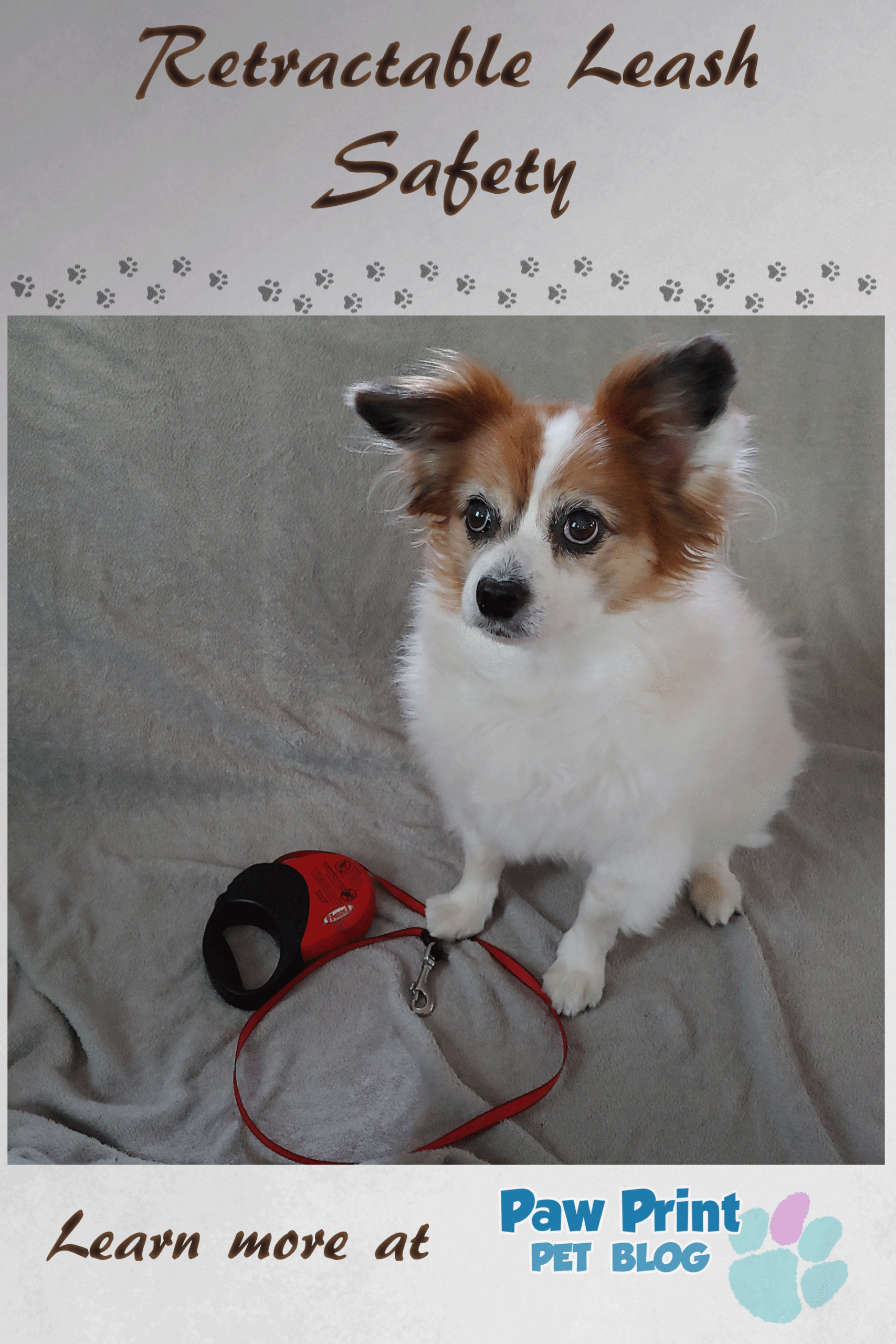
    Retractable LeashI’m going to just come out and admit it.  I sometimes use a retractable leash on Kitsune.  I’ve been doing so for over 13 years now without a single issue.
    I know there is a lot of controversy surrounding their use.  In most situations, I agree that regular leashes should be used over retractable leashes.  I also don’t deny that retractable leashes do come with their share of problems.  Most of which are caused when they are used irresponsibly.  However, I also believe that, under the right circumstances, retractable leashes can be a great tool to give well-behaved dogs a little extra freedom.

    Like any other tool, anyone who is going to use a retractable leash should learn how to do so safely and responsibly.  Whether you already use a retractable leash or are thinking about starting to use one, here are some safety tips you should always follow.

    Post Contents:

    • 1 Using any type of leash never replaces training.
    • 2 Respect is key.
    • 3 Stay alert and know your dog.
    • 4 Only use retractable leases in appropriate environments.
    • 5 Select the correct gear.
    • 6 So many of the issues I’ve heard or read about involving retractable leashes had to do with human error.

    Using any type of leash never replaces training.

    This is especially true when it comes to retractable leashes.  I didn’t start using a retractable leash with Kitsune until after he had learned some basic commands, including coming when called, leave it, sit, stay, and heel.  Kitsune knows not to pull hard when/if he gets to the end of his Flexi.  He runs to me if I call him.  He walks just as nicely next to me on his flexi as he does on his regular leash when I ask him too.

    Respect is key.

    It’s rude to allow your dog to run up to another person or dog without permission.  Flexi leashes allow your dog to get further away from you.  They require a little bit more vigilance on your part.  For the most part, I don’t use retractable leashes with Kitsune if other people are around.

    Stay alert and know your dog.

    Retractable LeashWhen you are walking your dog on a retractable leash, it’s important to be walking your dog.  As in, paying attention to your dog at all times and not talking on your phone, listening to music, or being otherwise distracted.  Don’t use retractable leashes in potentially dangerous locations, such as crowded areas or near busy roads.
    Only use retractable leases in appropriate environments.

    I would never use our Flexi leash to walk around in the city.  I use ours mostly in wide open places, especially where there are no other people/dogs around.  For example, I like to put Kitsune on his retractable leash when we go to the park, the beach, and sometimes on hikes depending on the area.

    Select the correct gear.

    Many of the dangers you hear about retractable leashes can be mitigated by selecting the correct products for your dog.  If you’re worried that dropping your retractable leash will frighten your dog and cause him to bolt, a simple wrist strap can be added.  This way, if you do loose grip on the leash, the heavy part of the leash will hang from your wrist instead of falling to the ground.

    Retractable leashes come in different sizes, strengths, lengths, etc.  Take the time to select the one that is right for you.  If you are worried about corded leashes, you can get all nylon Flexi leads (this is the type I use).  Also, check your leash often for signs of wear or damage, and replace as needed.

    So many of the issues I’ve heard or read about involving retractable leashes had to do with human error.

    I don’t think that retractable leashes themselves are bad.  But they are not by any means appropriate for every dog or in every situation.  Part of using a retractable leash responsibly is having the common sense to know when you should not use one.  That may mean not using them in certain environments.  Or maybe not using them at all if they are not suitable for you or your individual dog.

    Unfortunately you can be the best dog owner in the world, but there’s nothing you can do to control the actions of other people.  I definitely do understand why some people get nervous when they see other dog owners using a retractable leash.  What do you think?  Do you love or hate retractable leashes?  Or do your opinions fall somewhere in between?  Comment below!

    Retractable Leash

    Kitsune, The Paw Pack

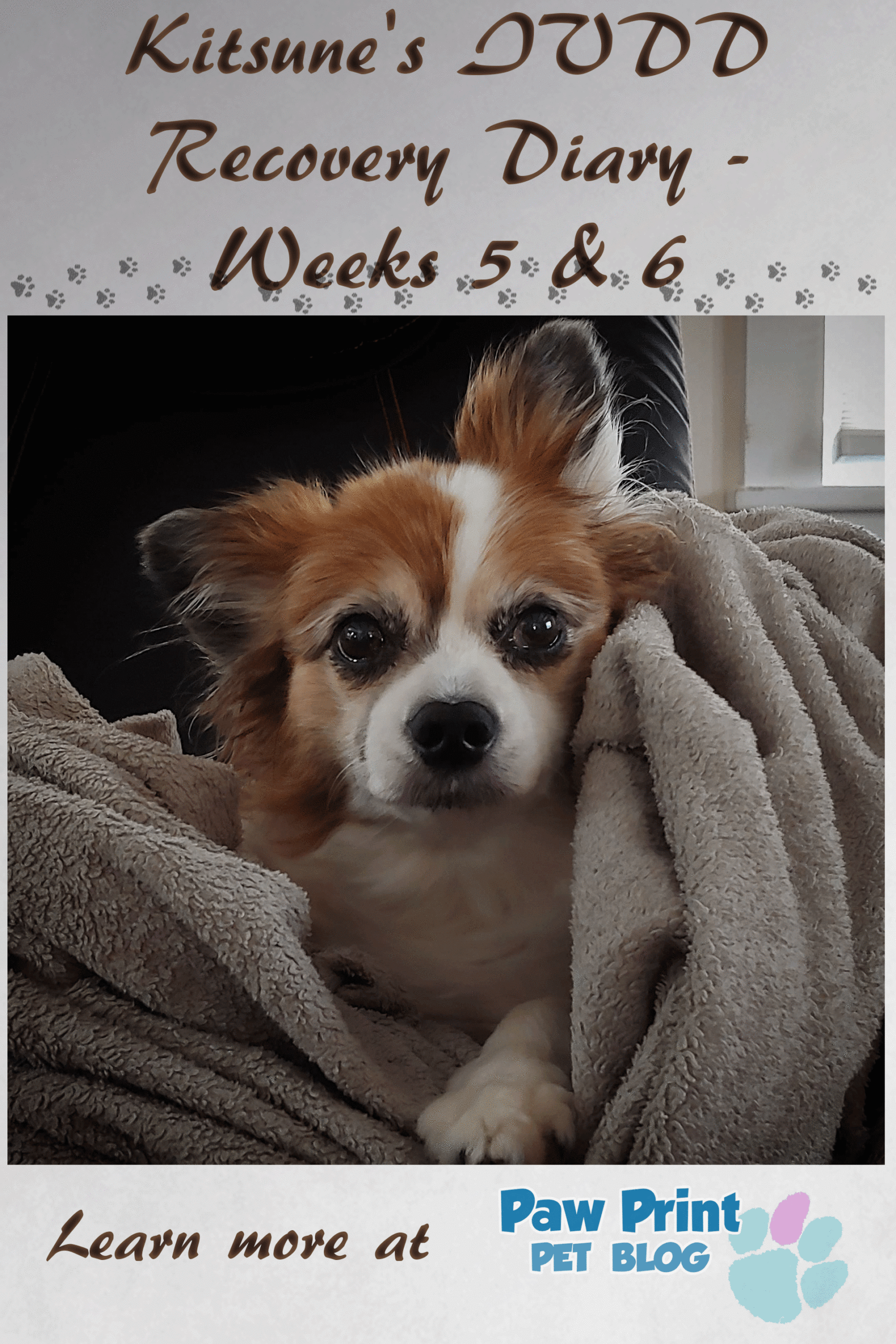
    Kitsune’s IVDD Recovery Diary – Weeks 5 & 6

    October 29, 2022

    Look at us doing a two-week update all in one post!  For those who don’t already know, my sweet senior papillon Kitsune was diagnosed with cervical IVDD on September 17th.  Thankfully his case was considered minor.  He was in a lot of pain, but (thankfully) never lost any neurologic function.  His vet and I decided that conservative treatment was the best course of action.  Kit was placed on 8 weeks of rest as well as a handful of medications to address inflammation and pain.

    As of Friday, October 28th, we’ve made it 6 weeks into Kit’s 8-week recovery time!  Up until now, I’ve been posting weekly updates on Kitsune’s recovery.  But I feel like our updates were getting quite boring.  After the first couple of weeks, Kit was essentially back to his normal, happy, pain-free self.  Since then we’ve been continuing to keep him resting.  Disc issues, unfortunately, take quite a while to fully heal.  Despite Kit feeling better and wanting to get back to his normal antics, we’ve been reducing his activity so that the injured disc in his neck has all the time it needs to heal.  A reoccurrence of his IVDD so soon after his first episode is the last thing we want!

    Post Contents:

    • 1 Follow Kitsune’s IVDD Recovery Journey…
    • 2 Saturday, October 15th – Friday, October 21st
    • 3 Saturday, October 22nd – Friday, October 28th
    • 4 That’s it for now!

    Follow Kitsune’s IVDD Recovery Journey…

    • Kitsune’s IVDD Recovery Diary – Week 1
    • Kitsune’s IVDD Recovery Diary – Week 2
    • Kitsune’s IVDD Recovery  Diary – Week 3
    • Kitsune’s IVDD Recovery Diary – Week 4

    Saturday, October 15th – Friday, October 21st

    Recovery week 5 was particularly uneventful.  This week, Kit was still on his every-other-day taper dose of Prednisone.  We’ve pretty much fully transitioned from strict crate rest to rest outside of his crate.  We’re still restricting too much movement, especially jumping.  Thankfully, as long as Kit is with either my partner or me he’s pretty content.  He doesn’t understand why we haven’t been letting him jump onto the furniture, but we have lots of dog beds and blankets set up throughout the house so Kit can get comfortable no matter what room he’s in.

    I noticed Kit’s been having a bit of shaking/weakness in his legs.  It’s not anything super dramatic.  I notice it most often when he goes outside and balances to use the bathroom.  It doesn’t seem to bother him or cause him any pain.  I did a phone consult with his vet and she seems to think that it’s a side effect of the Prednisone.  Kit’s also been drinking/peeing a lot more than normal thanks to the Prednisone.  We scheduled a check up for next week, just to make sure that everything is ok and that Kit’s recovery is still on track.

    Saturday, October 22nd – Friday, October 28th

    IVDD recoveryWeek 6 is now behind us!  The last six weeks of Kitsune’s IVDD recovery went by a lot faster than I thought they would.  Early this week we got Kit into the vet.  Thankfully, it went really well!  The vet said that the shakiness I’ve been noticing in Kit’s legs is being caused by muscle wasting, at least partly caused by the Prednisone he’s been on.  The fact that he’s been on strict rest for the past 6 weeks contributed too.  Him drinking and urinating more often is also a side effect of the Prednisone.

    Thankfully, as of Wednesday October 26th Kit is officially off Prednisone!  So he’s no longer taking any prescription meds because of his IVDD.  The vet gave us the ok to, very slowly, start exercising Kit again.  This week we started with slow, 5 minute walks on flat ground.  Over time I’ll slowly be increasing the amount of time I walk him for.  We’ll be continuing to restrict him from running and jumping for at least the next 2 weeks.

    That’s it for now!

    I’m so glad that Kitsune has been recovering so well!  It’s crazy to me that we only have 2 more weeks left before we can officially say this bout with IVDD is behind us.  Hopefully we won’t ever have to deal with it again, but, as our vet keeps reminding us, IVDD is a hereditary disease and, sadly, Kit may experience flares of it again in the future.  I’m going to do everything in my power to prevent that from happening.  But I will, at the same time, be prepared for future flares since you, sadly, can’t always prevent IVDD.

    Now that Kit’s off prednisone I’m hoping it doesn’t take too long before the side effects of that start going away.  Our next update will most likely be in two weeks, when Kit is officially completed with his 8 weeks of recovery!  If anyone wants more frequent updates, you can follow us on Facebook or on Kit’s Instagram page.  Thanks again to everyone who has sent Kit well wishes and followed his recovery during the past 6 weeks!

    IVDD recovery

Older Posts
Newer Posts
It's a beautiful day to play ball in the snow ❄️ It's a beautiful day to play ball in the snow ❄️
Today would have been Kit's 17th birthday. My best Today would have been Kit's 17th birthday. My best buddy...not a single day goes by that I don't think of him. Forever a beloved member of our little pack ❤️
Someone stole his dad's socks 😂 10 years old and s Someone stole his dad's socks 😂 10 years old and still as mischievous as a pup!  This little one makes me laugh everyday and I'm SO thankful for him. 💙
New phone, who dis!? 😅 Sorry for the lack of new New phone, who dis!? 😅 
Sorry for the lack of new Fen pics lately... My old phone broke and it took me awhile to replace it. 
Fen is his happy, sassy, playful self and is doing well. 💙
Fen makes me laugh so much! Today is my partner's Fen makes me laugh so much! Today is my partner's birthday. ❤️ I almost always wake up earlier than him, so this morning I was planning on getting up to decorate for his birthday. I wanted to surprise him with decorations and his presents set out when he got up.

Well...Fenrir ruined it all, because as soon as he saw the wrapped presents for my partner, he got SO excited! And if you have ever had the pleasure of meeting an Alaskan Klee Kai you will know, when they get excited, they just have to make sure everyone knows about it!

Long story slightly shorter, Fen woke my partner up early, on his birthday, all because Fen REALLY wanted to open presents that weren't even for him! I didn't get to decorate, but lesson learned - don't put gifts where Fen can see them because he will get really, really excited about it.

And just so you all don't feel too bad for him...I ended up wrapping one of Fen's Christmas presents and giving it to him to open early! 🤣
Follow on Instagram
Facebook Instagram Pinterest Youtube

Copyright © 2025 Paw Print Pet Blog. All Rights Reserved.

Back to top