• Home
  • Popular Topics
    • Papillons
    • Alaskan Klee Kai
    • Hiking with Dogs
    • Dog DIY
    • Recipes
    • Dog Product Reviews
    • Can Dogs Eat…
    • Dog Health
  • The Paw Pack
    • Kitsune (2008 – 2024)
    • Fenrir
  • Policies
    • Disclaimer
    • Privacy Policy
    • Work with Us
    • Site Map
  • Contact

Paw Print

    Senior Dogs

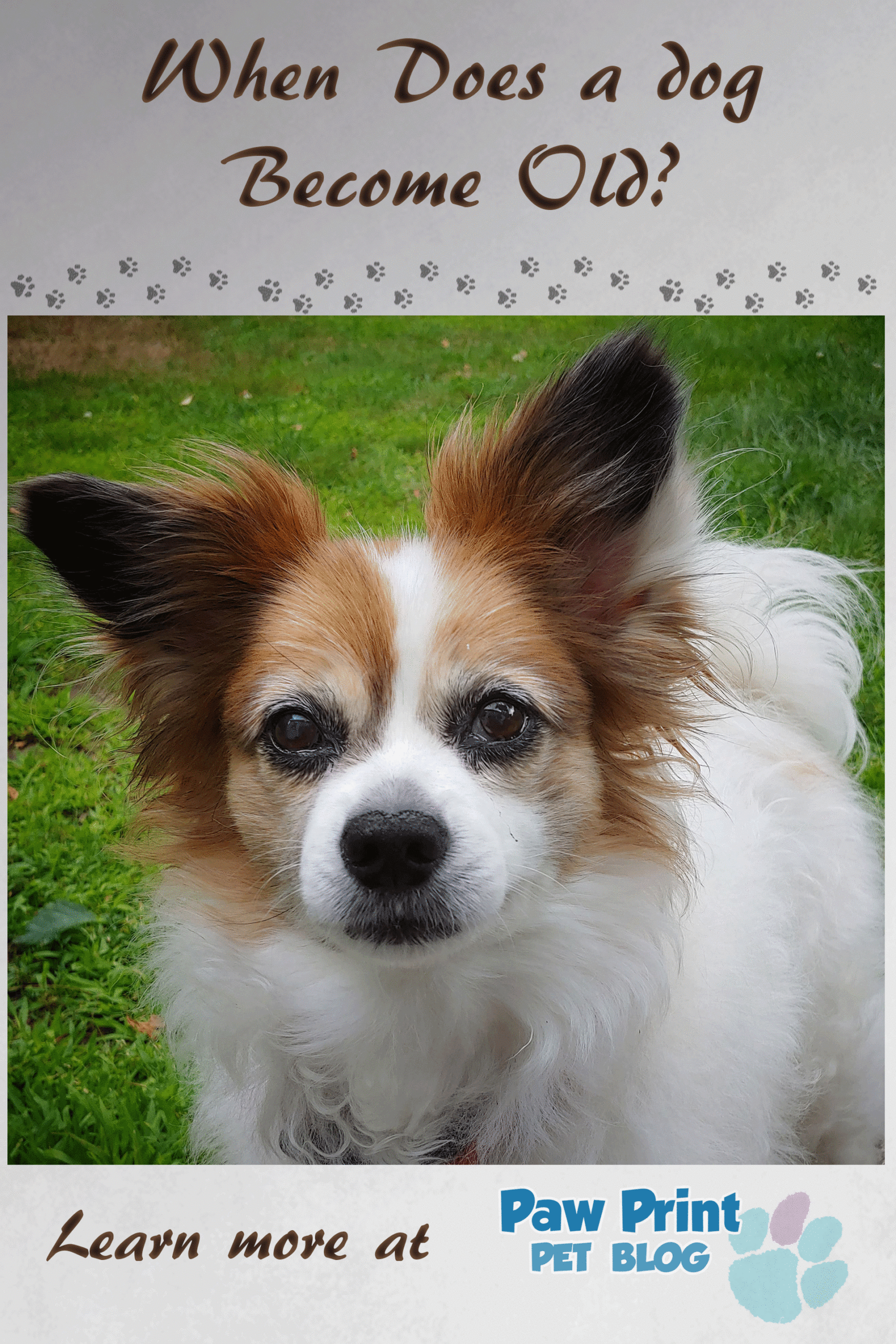
    When Does a dog Become Old?

    September 3, 2022

    It’s a question most pet owners, at some point in their pet’s life, will probably ask.  At what age do we start to consider our dog to be old?

    Post Contents:

    • 1 When is a dog considered to be a senior?
    • 2 Those numbers, however, are just an approximation.
    • 3 Age is just a number!
    • 4 Most importantly, love your senior pet!

    When is a dog considered to be a senior?

    Although it may seem pretty straight forward, it can actually be a difficult question to answer.  There is no magic number that, when your pet reaches that age, it causes him/her to suddenly become old.  Aging is a process, and how it effects your dog can depend on a lot of different factors.

    In general, a pet can be considered to be a senior when he/she reaches an age that is at least 2/3rds of the total average life span for their breed.  Dog breed that are estimated to live an average of 15 years can generally be considered senior citizens when they reach the age of 10.

    Those numbers, however, are just an approximation.

    dog old

    My Kitsune, who is currently 13.

    Just like some people die young, while others live passed 100 – some animals outlive their expected lifespan, while others, unfortunately, pass away before ever reaching old age.  These types of variations in age can be influenced by many factors, such as health, diet, and even genetics.

    With so many different variables involved, it’s easy to understand why it can be hard to say for sure at what age a pet should be considered old.

    Age is just a number!

    Rather than preoccupying ourselves with our pet’s age, why not just keep a close eye on your pet’s general health?  Age is just a number, after all!  It’s something most pet owners do already, and there are certain medical conditions that become much more common as animals age.  They can include…

    1. Arthritis
    2. Cancer
    3. Cognitive disorders
    4. Prostate disease
    5. Intestinal issues
    6. Deafness
    7. Vision problems
    8. Dental disease
    9. Diabetes
    10. Liver disease
    11. Kidney disease

    Make sure your pets receive regular wellness exams from their veterinarian.  Even if your pet is still young, preventative care throughout an animal’s life can help to reduce the chances of them developing serious issues later in life.  Yearly wellness exams are most common.  But for senior dogs your vet may, at some point, recommend you bring your pet in every 6 months.

    Most importantly, love your senior pet!

    Just because an animal is old, doesn’t mean he/she can’t still enjoy life.  Sure, daily walks may need to be shorter, but exercise is just as important to senior pets as it is for their younger counterparts.  Many older animals enjoy remaining active, both physically and mentally, well into their senior years.  And even if your pet does start to slow down a bit, he/she will still enjoy spending quality time with beloved pack members.  You’ll be hard pressed to find a companion more loyal than a senior dog who’s grown old under your loving care!

    dog old

    Pet Products

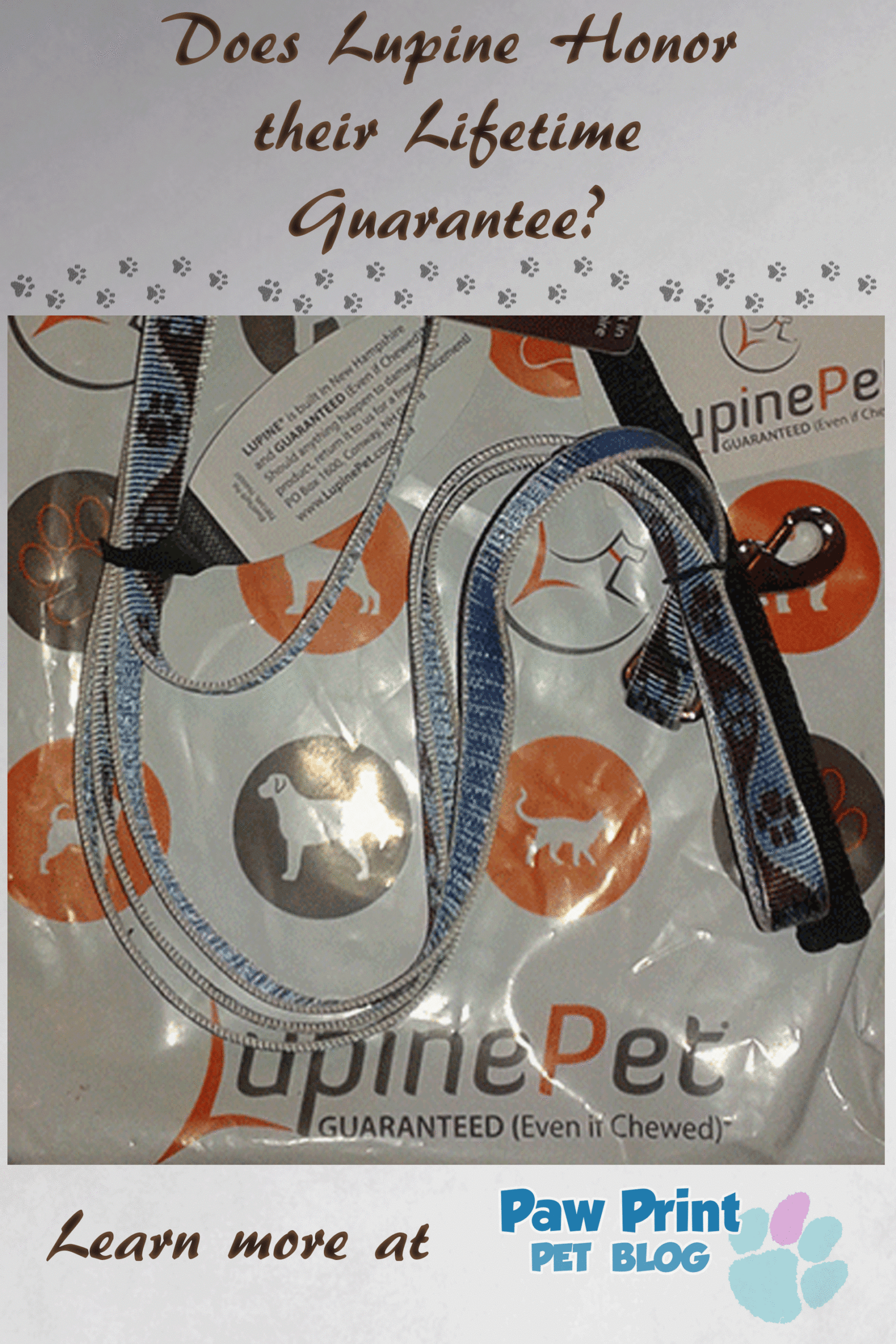
    Does Lupine Honor their Lifetime Guarantee?

    September 2, 2022

    Lupine GuaranteeLupine is a New Hampshire based company that is best known for its adorably designed dog leashes, collars, and harnesses.  I’m really surprised that I haven’t posted a Lupine review until now.  We’ve had our original Lupine leash for almost as long as we’ve had Kitsune!

    This article was originally posted on April 24th, 2017.  It was edited/reposted on September 2nd, 2022.

    Lupine Products

    Most of Lupine’s products are made from high quality nylon webbing.  I know – sounds like just another nylon dog leash right?  But Lupine’s products come in a wide array of adorable designs!  The first Lupine leash we ever got was a plain red one, but we’ve since decided to go with the “Wild West” pattern for Kitsune.  Kitsune has 2 Lupine leashes, a collar, and a Roman harness.

    All the products we’ve tried have been very well made.  The buckles on the collars and harnesses are easy to open, but also very sturdy.  The D-rings, for leash attachment, are also strong and firmly attached.   The collars and harnesses are adjustable, and stay at the size you set them too.  I love the padded handles on the leashes.  They are the perfect size for looping around your wrist for a bit of added security in case you accidentally let go of the leash.  I’ve never had a single instance of the leash clips not staying clipped to Kitsune’s harness, which is more than I can say for other leashes I’ve used.

    Most of Lupine’s products come in different sizes for different sized dogs, as well as a size for cats.  I’ve actually been using the small 1/2” width leash for Kitsune, even though he is probably technically a medium sized dog.

    Lupine’s Lifetime Guarantee

    If Lupine’s awesome designs and high quality products don’t draw you in, their lifetime guarantee should!  Lupine will replace damaged products, no questions asked, even if your dog chews on it!  You don’t even need to show your receipt.  Just return your damaged Lupine product in the mail, or upload a picture via their website, and you’ll be sent a free replacement.  Sounds too good to be true right?

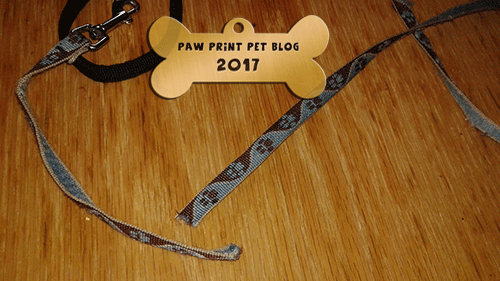
    We had the opportunity to put Lupine’s lifetime guarantee to the test!  In May of 2015 I purchased Fen his first Lupine leash, a 1/2” width leash in the design “Muddy paws”.  Like the leash we had used for Kit for many years, we had no issues with the leash we bought for Fen.  Until, that is, I stupidly left Fen’s leash attached to his harness for a few minutes without directly supervising him.  He was indoors, so escape wasn’t an issue, but I left the room Fen was in for a few minutes and returned to see that he had chewed his leash completely in half.

    Lupine Guarantee

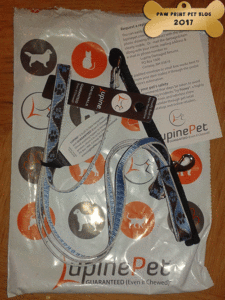
    I decided to take advantage of my own stupidity and use this opportunity to test out Lupine’s guarantee.  Hey, they do say they’ll replace damaged products even if your dog chews them.  I filled out the EZ return form on Lupine’s website and included the above picture of our broken leash.  The form was easy to fill out and the best part?  Not long after filling it out we received this in the mail…

    Our replacement leash!

    Lupine GuaranteeHow awesome is that?  The whole process was fast, and hassle free. Lupine replaced our leash even though I let them know that I had purchased it a few years ago and that the damage to it was caused by my dog.

    FYI, I kept the fact that I am a pet blogger and that I had plans of blogging about my experience replacing our leash secret.  No special treatment here – Lupine just has awesome customer service!

    Lupine does honor their lifetime guarantee!  Per their guarantee, a replacement (collar, leash, other pet gear) will be sent if your original was “accidentally damaged during normal pet-related activities, even chewing accidents”!  

    I really can’t say enough good things about Lupine, especially their leashes.  Their designs are really cute, but more importantly the products are well made – and you can’t beat their guarantee!

    You can purchase Lupine products online through their website, through numerous other online realtors, and in some local stores.

    Lupine Guarantee

    Pet Tips

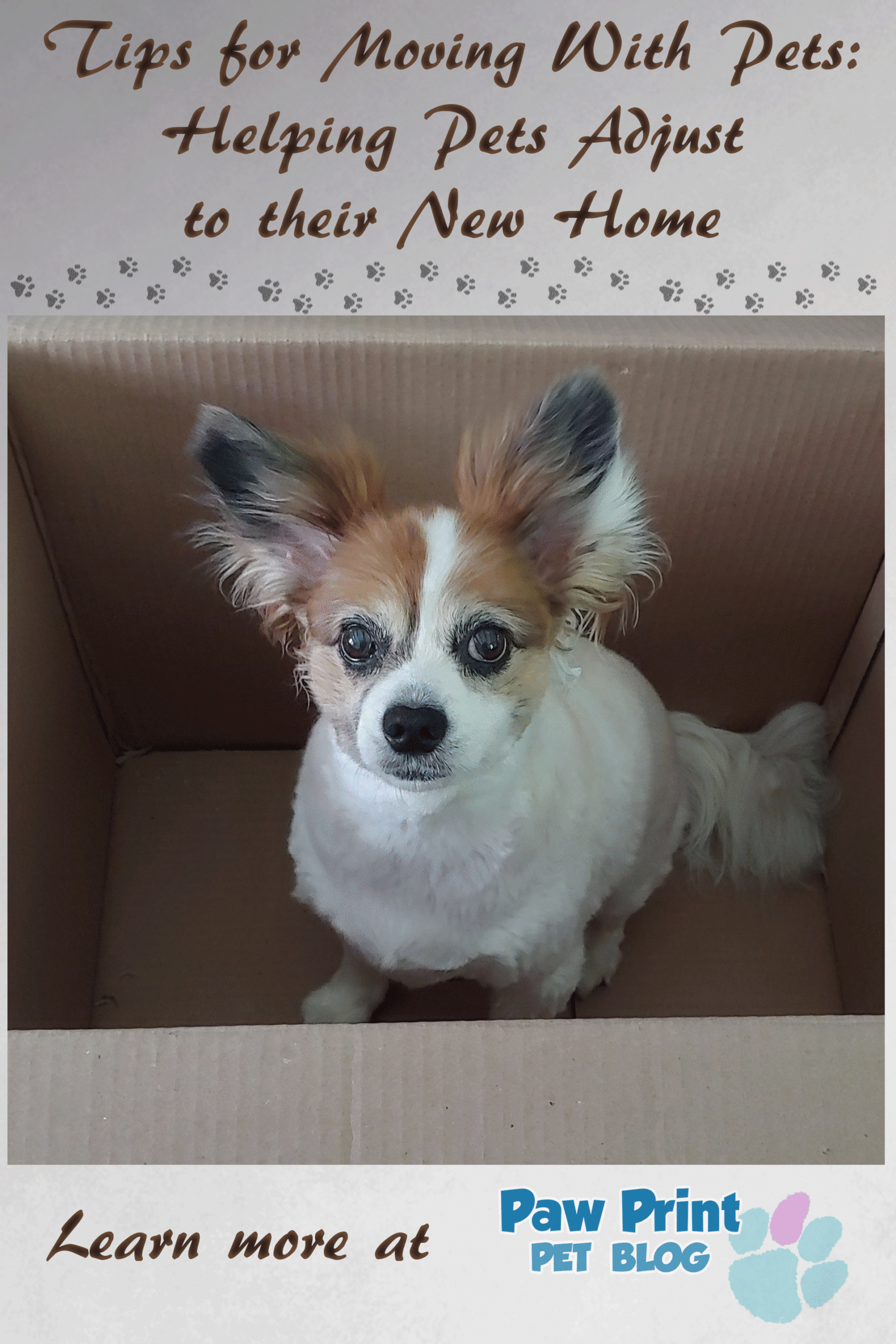
    Tips for Moving With Pets: Helping Pets Adjust to their New Home

    September 1, 2022

    Moving can be stressful.  It’s one thing for the people involved, who understand what’s going on.  It’s quite another thing for our pets, who have their worlds turned upside down with no understanding as too why.  Moving prep, and the actual move are stressful in themselves.  When they’re over most people want to, finally, be able to relax in their new home.  Your dog, however, will probably require some time to adjust to their new home!

    This article was originally posted on October 22nd, 2019.  It was edited and reposted on September 1st, 2022.

    dog adjust new homeIn late 2019 my little pack and I moved a bit over 300 miles, from the apartment we had spent 10+ years in to a house in the country.  It was the first time I had ever completed a move with dogs.  My papillon, Kitsune, was 10 years old when we moved.  I worried a lot about how he’d adapt to all the changes ahead.  Not only the new house, but also the fact that we were moving from a bustling city to a very small town.  How would my city dog deal with our new, country lifestyle?

    Post Contents:

    • 1 A big adjustment!
    • 2 Here are some tips I utilized to help my dogs’ adjustment period go as smoothly as possible…
    • 3 First and foremost, keep your pets safe!
    • 4 Give Fido the grand tour!
    • 5 Stay with your pet(s) as much as possible.
    • 6 Give your pets a bit of a free pass.
    • 7 Stick to a routine, and make changes gradually.
    • 8 Get plenty of exercise.
    • 9 Make your new home a positive place for your pets to be.
    • 10 Always remember to keep your pet’s individual quarks in mind when coming up with ways to help them adjust to new surrounds.
    • 11 If you are in the beginning stages of your move and looking for more tips about moving with pets, be sure to check out my previous posts:

    A big adjustment!

    Thankfully, both of my dogs did end up adjusting pretty well.  It’s amazing how adaptable even older dogs can be.  Not unexpectedly, the first couple of days in our new home were the roughest.  Kit especially seemed a bit stressed, and confused.  It didn’t take too long for both of my dogs to settle in, though.  I can’t say  for sure whether or not Kit misses all his old city haunts.  But what I can say is that he loves having a yard to run around in, spending more time outdoors, and having both of his humans working from home!  After a very short adjustment period, both Kit and Fen seemed to be very happy in our new home.

    Here are some tips I utilized to help my dogs’ adjustment period go as smoothly as possible…

    First and foremost, keep your pets safe!

    dog adjust new homeBeing in a new place for the first time can be scary, and some animals cope with fear by running away from it.  If your new yard is fenced, make sure to check it over before counting on it to keep your pet contained.  Otherwise, dogs should be kept leashed when outdoors, at the very least until they become more familiar with their new surroundings.  Pet proof your new place before giving your pet free reign.  Make sure there’s nothing dangerous he/she could get into.  Keep current forms of ID on your pets as backup in case they get loose.

    Give Fido the grand tour!

    When you’re ready to introduce your pet to his new home, give him a tour of the place.  Show him where important things are such as food and water bowls, a comfortable spot to relax in, and the place you’ll expect him to use the bathroom.  Knowing where all the important things are can go a long way towards helping your dog adjust to their new home.

    Be patient with your pet as he/she learns the new layout.  Kit, my older dog, got lost a few times in our new house.  He would go downstairs to get a drink, then forget, in the dark, how to get back to the bedroom.  During our first week here I had to go downstairs and ‘rescue’ him a few times.  I’d just calmly lead him back to the bedroom.  After about a week he seemed to be much more familiar with the new place, and hasn’t gotten ‘lost’ since.

    Stay with your pet(s) as much as possible.

    dog adjust new homeAt least at first.  When you move, you uproot so much of your pets’ life, it’s comforting for them to have you around.  My fiancé and I are very lucky to both be working from home now.  If you don’t have that luxury, take some time off (if you can) right after the move.  You don’t necessarily have to do anything special.  Just be there for them so they don’t feel alone in a place they are unfamiliar with.

    Give your pets a bit of a free pass.

    Accidents happen!  Your dog may need time to adjust to their new home before they figure out where they are supposed to go.  Have patience with pets when it comes to learning things like where they are supposed to go to the bathroom.  Depending on your pet, a bit of retraining may be in order.  And that’s ok!  Especially if you’re pet is an adult and was potty trained before, they should catch on to the correct place to go in no time, with just a bit of help from you.

    Stick to a routine, and make changes gradually.

    Right after we moved I noticed that Fen was having accidents, but he’d only have them around the times that I used to take him out for walks.  I realized that I had tried to change his schedule too quickly, without giving him and his body much time to adapt.  Once I got him on a schedule that more closely resembled the one he was used too, the accidents stopped.  Changing your schedule after a move is ok, and usually (I think) expected, but do it as gradually as possible so your dog has time to adapt.

    Get plenty of exercise.

    This is another one of those times when walking the dog might be low on your list of things you want to get done.  There’s so much to unpack!  But a mentally and physically exercised dog is a better behaved dog, which is amazing when you don’t want Fluffy to take unpacking into her own paws (jaws, should I say?).

    Make your new home a positive place for your pets to be.

    Have fun!  Do things your pet likes to do – Play ball, give them puzzle toys or stuffed Kongs, take time to snuggle on the couch.  I know moving can be hectic!  Once you’re finally in your new place you may want to really concentrate on unpacking.  But taking the time to relax and have a bit of fun can really go a long ways towards making your pets feel comfortable in their new surroundings.  And you never know, a bit of down time may help you as well!

    Always remember to keep your pet’s individual quarks in mind when coming up with ways to help them adjust to new surrounds.

    What would be really dog adjust new homehelpful for one, might not work for another.  For Kitsune, he really seemed to settle in as soon as he figured out where the essentials were located in the new house.  As long as he had access to water, a comfy bed, and food, he was pretty happy.

    Our bed was one of the few pieces of furniture we moved with and right after we set it up in our new bedroom.  Kit, in his typical fashion, was hogging it.  I gave him stuffed Kongs and other puzzle type food toys while we were unpacking and he was in his glory.  Fen, on the other hand, is super high energy.  The thing that really helped him adjust quickly to the new place was showing him how much fun it could be.  He loves playing fetch, and with his flirt pole in the yard.  I’ve been taking him (and Kit too) hiking as often as I can.

    If you are in the beginning stages of your move and looking for more tips about moving with pets, be sure to check out my previous posts:

    Moving Prep with Pets: Tips to Combat Stress while Preparing to Move

    Tips for Moving with Pets: Moving Day

    Comment below!  Have you ever moved with pets?  Or maybe you’re planning a move now?  Good luck, if that is the case.  If you’ve moved with pets before, what tips would you share with other pet owners?  What helped your dog to get through the move, and adjust to their new home?

    I really worried a lot about how my dogs would take our move.  But, in the end, they both ended up doing really well.  With a little bit of help, your dog should adjust quickly to their new home too!

    dog adjust new home

    The Paw Pack, Fenrir, Kitsune

    The Stories Behind my Dogs’ Names

    August 31, 2022

    Post Contents:

    • 1 What’s in a name?
    • 2 Kitsune Trouble
    • 3 Yes, Kit’s middle name really is Trouble.
    • 4 Fenrir Snowsong
    • 5 Fenrir’s middle name is Snowsong.
    • 6 Want to see more of Kit and Fen?
    • 7 There you have it, the stories behind my dogs’ names!

    What’s in a name?

    From common to downright wacky, pet owners seem to love telling the stories behind their pets’ names.  It makes me laugh to think about when we first met with the dogs’ new/current vet.  After being introduced to both of our dogs for the first time, she exclaimed “can’t you give your dogs normal names!?”.  Nope!  I’ve always liked giving my animals more unique/unusual names.  The lower the chances of meeting another animal with the same name as any of mine, the better!  Here are the stories behind Kit’s and Fen’s names!

    Kitsune Trouble

    Called most often: Kit

    Other nick names include: Muscle man, Sune, Trouble

    Kitsune, basically, means fox in Japanese (learn more here).  Foxes, or kitsune, are common in Japanese folklore and are often portrayed as intelligent, mischievous, magical creatures.  All characteristics that seemed to fit our (then) 9 week old papillon puppy very well – especially the intelligent and mischievous part!

    Photo Credit: Wikimedia Commons: /File:Tsugawa_kitsune.JPG

    I give my fiancé credit for naming Kitsune.  He’s always really like Japanese folklore.  We felt like the name Kitsune fit our very smart, very silly, very mischievous little pup.  To top it all off, Kit has a huge fluffy tail that, as many people have remarked over the years, looks somewhat like a fox tail.  The brownish-red mask markings over our Kitsune’s face also reminded us a bit of a red and white Japanese kitsune mask.

    Yes, Kit’s middle name really is Trouble.

    He more than earned his middle name when he was a puppy.  As a senior, he doesn’t get into quite as much trouble as he used to (I write as Kitsune tries to pull the bag out of the trash can), but he still lives up to his name with his sassy personality.

    dogs names

    Fun Fact: My fiancé still to this day occasionally teases me about how “bad” I am at naming animals because, before we settled on Kit’s name, the name at the top of my list was “Trevor”.  Does it make it any better that I wanted to name him after MAGICAL Trevor?  Everyone loves magical Trevor!

    dogs namesBefore we got him Kitsune’s name was Raindrop – thanks to an adorable marking on his head that is shaped like a raindrop.  I always felt like it was ironic, though, because Kit has always hated the rain.  He was 9 weeks old when we got him and didn’t seem to know his name yet, so luckily it wasn’t a big deal for us to change it.

    Looking back, I don’t think Trevor or Raindrop would have been fitting names for Kit.  I guess it’s good we eventually settled on Kitsune!  As our readers probably know, most of the time we just call him “Kit”.  It’s easier for most people to pronounce, and we don’t get quite as many weird looks telling people his name is Kit verses Kitsune.

    Fenrir Snowsong

    dogs namesCalled most often: Fen

    Other nick names include: Little man, FenFen, Fenris

    I’m not sure Fenrir’s name story is as interesting as Kit’s.  We actually had Fen’s name picked out years before we ever got him.  The name Fenrir is from Norse mythology.  The Fenrir/Fenris of myth is a huge monstrous wolf who is the son of the Norse god Loki (learn more here).  I guess I see something of a trend, Kitsune and Fenrir have not been our only pets to be named from various mythologies.

    Photo via Wikimedia Commons: Battle with Fenrir: /File:Gosforth_Cross_V%C3%AD%C3%B0arr_detail.jpg

    I clearly remember a conversation my fiancé and I had waaay back when we first started dating.  I told him that someday we were going to live together and have a husky.  Well, thanks in large part to Kit, we decided that we’re actually small dog people.  At some point we discovered Alaskan Klee Kai and the rest, as they say, is history.  Now, all these years later, we live together and have our very tiny ‘husky’.  We waited a long time for our Fenrir, and at some point in that time talked about how funny it would be to get a tiny dog, but name him after a huge monstrous mythological wolf.

    When we got Fen he was really small, and right from the start he was a pretty nervous/shy dog.  The name we had picked for him all those years ago strangely seemed to fit him.  I also liked the idea of giving our tiny, scared little pup a really strong name.

    dogs names

    Fenrir’s middle name is Snowsong.

    There’s not really much of a story as to why.  I liked the way that it sounded and thought it was a cute middle name for an adorably cute little pup of the north.  I thought that a softer middle name might potentially take some of the harshness out of his first name.  Fen is a very talkative little guy who loves to ‘sing’ and he also, as all proper northern breed dogs do, loves the snow.

    Because we had picked Fenrir’s name before we even met him, we didn’t really think much about other names for him.  His name before we got him was “Bob”, which we thought was funny, but not the most fitting name for him.  Fen was also young when we got him and didn’t have any issues adapting to his new name.

    Want to see more of Kit and Fen?

    Besides just reading through my other posts here, Kit and Fen also both have their own Instagram accounts.  Yes, I am extra when it comes to my dogs.

    • Kitsune on Instagram
    • Fenrir on Instagram

    There you have it, the stories behind my dogs’ names!

    I’m surprised, actually, that I never posted this before.  I always think it’s interesting to learn what people have named their pets, and why.  What are your pet(s) named?  Do you have an interesting story for how you came up with their name/s?  I’d love to hear them in the comments below!

    dogs names

    All About Dogs

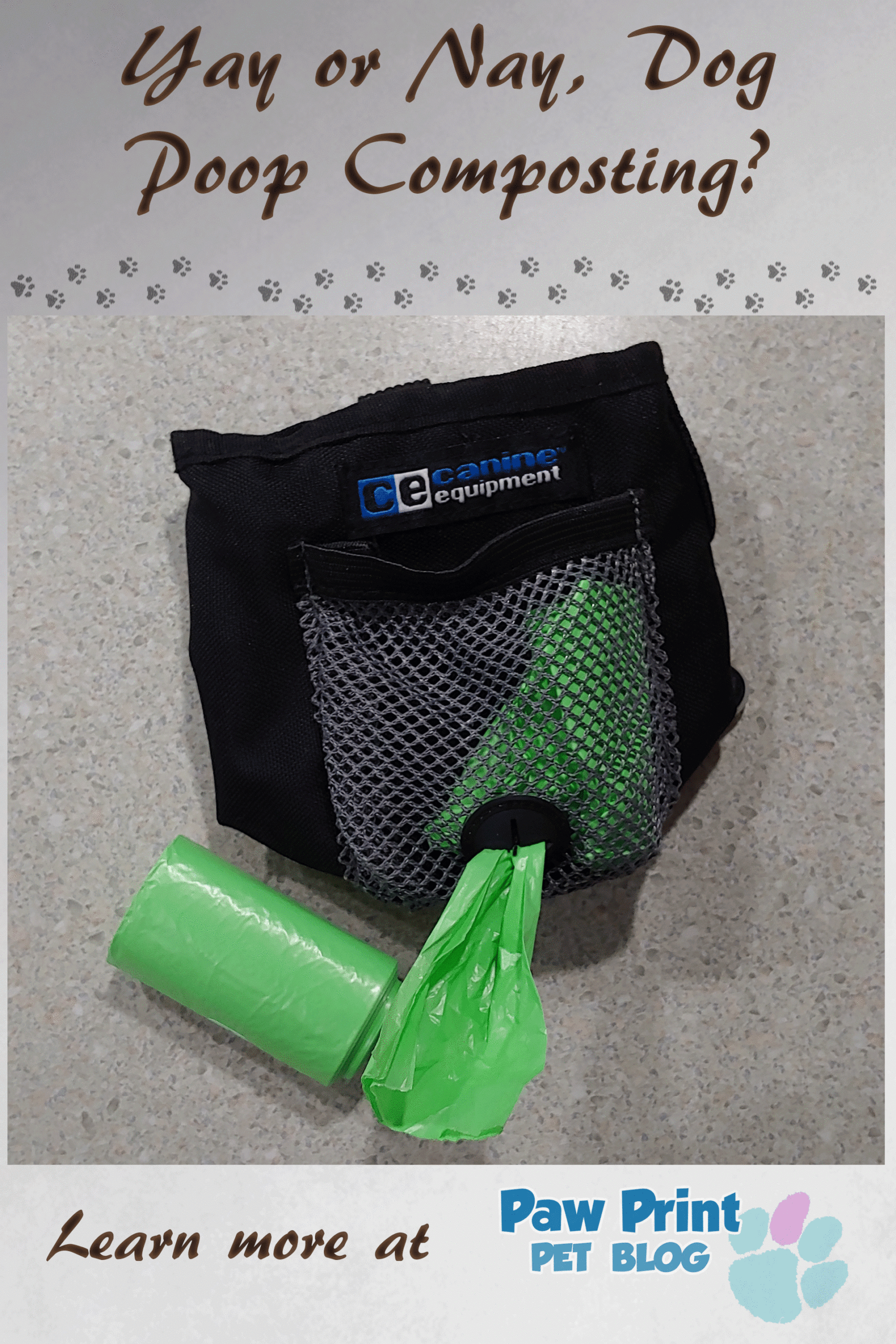
    Yay or Nay, Dog Poop Composting?

    August 30, 2022

    Don’t worry, I’ll spare you from having to look at pictures of dog poop, despite this blogs title!  It may not be the best part of owning pets, but hey, poop happens!  Dog owners, responsible ones at least, have to figure out the best way to dispose of their furry friends’ waste.  Composting the feces of herbivores (rabbit, cows, horses, etc.) is pretty common place.  But did you know that it’s possible to compost the poop of carnivores as well?

    Post Contents:

    • 1 Feeling a bit skeptical?
    • 2 The “recipe”
    • 3 But why, you ask?
    • 4 Can you actually use composted dog poop to fertilize plants?
    • 5 What do you think?
    Feeling a bit skeptical?

    Dog Poop CompostingI don’t really blame you.  Before getting dogs myself, I never thought much about how to dispose of the waste of carnivores.  Dog waste, when disposed of improperly (or not at all) can cause a number of issues.  Dog waste can spread parasites and bacteria, and is bad for the environment.

    • Why It’s Important to Pick Up After Your Dog

    For a long time, I always just assumed that only the poop of herbivores could be safely composted.  Afterall, when you hear people talk about using poop as compost for their gardens, it’s usually something like rabbit or cow manure that’s used.

    The “recipe”

    Apparently, composting doggy doo is very similar to composting other things.  The secret is that you want the compost to heat up to the magical number of at least 145*f, for at least several days.  This temperature is required to kill off pathogens naturally present in your dog’s waste.  And you’ll want to add other compostables into the mix, as sources of carbon and nitrogen.  Things like grass clippings, and vegetable waste, along with your dogs poop, can serve as sources of nitrogen.  For carbon, you’ll want to add things like stray or hay, sawdust, shredded newspaper, and/or leaves.

    For anyone interested in composting pet waste, but not up for creating their compost bin from scratch, you can purchase already made dog doo composters.

    But why, you ask?

    Composting pet waste keeps the poo, and other pollutants such as the plastic bags you use to pick it up, out of the landfill.  It turns your pet’s waste into something that, if done properly, can be used as a soil additive.  Many of the commercially sold dog poop composters are meant to be buried underground, making them less of an eyesore.

    Can you actually use composted dog poop to fertilize plants?

    There haven’t been a lot of studies, yet, that look at whether composts heat up enough to kill the eggs of certain parasites, such as roundworms.  Because of this, it’s recommended that you use composted dog poop on decorative plants only.  It shouldn’t be used on plants grown for consumption.  And it’s still important to ensure your compost heats up to the required temperature.  You want to eliminate as many pathogens as possible.  If you want to compost pet waste for environmental reasons, but don’t want to actually use the resulting compost, it can be buried instead of used for gardening.

    Want to learn more?  In 1991, the Fairbanks Soil and Water Conservation District, with assistance from the USDA Natural Resources Conservation Service, worked with dog kennel owners in Alaska to study composting as a means of dealing with dog waste in northern climates.  The results of that study can be seen here (PDF file), including some pretty in depth instructions on how to compost dog feces, a trouble shooting guide, and even instructions of how you can make your own dog waste compost bin!

    What do you think?

    Conveniently, these days you can purchase decomposable dog poop bags.  They make composting your dogs droppings even easier.  The entire bag will break down and can be thrown directly into your compost bin.

    Would you ever consider composting your pet’s waste?  I try to be as environmentally friendly as I can.  I actually do like the idea of composting my dogs feces.  But as long as I’ve had dogs we’ve lived in rentals.  I kind of have a feeling that most landlords wouldn’t be too excited about the idea of dog poop compost bins on their property.  So, thus far, I’ve resorted to more conventual means of disposing of my two dogs’ doo.  I’ll have to revisit this topic again in the future, once we own our own property.  Even if you decide that composting your pet’s waste isn’t for you, remember that it’s still important to always pick up after your pets!

    Dog Poop Composting

    Alaskan Klee Kai

    Do Alaskan Klee Kai Make Good Apartment Pets?

    August 29, 2022

    I have two dogs.  An Alaskan klee kai named Fenrir, and a papillon named Kitsune.  I recently wrote about keeping papillons in an apartment.  I thought it would be fitting to write a similar article about whether or not Alaskan klee kai make good apartment dogs.  My little pack and I are currently living in a rental house.  But for many years we resided in a third floor, walk up city apartment.  My Alaskan klee kai joined our pack in September of 2015, and from then until we moved in late 2019, Fenrir was an apartment klee kai!  So what was my experience like living in an apartment with an Alaskan klee kai?  Would I recommend Alaskan klee kai as an apartment pet?  Read on to find out!

    Post Contents:

    • 1 Any dog can make a ‘perfect’ apartment dog!
    • 2 These traits, in general, make for a better apartment dog…
    • 3 Do Alaskan Klee Kai make good apartment pets?
    • 4 The biggest challenges of raising an Alaskan klee kai in an apartment…
    • 5 My experiences keeping an Alaskan klee kai in an apartment.
    • 6 A breed for experienced dog owners
    • 7 Making it work…

    Any dog can make a ‘perfect’ apartment dog!

    Alaskan klee kai apartmentLike I mentioned in my post about whether or not papillons make good apartment pets, my definition of what makes the perfect apartment dog might be a little lax.  Rather than recommending a specific breed for life in an apartment, I really feel like it comes down to each individual dog!  You can make generalizations about a dog based on his or her breed, but not every single individual in that breed will behave the same way.

    Whether or not your individual dog will make a good apartment pet can also come down to how dedicated you are to making your dog happy in an apartment environment.  When I was living in the city, I met all kinds of apartment dogs.  Some of which were breeds that wouldn’t normally be recommended for apartment living.  My dogs were friends with a border collie, for example, who very happily resided in an apartment building.  Her owner was very dedicated to making sure that she got enough exercise and mental stimulation, so that she didn’t go crazy living in an apartment setting.

    These traits, in general, make for a better apartment dog…

    If you don’t have a dog already, and you’re looking for one to share the apartment life with, it can help to look for individual dog who has these traits.

    • Lower Energy Dogs:  In general, lazier or lower energy dogs will be easier to manage in an apartment, especially for owners who aren’t prepared to spend a lot of time outside of the apartment exercising their dog.
    • Quiet Dogs:  This one is pretty self explanatory.  Dogs who are loud, usually by barking excessively, don’t make the best neighbors in close quarters.
    • Friendly Dogs:  Dogs that are friendly towards both strangers and other dogs are the easiest to manage in an apartment, where meeting neighbors, both people and other animals, in hallways and other public spaces is a common occurrence.
    • Dogs Without Behavioral Issues:  Separation anxiety comes into mind here.  While stressful to manage in any situation, dealing with behavioral issues in an apartment building can add an extra layer of stress.

    Notice that I didn’t mention size?  While many people think of small dogs as being more suitable for apartment life, that’s not always the case.  Many small dog breeds are actually quite high energy.  There are some larger breed dogs, such as greyhounds, who are generally lazy and calm and, although large, make better apartment dogs than a high energy, high maintenance small dog.

    Do Alaskan Klee Kai make good apartment pets?

    In my opinion, as someone who has owned an Alaskan Klee Kai for 7+ years, and who lived in an apartment with an Alaskan Klee Kai, this breed does not make the best apartment pet.  While most Alaskan klee kai are smaller dogs, and they aren’t usually overly barky, they can have some personality quarks that makes them harder than other breeds to deal with in an apartment type setting.

    The biggest challenges of raising an Alaskan klee kai in an apartment…
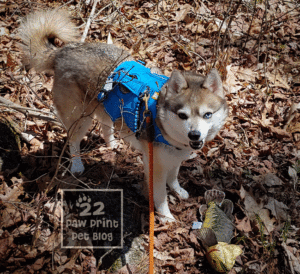
    Alaskan klee kai apartmentAlaskan klee kai are generally 1 person dogs.  They’ll adore their special person, and usually love other family members as well.  But they commonly want little to nothing to do with anyone else.  Alaskan klee kai can be shy, timid, and sometimes reactive around strangers.  These can be very stressful traits to manage if you’re living in a building full of other people.  It doesn’t help any that Alaskan klee kai are adorable, small, unique looking dogs.  Everyone wants to pet them!

    When it comes to apartment life, Alaskan klee kai have a few other strikes against them as well.  Alaskan klee kai can be very high energy little dogs!  Most AKK will not be content to sit around in an apartment all day.  Because they bond so strongly with their family members, they are also prone to separation anxiety.  Alaskan klee kai are little Velcro dogs!  They are obsessed with their people and want to be around them as much as possible.

    Alaskan klee kai can be super sensitive dogs, and they are prone to developing anxieties.  They really feed off of their owners emotions.  This is a generally a very high maintenance breed too.  Think of what you’d get if you mixed the most mischievous cat with a high energy, hyper alert, clingy dog.  That’s an Alaskan klee kai!  They often remain somewhat puppy-like well into adulthood, and are amazing at getting themselves into trouble if you let them get bored.

    My experiences keeping an Alaskan klee kai in an apartment.
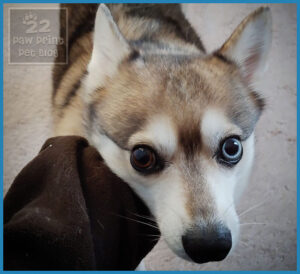
    Alaskan klee kai apartmentI adore Fenrir, and I’d never say that I regret getting him.  But when we still lived in an apartment, I often wished I had waited until we were in a house to get my klee kai.

    Fenrir was afraid of one of the neighbors in our apartment building.  She was loud and always tried to grab at him, which isn’t the right approach to take around these often shy dogs.  I found myself constantly trying to avoid that one neighbor when I had Fen with me, because I didn’t want to deal with her stressing him out.  But trying to avoid her all the time started to stress me out!

    That same neighbor, go figure, had a dog that didn’t get along with Fenrir.  It snapped at Fen once in the hallway, and ever since Fen would get really stressed inside our apartment when he heard that particular dog running around in the shared hallway.

    Other than those issues, Fen did ok in our apartment.  But I also took him on multiple walks everyday.  Every morning I would walk him to the park so we could play fetch on his long line.  We also did (and still do) daily training sessions.  Alaskan klee kai are not a breed for the lazy!  You really need to keep up with their mental, and physical exercise.

    A breed for experienced dog owners

    As I mentioned in my Alaskan klee kai breed profile, this is a unique, high maintenance breed that, in my opinion, would do best with experienced dog owners.  Potential owners should be well informed about this breeds potential quarks.  Alaskan klee kai need committed owners who are willing to provide them with ample, and on-going training, as well as plenty of mental and physical exercise.

    Unfortunately some of the issues that come up commonly with this breed can make them difficult to maintain stress free in an apartment.  These are dogs that very much appreciate a quiet, stress free, home environment with their pack.  The hustle and bustle of neighbors constantly coming and going in an apartment building can cause these often times shy dogs quite a bit of stress.

    Making it work…

    Many of these potential issues can be managed, notably with training.  However, training takes time and dedication.  If you really, really have your heart set on an Alaskan klee kai my advice would be to meet as many of them as possible, and talk to owners, to make sure this is the breed for you.  Be prepared to really commit to making this breed integrate well into apartment life.  Perhaps consider adopting an older, adult Alaskan klee kai, so you have a better idea of what its personality and energy level is going to be.  Alaskan klee kai puppies are somewhat notorious for developing some of the klee kai quarks as they mature.  An adult dog will have a more established personality, so you’ll be able to better assess how it would do living in an apartment.

    What do you think?  Do you, or have you ever lived in an apartment with an Alaskan klee kai?  What are some breeds of dogs you have experience with that you would recommend  for apartment living?  
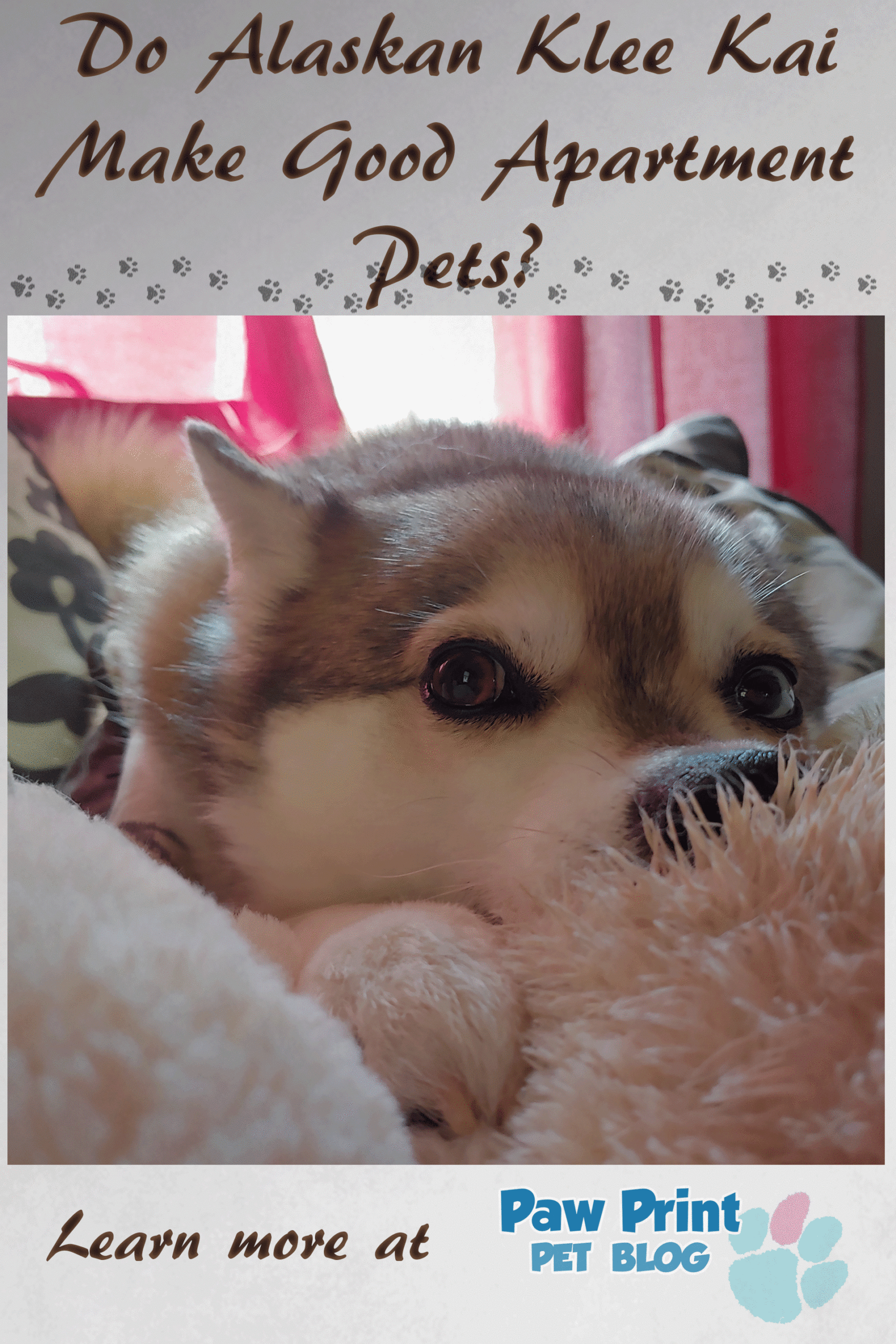
    Alaskan klee kai apartment

    Pet Tips

    Why It’s Important to Pick Up After Your Dog

    August 28, 2022

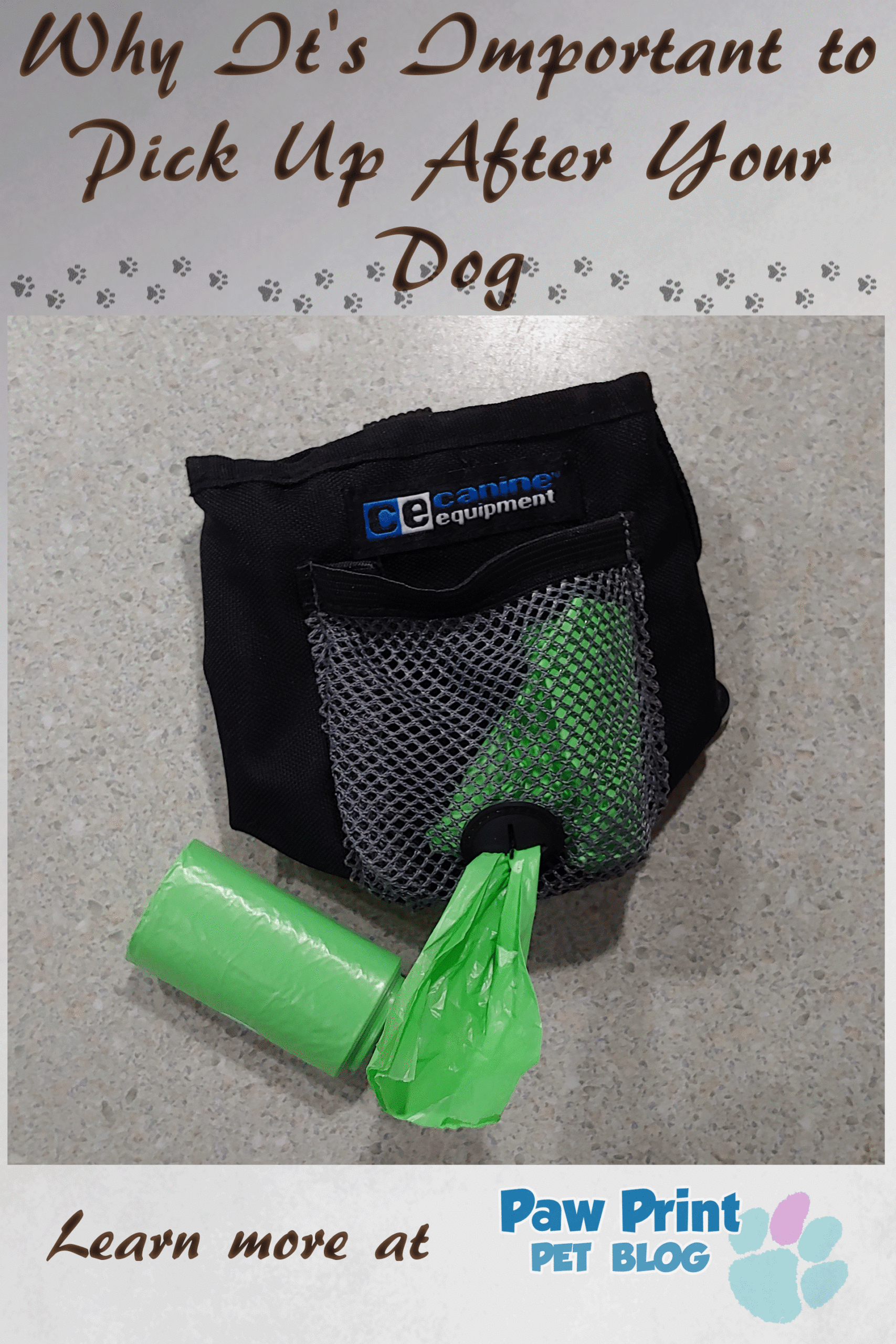
    It’s a dirty job, but you really should do it.  Picking up your pooch’s poop is a part of responsible dog ownership. Besides just being considerate towards others, there are some pretty important reasons why you should always pick up after your pet.

    Post Contents:

    • 1 Don’t pollute!
    • 2 Disease Transmission
    • 3 Unwanted visitors
    • 4 It’s the law!
    • 5 Health checks!
    Don’t pollute!

    pick up after dogStudies have shown that animal waste, especially from dogs, plays a roll in polluting our waters. Runoff from our cities and towns carries bacteria and nutrients from decaying animal waste into our water systems, where the introduced bacteria can cause illness. The excess amount of nutrients can cause overgrowth of algae in the waters, which can be damaging to the waters’ natural inhabitants.

    Disease Transmission

    Dog poop left outside can lead to parasite and disease transmission to other pets, and even to wild animals. You all know how much your dog likes to sniff at the droppings of other animals. As gross as it is, some dogs take things a bit further than just a sniff. Contaminated feces can transmit parasites such as roundworms, hookworms, coccidia, and giardia. Parvovirus can be deadly to dogs, and is also transmitted by feces.

    Feces also contain large numbers of bacteria that can potentially cause illness in humans. Humans can also contract parasites from dog poop.

    Unwanted visitors

    Dog poop left outside can attract unwanted visitors, such as mice, rats, and insects.

    It’s the law!

    In many areas, cleaning up after you dog is the law. If caught not scooping, you could be faced with paying a fine. Cleaning up after you pet is just common courtesy. You are the one who decided to get a dog, so you should be the one to take the responsibility to clean up after it.

    Health checks!

    As gross as this might sound, it’s important to keep an eye on our pets’ output.  There are a number of illnesses that will result in various bathroom issues.  Owners who pick up after their dog will be more likely to notice when something is amiss quickly.  In a lot of cases, the faster you notice a health issue in your dog, the easier it will be to treat.  You don’t want unnoticed bathroom issues to go on too long, possibly getting worse over time.

    Keeping an eye on our dogs’ health, preventing disease transmission to both humans and animals, reducing pollution, avoiding unwanted visitors such as mice, and following the law are all great reasons why you should always pick up after your dog when they go to the bathroom.  Hey, you never know, if you set a good example, other dog owners in your area might also take the intuitive to clean up after their pets too. A cleaner community will make for a healthier environment for both the people and the pets living in it.

    pick up after dog

    Pet Tips

    Tips for Moving With Pets: Moving Day

    August 27, 2022

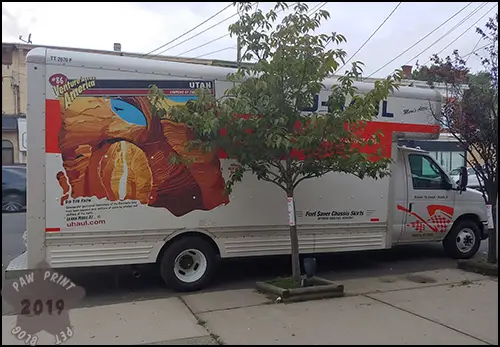
    On Sunday, September 15th, 2019 my little pack woke up super early, said our final goodbyes to the apartment we had called home for over 10 years, piled into our car, and drove just over 300 miles to our new home!  The Saturday before our actual moving day we had an amazing group of friends come to help us move pretty much everything we owned from our apartment, down 4 flights of horrible stairs, to our waiting Uhaul outside.

    moving pets

    Since we moved so far from where we had been living, around 5 hours away, we decided to bite the bullet and do the entire move in one shot.  Luckily we were able to fit everything we wanted to bring with us into a 20 foot Uhaul, with all the super important stuff (pets included) coming with Chris and I in our car.  We paid a friend with experience driving trucks to drive the Uhaul for us, while we made the journey home in our car.  Watching New York City pass by out our car window, for probably the last time in a very long time, was such a surreal feeling.  We were finally making our escape from the city!

    The landscape surrounding our new place is quite a bit different!
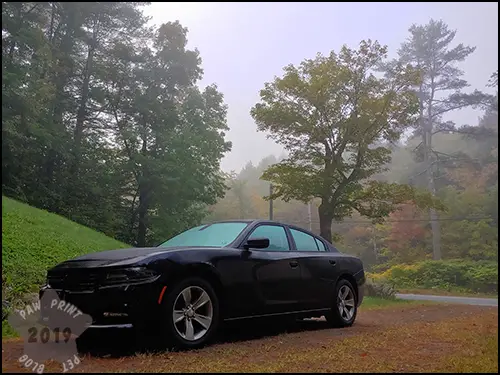
    moving petsI keep thinking about how crazy it was that we went from living in an apartment with a NYC view one night, to living in a house across the street from a 400+ acre forest the next.  But I’ll tell you all about the new place in more detail later.  Today I wanted to share some tips that we found helpful when it came to keeping our pets comfortable on moving day.
    Post Contents:

    • 1 Pack pet belongings, and important items/paperwork, in an easy to access location.
    • 2 Utilize a “Quiet Zone”, or have your pet visit with friends, while you move out belongings.
    • 3 Keep current forms of ID on your pets at all times during the move.
    • 4 Transport your pets as safely as possible.
    • 5 Do what you can to keep pets comfortable during long car rides.
    • 6 To take breaks or not to take breaks?
    • 7 Have a vet lined up in your new location.
    Pack pet belongings, and important items/paperwork, in an easy to access location.

    Things like pet beds, bowls, food, medications, and any other comfort items should be packed in a way that you can get to them easily once in your new place.  You don’t want to have to be searching like crazy though a mountain of boxes to find your pet’s medication, and items like beds and toys can be very comforting in unfamiliar surroundings.  Make sure you can also access important paperwork such as vet records.

    Utilize a “Quiet Zone”, or have your pet visit with friends, while you move out belongings.

    Especially if you do what we did and move everything out of your old place at once, it’s important to keep your pets safe and calm.  Seeing lots of people, especially strangers, coming in and out of the house, and the hustle and bustle of lots of items getting moved out, can be really stressful and scary to an animal who doesn’t quite understand what’s going on.  Couple that with doors being constantly opened and closed, or just left open, and you may have a recipe for disaster.  Make sure you keep your pets safe on moving day.  If you have a friend or family member who can take your pet for the day that would be ideal.  We didn’t have that luxury so utilized the next best thing, a ‘quiet zone’  behind closed doors where the dogs could stay safe and relax away from all the excitement.

    Keep current forms of ID on your pets at all times during the move.

    If your pet is micro-chipped, make sure to update his/her microchip information with your new/current address and phone number ASAP.  Dogs and cats should wear updated ID tags.  For other types of pets, such as exotics, you should write your current contact information down and securely attach it to the outside of their carrier or whatever you’re using to transport them in.

    Transport your pets as safely as possible.

    Crash tested carriers or harnesses (for dogs) are recommended.  There are a lot of companies that sell carriers/car seats/travel harnesses/etc. especially for dogs, but a majority of them don’t undergo any type of safety testing.  You can check out the Center for Pet Safety to research which brands actually pass crash tests, making them safer options not only for your pets, but for human passengers as well.

    Do what you can to keep pets comfortable during long car rides.

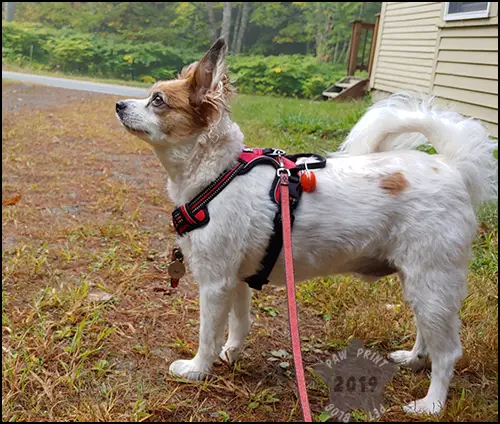
    My Kit is prone to getting car sick, but we found that keeping him in a more enclosed carrier that prevents him from looking out the car window goes a long way towards keeping his stomach more settled.  Fenrir gets nervous in his carrier sometimes, but if he can hear us talking, either to him or to each other, he stays much calmer.  Keeping your pet(s) comfortable during car rides will mean knowing your individual pet(s), the things that make him/her uncomfortable, and coming up with ways to combat any stressors.  Some pets may benefit from playing calming music, covering his/her travel crate with a light blanket, withholding food the night before a long commute, etc.

    To take breaks or not to take breaks?

    We decided, during our move, to drive straight to the new place without taking any breaks.  I wanted my dogs to be as comfortable as possible in their carriers, which meant taking their harnesses/leashes off.  I decided that I didn’t want to risk having to take them out of their carriers and putting their harnesses on in an unknown location, just in case one of them (ahem…Fen) decided to try to take off before fully harnessed.  But whether or not you take breaks and allow your pet to stretch his/her legs, or use the bathroom, will depend on your individual pets needs and the length of your trip.

    Have a vet lined up in your new location.

    I know, all too well, that finding the ‘perfect’ vet can be a task and a half.  Even so, make a list of vets in your new location to try out before you move.  That way if you encounter any issues during or right after your move, you won’t have to waste time researching local vets.  If the new vet you end up selecting doesn’t also provide emergency services, make sure you also research local 24/7 emergency clinics.

    moving pets

    If you’re in the beginning stages of moving, or are planning a future move, be sure to check out my last post: Moving Prep with Pets: Tips to Combat Stress While Preparing to Move.  It contains some additional tips that were helpful for us while we were still in the prepping stages of our move.  I’m planning on doing one more big moving themed post, most likely next week, that will include some tips for helping your pets adjust to their new home.

    Thank you all so much for reading, and especially so to those who have offered words of encouragement during our moving journey.  The past couple of months have been crazy, hectic, stressful…but also exciting, wonderful, and, at the risk of sounding super sappy, a dream come true for us.  I’m looking forward to getting back to posting more regularly, to sharing this next chapter of our story with all of you.

    moving pets

    Papillons

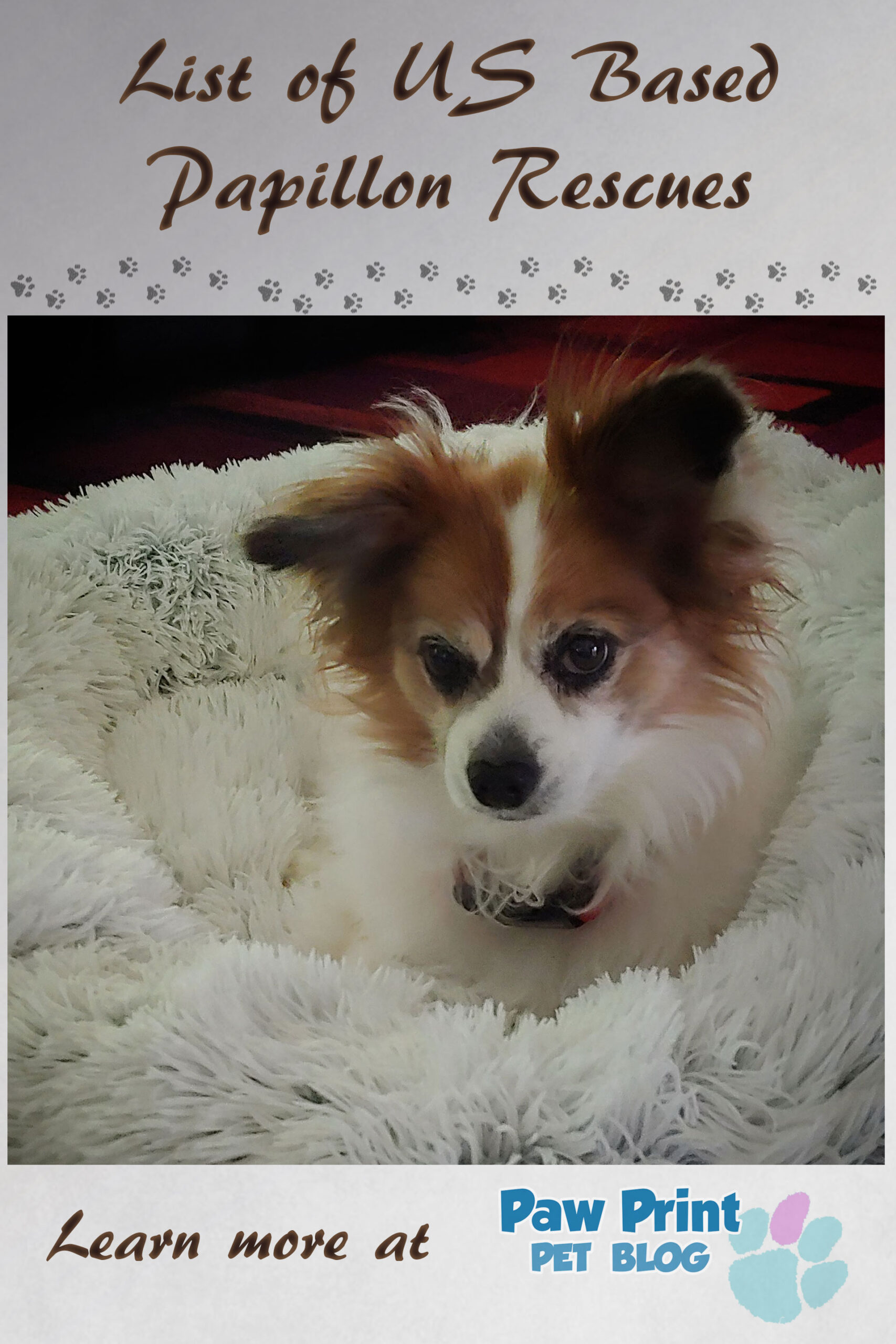
    List of US Based Papillon Rescues

    August 26, 2022

    Papillons are my heart breed.  These dogs may be little in size, but they have the biggest hearts.  They are the perfect combination of beauty and brains, and make the best little adventure companions.  If you’re thinking of adding one of these amazing dogs to your own pack, you can certainly look into getting one from a breeder.  The Papillon Club of America keeps an updated breeder directory.  However, did you know that purebred dogs can also often be found in rescues?  There are a handful of breed specific papillon rescues across the US!

    papillon rescuesIn this post,  I’m going to highlight all of the US based papillon recues that I am aware of.  I’ll make sure to update this post frequently as well.  If you know of any papillon rescues that I missed please comment below and let me know, so I can add them here!  Disclaimer – I am not affiliated with any of these rescues.  Please always remember that it’s important to vet any organization that cares for and provides pets before supporting them, yes even rescues.

    Post Contents:

    • 1 Papillon Haven Rescue
    • 2 Papillon Pals Rescue
    • 3 Papillon Rescue of the North East (PRONE)
    • 4 Papillons on RescueMe.Org
    • 5 Papillons on Petfinder
    • 6 Check with Your Local Rescues/Shelters too!
    • 7 Looking for more information about papillons?

    Papillon Haven Rescue

    Papillon Haven Rescue is a volunteer based, nation wide papillon rescue.  They rescue papillon and  papillon mix dogs and place them in loving foster homes until their forever homes can be found.

    Papillon Pals Rescue

    Papillon Pals Rescue is based out of Jacksonville, FL.  They adopt out papillons in a radius of about 250 miles outside of Jacksonville.  Besides their website, you can keep up with Papillon Pals Rescue on their Facebook page.

    Papillon Rescue of the North East (PRONE)

    PRONE was founded in 2012.  They are a volunteer based rescue based in the northern US and Canada.  PRONE works with Papillons, Pomeranians, and other small breed dogs.  There website, at the time of writing this, doesn’t seem to be super up to date, but PRONE does have an active Facebook page.

    Papillons on RescueMe.Org

    Not a rescue per se, but RescueMe.Org allows you to see a map of papillons looking for new homes in each state.

    Papillons on Petfinder

    Did you know that you can also search for specific breeds on Petfinder?  Find papillons on Petfinder here.

    Check with Your Local Rescues/Shelters too!

    Even if your local rescue/shelter doesn’t have a papillon currently, it never hurts to check in with them.  Many shelters will happily take down your information, and contact you if a dog that matches what you’re looking for shows up.  According to the American Kennel Club, papillons were the 54th (out of 197) most popular dog breed in 2021. While they’re not the most common dog breed, they’re not exactly rare either.  Sadly, papillons and papillon mixes do turn up in rescues and shelters fairly often.

    Looking for more information about papillons?

    • Papillon Breed Profile
    • Do papillons shed?
    • Do papillons make good apartment pets?
    • Pros and Cons of owning a papillon
    • See more papillon themed content here!

    Comment below!  Do you share your life with a papillon, or are you thinking of getting one?  Do you know of any breed specific papillon recues that I missed?

    papillon rescues

    Dog Health

    Catnip…for Dogs!

    August 25, 2022

    I occasionally purchase catnip.  But I don’t have any cats!  So what gives?  Catnip isn’t just for cats anymore – it’s for dogs too!

    First lets take a look at what, exactly, catnip is.

    The plant with the scientific name Epeta cataria is commonly known as catnip, and also sometimes as catmint, or catswort.  It’s a member of the mint family originally native to eastern and southern Europe, central Asia, China, and the Middle East.  Catnip is a perennial plant that grows, on average, up to 39 inches tall and produces small pink, white, and/or purple flowers from late spring until fall.  Catnip is safe for humans and is sometimes used as an ingredient in herbal teas.  It’s best known, of course, for the effect it has on some (but not all) cats.

    Roughly 33% of cats are actually not affected by catnip.   For the ones it does influence, an attractant called nepetalactone is to blame.  How cats react to the  nepetalactone in catnip varies.  General responses can include drooling, rubbing and rolling against the catnip, excitement, and increased activity for a short period of time.

    But what does catnip do to dogs?

    Why would a dog owner buy it?  Although catnip works as a stimulant on cats, it has the opposite effect on dogs.  For dogs, catnip works more as a sedative.  It can help to relax them, similar to how drinking chamomile tea can help relax people.

    catnip for dogsCatnip (for dogs and people) can also help to relax upset stomachs.  It can help to relieve gas, cramps, vomiting, and diarrhea.  It can also be a natural way to help dogs who suffer from motion sickness.
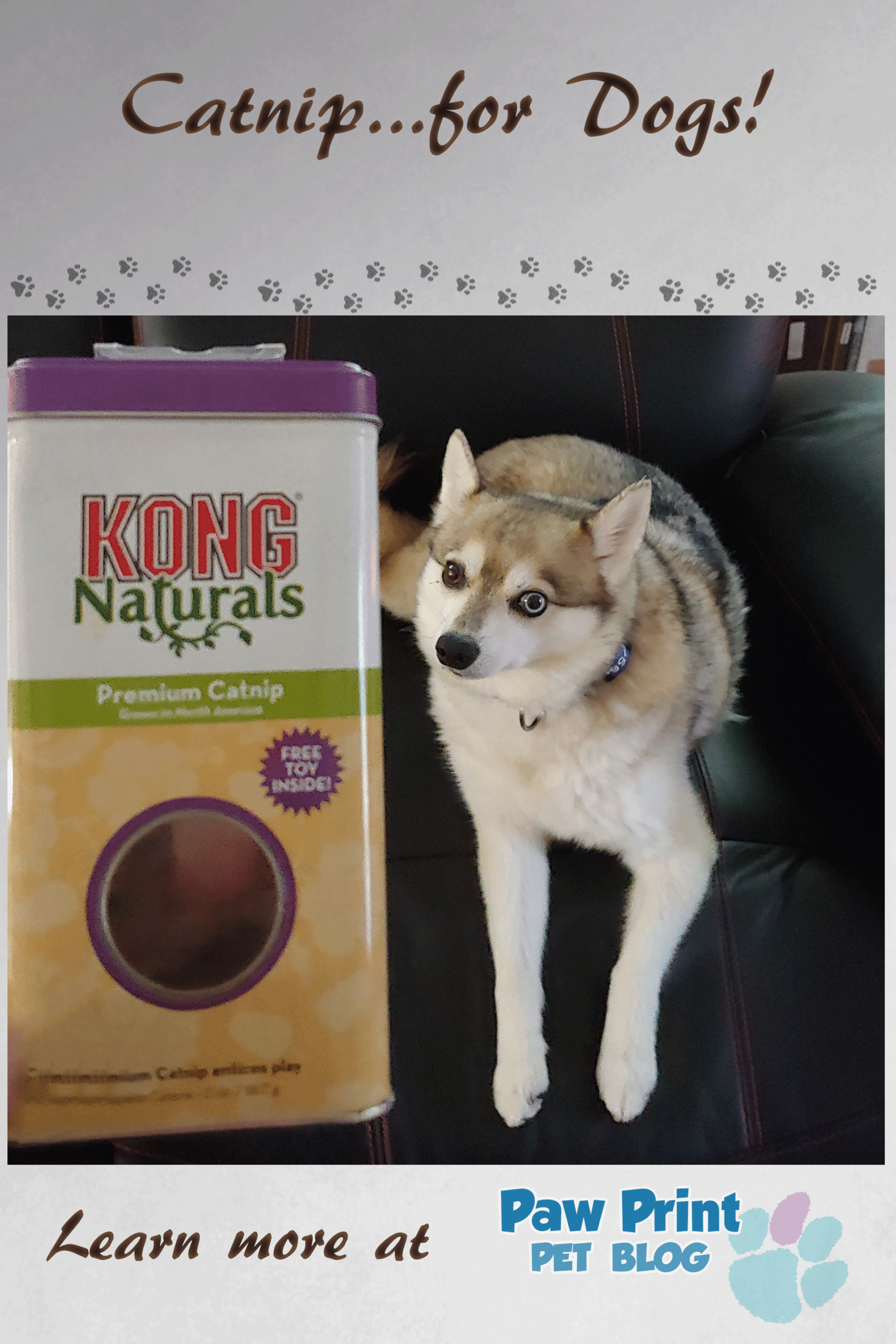

    I like to make my dogs catnip tea by sprinkling just a bit of catnip into a water bowl.  I also sometimes mix it into their food.  My papillon, Kitune has always had a sensitive stomach.  Catnip seems to help sooth his tummy, especially on days when he’s particularly gassy.  My Alaskan Klee Kai, Fenrir, gets anxiety in a lot of situations.  While catnip isn’t a cure for him, it does seem to help him relax at the end of particularly stressful days.  Most recently, I gave it to him after he had to go to the vet for his yearly checkup.

    This is the brand of catnip I’ve been buying, although I’m not really brand loyal.  I’ve purchased other brands in the past and, so far, all the brands I’ve tried have been pretty much the same.  Someday I’d love to try growing catnip, for my dogs, myself, but that’s a project for another day.

    Comment below!  Have you ever given catnip to your dog?  Or do you buy it for your cat?  How do your pets react to it?

    catnip for dogs

Older Posts
Newer Posts
It's a beautiful day to play ball in the snow ❄️ It's a beautiful day to play ball in the snow ❄️
Today would have been Kit's 17th birthday. My best Today would have been Kit's 17th birthday. My best buddy...not a single day goes by that I don't think of him. Forever a beloved member of our little pack ❤️
Someone stole his dad's socks 😂 10 years old and s Someone stole his dad's socks 😂 10 years old and still as mischievous as a pup!  This little one makes me laugh everyday and I'm SO thankful for him. 💙
New phone, who dis!? 😅 Sorry for the lack of new New phone, who dis!? 😅 
Sorry for the lack of new Fen pics lately... My old phone broke and it took me awhile to replace it. 
Fen is his happy, sassy, playful self and is doing well. 💙
Fen makes me laugh so much! Today is my partner's Fen makes me laugh so much! Today is my partner's birthday. ❤️ I almost always wake up earlier than him, so this morning I was planning on getting up to decorate for his birthday. I wanted to surprise him with decorations and his presents set out when he got up.

Well...Fenrir ruined it all, because as soon as he saw the wrapped presents for my partner, he got SO excited! And if you have ever had the pleasure of meeting an Alaskan Klee Kai you will know, when they get excited, they just have to make sure everyone knows about it!

Long story slightly shorter, Fen woke my partner up early, on his birthday, all because Fen REALLY wanted to open presents that weren't even for him! I didn't get to decorate, but lesson learned - don't put gifts where Fen can see them because he will get really, really excited about it.

And just so you all don't feel too bad for him...I ended up wrapping one of Fen's Christmas presents and giving it to him to open early! 🤣
Follow on Instagram
Facebook Instagram Pinterest Youtube

Copyright © 2025 Paw Print Pet Blog. All Rights Reserved.

Back to top