• Home
  • Popular Topics
    • Papillons
    • Alaskan Klee Kai
    • Hiking with Dogs
    • Dog DIY
    • Recipes
    • Dog Product Reviews
    • Can Dogs Eat…
    • Dog Health
  • The Paw Pack
    • Kitsune (2008 – 2024)
    • Fenrir
  • Policies
    • Disclaimer
    • Privacy Policy
    • Work with Us
    • Site Map
  • Contact

Paw Print

    Dog Health

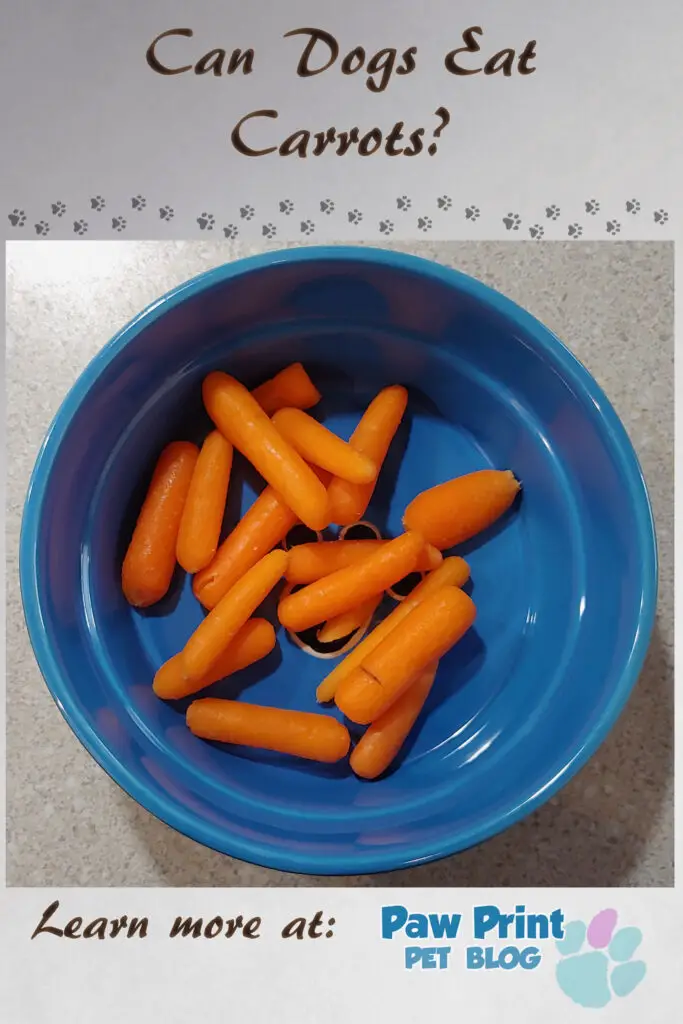
    Can Dogs Eat Carrots?

    April 3, 2022

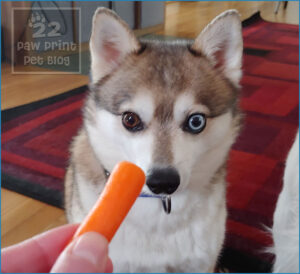
    dogs carrotsMy dogs LOVE carrots!  These days, if I buy carrots, it’s almost always to give them to Kitsune and Fenrir as snacks.  No big surprise here, I suppose, but Kitsune especially loves them.  That isn’t saying much.  Kitsune especially loves most foods!  Picky Mr. Fenrir likes carrots too, although he makes more of a mess eating them – always on my rugs, of course.

    Are Carrots Safe to Feed Dogs?

    Yup!  If they weren’t, I think Kitsune would be dead by now.  If your dog is diabetic or requires a special diet, keep in mind that carrots are high in natural sugars.

    dogs carrots

    Many owners, myself included, feed carrots raw.  That’s actually not the best way to feed them if you are feeding carrots strictly for their health benefits.  Dogs aren’t able to fully digest raw carrots – meaning that most of the awesome nutrients pass right through your dog if you are only feeding carrots raw.  To break down the carrots’ cell walls, and make their nutrients more available for your dog to absorb, you can purée or cook carrots before offering them to Fido.

    What are the Benefits of Feeding Dogs Carrots?

    dogs carrotsFor me, one of the major benefits of feeding Kitsune carrots is that he loves them so much!  Raw carrots, although perhaps not the best supplement nutritionally for reasons stated above, may help to keep your dog’s teeth clean.  They shouldn’t replace proper dental care by any means, but, like chewing on bones, may help to remove plaque from your dog’s teeth.

    Like in humans, carrots can help support your dog’s eye health.  This is because they are packed full of beta-carotene as well as vitamin A.  Besides eye health, vitamin A can help build a strong immune system, and support healthy skin and fur.  Carrots also contain vitamins A, C, D, E, K, B1, and B6. 

    Cooked or raw, carrots are low in calories.  This makes them, in moderation, great snacks for dogs who are watching their weight.

    If you are unsure about whether a certain food is ok for your particular dog, make sure to ask your vet!  As always, treat foods should be fed to dogs in moderation.

    dogs carrots

    Dog Health, Pet Tips

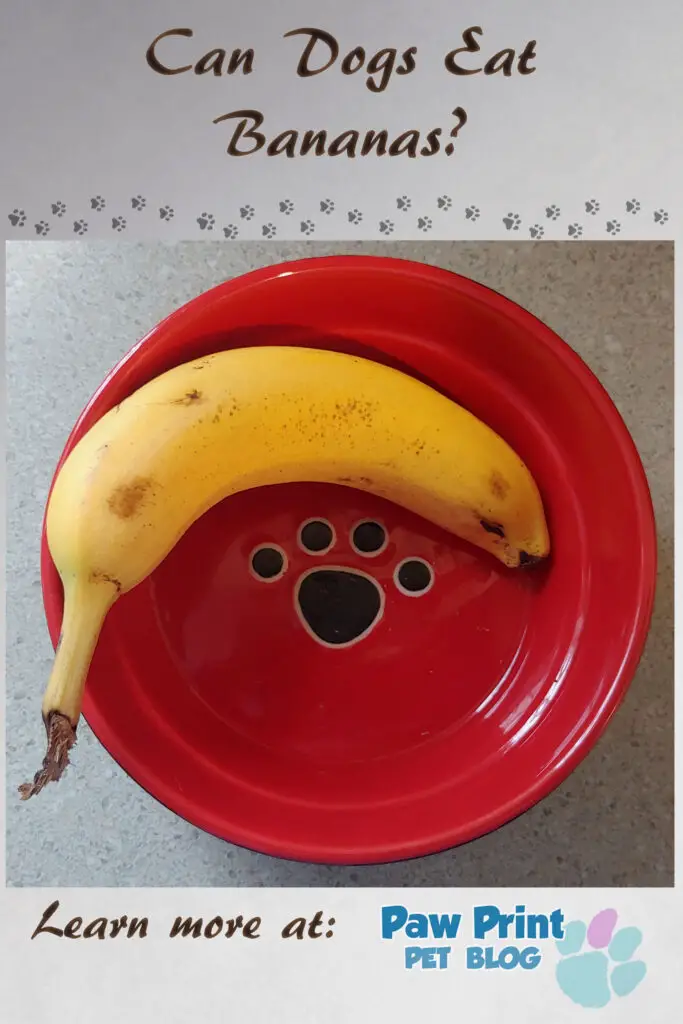
    Can Dogs Eat Bananas?

    April 2, 2022

    B is for Banana but…

    dogs bananasI had a hard time choosing what food to use for B.  The first food that came to mind was beef, which both of my dogs eat on a pretty regular basis.  But then Kitsune ended up kind of selecting the B food for himself.  I was eating breakfast the other day, and he was underfoot begging for what else, pieces of my banana.

    This post is part of our April 2022 Blogging (snacking) from A to Z challenge!  Recognize this post?  This series was originally posted in April 2016.  Because I needed to go back and redo/update these posts anyway, I decided what better time than another April?

    dogs bananas

    So bananas it is!

    This is going to be an ongoing theme with these food posts, but you want to make sure not to feed bananas in excess – moderation is key!  Bananas are high in natural sugars, so should be counted as a treat food.  Too many bananas can cause constipation.  Also, never feed your dog banana peels.  They are very difficult to digest, for dogs especially, and can cause blockages.

    Otherwise, bananas are safe for your furry friend to consume!  Kitsune love them plain, but they make a great addition to dog treat recipes as well.

    What are the Benefits of Feeding bananas?

    Most people already know that bananas are high in potassium, which is great for both muscles and blood vessel function.  They also contain lots of fiber (we all know what that’s good for!), vitamin C, vitamin B6, biotin, and magnesium.

    Eating bananas can help support your pup’s immune system, and promotes skin and fur health.  They are full of antioxidants and may help to maintain healthy blood pressure.

    Due to how soft they are, it’s easy to mush a banana to add to your dog’s food or in a treat recipe.  Or, like I do, you can just offer your pup a piece of your breakfast banana.

    dogs bananas

    Do Dogs Even Like Bananas?

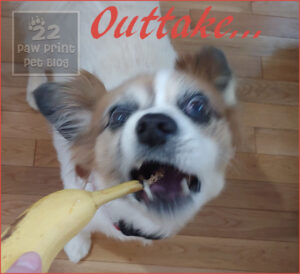
    Kitsune LOVES bananas.  He begs for them with as much enthusiasm as if they were w meaty treat.  He even tries to raid the trash when he can smell banana peels in there.  Fenrir, on the other hand, isn’t as crazy about them.  In fact, most of the time when I offer pieces of banana to Fenrir he rejects them.  If you’re not sure whether your dog likes them or not, it would probably be a good idea to offer a piece of plain banana before going through all the trouble of mixing them into food or baking them into treats.  Like with all new foods, go slowly when introducing your pet to bananas for the first time.


    Pet Tips

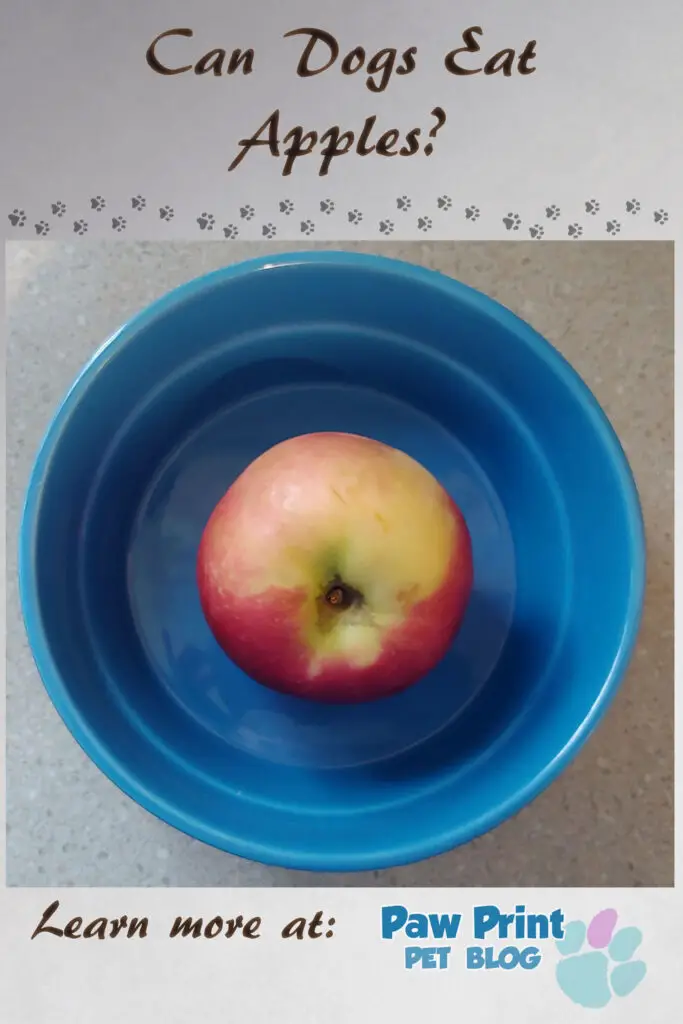
    Can Dogs Eat Apples?

    April 1, 2022

    Of Course, A is for Apples! 

    dogs applesMy Papillon, Kitsune, has always loved snacking on fruits and vegetables.  Fenrir has been a different story.  He started out being a pretty picky eater.  By picky I mean, if it wasn’t his regular food, or chicken, he didn’t want it!  We’ve slowly been able to introduce, and get him to eat, different foods.  Apples are one of the very few fruits that Fenrir actually seems to enjoy now!

    This post is part of our April 2022 Blogging (snacking) from A to Z challenge!  Recognize this post?  This series was originally posted in April 2016.  Because I needed to go back and redo/update these posts anyway, I decided what better time than another April?

    dogs apples

    Can Dogs Eat Raw Apples?

    Many dogs enjoy apples for the same reasons people do.  These crispy, sweet treats can be fed simply sliced, chilled, or as an ingredient in homemade treats.

    Do keep in mind that apple seeds, however, are toxic.  If your dog eats a couple of seeds accidentally, it shouldn’t be a big deal – but you should try to avoid feeding your dog apple cores, seeds, and stems.

    Also avoid feeding applies in excess.  I remember once, when I was a kid, I took the old adage “an apple a day keeps the doctor away” seriously.  While I didn’t end up having to go to the doctor from eating too many apples, I did end up with some pretty unpleasant stomach symptoms.  The same can happen to your dog if you’re not careful.  Moderation is key!

    What are the Benefits of Feeding Apples?

    dogs applesApples contain phytonutrients that are thought to help prevent cancer in humans.  Other than phytonutrients, apples are a good source of fiber, vitamin C, vitamin K, and calcium.  They also contain omega-3 and omega-6 fatty acids, which can help improve your dog’s coat.

    Apples are low in calories, making them a good snack choice for dogs who are overweight.  Chewing on them may also help to freshen your dog’s breath.

    So while your dog doesn’t need, and probably shouldn’t have, an apple a day – apples can be healthy, low calorie snacks for dogs.  Just make sure, like with any new treat, that you introduce them to your dog slowly, in small amounts, to avoid stomach upset.

    Comment below!  If you have a dog, does he/she like apples?


    Pet Products

    Does Material Matter? Finding the Best Bowl for Your Pet

    March 24, 2022

    Last September, I found myself in the market for new dog bowls.  Although most of our stuff got to the new house safely, unfortunately, the box containing Kit’s and Fen’s bowls must have gone for a rough ride.  Quite a few of their ceramic bowls arrived broken.  When it came to replacing them, I decided to put a bit more thought/research into my selection.  Does material matter when it comes to dog bowls?  What is the best type of pet bowl?

    • Kit & Fen’s 2022 Holiday Gift Guide

    Post Contents:

    • 1 Who would have thought there’s so much to learn about buying dog bowls!?
    • 2 Plastic Pet Bowls:
    • 3 Ceramic Pet Bowls:
    • 4 Glass Pet Bowls:
    • 5 Silicone Pet Bowls:
    • 6 Stainless Steel Pet Bowls:
    • 7 What Type Of Bowl Did I Choose?

    Who would have thought there’s so much to learn about buying dog bowls!?

    I’ve always been aware of many of the different types/materials of bowls that are available, but until recently I never put too much thought into how they differ.  The most common materials used to create pet bowls include plastic, ceramic, glass, silicone, and stainless steel.  Each type comes with their own lists of pros and cons…

    best pet bowl

    Plastic Pet Bowls:

    Pros:

    • Plastic pet bowls can come in a wide array of colors, and even shapes!
    • They are commonly some of the easiest to find for sale, as well as the least expensive.
    • Plastic pet bowls are unlikely to break, even if dropped or thrown around by your pet.

    Cons:

    • Although they don’t normally shatter, plastic bowls can be easily scratched or chewed on by your pet.
    • These scratches can quickly become breeding grounds for bacteria, which could make you and/or your pet sick.
    • Some dogs can develop allergies to plastics, which can lead to skin irritation on their face.
    • Not all plastic is BPA free.  BPA from plastic bowls can leach into your dog’s food, and over time can lead to health issues.

    best pet bowl

    Ceramic Pet Bowls:

    Pros:

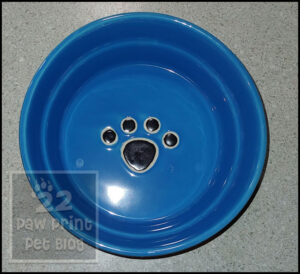
    • Ceramic bowls are, in my opinion, the most visually appealing option.  They come in a wide array of colors and designs, and can sometimes even be customized.
    • Ceramic pet bowls are easy to clean, and, as long as they remain nonporous, will not harbor bacteria.

    Cons:

    • However, ceramic bowls are easy to break.
    • Any cracks in the bowls, no matter how small, will offer a space for potentially harmful bacteria to breed.
    • Depending on the design/where you get it, ceramic bowls can be expensive.

    best pet bowl

    Glass Pet Bowls:

    Pros:

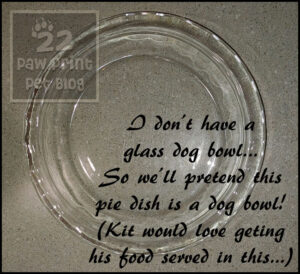
    • Glass pet bowls are relatively simple, easy to clean, and easy to find in stores.

    Cons:

    • Although they are usually on the simple side, glass bowls will usually not be your cheapest option.
    • Glass, like ceramic, is easy to break if dropped or hit around too much by your pet.  Any chipped or broken areas may be sharp, and offer an area for bacteria to colonize.  It’s best practice to dispose of broken/chipped glass bowls.

    Silicone Pet Bowls:

    Pros:

    • Silicone comes in a wide array of colors.
    • It is also lightweight, durable, and typically collapsible. Silicone pet bowls are awesome for travel!

    Cons:

    • Being so lightweight can also be a con.  These bowls are easy for even small pets to pick up or knock around.
    • They are also easily damaged if chewed.  These bowls are best used for travel rather than an everyday use.

    best pet bowl

    Stainless Steel Pet Bowls:

    Pros:

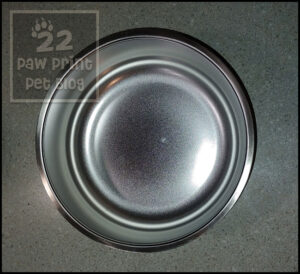
    • Stainless steel bowls are nonporous and very easy to clean.
    • They do not harbor bacteria and, because they are metal, can usually be disinfected using high heat.
    • Stainless steel bowls run the gambit when it comes to pricing.  Simple stainless steel bowls are typically both cheap and easy to find.
    • More decorative options exist if you’re looking for something with a bit more style.  Stainless steel bowls often come with colored coatings on the outside.  Nonskid rubber bottoms are popular if you have a pet who likes to push around his/her dish.
    • These bowls are very durable and hard to break, even if dropped or smacked around by your pet.
    • Stainless steel pet bowls come in a wide array of sizes, from very, very small to huge.

    Cons:

    • Be careful not to allow your dog to chew on stainless steel bowls, as it could damage his/her teeth.
    • Although it’s not super common in dog bowls, stainless steel can, under some conditions, rust.
    • Color and optimization options are limited, unless you get a stainless steel bowl with some type of coating on the outside.  While more aesthetically pleasing, some of these coatings cannot be put into the dishwasher or exposed to high heat.

    What Type Of Bowl Did I Choose?

    If you haven’t already guessed by the long list of pros, I decided to go with stainless steel bowls for my own dogs.  I really liked these Yeti dog bowls, which are apparently really popular amongst all the spoiled pooches.  As highly rated as they are, I just couldn’t bring myself to spend around $50+ per bowl – especially considering I was looking into buying multiples.

    Then I came across these stainless steel Hydrapeak bowls.  They look similar to the Yeti bowls, but are cheaper.  The Hydrapeak bowls are made from double wall insulated food grade stainless steel, and are dishwasher safe.  The outside features a durable powder coating, available in multiple colors.  So far, I’ve purchased two of the 8 cup (1.89 l) bowls that I use as water bowls for Kit and Fen.  I’m waiting for a few of the colors to come back into stock in the 4 cup (0.95 l) size to use as food bowls for the boys.

    Once a week, I wash our Hydrapeak bowls in the dishwasher on the sanitize setting.  In between that, I just handwash them.  They’ve been holding up really well so far.  I’ve had them since early November and both of them still look like new, despite all the washings and exposure to high heat in the dishwasher.

    I have to admit, we do have a few other dog bowls as well, as the pictures in this post would suggest.  The boys each have a plastic slow feeder bowl.  We have one set of ceramic bowls that actually did make it through the move, a silicone travel bowl that we take hiking with us, and old stainless steel bowls that we still use regularly.  I really like having multiple dog bowls.  That way when some are dirty, I can just grab a clean bowl instead of having to handwash a dirty one.  Have I ever mentioned here before how much I hate doing dishes?  I really, really hate doing dishes!  I’m so thankful our rental house has a dishwasher.

    Comment below!  What’s the best pet bowl you’ve found for your pet?  What type of bowls do you use currently?

    Papillons

    The Pros And Cons Of Owning A Papillon

    March 17, 2022

    Papillons are a breed of dog that seems to be growing in popularity.  And for good reason – they are amazing little dogs!  Have you ever considered making a papillon a part of your pack?  I’ve been sharing my life with my papillon, Kitsune, for over 13 years now!  In that time, between raising my own papillon and interacting with others, I feel like I’ve gained a pretty good understanding of the breed.  In this post, I’m going to go over five pros, and five cons, of owning a papillon.  Hopefully this, perhaps along with some of my other papillon themed posts, can help any potential new owners decide if this is, indeed, the right breed for you!

    Pros Cons Papillon

    Pros Of Owning A Papillon

    1. They are super sweet dogs!  Kitsune is the sweetest dog ever.  Pretty much everyone he meets, human or animal, becomes his new best friend.  They don’t call papillons “social butterflies” for nothing!  Because of how friendly and social he is, Kit made an excellent city dog.  I never had to worry about how he was going to react to meeting new people, or dogs, during our walks.
    2. Papillons are crazy smart!  Papillons are ranked as the 8th smartest dog breed!  Not bad, considering the AKC currently recognizes 197 dog breeds.  This means that papillons are generally quite easy to train, and can excel in things like dog sports and obedience.
    3. Papillons have lots of energy!  This could turn into a con in the wrong home, but papillons are typically very high energy dogs.  As adorable as they are, pappies are not purse pups!  They are very playful.  If you’re the type of person who loves to go on adventures outdoors, a papillon might be the perfect companion for you.  My Kitsune, despite also being over 13 years old now, is the best adventure buddy!  We especially love hiking together.
    4. Papillons are a pretty healthy breed.  The average lifespan of a papillon is listed as being between 12 and 15 years.  However, over the years I’ve met quite a few 15+ year old papillons who were still going strong!  Luckily, most health issues commonly seen in the breed can be avoided by going to a reputable breeder who health tests their dogs, and/or by following proper care standards.
    5. Papillons are the best dogs ever, in small, portable packages!  Papillons have it all – beauty and brains!  Not everyone likes small dogs, I know, but pappies have it all in an adorable little package.  Because they are friendly and small, papillons can make great apartment pets.  They can do everything bigger dogs can, and you’ll never have to worry about dog weight limits when applying for apartments or traveling on public transit!  Oh, they are also the perfect size to snuggle up on your lap, too.

    Pros Cons Papillon

    Cons Of Owning A Papillon

    1. Papillons are crazy smart, and have lots of energy! I know… I listed these things as pros too!  However, in the wrong hands, a high energy dog who is also super intelligent is just asking for trouble.  A bored papillon is a naughty papillon!  Papillons are amazing at finding new and exciting ways of entertaining themselves… aka getting into trouble.
    2. Papillons like to bark…a lot! Probably the biggest con for many people, papillons do tend to be a barky breed.  Dare I say yappy, even?  Thankfully, with how intelligent they are, it’s very possible to train these talkative dogs to keep it quiet.  However, you really have to be willing to put in the work to train them not to bark too much.
    3. Papillons don’t like being left alone. With how social they are, papillons don’t like to be left home alone.  They get very, very attached to their people, and are prone to developing separation anxiety when separated from them.  Once again, you have to be willing to put in the time to work on training them if you want to work towards eliminating these types of issues.
    4. Papillon communities/groups can be toxic.  If you’re the type of dog owner who likes to find community with fellow lovers of their breed, you might not find what you’re looking for in papillon specific breed groups.  Papillon groups are usually some combination of amazing owners, and toxic people who will jump down your throat the second you say or do anything they don’t agree with.  I don’t know if it’s because papillons are such an aesthetically pleasing breed, but a lot of owners seem to only appreciate these dogs for their looks.  That’s always been sad to me, since papillons are SO much more than just a pretty face.
    5. Papillons don’t live forever.  Probably the biggest con of any dog, I’d imagine?  I’d gladly deal with all the other cons of owning a papillon, 100-fold, if only my sweet Kitsune could be with me forever.  He turned 13 last December and out of all the challenges I’ve had to face with my dogs over the years, thinking about loosing them someday has, by far, been the hardest thing for me to deal with.

    Papillons Are Amazing Dogs, But Not For Everyone

    I’ve loved papillons ever since I first learned about them, in a dog breed book, when I was around 8 years old.  Especially after sharing my life with Kit, this breed will always be near and dear to my heart.  They are such an amazing, versatile breed.  I mean, who wouldn’t want a beautiful ball of fluff that’s the perfect size for snuggling, but also an amazing sports dog or adventure buddy?

    But this breed isn’t for everyone.  They are sometimes referred to as “the border collies of the small dog world”, because of how smart and energetic they are.  I think most people who don’t want a border collie understand why!  It’s pretty common knowledge how much of a challenge living with a border collie can be.  But because papillons are small, and very elegant looking, I think their intelligence and energy level often gets underestimated.

    Comment below!  Have you ever met a papillon, or maybe even thought about owning one yourself?  What is your favorite dog breed?  If anyone has any questions about this breed, feel free to post them in our comment section below.

    DIY, Pet Products

    Painting Ruff Land (And Other Plastic) Dog Crates

    March 10, 2022

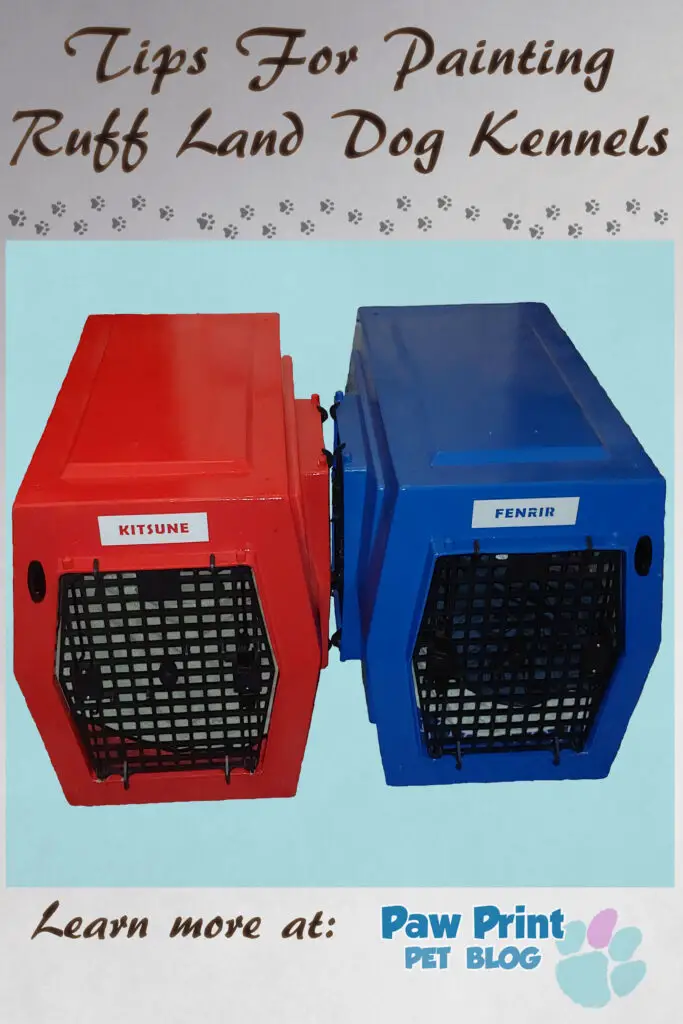
    Ruff Land is known for occasionally releasing limited edition, uniquely colored kennels.  While the specialty colors are popular, they are only offered for short periods of time.  They are often harder to get, and, so far, Ruff Land has only released a handful of unique colors.  I really wanted Kit and Fen to have crates in “their” colors – red and blue!  Time to get creative!  This post is about how I went about painting our Ruff Land dog crates, how they turned out, and how they’ve held up over the past couple of years!
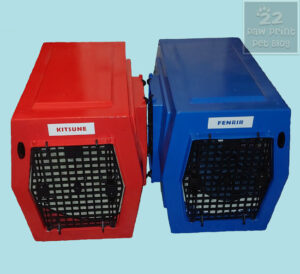
    painting Ruff Land crates

    Just a warning, this post is a bit longer than usual, and will be picture heavy!  I spray painted Kitsune’s crate, the red one, in August of 2020.  Fenrir’s crate, the blue one, was painted later, in April of 2021.  This post contains affiliate Amazon links.  If you click on one of our links and make a purchase, we will receive a small commission at no additional cost to you.  Thank you for your support! 


    Post Contents:

    • 1 First Things First – Research
    • 2 Gathering My Supplies
    • 3 Prepping The Crates
    • 4 Time To Paint (Finally)!
    • 5 And Just Like That, We Had Custom Crates!
    • 6 So How Have They Held Up?
    • 7 What Would I do Differently Now?
    • 8 What do you think!?

    First Things First – Research

    While I really wanted our crates to turn out as nice looking as possible, my dogs’ safety came first!  I decided that spray painting our Ruff Land crates would probably be the easiest way to paint them.  While researching, some people suggested I use Plasti-dip rather than spray paint.  Plasti-dip is a PVC based paint that’s commonly used to temporarily color cars.  A big reason why car enthusiasts like Plasti-dip is because it can be easily peeled off, making it easy to temporarily change the color of your car without damaging the original paint underneath.  But for my project, I was specifically looking for something that, ideally, wouldn’t peel!

    Once I decided that spray-painting was the route I wanted to go, I had to decide what brand of paint to try.  Once again, using something that would be safe for my dogs was the most important factor here!

    After lots of research, I ended up going with the spray paint brand “Rust-Oleum”.  While researching, I came across some information about bird owners using Rust-Oleum spray paint on their bird’s cages.  Birds, for those that don’t know, are very, very sensitive to fumes from products such as paints.  I figured if Rust-Oleum was bird safe, I was probably on the right track to finding something dog safe.  Rust-Oleum paints are non-toxic once dry.  They are also unleaded.

    Gathering My Supplies
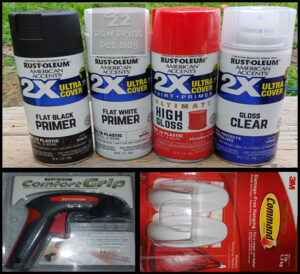
    painting Ruff Land crates suppliesI ended up purchasing Rust-Oleum primer (I used white for the crates), the colored paints I wanted to use, and a clear gloss top coat.  For each of our large Ruff Land kennels, I ended up buying a single can of primer and top coat, plus two cans each of the red and blue colors.

    I also purchased a two pack of Command hooks.  Because I didn’t realize that Command hooks come in colors other than white, I used black Rust-Oleum primer to spray paint mine black.  This next item, in my opinion, is really important!   Especially if you’re going to paint larger crates, you’re really going to want to get a spray paint trigger grip.  Believe me, if you’re working on any big spray paint project, get the trigger grip!  Your fingers will thank you!

    I also used some cheap duct tape, and packing paper, both of which I already had lying around the house, to block off the inside of my crates.  I’m sure other types of tape and something like old newspapers would work just as well.  I spray-painted my crates outside in the yard, over a large piece of cardboard.  Other than the stuff I already mentioned, the only other things you’d need would be your actual crate, and any additional decorative items you want to add!

    Prepping The Crates
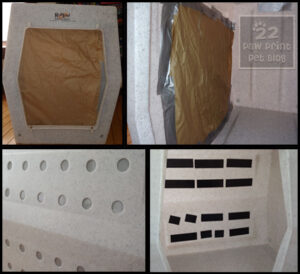
    Step 1 for me was washing down my crates, then using duct tape and some old packing paper to close off the inside.  I personally felt like there was no reason to paint the inside of the crates.  I figured that Kit and Fen scratching at the inside of their crates would damage the paint over time, and potentially expose them to paint chips.  Plus, it saved me some money because I probably would have had to buy twice the amount of paint if I wanted to do the insides too.

    I played around with the idea of sanding the crates, in hopes that it might make the paint stick better.  But in the end I just couldn’t bring myself to take sand paper to brand new, expensive, dog crates, so I didn’t do it.

    Probably the most annoying part of prep was waiting for the weather to actually cooperate with me!  Because I knew painting the crates would be a multistep process, I had to wait for a span of at least a couple of days in a row with nice, rain free, weather.

    Time To Paint (Finally)!
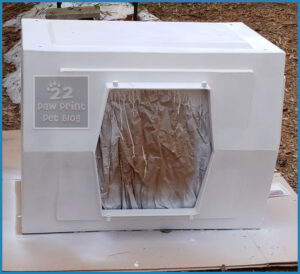
    Once mother nature decided to cooperate, it was time to get painting!  I started by priming my crates with white primer.  To be honest, if I was doing this project again, I think I might strongly consider skipping this step.  At least if I was working with another light colored crate.

    I did one coat of primer and, once that was dry, started in on my colors.  I have to admit, I’m not the best at spray-painting, and tend to be too heavy-handed.  But I did my best.  I did two coats of the colored paint, allowing the paint to fully dry in between coats.  I didn’t paint the insides of my crates (as explained above), or the bottoms.  Then I finished off by adding a single layer of top coat.  In my opinion, the top coat didn’t seem to make a huge difference.  If you’re looking to save on time, or money on paint, I don’t think my project would have turned out all that differently if I had skipped using the primer and top coat.

    When I was finished, I left my crates to dry for a really long time.  I wanted to be 100% extra sure that the paint was fully dry and fume free.  I left our crates outside as long as possible, then moved them into our shed.  All in all, I ended up allowing our newly painted crates to sit for around a month each before I even thought about letting the dogs near them.  Waiting that long was overkill for sure, but my dogs had other crates to use in the meantime, so I wasn’t in any rush.
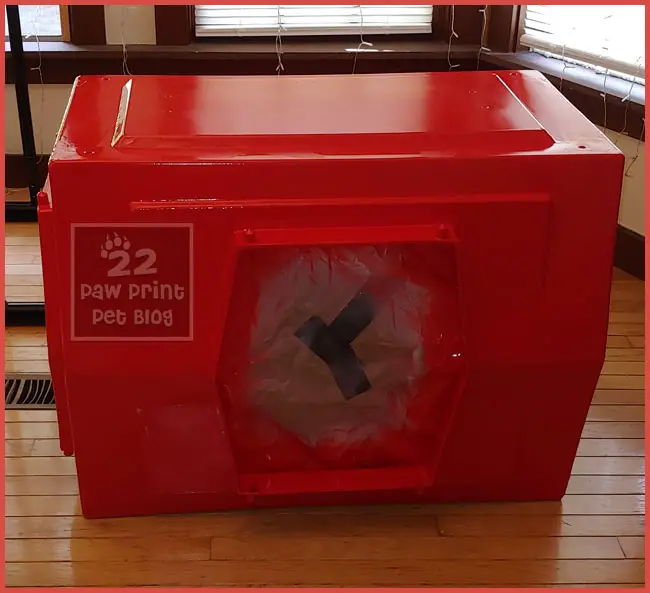
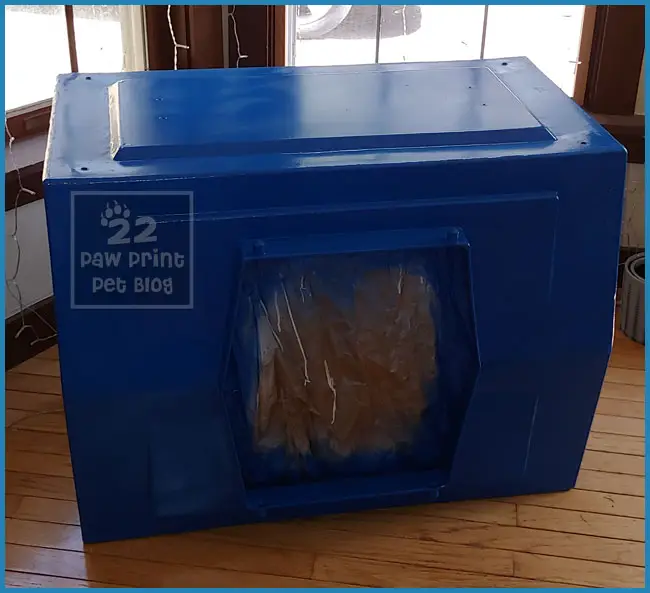
    And Just Like That, We Had Custom Crates!
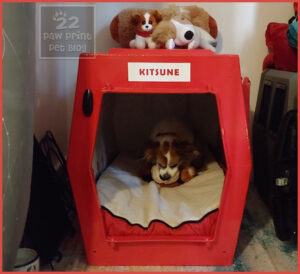
    I added the command hooks that I mentioned above on the front of our crates, near the door.  I don’t like crating my dogs with their collars on.  On the rare occasion when I actually close them up in their crates, I take their collars off and hang them up on the hooks.

    The only other thing I added was my dogs’ names to the top of the crates.  My partner was very sweet and made me stencils of the boys’ names.  I was originally going to use the stencils to paint their names with black paint.  Being the weirdo that I am, I decided that I actually liked how the stencils looked attached directly to the crates.  I figured I can always update this later if I want to change up the look.

    So How Have They Held Up?

    As I mentioned above, Kit’s (the red crate) was painted in the summer of 2020 and Fen’s (the blue one) was done in the spring of 2021.  I’d say they’ve held up really well so far!  However, I do want to point out that we use these as indoor crates.  They pretty much sit in one spot in our house.  I don’t move them very often, and we don’t use them for travel.  We did move with them last fall.   Because the crates are too big for our car, we had movers move them to the new house for us.

    I’ll admit that the paint was a bit damaged in a few spots during the move.  It wasn’t anything super major, but Kit’s crate especially has some scuff marks and small spots where the paint was scraped off during the move.  I’ve also noticed a few chips in the paint that wasn’t a result of the move.  These almost exclusively happened around the doors of the crates.
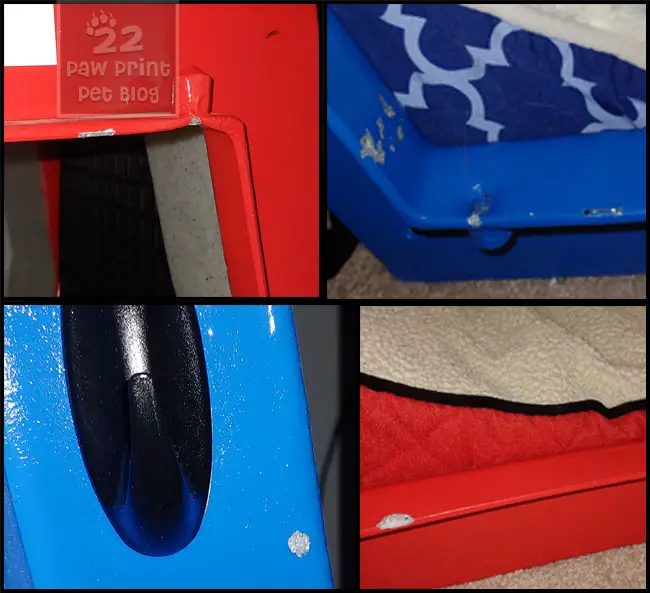
    I’m eventually planning on touching up at least a few of the chips.  I probably won’t bother touching up too much around the doors, but figure it will be easy to fix a few of the other, minor, chips.

    A 4 Year Update On Our Spray Painted Plastic (Ruff Land) Dog Crates

    What Would I do Differently Now?
    Knowing what I know now, if I were to do a project like this again, there are a few things I would do differently.  Like I mentioned above, I would strongly consider skipping using primer and the top coat.  The colors I selected were vibrant, and the crates were already a light color.  I think I would have gotten good coverage without using a primer, which would have saved me a bit of money and, more importantly, time.  I didn’t notice a huge difference in the appearance of the crates after I applied the top coat, and I don’t feel like it did a lot to protect the paint.

    I’d also not bother painting the inside lip around the doors of the crate.  While I do think this area looks better painted, it’s also the area where I’ve experienced the most chipping/damage to the paint.  In addition, I’d probably try sanding the crates, at least a bit, before painting them.  I’d be curious o see if that would help the paint stick better, and maybe reduce the number of scratches and chips.

    Not necessarily something I’d do differently, but I’ll add that I’m not sure if I feel like this project would be worth it for a crate that gets moved around a lot.  For an indoor crate, that rarely ever gets moved (like ours!), the paint holds up well.  But I’ve noticed that the paint does scratch/scuff pretty easily if it’s accidentally scraped up against another surface.  If you have a travel crate that you’re constantly taking in and out of your car, or just otherwise moving around a lot, I strongly suspect the paint would show a lot of damage in a short time.

    What do you think!?

    Do you like how our crates turned out?  Would you ever try a project like this yourself?  If anyone has any questions about the process, or anything else, please feel free to ask in the comments below!  I’ll do my best to reply ASAP, and will update this post in the future after we’ve used our painted Ruff Lands crates for longer!

    Pet Tips, Dog Health

    The Potential Dangers of Wire Crates

    March 3, 2022

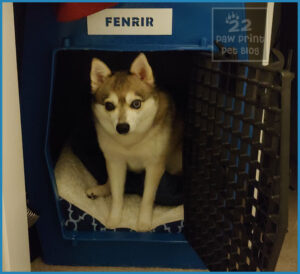
    Both of my dogs are crate trained.  I know not everyone agrees with using crates.  But for numerous reasons I will always crate train all of my personal dogs.  If introduced correctly, a crate becomes a dog’s ‘safe place’.  A crate is a comfortable area that belongs to your dog, where he/she can go to sleep or relax, and get away from the hustle and bustle of everyday life.  As such, we should do everything we can to ensure our dog’s crates are actually safe!  Are some types of crates dangerous for our furry best friends?  When my Alaskan Klee Kai, Fenrir, was a puppy we experienced something that made me start to wonder – are wire dog crates dangerous?

    66

    Fenrir was a dream to crate train, especially when compared to my papillon Kitsune.  I remember Fenrir’s first night home with us.  Much to my surprise, he almost slept through the entire night.  Fen seemed to love his crate from day one.  Even to this day, Fenrir is 6 years old now, he spends quite a bit of time each day napping or otherwise relaxing in his ‘room’, as we call it.  But when Fen was around 7 months old, something happened that caused me to ditch the wire crates forever.

    Post Contents:

    • 1 What Happened to Make Me Ditch Our Wire Crates?
    • 2 A Freak Accident?
    • 3 If Wire Dog Crates are Dangerous, What Are Some Safe Alternatives?
    • 4 Should All Dog Owners Avoid Wire Crates?

    What Happened to Make Me Ditch Our Wire Crates?

    wire dog crates dangerous

    Kitsune relaxing in a wire crate, before we decided to get rid of them.

    My partner had been away for a week on a business trip.  When he got home, the dogs were understandably excited.  A few hours after our reunion I thought everyone had calmed down enough that we could all relax and go to bed.  I took the dogs out, got Fenrir settled in his crate, then went into the other room to finish getting ready for bed.

    I remember I was in the bathroom brushing my teeth when I heard Fen screaming.  Not his typical “hey I need to get out of here and use the bathroom” whine, but a panicked wailing.  I ran to the bedroom, where Fen was, and found that one of his paws had gotten caught in between two of the wire bars of his crate.

    If he had remained calm I’m sure it would have been easy for him to free himself, but he was panicking.  Frantically trying to pull his paw out from between the wires, he was only making the situation worse.  One wrong twist and he could have broken his leg!

    A Freak Accident?

    We lucked out.  I was able to quickly free Fen’s paw, which was unharmed.  But the experience lead me to do some research and I found that we were not the only ones who have had this type of experience with wire crates.  I found reports of other dogs getting their paws/toes caught, and even an old petition about a dog who got her teeth caught in her crate, broke her jaw, and had to be euthanized due to her injuries.

    Scary, especially considering that many owners, myself included, leave their dogs crated when they leave the house.  I hate to think of what could have happened to Fen’s little leg had I not been able to quickly help him free it.  Hopefully he would have freed it on his own without hurting himself, but who knows.

    This post contains affiliate links.  If you use one of our Amazon links to make a purchase, we will receive a small commission at no additional cost to you.  Please see our Disclaimer page for more information.

    If Wire Dog Crates are Dangerous, What Are Some Safe Alternatives?

    wire dog crates dangerousAfter that event with Fenrir, and the research I did afterwards, I decided not to use wire crates for my own dogs anymore.  Luckily I had a soft sided carrier/crate on hand to use with Fen while I worked on deciding what type of crate I wanted to get him for more permanent use.  I ended up deciding on a plastic crate, which can be a good alternative for dog owners looking to avoid metal crates.  A lot of plastic crates do still have metal or plastic doors with grids.  You need to make sure the grid on the door of the crate you select is small enough that your dog’s leg/paw can’t fit through.

    I actually ended up going with Ruff Land Kennels plastic dog crates for both of my dogs.  At least for indoor crating.  We use something else for traveling in the car with the boys, but that’s a post for another day.

    Should All Dog Owners Avoid Wire Crates?

    Part of me feels like this could be one of those “know thy dog” type of situations.  Maybe metal crates are just not a good fit for certain dogs.  On the other hand, it could take just a single incident to make dog owners regret using metal crates.  Even if your dog has been using them safely for years, that doesn’t guarantee that nothing bad will ever happen.


    What do you think?  Has your dog ever gotten hurt on his/her metal crate?  After learning of the potential danger, would you stop using this type of crate?  Or do you feel the benefits outweigh the risks?


    Pet Products

    Reviewing Microsoft’s Dog Breed Recognition Website

    February 24, 2022

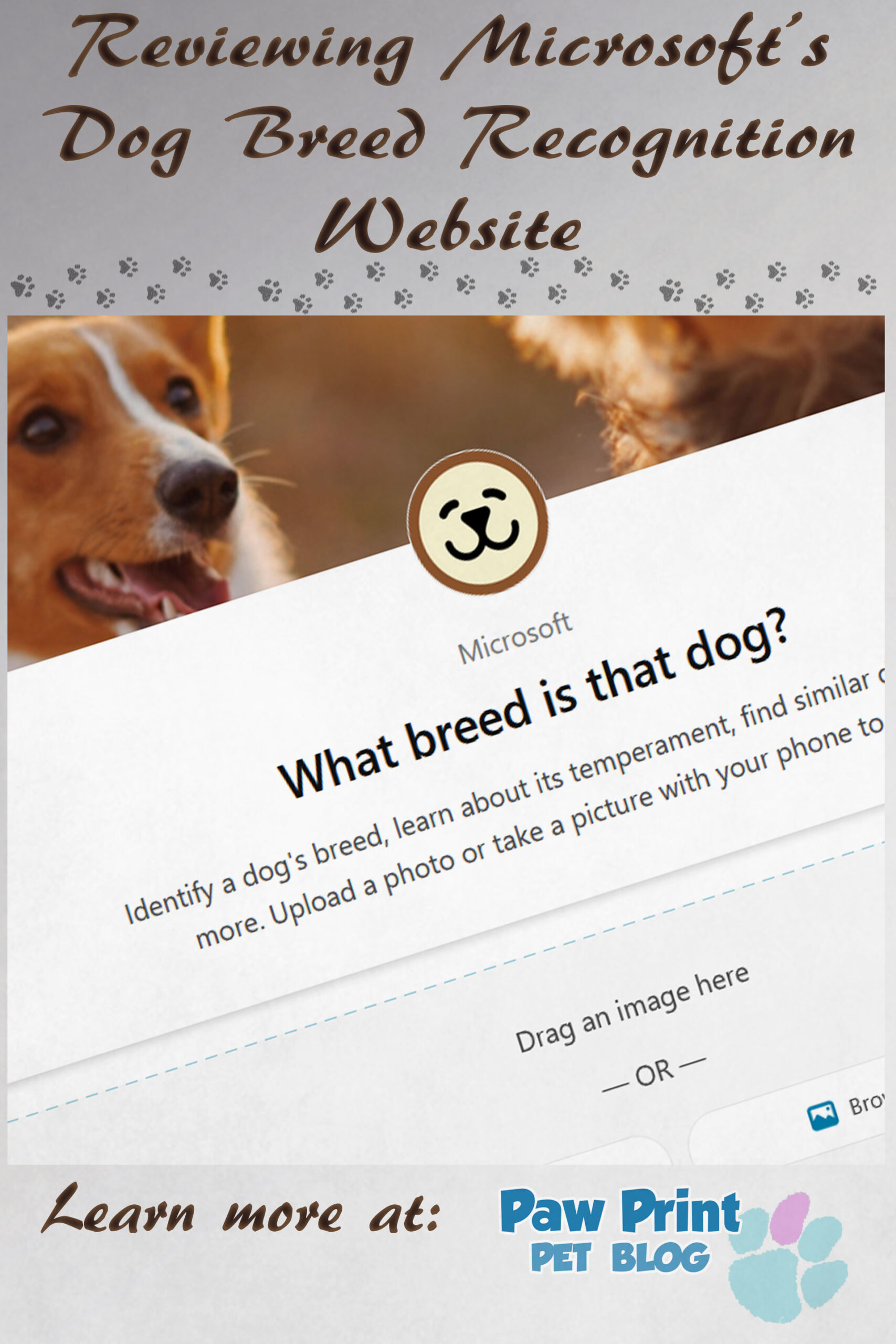
    Have you ever heard of the site What-Dog.net?  It’s a website created by Microsoft that uses object recognition to attempt to determine a dog’s breed from a picture.  I wrote a review for What-Dog.net way back in 2016.  Since it’s been so long, I thought it might be fun to take another look at the site’s dog breed recognition capabilities.  Has it improved any in the past 6 years?  This post will be an update of my 2016 review!

    The first thing I noticed is that the look, and display URL, of the website has changed.  What-Dog.net still directs to the dog breed recognition site, so that’s good.  It’s hard for me to remember exactly what the site looked like 6 years ago, outside of the screenshots I have saved, but from what I can tell it looks a bit more sophisticated now.  Change is good, right!?

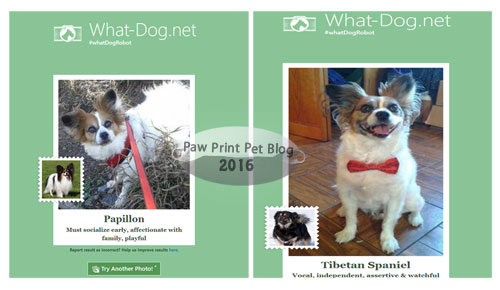
    I only have my own two dogs to test the software on, so take that as you will.  A super small sample size is never a great thing.  Oh well.  First up we have my papillon, Kitsune.  He is indeed a purebred papillon, but he doesn’t always look like one.  He’s oversized and I often cut his hair, which isn’t typical for the breed.  Back in 2016, I found that the breed recognition software recognized Kitsune as a papillon 75% of the time, seemingly depending on what picture I submitted.  Here’s my old screen shot from when I was testing out pictures of Kit…

    Dog Breed Recognition review

    Testing the software with pictures of Kitsune now, it does seem to be more accurate!  I didn’t try a ton of different pictures, but out of all the ones I tried, there was only one where it listed two breeds instead of one – King Charles spaniel, and papillon.  I even dug up that old picture of Kit in a bow tie that I tested back in 2016.  Back then, using that picture, the software thought Kitsune was a Tibetan Spaniel.  With that same photo now, it guessed papillon!

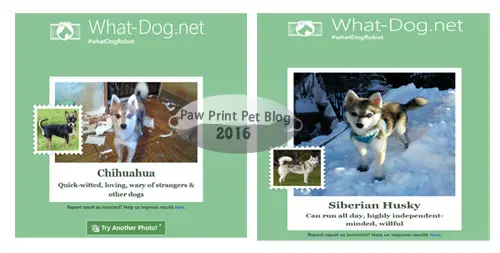
    Fen was always going to be the real test, though.  In 2016, the Microsoft software didn’t guess his breed correctly a single time.  My theory was that maybe it didn’t have Alaskan Klee Kai in its breed database.  In 2016, depending on what photo I used, it seemed to think Fenrir was either a chihuahua or a Siberian husky.kkk

    Will it do better in 2022?…..

    Dog Breed Recognition review

    Not really.  In all the newer photos I tried of Fen it mostly guessed him to be a Siberian Husky or a Canadian Eskimo dog.  One time it guessed him to be a malamute.  Based mostly off of Fen’s colors, it does make sense to guess those breeds.  But Fen is only 15 lbs, a fact I guess the software can’t really determine from photos.

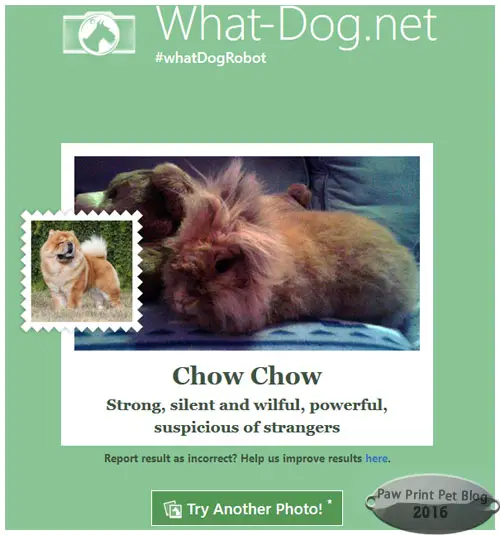
    The Microsoft dog breed recognition software does seem to be a bit better at determining when there is no dog in a photo.  Back in 2016 it seemed to recognize one of my 2lb house rabbits, Barnaby (RIP), as a chow chow!

    Dog Breed Recognition review

    This time I tried photos of cats, to see what dog breeds they most closely resembled, but the software just displayed a message saying it couldn’t find any results.  I’m not sure whether that was because it couldn’t detect a dog in the photo, or it was just a coincidence.  Because strangely, there were a couple of photos of Fen that I received the same error message with.
    Overall I’d say that the Microsoft dog breed recognition software does seem to have improved somewhat.  Still, I feel like programs that predict your pet’s breed from a photo are more of a novelty than something you should 100% rely on.  I wouldn’t base my dog’s breed solely on the results from this site, although I think the results can be interesting.  It’s also a fun website to play around with, if you have a bit of free time.

    Have you ever used the What-Dog website or a similar photo app?  How accurate was it for your pet?

    Dog Health, Fenrir

    Heterochromia in Pets

    February 17, 2022

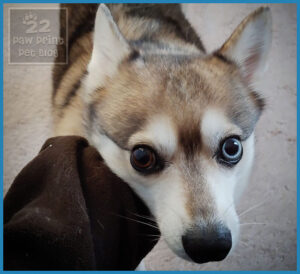
    I’ve had my Alaskan Klee Kai, Fenrir, for over 6 years now.  Since his debut on the blog, I get SO many questions about his eyes.  Fen has two different colored eyes, or heterochromia.  His left eye is a beautiful light/ice blue, while the right is a very dark brown.  Heterochromia is common in certain breeds of dogs, such as Alaskan Klee Kai, Australian shepherds, and huskies.  It can also be common in dogs with dapple, or merle coloration.

    Different in Looks Only…

    Heterochromia in dogsThe question I seem to get most often is whether or not Fenrir can see normally.  He can!  Both of his eyes are healthy and he can see just as well as any other dog.


    Heterochromia in dogs can occur for a number of reasons.  Sometimes it can be caused by an injury or defect in the eye.  In Fenrir’s case, it’s just genetics.  Dogs born with two different colored eyes are often referred to as being bi-eyed.  Scientifically, it’s called heterochromia iridum.

    Fenrir has what’s called complete heterochromia, which means that his eyes are two completely different colors.  There are other forms of heterochromia where only parts of the eye differ in color.  Central heterochromia is the most common type.  That’s when the center ring of the eye, around the pupil, is a different color than the rest of the iris.  Sectoral heterochromia, which can also be common in certain northern breed dogs, is when one, or both, eyes have sections of different colors.

    Heterochromia, although rare, also occurs in other animal species – humans included!

    I love Fenrir’s eyes.  They were one of the first things that drew me to him when I saw him for the first time.  Once in awhile we get some negative comments about them but, in general, people seem to react positively to Fen’s unusual eyes.  Not that it matters what other people think.  What matters most is that Fenrir is a happy, healthy pup!

    Comment below!  What color are your pets’ eyes?  Have you ever shared your life with an animal with heterochromia, or some other unique eye color?

    Heterochromia in dogs

    Dog Health

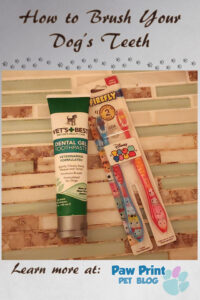
    How to Brush Your Dog’s Teeth

    February 10, 2022

    Do you brush your dog’s teeth?  As caring pet owners, we do all we can to keep our pets happy and healthy.  But Dental care is an important part of our pets’ health that is often overlooked.  The American Veterinary Medical Association recommends that a dog’s teeth be brushed daily.  Poor dental hygiene can lead to tooth loss, Periodontal disease, and even more serious health issues such as bacterial infections in major organs such as the heart or lungs.  Periodontal disease is one of the leading health concerns in dogs.

    brush dog's teeth

    Brushing your dog’s teeth might sound like a daunting task, but it isn’t really all that difficult. Make brushing your dog’s teeth part of your daily grooming routine. Start by keeping the brushing sessions short and pleasant for your pooch. Because you don’t want your dog to associate tooth brushing with anything negative, stay calm and be liberal with the praise!

    This post contains Amazon affiliate links.  If you make a purchase using one of our links we’ll receive a small commission at no additional cost to you.  Please see our Disclaimer page for more information. 

    brush dog's teethGetting Ready:

    First, you’ll need your supplies. There are a number of different styles of pet toothbrushes you can buy, or you can simply use a child size soft bristle tooth brush. Buying toothpaste with a pleasant (for example, chicken or peanut butter) flavor can make your dog more excited about his or her dental health.

    Make sure to use pet toothpaste, as dogs can’t rinse and spit after brushing the way that humans can, and swallowing human toothpaste can make your pup sick. Don’t be afraid to experiment with different types of toothpastes and brushes. Find the combination that works best for you and your pet!  If you need more help selecting dental supplies for your pet, check out our previous post Selecting the Right Dental Health Products for your Dog.

    How to brush your dogs teeth:

    1. The first step is to get your dog use to being touched around his or her mouth. Gently touch around your dogs mouth, open his/her mouth, and touch the teeth.
    2. Get your dog used to the taste of the toothpaste. Put a bit of toothpaste on your finger and let your dog lick it off. Praise him/her and act like the toothpaste is a treat. Within a few days, your dog will start looking forward to getting his/her tasty new treat.
    3. Next, instead of letting your dog lick the toothpaste off your finger, gently lift your dogs lip and press your finger, with toothpaste on it, against your dogs teeth and gums. If your dog is comfortable with that, you can start to move your finger around against his/her teeth in a way that mimics a toothbrush.
    4. Now introduce the toothbrush. Put the toothpaste on the toothbrush, much like you did with your finger, and let your dog lick it off. Eventually, repeat step 3 only with the toothbrush. Don’t worry yet about doing a good job at brushing your dogs teeth.  Just work on getting your pet use to the feeling of the toothbrush in his/her mouth.
    5. Start brushing! Concentrate on the areas along the gum line, and especially pay attention to the back and canine teeth, as they are often the teeth that start to develop tarter first. Brush in small circular motions. You can start by just brushing for a few seconds, but as your dog gets more used too and comfortable with the procedure, you can work up to spending about a minute a day brushing your dogs teeth.

    If you follow these steps, your dog will be well on the way towards having a healthy smile!

    I got both of my dogs used to having their teeth brushed when they were puppies.  But don’t get discouraged if you have an older pet.  It’s SO not true that old dogs can’t learn new tricks.  Each step might take a bit longer for an older pet than it would for a younger one.  Still, teaching an adult pet to allow their teeth to be brushed is still very possible.

    Comment below.  Do you regularly brush your pet’s teeth?  What dental health products do you use most often for your own pets?

Older Posts
Newer Posts
It's a beautiful day to play ball in the snow ❄️ It's a beautiful day to play ball in the snow ❄️
Today would have been Kit's 17th birthday. My best Today would have been Kit's 17th birthday. My best buddy...not a single day goes by that I don't think of him. Forever a beloved member of our little pack ❤️
Someone stole his dad's socks 😂 10 years old and s Someone stole his dad's socks 😂 10 years old and still as mischievous as a pup!  This little one makes me laugh everyday and I'm SO thankful for him. 💙
New phone, who dis!? 😅 Sorry for the lack of new New phone, who dis!? 😅 
Sorry for the lack of new Fen pics lately... My old phone broke and it took me awhile to replace it. 
Fen is his happy, sassy, playful self and is doing well. 💙
Fen makes me laugh so much! Today is my partner's Fen makes me laugh so much! Today is my partner's birthday. ❤️ I almost always wake up earlier than him, so this morning I was planning on getting up to decorate for his birthday. I wanted to surprise him with decorations and his presents set out when he got up.

Well...Fenrir ruined it all, because as soon as he saw the wrapped presents for my partner, he got SO excited! And if you have ever had the pleasure of meeting an Alaskan Klee Kai you will know, when they get excited, they just have to make sure everyone knows about it!

Long story slightly shorter, Fen woke my partner up early, on his birthday, all because Fen REALLY wanted to open presents that weren't even for him! I didn't get to decorate, but lesson learned - don't put gifts where Fen can see them because he will get really, really excited about it.

And just so you all don't feel too bad for him...I ended up wrapping one of Fen's Christmas presents and giving it to him to open early! 🤣
Follow on Instagram
Facebook Instagram Pinterest Youtube

Copyright © 2025 Paw Print Pet Blog. All Rights Reserved.

Back to top